Thoughts on the UPS Crash.

UPDATE: November 16, 2025

Investigators are looking into the possibility that a structural failure — a fracture in the pylon that connects the engine to the wing — may have caused the engine separation that struck UPS fight 2976 on November 4th.

Shortly after the accident, the FAA grounded all MD-11 jetliners. This weekend they extended that emergency order to all remaining DC-10 jets. The MD-11 is a derivative of the DC-10 and shares many structural components.

Very few DC-10s remain active. Fewer than ten survive, used as freighters or as specialty firefighting planes.

In 1979 the FAA grounded all U.S.-registered DC-10s, and banned the plane from U.S. airspace, following the horrific crash of American Airlines flight 191 in Chicago (see below). Then, as now, the culprit was engine pylons. Airline maintenance procedures were blamed for causing cracks, but investigators criticized the pylon design as well. Did this issue rear its head again, all these decades later, in Louisville?

The poor DC-10 was beset by a slew of design shortfalls that contributed to several accidents. Cargo doors, floors, hydraulics, pylons. The Chicago disaster killed 273 people. Five years earlier, a faulty cargo door led to the crash of a Turkish Airlines flight outside Paris, in which 346 were killed.

So far as I know, the DC-10 becomes the only commercial jet to be grounded twice. A jinxed machine that can’t escape its fate. Here it is, with only the tiniest number still in service, yet its bad luck continues.


November 6, 2025

You’ve all seen the footage by now. Late on Tuesday afternoon, a UPS MD-11 freighter crashed off the runway in Louisville, Kentucky, erupting into a wall of fire. All three pilots perished, as did several people on the ground.

For reasons unclear, the left-side engine of the three-engine widebody jet separated from the wing before liftoff. Beyond that, there’s not a lot we know.

A commercial jet is, by regulation, able to safely take off and climb with a failed or detached engine. That doesn’t guarantee success, however. Everything must be done right, procedurally. It’s something pilots train for all the time, but when you’ve got a widebody jet at max takeoff weight, there’s nothing easy about it.

And there was more going on. From the video, it appears that the left wing was on fire. It’s possible the wing, or its critical control surfaces (flaps and slats), were damaged.

We can’t help thinking of American Airlines flight 191, a DC-10 that lost its left engine on liftoff at Chicago in 1979. The engine rolled over the top of the wing and tore out hydraulic lines, causing the flaps and slats on that side to retract. These devices are crucial for maintaining lift at low speeds. Without them, the wing stalled; the plane rolled over and crashed into a fireball killing 273 people. Indeed, the sequence that befell AA 191 isn’t at all unlike the one in Louisville.

It’s also possible that the MD-11’s center engine, located at the base of the tail, may have ingested debris or hot gasses from the wing fire, causing that engine to suffer a power loss, or fail completely, as well. A jet can take off with a lost engine. It cannot take off with two lost engines.

This brings to mind the Concorde disaster at Charles de Gaulle Airport in 2000. With one engine already failed, a wing fire fed by leaking fuel caused the adjacent engine to quit as well.

A derivative of the star-crossed DC-10, the MD-11 was developed by McDonnell Douglas in the late 1980s. It didn’t sell particularly well. Long since retired from passenger service, a few remain in service as freighters, mostly with UPS and FedEx. The plane has a reputation for being difficult to handle in certain situations, such as when landing in gusty winds. MD-11s were involved in at least three landing rollovers. Whether or how its characteristics played a role in Tuesday’s disaster is unknown. It’s not likely.

At least four different videos of the MD-11 crash have been making the media rounds, each of them pretty gruesome. In the old days it was rare for crashes to be caught on film, be it photographs or video. Someone had to have a camera handy at exactly the right second. The few that were captured became iconic images, such as the photo of the PSA 727 in San Diego in 1978, its wing afire after colliding with a Cessna, and the aforementioned DC-10 at Chicago, rolled onto its side and out of control.

Nowadays, with cameras everywhere and a public starving for sensational images, a plane goes down and the footage is bouncing around social media within minutes.

I’m not sure how I feel about that.


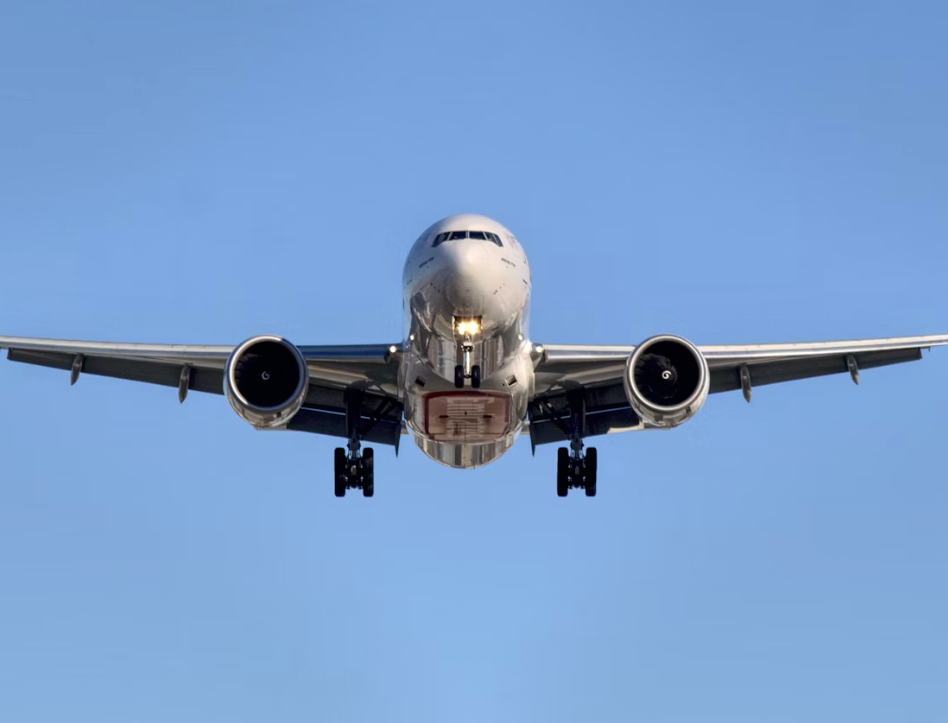
Photo by Lukas Souza, courtesy of Unsplash.

Comments (19)

Thoughts and Theories on the Air India Disaster

UPDATE. July 14, 2025

The preliminary crash report on Air India flight 171 is out, and what it says is startling.

It contends that at the moment of takeoff, both fuel control switches “transitioned” from the RUN to CUTOFF positions, essentially killing both engines.

One of the pilots is then heard asking the other why he did this. The second pilot responds that he did not. (Which pilot was speaking to whom is not specified.)

A few seconds later the switches transitioned back into the RUN position. The engines began spooling up again, but there was nowhere near enough time for them to produce adequate power.

In other words, it seems that one of the pilots switched off the fuel intentionally.

Or did he? Notice the investigators’ use of the word “transitioned.” The report is not fully clear as to whether the data recorder was tracking the flow of fuel independent of the switch position, or if it shows the switches themselves were, in fact, physically moved by hand. If they weren’t, it remains possible that an electronic glitch in the plane’s digital engine control system could be the culprit.

But if the switches were moved to CUTOFF manually, the billion-dollar question is why? Were they moved by accident, or nefariously? Was it an act of absurd absent-mindedness, or one of willful mass murder, a la EgyptAir, Germanwings, and (almost certainly) MH370.

As preposterous as the idea of a pilot mistakenly shutting off the engines sounds, I’ll note that it’s happened before. Consensus, however, is trending toward premise number two.

At least to me, though, the dynamics of the crash don’t really fit the suicide theory. You’re saying that the pilot’s plan was to cut both engines and let the plane glide into the ground? That seems an awfully conservative scheme. There would be a lot of unknowns in such a scenario, and no guarantee that the ensuing impact would be as disastrous as it turned out to be.

Just to the left of the impact zone was an area with no buildings and fewer obstructions. Perhaps with just a little more altitude they could’ve reached it, resulting in a crash that was partly survivable. Calculating the exact impact point ahead of time would’ve been nearly impossible.

Further, the second pilot denied shutting off the engines when queried by the first one. Why?

Rumors are circulating that the captain was going through a divorce and had been treated for depression. Whether or not this turns out to be true, just keep in mind that although depression sometimes turns people suicidal, only in the rarest cases does it also turn them murderous.

One thing that should pique interest is the report’s inclusion of a Boeing service bulletin issued a few years ago. The concern was fuel control switches failing to properly lock. The bulletin pertained to 737s, but the same basic switch is used on the 787 as well. Is it possible the fuel switches on Air India 171 were defective, and were moved from RUN to CUTOFF by nudge or vibration?


UPDATE. July 9, 2025

The focus now is on the fuel control switches. These are a pair of manually positioned cockpit controls that effectively turn the engines on or off.

These switches lever-lock into place cannot move automatically. Whichever position investigators say they were in, a pilot had to put them there.

If an engine fails during flight, one of the steps in securing that engine is to shut off its fuel control. In the case of Air India, what’s being whispered is that an engine may have failed on takeoff, and one of the pilots then grabbed the wrong switch, thus rendering both engines inoperative only a few hundred feet over the ground.

The biggest problem with this idea is that engine failures aren’t handled this way. All pilots are trained to wait until a safe altitude — usually at least a thousand feet — before commencing any steps to secure or troubleshoot a malfunctioned engine. You don’t start moving critical controls until there’s adequate time and altitude. Additionally, any time a fuel control switch is lifted out of the RUN position, both pilots must verbally confirm the correct one is being manipulated.

Is it possible a pilot could’ve have reacted in a panic and done exactly the wrong and catastrophic thing? Yes, and it’ll be quite troubling if it turns out one fuel control switch was found in RUN, with the other in CUTOFF.

And what if they were both found in CUTOFF? Well, putting aside the a possibility that the plane was crashed on purpose, this would make some sense. One of the steps addressing a dual engine failure — rare as such things are — is to cycle both fuel control switches. That is, move them from RUN to CUTOFF, then back again.

If something in the plane’s electronics went haywire and caused the engines to lose power simultaneously, we can imagine a desperate crew, with only seconds to spare, attempting the re-start process, with both fuel controls repositioned to CUTOFF and not enough time to get them on again.

Nothing in the preliminary report will be definitive, but if the switches were found in different positions from one another, this hints at pilot error. If both were found in CUTOFF, this hints at a dual failure and a last-ditch re-start effort.


UPDATE. June 24, 2025

It’s looking more and more likely that flight 171’s ram air turbine (RAT) was indeed deployed just prior to the crash. If so, this more or less confirms a loss of power in both engines.

Why it lost power is another issue altogether, and a potentially calamitous one for Boeing.

See below for more.

June 15, 2025

AIR INDIA flight 171 plunged into a neighborhood seconds after takeoff from Ahmedabad airport on Thursday afternoon, killing more than 270 people. The exact death toll is uncertain, as the search for bodies continues. One passenger survived.

My rule this soon after an air disaster is to avoid conjecture. Crash investigations can run for months before causes are nailed down, and first-glance theories, however convincing they seem in the moment, often turn out to be wrong.

That being said, evidence suggests the Boeing 787 suffered either a loss of thrust in both engines, or an inadvertent retraction of the plane’s flaps and slats before reaching sufficient speed.

The plane climbed to only about 400 feet above the ground (the 650 feet being reported by the media is the altitude above sea level), leaving the pilots no time to troubleshoot or turn back. All they could do was glide straight ahead. The flight path was stable, but the jet slammed into buildings at over 150 miles-per-hour, exploding into a fireball.

The loss of thrust theory is evidenced a few different ways. Most notably, one of the pilots, in a mayday call to air traffic control, reported power loss to air traffic control. In addition, some of the video footage appears to show deployment of the 787’s ram air turbine (RAT), a device that extends from the fuselage automatically, triggered by the loss of both engines, to provide flight control power. The “bang” heard by the surviving passenger could have been the RAT dropping into place, and the buzzing noise in one of the videos could be the sound of the device doing its thing (it’s essentially a propeller driven by the oncoming air). The footage is grainy and unclear, however.

Engine failures are rare. A loss of both engines is exceptionally rare. A bird strike, a la Captain Sullenberger, would be one possible culprit, but so far nothing points to this. Other possibilities include a malfunction of the 787’s electronic engine controls, fuel contamination, or ingestion of runway debris. There’s also the chance, however far-fetched, that a pilot shut the engines down, either out of carelessness, or, in a worst-worst-worst case situation, deliberately.

Getting back to those grainy videos, it’s hard to see much detail, but the wings look strikingly “clean,” which is to say the flaps appear retracted. Flaps, which extend from the trailing edge of the wing, together with slats, which extend from the front, provide critical lift at low speeds. Jetliners almost always take off with these devices extended (the particular setting varies with weight and runway length). The pilots then retract them incrementally as speed increases. Perhaps in this case they were brought up inadvertently — or by way of some bizarre malfunction — immediately after takeoff, resulting in a loss of lift without enough altitude for recovery.
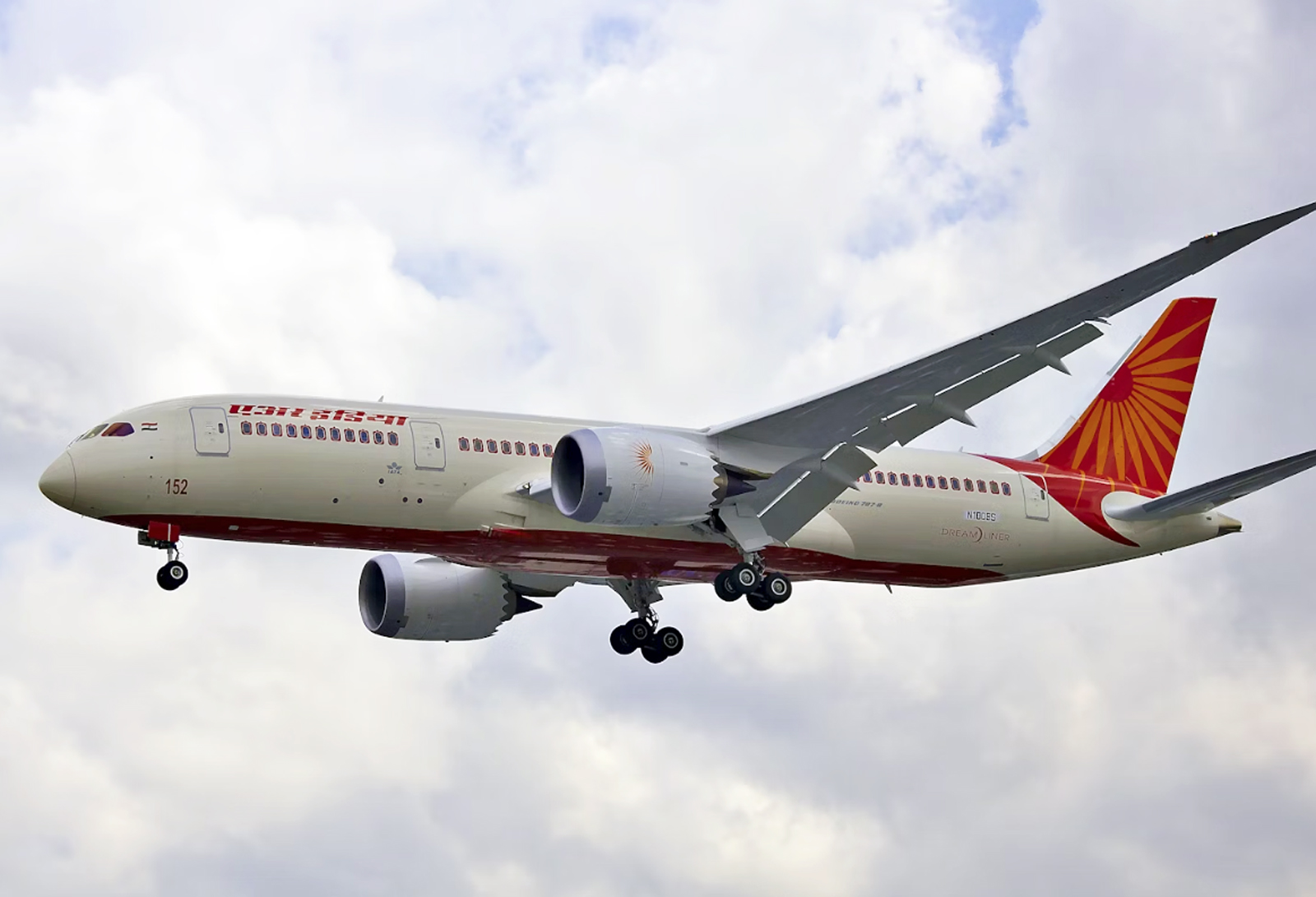
An Air India 787.

Then we have the landing gear. It was not retracted after liftoff, as normally would be the case. Curiously, this hints at either of the two scenarios just discussed. In the first one, we imagine the pilots, distracted by engine warnings and a sudden loss of power at the worst possible time, simply neglecting to raise it. In the other, a pilot mistakenly retracts the flaps rather than landing gear. The probability of such a mistake is absurdly low, but it’s bigger than zero.

On the other hand, the 787’s aerodynamics are uniquely sculpted, and when the flaps are extended the wings take on a camber, a smoothly downward curve, front-to-back, that makes the flaps less conspicuous than they are on other airplanes. Looking at videos of 787s taking off under normal circumstances, loads of which can be viewed online, those wings, too, look very clean. And photos from the crash site show a wing with flaps and slats that appear to be extended, at least partly.

The stronger evidence points towards power loss. My hunch is that something went wrong with the jet’s digital-electronic engine management system.

Whatever it was, the data and voice recorders will tell us shortly. That would be the how. Figuring out the why might take more time. For Boeing’s sake, let’s hope it’s not a design flaw buried in the plane’s high-tech architecture.

This is the worst crash since the downing of Malaysia Airlines flight MH17 in 2014, more than a decade ago. As of June 20th the body count is 274 people, including dozens killed on the ground.

The media keep reminding us how terrible the last twelve months have been for aviation, with at least four high-profile accidents. It hasn’t been a good run, but as I underscored in a recent post, historical perspective and context are important. Even including the past year’s spate, we see far fewer plane crashes than we used to. Heck, in 1985 there was a serious accident every 13 days, on average (including the bombing of an Air India 747 that killed 329 people). Multiple deadly disasters were once the norm, year after year. This is no longer the case, despite the number of commercial flights more than doubling since the 1980s.


Related Stories:

MH370: A STORY IN PIECES
PILOTS AND MENTAL HEALTH
WHAT’S GOING ON?

Photo courtesy of Unsplash.

Comments (74)

What’s Going On?

March 14, 2025

TWO THINGS jumped to mind as I watched the footage last week of the American Airlines jet in Denver, its engine on fire, passengers evacuating onto the wing.

The first thing was the recklessness of the people who brought their carry-ons with them as they evacuated. Fewer things are more stupid, or more dangerous, particularly when there’s a fire. We’ve seen this before, and I’m sure we’ll see it again. Airlines and regulators need to come up with something.

Second thing was a wave of consternation. Here we go again, I thought. Jeju Air, Azerbaijan, Washington D.C., Toronto. Now this. Another incident, another round of media hype, another feeding frenzy on social media. Here come the emails asking, “What’s going on?”

Whatever it is, it’s bad enough that, according to airline execs, the demand for air travel is softening. How much of this is economics-related rather than fear-related is hard to quantify, but the CEOs believe the latter is part of it.

This is frustrating, because on the whole flying remains remarkably safe. Much, much safer than it was in decades past.

I don’t mean to downplay recent mishaps too much; the Potomac crash, especially, was tragic, and there’s no denying that aspects of our system need funding and shoring up. But what are we actually dealing with? Are these incidents symptomatic of something dangerously broken? Are they warning signs of catastrophes to come?

I’m not sensing that. At worst, we can see it as a correction. Perhaps what’s surprising isn’t the spate of accidents, but rather how long we’d gone without such a spate. Perhaps we were too lucky for too long. Around two million people travel by air every day of the week, aboard tens of thousands of flights. The idea of perfect safety is foolish.

What the traveling public needs more than anything is a sense of perspective. For that, I recommend a trip through the history books, a dig through the crash chronicles of a generation ago, and the generation before that. Many Americans, younger ones especially, have no knowledge, or no memory, of how bad things used to be. From the dawn of the jet age in the 1950s, through the early 2000s, deadly air disasters were soberingly common, year after year after year.

And I don’t mean engine fires where people lined up on the wing. I’m talking about major accidents with, in many cases, fatalities in the hundreds.

Just how common? In 1985, the worst year on record, there were 27 crashes — an average of one every two weeks. This included two of the deadliest air disasters in history (JAL flight 123 and Air India 182), which occurred within sixty days of each other and killed over eight hundred people. And that’s not counting the incredible hijacking saga of TWA flight 847, which also happened in ’85.

The year 1974 saw nine disasters, including a TWA bombing and an Eastern Airlines crash three days apart. In 1973, when a Delta jet crashed in Boston killing 89 people, the accident was recorded on page two of the New York Times, below the fold. Ten crashes occurred between the fall of 1988 and the fall of 1989, three of them terrorist bombings.

As recently as the year 2000, we saw eleven crashes in which a dozen or more people perished, including the Air France Concorde disaster and Alaska Airlines flight 261, plus a cargo jet crash in California in which a former colleague of mine died.

This doesn’t happen anymore. Primarily through advances in training and technology, we’ve engineered away what used to be the most common causes of accidents. The number of planes in the sky has tripled since the 1980s, while the accident rate has plummeted. The events of the last several weeks, however unfortunate, hardly nudge the big picture data. Neither would another crash — even a big one, knock on wood.

It’s not that we’re spoiled, exactly. But we’ve grown accustomed to the rarity of disaster. And the result is a double-edged sword. On the one hand, we’re a lot safer. On the other hand, we’re primed to overreact when something goes wrong.

This is human nature, I suppose. When an engine catches fire, it grabs our attention. Fair enough. What it shouldn’t do, however, is cause you to call off your business trip or cancel your vacation.

 
Photo courtesy of Unsplash

Comments (38)

Potomac

February 1, 2025

“Perhaps a boring 2025 is what we should hope for,” I wrote back on January 21. A week later, a Blackhawk military helicopter collided with a PSA Airlines regional jet maneuvering to land at Reagan National Airport. Both aircraft plunged into the Potomac River, killing 67 people.

Not a good way to begin the year.

As I understand it, the crew of the helicopter told air traffic control it had the regional jet in sight, and was asked to “maintain visual separation,” as we say. When this happens, the onus of avoiding a traffic conflict falls to the pilot, rather than ATC. Maybe that sounds a bit old school, and I suppose it is. But it’s a common procedure when operating close to an airport, and almost always a safe one.

So the big question is: why did the helicopter not do as instructed? It’s possible the pilots misidentified their traffic, confusing the lights of a different plane with those of the PSA jet. Or, They had the correct aircraft in sight, but misjudged their trajectories. Were they paying close enough attention? Were they reckless, negligent, or something in between?

Another question is why the regional jet’s collision avoidance system, called TCAS, didn’t save the day. For one, although all commercial aircraft are equipped with TCAS, military helicopters are not. For the system to work optimally, both aircraft need to be wired in, so to speak, with their transponders exchanging speed and altitude data.

Regardless, the most critical TCAS function, called a “resolution advisory,” or RA, which gives aural commands to climb or descend, is normally inhibited at very low altitudes. The collision happened at less than 400 feet above the ground, maybe 25 seconds from touchdown. The RJ pilots might have received a basic TCAS alert — a synthesized voice announcing “Traffic! Traffic!” — but they would not have received maneuver instructions, and were likely preoccupied with aligning themselves with the runway. That close to the runway, a pilot is focused on landing, not on scanning for traffic.

DCA is a busy and challenging airport. There are twisty approach and departure patterns, and military copters are often transiting the airspace. It’s hard to know at this point what the takeaways of this crash might be, but the whole “maintain visual separation” thing may need to be reevaluated, especially for operations at night.

This was the deadliest U.S. aviation accident since 2009, when 49 people died in the crash of Colgan Air (Continental Connection) flight 3407 outside Buffalo.

PSA is an Ohio-based regional affiliate of American Airlines. Although wholly owned, it operates independently, with its own employees and facilities. Its pilots are neither employed nor trained by American Airlines.

Unfortunate as this accident was, it didn’t involve a major carrier or a mainline jet. And so, if nothing else, our 23-year crashless streak, which I discuss often in these pages, remains intact. And we hadn’t had a serious crash of any kind in fifteen years, which itself is remarkable. Making these points is, I hope, not in poor taste; the deaths of 67 people is still a significant tragedy.

PSA Airlines is not to be confused with the original PSA, a.k.a. Pacific Southwest Airlines, which operated from 1949 until 1988, when it was taken over by USAir.

As it happens, the old PSA was involved in an infamous midair collision over San Diego in 1978, in which 144 people were killed. In that disaster, which remains the deadliest midair collision in U.S. history, the pilots of the PSA Boeing 727 lost sight of a private plane that ATC had instructed it to follow, eventually colliding with it. There’s an irony in there.

Hans Wendt’s photograph of the stricken PSA 727, flames pouring from its right wing, is one of the most haunting airplane photos ever taken. Google it.

Neither was last week’s crash the first involving the Potomac River. Some of us are old enough to remember the spectacle of Air Florida flight 90, in 1982. The pilots of flight 90 failed to run their engine anti-ice system during a Janauary snowstorm at DCA. The plane took off, stalled, slammed into the 14th Street Bridge, then disappeared below the frozen river.

I was a sophomore in high school at the time. I remember our teacher wheeling a television into the room so we could all watch the rescue efforts. The heroics of Arland Williams and Lenny Skutnik.

No heroics this time.

And nope, not the first time a military aircraft collided with a civilian one. I can think of at least three others, including the 1971 collision over California between a Hughes Airwest DC-9 and a U.S. Air Force F-4 Phantom.

Comments (40)

Autumn Macabre

November 1, 2024

Forgive me for being morbid, but did you know that no fewer than six major airline crashes occurred on Halloween?

That’s right, six.

Ranked chronologically, they go like this…

1. On Halloween morning, 1979, Western Airlines Flight 2605 crashed in Mexico City killing 73 people. The crew attempted to land on a closed runway in the fog. The DC-10 hit a truck, then careened into a building.

2. On the night of October 31, 1994, American Eagle Flight 4184 went down near Roselawn, Indiana killing all 68 passengers and crew. Investigators found that a design flaw allowed ice accretion to cause an uncommanded aileron reversal, which threw the ATR-72 into an unrecoverable dive. The plane’s de-icing system was redesigned.

3. Two years later the day, TAM flight 402 crashed after takeoff from São Paulo, Brazil, after a thrust reverser deployed during climb. All 99 people aboard the Fokker 100 jetliner were killed.

4. Exactly three years later, EgyptAir Flight 990 crashed into the Atlantic near Nantucket, killing 217. Investigators determined that the first officer intentionally crashed the Boeing 767.

5. On Halloween night, 2000, the crew of Singapore Airlines Flight 006 attempted takeoff on a closed runway in Taipei, Taiwan. The Boeing 747 collided with construction equipment and burst into flames. Eighty-three of the plane’s 179 occupants died.

6. On October 31, 2015, Metrojet flight 9268, a Russian charter flight heading from Sharm El Sheihk, Egypt, to St. Petersburng, was destroyed by a bomb after takeoff. All 224 passengers and crew on the Airbus A321 were killed. It is believed the bomb was planted by operatives of the Islamic State group.


There you have it. There can’t possibly be a calendar day with a record worse than October 31.

There’s nothing going on here other than chance, of course. Bad luck is bad luck. Still it’s peculiar. I’m not normally superstitious, but can you find any patterns?

I had this to mull over on Halloween night, flying a 767 to Europe.


Comments (3)

MH 370, Ten Years On

March 19, 2024

TEN YEARS AGO this month, Malaysia Airlines flight 370 disappeared during a routine flight between Kuala Lumpur and Beijing. The wreckage was never found.

There’s a solid chance the wreckage will never be found. That’s unfortunate, but there are clues to work with. And those clues have, over time, led me to believe that the plane was intentionally brought down by one of the pilots, most likely the captain, in an act of murder-suicide. It was ditched somewhere in the Indian Ocean — landed, if you will, on the surface of the sea — where it sank to to the bottom and rests today, undetected but mostly intact.

Early on, I was open to a number of theories popular at the time: fire, depressurization, and so on. Accidents. I’ve come around since then. My opinion is based on the evidence, both as it exists and, just as importantly, doesn’t exist.

If we assume an accident, we must also assume the plane crashed into the ocean. We know from electronic satellite “pings” that the jet continued on for some time after its last appearance on radar. Having suffered some catastrophic malfunction that rendered the crew dead or unconscious, the thinking goes, the plane continued on autopilot until running out of fuel, at which point the engines failed. Without pilots to control the glide, it plunged into the sea.

The problem with this idea is the absence of pieces. There is no way for a jetliner to crash “gently” into the ocean. A Boeing 777 in an out-of-control impact would have effectively disintegrated, producing tens of thousands of fragments: aircraft parts, human remains, luggage, and so on. Much of this debris would have sunk, but much would not have. Eventually, borne by currents, it would’ve washed up.

So why didn’t it?

A small number of pieces did come ashore, but that’s the thing: of the few parts recovered, almost all of them are consistent not with an out-of-control crash, but with a controlled and deliberate ditching. (Even the most textbook ditching at sea is going to cause serious damage and the likely shedding of parts.) The flaperon discovered in 2015 on Reunion Island, for example, and the trailing edge flap that washed up on Mauritius, both from the same wing.

The parts themselves are evidence enough; a thorough post-mortem on them reveals even more. The forensics are complicated, but they’re solid. Use your Google and check out the analysis by former Canadian crash investigator Larry Vance. These pieces tell a story.

For these particular parts to have been found, together with a complete absence of the myriad flotsam a full-on crash would have produced, is to me a smoking gun.

The conclusion is simple: There was no debris field. And the only plausible explanation for a lack of one is if the plane was carefully, intentionally ditched at sea.

And thus, the biggest reason the submerged wreckage hasn’t been found is because the location of the search area has been based almost entirely on the fuel exhaustion theory. The search-zone calculations, extrapolating from the satellite pings, are based on when and where, approximately, the 777’s tanks would’ve run dry.

Except maybe the tanks didn’t run dry, and the plane went — was taken — somewhere else. What if that was the intent all along — to vanish?

Those pings are still important, and give us hints. Chances are the actual location of the wreckage isn’t far away. But it’s far enough away to have missed it.

I’ve been saying from the start that we should prepare for the possibility of the plane not being found. It happens this way sometimes. If it helps you feel better, the air crash annals contain numerous unsolved accidents. What makes this one different, maybe, is how we’ve come to expect easy and fast solutions to pretty much everything these days, with a fetishized belief that “technology,” whatever that means anymore, can answer any question and fix any problem.

Oh sure, radios, transponders, emergency locator transmitters, GPS, real-time position streaming, satellite tracking. But all of that is fallible, one way or another.

Sometimes nature wins. And that’s what this is about, ultimately: nature. The immensity of the ocean versus the comparative speck of a 777. It’s out there somewhere, in the ink-black darkness beneath thousands of feet of seawater. We’ll probably never find it.


Related Story:
THE RIDDLE MAY NOT BE DEEP

Photos courtesy of Unsplash.

Comments (24)

Lucky and Good

March 20, 2023

A FLURRY of recent close calls finds us nervous. There were near misses on runways in New York, Boston, and Austin. A United Airlines jet plunged to within 800 feet of the ocean after takeoff from Maui. And so on.

The billion-dollar question is, are these incidents symptoms of something gone rotten, or a spate of bad luck? Are they harbingers of disaster, or outliers?

Much discussed are staffing woes both at the airlines and air traffic control. The post-pandemic aviation world is operating at maximum capacity, but with lesser levels of experience and expertise. The job losses during COVID aren’t just measured in raw numbers; there was a brain-drain as well, as many senior employees took early-retirement packages. Now, thousands of new-hire employees are being taken on: pilots, cabin crew, controllers, dispatchers, schedulers, mechanics. They find themselves in a high-stress environment where learning curves are steep and mistakes can be unforgiving or worse.

Whatever the root causes, it’s been alarming enough to gather the FAA and airline officials in an aviation safety summit taking place this week in Washington.

And that’s a good thing. Surely it’s better to be digging into things now, rather than after there’s a catastrophe that kills 250 people. It’s all about being proactive; identifying weaknesses in the safety chain, and fixing them.

Our vantage point is a remarkable one. Twenty-one years have passed since the last major crash involving a legacy U.S. airline. That’s by far the longest such streak in commercial aviation history. Whether you look at it nationally or globally, never has commercial flying been as safe as it’s been over the last two decades.

For a sense of how true this is, all one needs to do is flip through the accident annals of the 1960s through the 1990s, when multiple deadly crashes were the norm year after year after year, killing 200, 300, even 500 people at a time. In some years we’d rack up ten or more mishaps worldwide. In 1985, perhaps the deadliest year on record, we saw a major crash on average of once every two weeks! Even with vastly more planes in the sky, accident rates are a small fraction of what they were.

It’s not easy, I know, for the average person to keep this in perspective. The media certainly doesn’t help. Precisely because there aren’t as many serious crashes to steal the headlines, there’s a tendency to hyper-focus on even the most insignificant events, inflating and sensationalizing them. This creates an atmosphere in which it can feel like flying is becoming riskier, when really the opposite is true.

Over at that safety summit, the focus is on preventing runway collisions. At least three of the most recent incidents involved so-called “incursions,” where planes were on active runways when they shouldn’t have been. Scary, sure, but when you look at the FAA data, the number of incursions so far in 2022 and 2023 match those from 2018 and 2019 almost exactly. The numbers aren’t going up, but the attention they receive is.

It’s a double-edged sword, to a degree. The safer we are, the more obligated we are to keep it that way. Near-misses like the ones we’ve seen draw so much talk both because and in spite of how reliable flying has become. And while it’s easy to see them as warning signs, they end up making us safer in the long run.

Sure, we’ve been lucky. There’s no denying we’re overdue, and accidents, including really bad ones, will continue to occur from time to time. But also we’ve been pretty damn good, having engineered away what used to be the most common causes of crashes. Better training, better technology, and better oversight have brought us to where we are.

And so, while maybe it sounds bizarre, or disingenuous, the way I see it, for the FAA to be holding an emergency summit underscores not how overdue we might be for a crash, but rather how safe it is to fly. We’re living in an age when major disasters, once commonplace, are virtually unheard of. What they’re trying to do is keep it that way.


Related Story:
The Silent Anniversary

Comments (33)

Daredevil Debacles

November 13, 2022

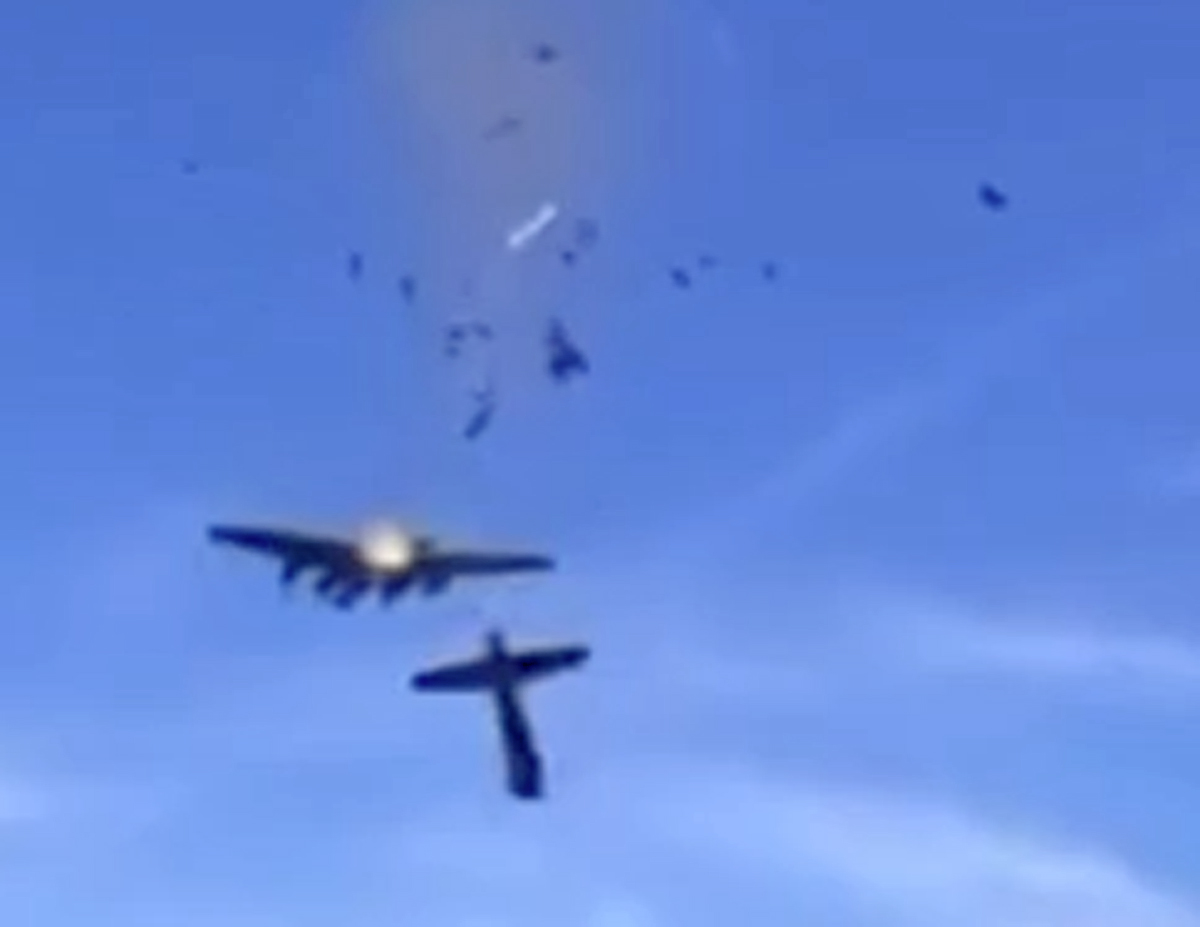
MAYBE YOU CAUGHT the footage. On Saturday afternoon at the Wings Over Dallas airshow in Texas, six people were killed in the midair collision of two vintage warplanes, including one of the few surviving examples of the B-17 bomber. Two of the six dead were retired American Airlines pilots. Another was an active Boeing 777 captain for United.

There are a few different videos of the accident, shot by spectators from different angles. You see the smaller plane, something called a P-63 Kingcobra, racing in from behind, nailing the B-17 in the midsection, almost as if it were aiming for it. The bomber instantly splits in half, spewing fragments, then plummets into the ground. As one of those pilots with a morbid fascination with air disasters, I confess to hitting the replay button multiple times.

If you do this, YouTube’s algorithms will send you on a greatest hits tour of previous airshow crashes. Of which there is no shortage. There’s the infamous B-52 crash in 1994, for instance. Or the ghastly footage from 1988 in Rammstein, Germany, when three planes from an Italian aerobatic team collided during a maneuver, sending a fireball into the crowd and killing 70 people. In 2002, 77 people died when a Russian-made Sukhoi fighter cartwheeled into the crowd at a show in Lviv, Ukraine.

Over on Wikipedia, meanwhile, a list of airshow fatalities runs for pages. Among the dozens of listings is a 2018 accident in Virginia that killed a pilot named Jon Thocker, a former colleague of mine who I flew with on numerous occasions.

All of which makes us ask: Has the time come, maybe, to put airshows to pasture? Is it really worth the risk? And is there not something anachronistic about these events? Are that many people still enthralled by the spectacle of planes doing loops and rolls?

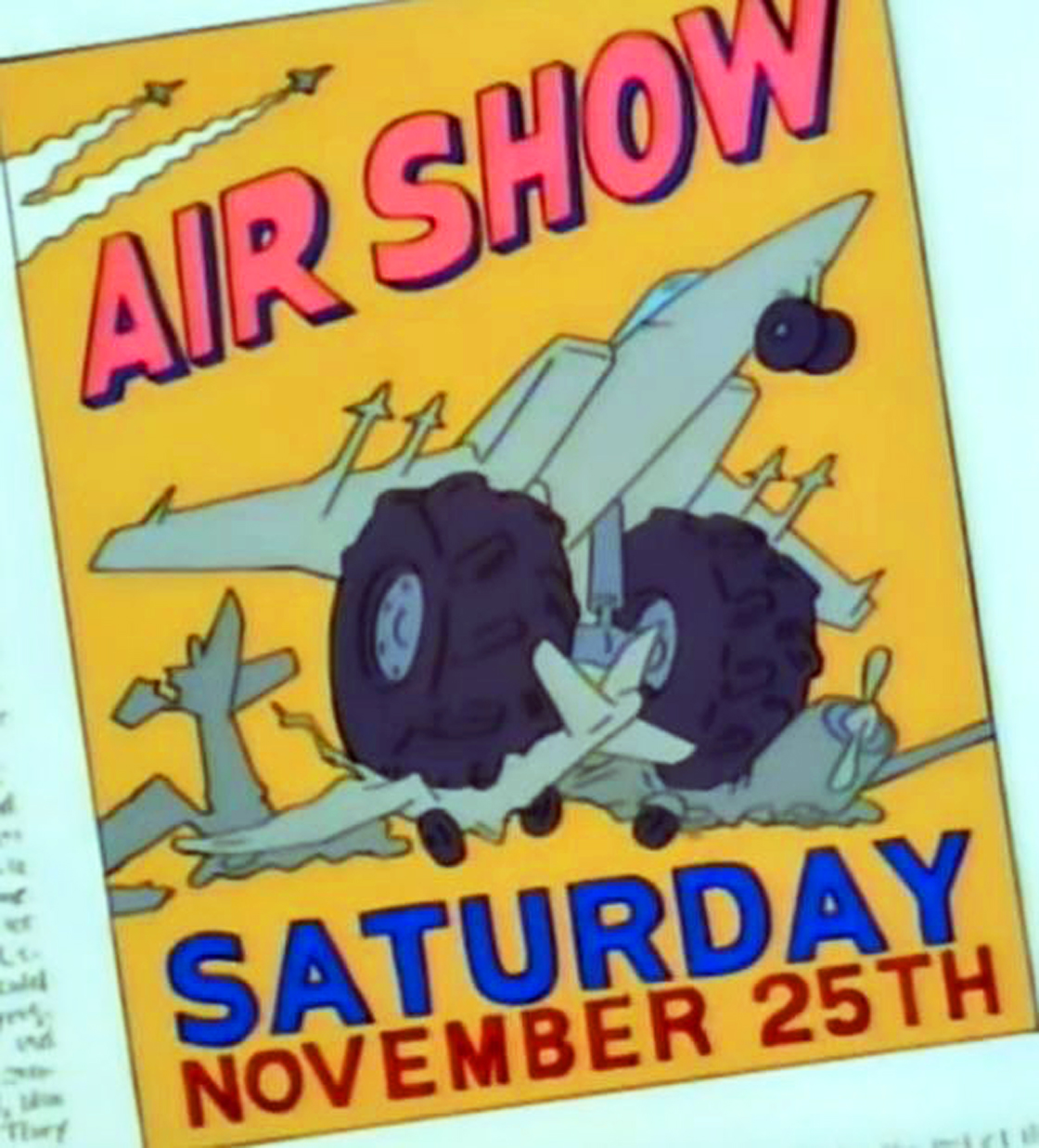
Allow me to quote Sideshow Bob, from season seven of “The Simpsons”: “Air show? Buzz-cut Alabamians spewing colored smoke in their wizz-jets, to the strains of “Rock You Like a Hurricane.” What kind of country-fried rube is still impressed by that?”

Fair question.

Still from “The Simpsons,” 1995.

Not me, certainly. I’ve been to a few airshows over the years, but my interest in them is at best halfhearted. On a list of things I’d choose to do on a weekend afternoon, hanging out at an airshow is right up there with cleaning the bathroom. Oh, I might enjoy clambering around the aircraft on static display, but few things bore me more thoroughly than watching aerobatics, be it the Blue Angels, Thunderbirds, Red Arrows, or anyone else. I don’t know if you could pay me enough to attend Oshkosh, the big annual “fly-in” event up in Wisconsin that, for reasons not understood by me, draws hundreds of thousands.

Admitting this makes me feel a bit traitorous. I’m a professional pilot, after all; what’s wrong with me? Is there some visceral thrill I’m somehow immune to? But aviation is a broad field. Different aspects of it appeal to different people. Military aircraft, stunt flying, and so on, has never held my attention. My passion has always been the commercial realm: jetliners. As a kid I put together hundreds of plastic Revell kits of bombers and fighters, it’s true, but it was always the 747s and DC-10s that excited me more.

For that reason, if I were to attend an airshow, make it the one held every two years in Paris. At Le Bourget Airport, the focus is commercial planes. Though even here things can turn deadly. In Paris in 1973, a Tupolev Tu-144 — the Russian Concorde — crashed during a display flight killing the entire crew. This, too, you can watch on YouTube.

Maybe just stick with the static displays. Let kids get their pictures taken next to a B-2 bomber or a KC-10, or in the cockpit of an Airbus. But nix the daredevil fly-by stuff. Instead of risking life and limb, retired pilots can play golf or go fishing.


Related Story:

THE NOISY, SWEATY HELL OF SMALL PLANES
THE ARC OF CREATIVE DECLINE

Comments (24)

The China Eastern 737 Crash

March 22, 2022

FIRST THINGS FIRST, it’s important to employ my usual post-crash disclaimer: When planes go down, initial speculation is often misguided and wrong. Early clues that appear straightforward and revealing turn out to be complicated and unclear.

All we know for certain is that China Eastern flight 5735 was cruising at 29,000 feet when something went disastrously awry. The jetliner, with 132 people aboard, fell into a high-speed plunge. Radar reports show that it leveled off briefly at around 8,000 feet, began a brief climb, then fell into a second plunge from which it never recovered, disintegrating into hilly terrain near the city of Wuzhou. There were no survivors.

The severity of the plunges, which were tracked by air traffic control radar, together with harrowing security camera footage showing the stricken jet in a vertical dive, offer some of those clues that we need to be careful with. Whatever went wrong, it happened quickly and catastrophically. There was no distress call.

This tells us a lot, but also it tells us nothing. Any number of things is possible, from a bomb to a flight control system somehow gone haywire. One cause being thrown around is “structural failure.” Did some portion of the tail or a stabilizer separate from the aircraft? Perhaps. But if so, why? Design flaw, faulty repair, explosive decompression? There can be layers to these things.

That the descent was temporarily arrested is the most interesting part. It suggests the pilots were able to maintain or regain some semblance of control, at least briefly. This lessens the probability of certain scenarios — a bombing or major structural failure, for example, the results of which tend to be a more consistent sort of plummet. Yet nothing can be ruled out entirely. A friend of mine even came up with a pilot suicide hypothesis that, although extremely unlikely, is nonetheless plausible

The plane was a Boeing 737-800. The -800 is one of the “Next Generation” (NG) 737 variants. It first flew in 1997, and today is one of the most popular jetliners in the world.

The 737-800 is not equipped with the stall avoidance system that led to the 737 MAX crashes a few years ago, but the jet has had a few problems over the years:

In 2005, a group of former Boeing employees filed a lawsuit claiming that some Next Generation 737s had been manufactured with defective parts. These parts, it was contended, may have contributed to the fuselage breakups of a Turkish Airlines 737 outside Amsterdam in 2009, and the nonfatal runway overrun of an American Airlines 737 in Jamaica that same year. The ex-employees lost their case, as well as their appeal. Investigators, including the NTSB, found no link between faulty parts and structural failure.

In 2019, fatigue cracks were discovered in the wing-fuselage attachment sections of approximately five percent of the global 737NG fleet, leading to a series of mandated inspections and repairs. But this applies primarily to older -800s that have exceeded a particular number of flight hours and cycles (takeoffs and landings). The airplane that crashed in China was only seven years-old.

A rudder defect was blamed for at least two 737 disasters in the 1990s, plus a number of nonfatal incidents. These were earlier-generation variants, however, and the plane’s rudder servo system was redesigned.

You might also come across articles highlighting the high number of incidents and accidents involving 737s over the decades. Be wary of how these numbers are presented (usually as raw totals, without meaningful statistical context), keeping in mind that more 737s have been built than any other jet.

And so, there’s nothing at this point to suggest flight 5735 was brought down by a design flaw or potential negligence on the part of the manufacturer. And while I’ve never been much a fan of the 737, it’s not because I consider the plane unsafe. No matter, the wolves are out for Boeing, and have been since the MAX crashes. With the company’s reputation in tatters, this couldn’t have come at a worse time, regardless of who or what is to blame.

“Boeing Faces New Upheaval After Crash of Chinese Airliner,” read a headline in yesterday’s New York Times. “No fault has been found,” the article continues, “but the company, which has been trying to overcome a recent legacy of design and production troubles, is likely to get scrutinized.”

It certainly will be. But let’s maybe not go that route until the facts are in. We live in a time when everyone wants quick and concise answers, I know. But air crash investigations take months, sometimes years. Even then, we don’t always learn the whole story.


NOTES AND WHATNOT:

— China’s domestic airline market is roughly as large as that of the United States. Once much maligned, the country’s aviation safety record has improved considerably over the last two decades and is now considered among the safest. China’s last major accident was a decade ago.

— In the old days, China had only one airline: the Civil Aviation Administration of China (CAAC), which was second only to Aeroflot in size. And like Aeroflot, it was eventually broken up, splintering off dozens of smaller independent carriers. One of those was China Eastern. Based in Shanghai, China Eastern is today the country’s second-largest airline, just behind China Southern, with a fleet of some 600 aircraft and a route structure extending to Europe and North America.

— We can thank the security-industrial complex for these furtive glimpses of crashing planes we’d otherwise never see. Pentagon, etc. Now this one.

— Those puffs of smoke visible in the video look to me like engine compressor stalls. Jet engines will not function properly in a vertical dive, effectively hiccuping.

— One upon a time, a plane crash in a foreign country killing 132 people would have been a relatively minor news story. What happened is obviously tragic, but the amount of attention that crashes receive nowadays helps underscore how rare they’ve become.


RELATED STORIES:

BOEING’S BIG GAMBLE

Comments (20)

Twenty Years and Counting

November 12, 2021

WE MADE IT. I had my doubts, but we pulled it off.

Today marks the 20th anniversary of the crash of American Airlines flight 587 in New York City. We have now gone twenty full years since the last large-scale crash involving a major U.S. carrier. This is by far the longest such streak ever.

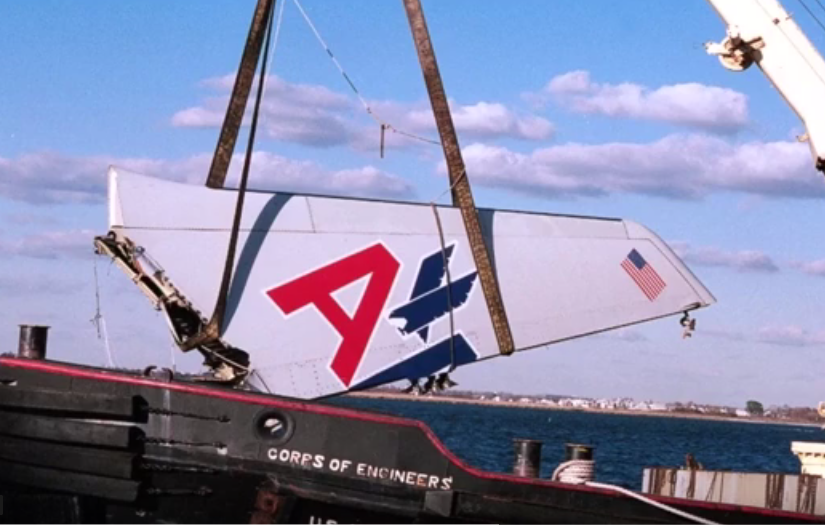
On the sunny morning of November 12th, 2001, American 587, an Airbus A300 bound for the Dominican Republic, lifted off from runway 31L at Kennedy Airport. Seconds into its climb, the flight encountered wake turbulence spun from a Japan Airlines 747 that had departed a few minutes earlier. The wake itself was nothing deadly, but the first officer, Sten Molin, who was at the controls, overreacted, rapidly and repeatedly moving the widebody jet’s rudder from side to side, to maximum deflection. The rudder is a large hinged surface attached to the tail, used to help maintain lateral stability, and Molin was swinging it back and forth in a manner it wasn’t designed for. Planes can take a surprising amount of punishment, but airworthiness standards are not based on applications of such extreme force. In addition, the A300’s rudder controls were designed to be unusually sensitive, meaning that pilot inputs, even at low speeds, could be more severe than intended. In other words, the pilot didn’t realize the levels of stress he was putting on the aircraft. The vigor of his inputs caused the entire tail to fracture and fall off.

Quickly out of control, the plane plunged into the Belle Harbor neighborhood of Queens, a skinny section of Rockaway only a few blocks wide, with ocean on both sides. All 260 passengers and crew were killed, as were five people on the ground. It remains the second-deadliest aviation accident ever on U.S. soil, behind only that of American flight 191 at Chicago, in 1979.

Flight 587 was well known among New York City’s Dominican community. In 1996, merengue star Kinito Mendez paid a sadly foreboding tribute with his song El Avion. “How joyful it could be to go on flight 587,” he sang, immortalizing the popular daily nonstop.

This was a catastrophe to be sure. It was also the last multiple-fatality crash involving a legacy American airline, and the last on U.S. soil with more than 50 fatalities.

To be clear, there have been a number of post-2001 tragedies involving regional carriers and freighters. The worst of these were the Comair (2006) and Colgan Air (2009) crashes, in which 50 and 49 people were killed, respectively. In 2005 a young boy in a car was killed when a Southwest Airlines 737 overran a runway in Chicago, and in 2018 a woman on a Southwest Airlines 737 was killed after being partially ejected through a blown-out cabin window.

What we haven’t seen, however, is the kind of mega-crash that was once brutally routine, year after year. Take a look through the accident archives from 1970s through the 1990s. Seldom would a year go by without recording one or more front-page mishaps, with 100, 200, sometimes 300 (or more) people killed at a time. In the eighteen years prior to November, 2001, and not counting the September 11th attacks, the American legacies, which at the time included names like Pan Am, TWA and Eastern, suffered ten major crashes. The idea that we could span two full decades without such a disaster was once unthinkable.

It’s especially remarkable when you consider there are nearly twice as many planes, carrying twice as many people, as there were in 2001. Since then, the mainline American carriers have safety transported more than twenty billion passengers. Today they operate over four thousand Airbuses and Boeings between them, completing tens of thousands of flights weekly. The streak also takes in those dark years of the early 2000s, when pretty much all of the big carriers were in and out of bankruptcy, fighting for survival. Not to mention the dire challenges of the last twenty months, brought on by the COVID-19 pandemic. Best of times, worst of times. All it would have taken is one screw-up, one tragic mistake. Yet here we are.

When we expand the context globally, the trend is even more astonishing. Between the 1980s and the mid-2000s there were dozens of air disasters worldwide — sometimes five or more in a year. In 1985 alone, twenty-seven major crashes — twenty seven! — killed almost 2,400 people.

How we got here is mainly the result of better training, better technology, and the collaborative efforts of airlines, pilot groups, and regulators. We’ve engineered away what used to be the most common causes of accidents. Yes, we’ve been lucky too, and the lack of a headline tragedy does not mean we should rest on our laurels. Complacency is about the worst response we could have. Air safety is all about being proactive — even a little cynical. Our air traffic control system needs upgrades, our airports need investment. Terrorism and sabotage remain threats, and regulatory loopholes need closing. The saga of the 737 MAX has been a cautionary window into just how fortunate we’ve been, and exposed some glaring weaknesses.

Duly noted, but a congratulatory moment is, for today, well earned. This isn’t a minor story.

Almost nobody in the media is paying attention, trust me. Crashes, not an absence of them, make the news. Call it the silent anniversary, but there’s no overstating it: we have just passed one of the most significant milestones in commercial aviation history.


U.S. Airline Accidents With 50 or More Fatalities, by Year

1970: 1
1971: 1
1972: 1
1973: 2
1974: 4
1975: 1
1976: 0
1977: 2
1978: 1
1979: 2
TOTAL 1970s : 15

1980: 0
1981: 0
1982: 2
1983: 0
1984: 0
1985: 3
1986: 0
1987: 1
1988: 1
1989: 2
TOTAL 1980s: 9

1990: 0
1991: 0
1992: 0
1993: 0
1994: 2
1995: 1
1996: 2
1997: 0
1998: 0
1999: 0
TOTAL 1990s: 6

2000: 1
2001: 5

Since 2001: 0


History’s Ten Worst Disasters Involving U.S. Carriers

1. 1977. Two Boeing 747s, operated by Pan Am and KLM, collide on a foggy runway at Tenerife, in Spain’s Canary Islands killing 583 people, 335 of them on the Pan Am plane. The KLM jet departed without permission and struck the Pan Am jet as it taxied along the same runway. Confusion over instructions and a blockage of radio transmissions contributed to the crash.

2. 1979. As an American Airlines DC-10 lifts from the runway at Chicago’s O’Hare airport, an engine detaches and seriously damages the wing. Before its crew can make sense of the situation, the plane rolls 90 degrees and disintegrates in a fireball beyond the runway, killing 273. The engine pylon design and airline maintenance procedures are faulted by investigators, and all DC-10s are temporarily grounded.

3. 1988. Two Libyan agents are later held responsible for planting a bomb aboard Pan American flight 103, which blows up in the night sky over Lockerbie, Scotland, killing 270 people, including 11 on the ground.

4. 2001. American Airlines 587 goes down outside JFK airport in New York killing 265.

5. 1985.  An Arrow Air DC-8 crashes after takeoff from Gander, Newfoundland, killing 256 people, most of them U.S. military personnel returning from Egypt. The disaster is blamed on ice contamination of the jet’s wings.

6. 1996. Shortly after departure, a fuel tank explosion destroys TWA flight 800, a 747 carrying 230 passengers and crew from JFK to Paris. There are no survivors.

7. 1995. A navigational error causes American Airlines flight 965, bound from Miami, to Cali, Colombia, to wander off course during arrival. The 757 hits a mountain 25 miles from its destination. There are four survivors of the plane’s 163 occupants.

8. 1987. A Northwest Airlines MD-80 crashes on takeoff at Detroit. The pilots had neglected to properly set the flaps and slats, and for reasons unknown the jet’s warning system failed to alert them. A four year-old girl was the only survivor among the 155 passengers and crew.

9. 1982. A Pan Am 727 goes down seconds after departing from New Orleans, Louisiana. There are 153 fatalities, including eight people on the ground. The plane had taken off into a rare and deadly microburst — a localized, high-power windshear produced by a violent thunderstorm.

10. 1978. A Pacific Southwest Airlines (PSA) 727 collides over San Diego with a small private plane. A total of 143 people die including seven on the ground.


Related Stories:

AMERICA’S DEADLIEST AIR DISASTER, 40 YEARS LATER
THE HORROR AND ABSURDITY OF HISTORY’S WORST CRASH

Comments (18)