Author Archive

Letter From Ghana


Welcome to Room 420: Rubber Floors, Mysterious Odors and Inexplicable Artwork. Plus: Mojito Madness and the World’s Worst Billboard.

ACCRA, GHANA

THE FLOOR IN ROOM 420 is made of rubber — or something that looks like rubber. It’s a pebbly, industrial-style flooring. I wouldn’t be surprised if it were made from recycled tractor tires. That would be a good thing, and either way I like it. I admire its toughness, and it lends a handsome touch to the rest of the — what to call it? — African-modernist decor of sun-faded pastels and white pine. But tread barefoot at your peril: in the shower your feet will leave inky black stains around the drain.

Outside my window, a crippled man is propelling himself down the sidewalk in a hand-cranked wheelchair with a seat made of plywood. He is wearing an oily pair of jeans, and his legs — whatever might be wrong with them exactly, or if they’re there at all — look like deflated canvas tubes. Nearby, on the wall of a construction site, in angry spray-painted letters it says, DO NOT PISS HERE!

My room stinks of cigar smoke and cologne.

Now, at least as I understand it, the accepted literary style of describing smells is to always use some fantastical or over-the-top comparison and maybe a little metaphor. “His room stank of coalsmoke and defeat.” I’m not creative enough for that, and besides it doesn’t always describe the smell accurately. I assure you this room smells precisely like cigar smoke and cologne, and I am confident that both of those things were here, in abundance, shortly before my arrival yesterday afternoon. I picture an overweight German businessman in a towel dousing himself in some awful fragrance; a recalcitrant Nigerian hooker napping in this very bed. “Kommen ve must go now. It is check-out time!”

The smell hit me the second I walked in. I thought about changing rooms but I was too tired to go dragging my stuff back to the elevator.

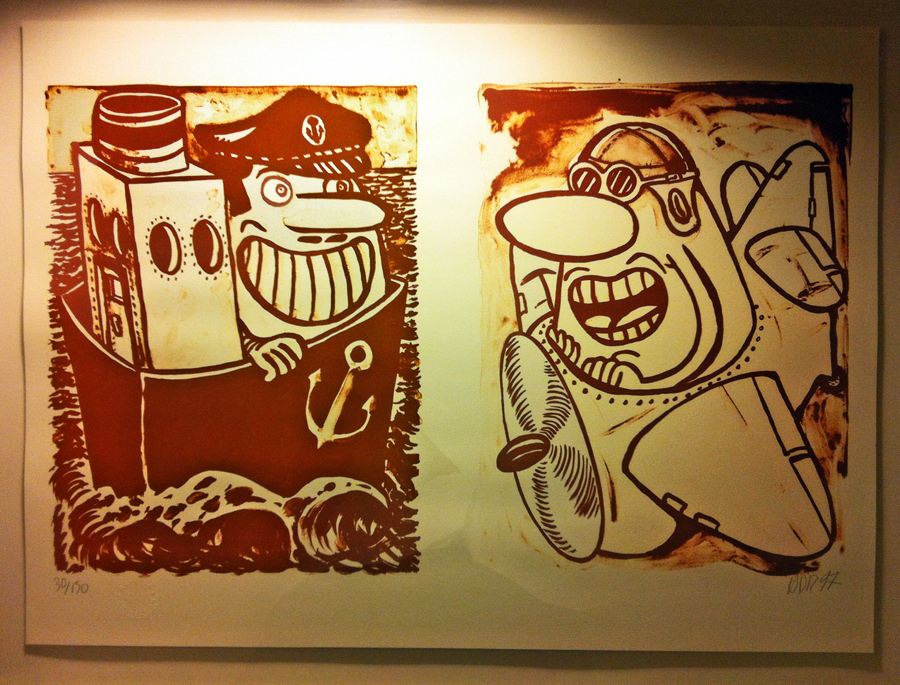
Plus, this is room 420. I have had this room before, and Eau de Montecristo aside, it is my favorite for an excellent reason: because it is home to the most ridiculous piece of artwork ever to grace a hotel room. Hotel artwork is a pretty competitive field — in all the wrong categories — and if you travel a lot, doubtless you’ve marveled at the many tacky, trite, or simply hideous pieces tacked to the walls by clueless hoteliers. But the winner for oddest-ever in-room picture hangs proudly above the non-useful miniature sofa in room 420 of the Novotel City Centre here in Accra. I could try describing it, but here’s your proverbial Thousand Words instead:
Worst Hotel Artwork

I can’t make out who the artist was (initials DDR?), but this was a limited edition print, number 30 of 150, and it dates from 1997, embossed with an important-looking stamp decreeing its membership in the esteemed “Novotel Collection.” I call it, “Air and Sea,” or, “O Captain My Captain” (artist unknown; ink and whatnot on paper). Perhaps in a youth hostel or backpacker joint it wouldn’t seem so jarring, but the fact this is West Africa makes it even more of an insane non-sequitur than it would be anywhere else.

I thought about taking it with me — the theft of fine arts is a booming business, you know. And here in Somerville, Massachusetts, we have the should-be-famous Museum of Bad Art. MOBAs renowned curators could do worse, maybe, than ringing up Novotel and making an offer for DDR’s masterpiece. Alas the piece is surprisingly well-secured in its frame.

Or am I being unfair? It’s a fun picture, certainly, and far preferable to some schlocky painting of an African village or an acrylic stick figure of a woman grinding grain.

Meanwhile, for guests who don’t mind lingering odors, who aren’t serious art collectors, or who don’t enjoy bouncing around on rubber floors, the Novotel still has plenty to offer. It’s clean, in a convenient location, and the staff, like everybody in Ghana, is disarmingly friendly. The poolside pizzas are the best in West Africa and the Sangaw bar, just off the lobby, is a relaxed and cozy spot to enjoy a cold bottle of Star.

It’s also a great hotel to have your laundry done — a badly needed service after a long flight and the sweaty van ride from Kotoka airport. They are prompt and do an excellent job. It’s not too expensive, and everything comes back brightly washed and meticulously folded in accordance with some unfathomable mathematical folding principle. Even the socks come back folded, looking like little origami socks.

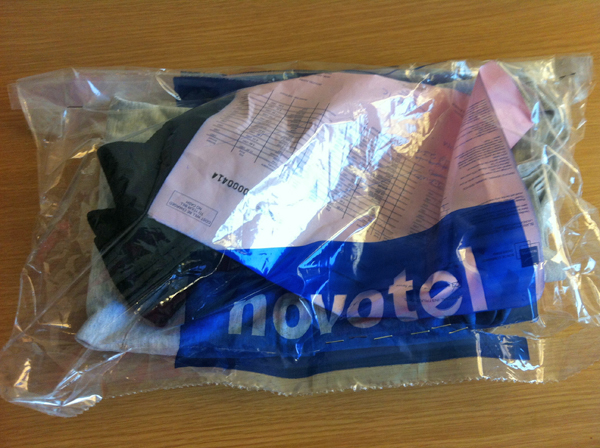
Not everybody at the washing station is paying attention though. I’m one of those eco-weirdos who takes those sad little “help us conserve water” placards seriously; I re-use the towels and I don’t let the housecleaners change the pillow cases. And on the laundry slip, I write, in big underlined letters, NO PLASTIC! Chipping in, doing my part. No matter, here’s how my clothes come back to me…
Laundry

There’s some cultural disconnect going on here, possibly — the idea that a Western guest wouldn’t want his impossibly folded boxer-briefs and socks presented in cellophane splendor simply impossible to entertain. Or maybe they think this is funny?

Which brings us down to the aforementioned Sangaw Bar. What to make of this special cocktail promotion, advertised tabletop in clear plastic easels…

Apparently for some West Africans, your idea of “Latino” is a crazy old woman smoking a gigantic cigar.

I much enjoy traveling to Ghana, and Ghanaians are some of my favorite people in the world. Always smiling, always saying hello, always eager to sell you a handmade goatskin drum or some shea butter without ripping you off. This is an amiable and proud place — if not always for reasons everyone is eager to hear about. Once, a couple of years ago, I was getting out of a taxi across from the Novotel, and as I stepped to the curb I was confronted with the following, staring at me from a newspaper kiosk…

So we know there are people who keep track of these things. And naturally some of us wonder: who finished first and second?

Accra is also home to the world’s worst billboard. It’s just outside the airport, informing arriving passengers of the country’s desperate dearth of copywriters. KILL INSECTS! ENJOY NICE SMELL. Is that the smell of dead insects? At any rate, it looks like they applied a little too much: “Hey girls, come and help daddy spread some of this toxic insecticide around the house. Douse it good now, and breathe it in! Smell that wonderful smell. Breathe in deep! What’s that? Yes, daddy also has a headache and knife-like stomach pains. But just keep breathing and spraying. Wait, oh shit, I just killed my entire family…

Kill Insects

I digress.

Every hotel has it quirks. Inexplicable artwork, rubber floors and bizarre cocktails, there are a lot of things to dislike about hotel rooms, even the fanciest and most expensive ones: temperamental air conditioning, toe-breaking doorjambs, ergonomically hellish “work spaces.”

And here’s another one: cardboard brochures. Nowadays, each and every hotel amenity, from room service to Wi-Fi, is hawked through one or more annoying advertisements displayed throughout the room. Cards, signs, menus, and assorted promotional materials—they’re everywhere: on the dresser, in the closet, on the pillows, in the bathroom. I wouldn’t mind if this laminated litter was placed unobtrusively, but it tends to be exactly in the way, and I resent having to spend five minutes after an exhausting red-eye, gathering up these diabolical doo-dads and heaving them into a corner where they belong. One’s first moments in a hotel room ought to feel welcoming, not confrontational.

Food and room service are another topic entirely. Speaking of West Africa, be careful never to dine too hungry at the Pullman Hotel in Dakar, Senegal, where the surly poolside waitress might, eventually, bring you the pizza you ordered ninety minutes ago, and where the in-room menu offers such delectables as:

Chief Salad
Roasted Beef Joint on Crusty Polenta
The Cash of The Day
Paving Stone of Thiof and Aromatic Virgin Sauce

That last one sounds like a chapter from a fantasy novel. Head instead to Le Layal, a great little Lebanese place up the street where, once you get past the “Testicles with Garlic” and the “Homos with Chopped Meat”, the menu is both coherent and tasty.

So the phones are open. If you’ve got comparable examples of hotel weirdness, feel free to share them in the comments section below.


UPDATE: November 15, 2014

Well, subsequent stays at the Novotel City Centre in Accra reveal that the “Novotel Collection” is more bountiful than we thought. We now have three contenders for the for strangest (worst?) hotel artwork of all time. Move over “O Captain,” you’ve got company. Down one floor, in room 302 we behold this remarkable creation. For now untitled, it appears to depict a severed robot head in the throes of a mind-meld with a giant strawberry…
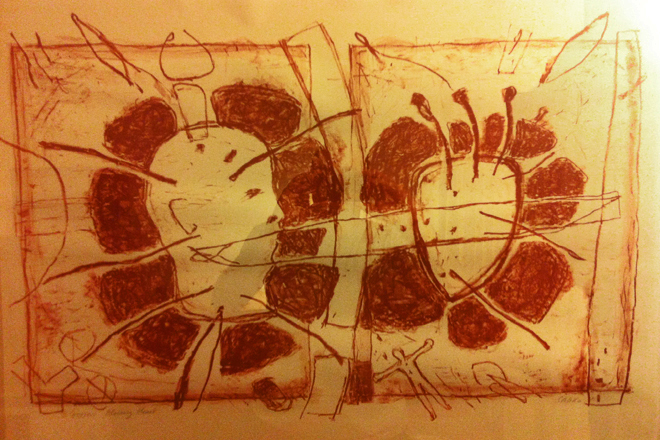
NovotelArt2

And not to be outdone, also on the third floor, yet another demented masterpiece awaits us, perhaps the most impressive of the lot…
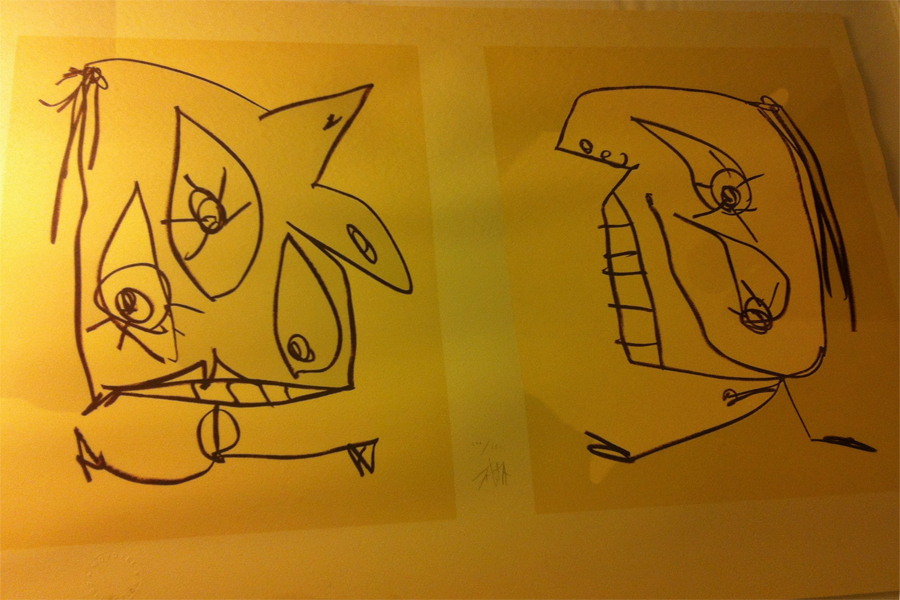
Novotel Art 3

We notice a consistency here — an opposing-panels “faces” theme — though somehow this unifying principle doesn’t make the pictures less ridiculous. How to choose a favorite?


Anyway here’s an idea. Maybe you should visit Ghana. If you’re considering a first-time trip to West Africa, I can’t recommend it more highly. It’s friendly, safe, affordable, and there’s tons to do.

HIGHLIGHTS IN TEN DAYS…

Day 1: Arrival. Check in to your non-smoky room at the Novotel and enjoy the afternoon at leisure. Walk down to the Arts Center to try out your haggling skills, and maybe come away with one of those not-too-overpriced drums. Later have dinner at Tandoor, Africa’s best (and spiciest) Indian restaurant.

Day 2: Accra. Visit the Osu coffin makers, and finish the afternoon with a sundowner at Osekan, a seaside bar/restaurant not far from the hotel. Ghanaian food tonight at Buka, or at Asanka Local if you’re adventurous. If you’ve never had Ghanaian food, start easy and order the red-red, or the Jollof rice with chicken.

Day 3: Get an early start and head west to Elmina Castle, the famous slave castle about two-and-a-half hours west of Accra. (Skip Cape Coast Castle and head directly to Elmina, about 20 minutes further.) After a tour be sure to wander around the harborfront area. Get right down in there, onto the sand in into the little alleyways between the houses. After lunch continue west to the small town of Axim, near the border with Ivory Coast.

Visit Ghana

Days 4 and 5: Spend two nights at the Axim Beach Hotel, a rustic seaside place on a beautiful beach. Take some time to wander Axim town, with its ramshackle main street and nearby slave castle.

Day 6: Depart Axim early and head east to Cape Coast, stopping at Nzulezo floating village on the way. Once in Cape Coast grab a bus or tro-tro up to the frenetic city of Kumasi, about a five-hour drive away. Stay at the Four Villages Inn.

Days 7-8. From your base in Kumasi, take a tro-tro out each morning and visit the nearby Ashanti towns. Buy some Kente cloth and don’t forget your schnapps (this will make sense to you later).

Day 9. Fly back to Accra — no bus or tro-tro; you’ve had your fill of that — and spend your final night in room 420. Have a pizza and a crazy lady mojito.


CLICK HERE TO VIEW THE AUTHOR’S PHOTO GALLERY FROM GHANA


And please consider donating to this campaign:

Recycling


Comments (42)

Q&A With the Pilot, Volume 2

AN OLD-TIMEY QUESTIONS AND ANSWERS SESSION.

Eons ago, in 2002, a column called Ask the Pilot, hosted by yours truly, started running in the online magazine Salon, in which I fielded reader-submitted questions about air travel. It’s a good idea, I think, to touch back now and then on the format that got this venerable enterprise started. It’s Ask the Pilot classic, if you will.

Q: On a flight from London to New York, I noticed that our 747 was flying almost parallel with, and very close to, a Lufthansa plane. It remained next to us for at least a couple of hours as we crossed the Atlantic. We were close enough that I could clearly see the tail emblem and the Lufthansa name on the fuselage. I assume our pilots were aware of it, and vice versa?

What you describe is common when flying between Europe and North America. The east-west routes across the North Atlantic consist of a series of one-way parallel “tracks,” as we call them, made up of sequential points of latitude and longitude. Flights along the same track are sequenced by time, one behind the other. Or, they are stacked vertically, with a minimum of 1,000 feet between each plane. The tracks are 60 miles apart, however, so you were likely on the same track as the Lufthansa jet, a thousand feet higher or lower, and slightly offset horizontally.

Offsetting horizontally reduces collision hazards, unlikely as they are, and helps avoid wake turbulence. Standard offsets are 1 mile or 2 miles (pilot’s choice) to the right. A plane one or two miles away horizontally and only a thousand feet lower or higher will basically appear parallel to you.  

The tracks go west-to-east in the evening, when the vast majority of planes depart North America for Europe, and east-to-west in the mornings and afternoons, when most flights are headed the other way. Those going against the flow — a morning flight from New York to London, for example — will be assigned a “random route,” clear of the organized tracks. Each track is assigned a letter designation. The locations of the tracks are different every day, varying with weather and winds aloft. Track “A” on Tuesday might consist of a totally different string of latitude/longitude fixes than Wednesday’s track “A.”

Separate from ATC communications, there’s an open radio frequency (VHF 123.45) used on the track system that allows crews to talk to each other. While this is useful for passing on information about turbulence and whatnot, a lot of the conversation is casual. The likes of “What’s up? Where are you guys headed?” is heard all the time. It’s quite possible that your crew and the Lufthansa crew were chatting at some point.

Q: How come there are no direct flights from Europe to Hawaii? The distance is somewhere around 6,000 nautical miles from the bigger Western European capitals, but that’s well within the reach of long-haul aircraft.

I can’t imagine such a route would be profitable. It has two critical factors working against it. First, it’s a very long distance. Second, it’s a leisure destination with little premium-fare traffic, meaning that yields would be low. Cheap tickets, limited first or business class traffic, and long distances: that’s a terrible economies-of-scale combo that will only work if you can consistently fill a jumbo jet to the gills. And even that’s no guarantee of turning a profit. And how many Europeans are interested in vacationing in Hawaii in the first place? There are many closer sun-and-sea options: Turkey and the Mediterranean, the Indian Ocean resort islands, Thailand, etc. Heck, there wasn’t even a Hawaii to New York nonstop until just a couple of years ago when Hawaiian Airlines came in to give it a try (the route continues, though I’ve been told it only makes money in the winter high season). Most people headed to Hawaii will connect through one of the bigger West Coast cities.

Q: I love watching airplanes in the night sky, but what do all the different lights mean? You’ve got green lights, red lights, white lights; steady lights and flashing lights. What does it all mean?

Wow, you’re really going to make me do this? If you insist. Mind you there are variations, but here’s a generic rundown:
Navigation lights (wingtips and tail): Colored lights that show a plane’s orientation: red on the left, green on the right, white in the back.  Always turned on.
Anti-collision lights (on the wingtips and sometimes the upper or lower fuselage as well): Very bright, white flashing lights that basically mean “look out, here we are!” Used night and day. Turned on just prior to the takeoff roll; turned off again just after landing.

Rotating beacon (upper or lower fuselage): A red flashing light used any time aircraft is moving. Turned on just prior to taxiing or towing; turned off again after engine shut-down. Means, “stay clear!”

Landing lights (most commonly wing-mounted and/or mounted on the nose gear strut): Very bright, white, forward facing beams. Used during takeoff, approach and landing.  Always off for taxi and cruise flight.

Taxi lights (normally on nose gear strut): White, forward facing beams. Assist with ground visibility during taxi. Usually left on for takeoff and landing as well.

Runway turnoff lights (if installed, wing-mounted): Bright white lights aimed slightly askew, to aid in high-speed turns when exiting the runway.

Logo lights (if installed): Spotlights mounted in the top of the horizontal stabilizer and aimed at the tail. Shows off your carrier’s ugly logo and helps pilots and ground controllers identify traffic.  On for taxi, takeoff and landing; optional during cruise.


EMAIL YOUR QUESTIONS TO patricksmith@askthepilot.com

Related Stories:

Q&A WITH THE PILOT, Volume 1
Q&A WITH THE PILOT, Volume 2
Q&A WITH THE PILOT, Volume 3
Q&A WITH THE PILOT, Volume 4
Q&A WITH THE PILOT, Volume 5
Q&A WITH THE PILOT, Volume 6
Q&A WITH THE PILOT, COVID EDITION

Portions of this post appeared previously in the magazine Salon.

Comments (28)

Laying Over

June 12th, 2015

THERE’S A SEGMENT in Cockpit Confidential where I reminisce about layovers. I talk about different cities, different hotels, the sometimes strange items available through room service, and so on.

The quality and duration of airline layovers can vary quite a bit, from ten-hour naps at the Holiday Inn Express in Kansas City, to the chance to spend several days in a place like Cape Town, Buenos Aires or Hong Kong.

My YouTube channel includes a pair of videos highlighting two of my favorite layovers: Cairo, Egypt, and Dakar, Senegal. I have additional footage from Georgetown, Guyana, that I haven’t edited yet. I should maybe do more of these?

The Senegal video is in two parts:

PART ONE
PART TWO

The other one is here:

CAIRO


Related stories:

POVERTY, HEDGEHOGS, AND THE WORLD’S WORST AIRPORT
SOUTH LATITUDE: SEARCHING FOR SOUL & SKY IN FLORIDA AND BEYOND

Comments (5)

Remembering Cairo

With Egypt in seemingly continuous turmoil, here’s a photographic toast to one of the world’s most fascinating cities.

June 11, 2015

THE ENDLESS STREAM of dispiriting news from Egypt, topped by this week’s suicide bombing at the Karnak temple in Luxor, has me thinking about my many visits to that country.

My first, in 2002, was a ten-day, small-group tour from Cairo through the Sinai and down along the Red Sea coast. Memories include Saint Catherine’s monastery, the snorkeling at Ras Mohammed, and climbing Mount Sinai at 4:30 in the morning in the company of five thousand Russian pilgrims. Later, before the overthrow of Mubarak and the ensuing chaos, I was fortunate to visit Cairo several more times.

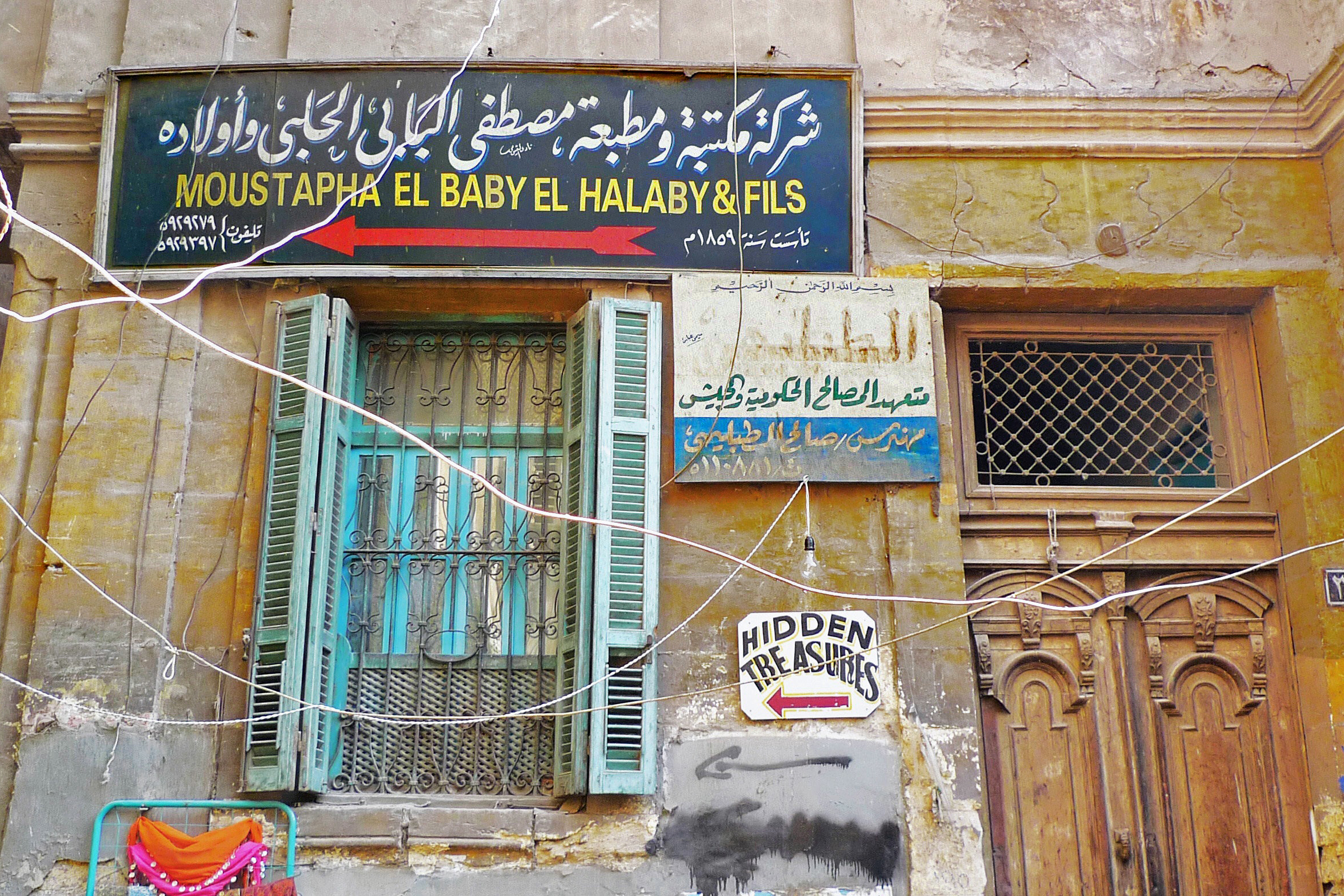
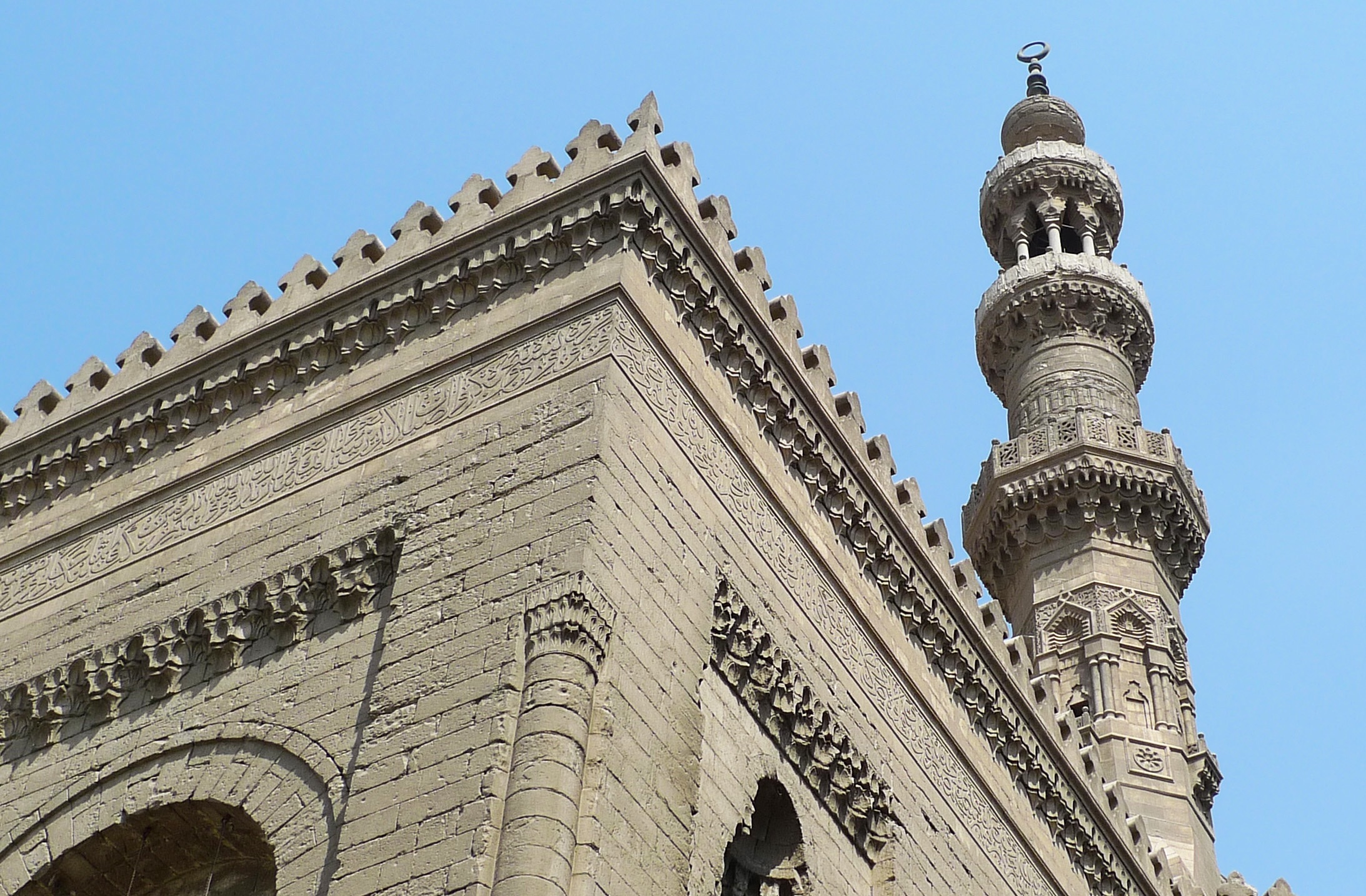
As a rule I’m not much of a cities person — I’ll take the jungles, the mountains, the countryside villages — but this is a special case: Cairo, the de facto capital of the Islamic world, with its countless grand mosques, teeming bazaars and ancient ruins. I have taken more pictures in Cairo than anywhere else; at every turn I was digging out my camera. I’d never call the city “picturesque” — it’s far too hectic and overwhelming for a word like that — but it’s a palette of endless texture and detail, color and commotion. Even without riots and revolution, there is simply so much of everything. The imagery doesn’t stop: the spectacular detailing of a thousand year-old minaret; the ramshackle clutter of the souqs and storefronts; a donkey cart piled with strawberries; women in full cover walking along some back-alley road at sunset.

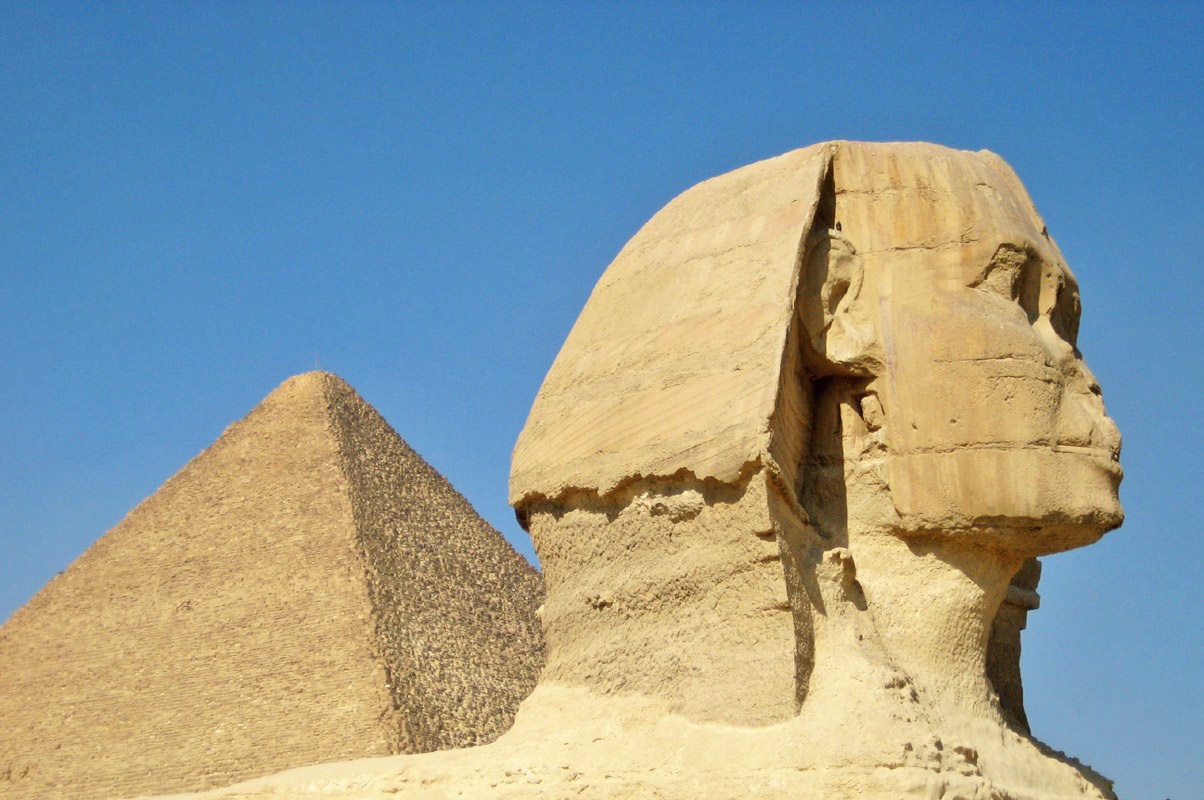
And lest we forget the Giza Plateau. Sure there are tour buses everywhere, and the spectacle of Ukrainian women tottering through the sand in six-inch heels and miniskirts. But it’s the Pyramids! Sure there’s a Pizza Hut only a few hundred yards from the paws of the Sphinx. But it’s the Sphinx!

To be fair, Cairo is also massively overcrowded, filthy, and draped in heavy smog. Traffic is unmanageable beyond words. There’s little sanitation, and the volume of roadside trash can be staggering; I once saw an impromptu traffic island constructed entirely of garbage. Even the Pyramids are strewn with litter. In summer, with temperatures poking into the triple digits, the noise and fumes become unbearable — the air above the city seems to condense into a superheated, tea-colored broth.

There are nearly twenty million people in greater Cairo. That sounds impossible until you find yourself looking out at the city from the walls of the Citadel or from atop the minaret at Ibn Tulun. Suddenly it is very believable. There is Cairo in every direction — a mammoth, horizon-wide sprawl of concrete and dust and humanity. It’s so densely, suffocatingly packed as to seem almost a single continuous structure — hundreds of thousands of buildings scorch-fused together by the sun.

What to do when it’s all too much? Simple, just head for the world’s greatest restaurant, the inimitable Abou Tarek. Everybody in Cairo, if not in all of Egypt, is familiar with Abou Tarek, a four-story building on a grimy street of tire and muffler shops, just off the eastern end of 6 October Bridge, a few blocks in from the Nile. It’s been there since 1950, founded and (still) owned by Youssef Zaki. Zaki is maybe Cairo’s closest thing to a celebrity chef — a sort of Colonel Sanders of Egyptian fast food, whose portrait stares down at you from the walls. On my last visit, Zaki himself was on the premises, shaking hands.

Walk in, take a seat, and within thirty seconds you’re dining on the restaurant’s sole entree, that most delectable of Egyptian treasures: a steaming bowl of koshary. Koshary is a carbohydrate bomb of noodles, lentils, chickpeas and fried onions, topped with a spicy tomato sauce and however much chili sauce you can handle. All for the equivalent of about $1.50.

You have to feel terrible for the many Egyptians who make their livings through tourism. I think of Abdou, for example, an independent driver and tour guide whom I came to rely on for sightseeing. Abdou was friendly, punctual, spoke good English, and he never overcharged — about as ideal a host as you could hope for. I can only wonder how he’s getting by.

ALL PHOTOS BY PATRICK SMITH


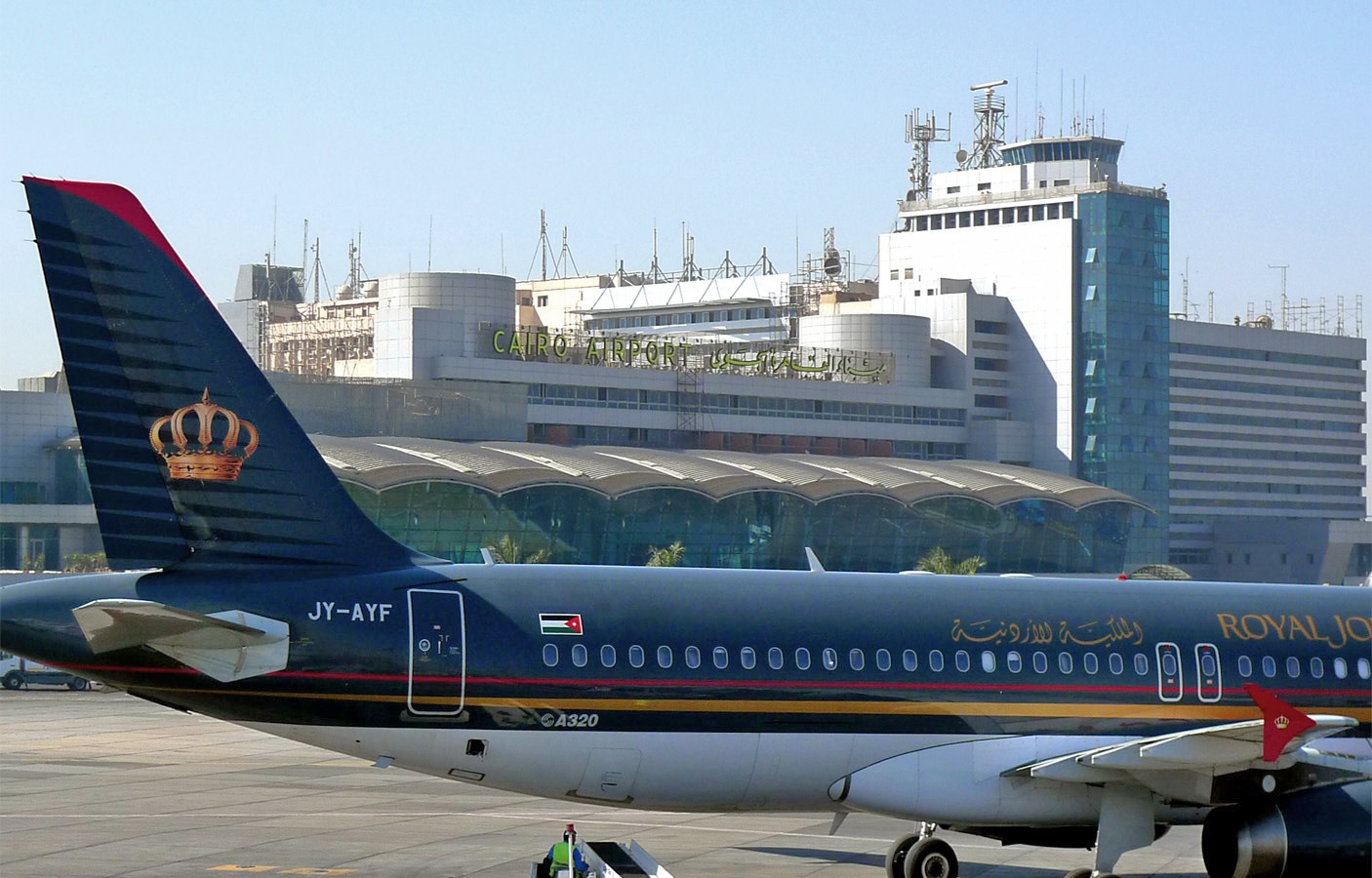
Cairo airport isn’t much to write home about, but I’ve seen worse. Here’s a Royal Jordanian A320 on the CAI tarmac.


What you can’t see in this picture are the hundreds of Ukrainian tourists on all sides of me, including the dozens of women in four-inch heels and miniskirts.


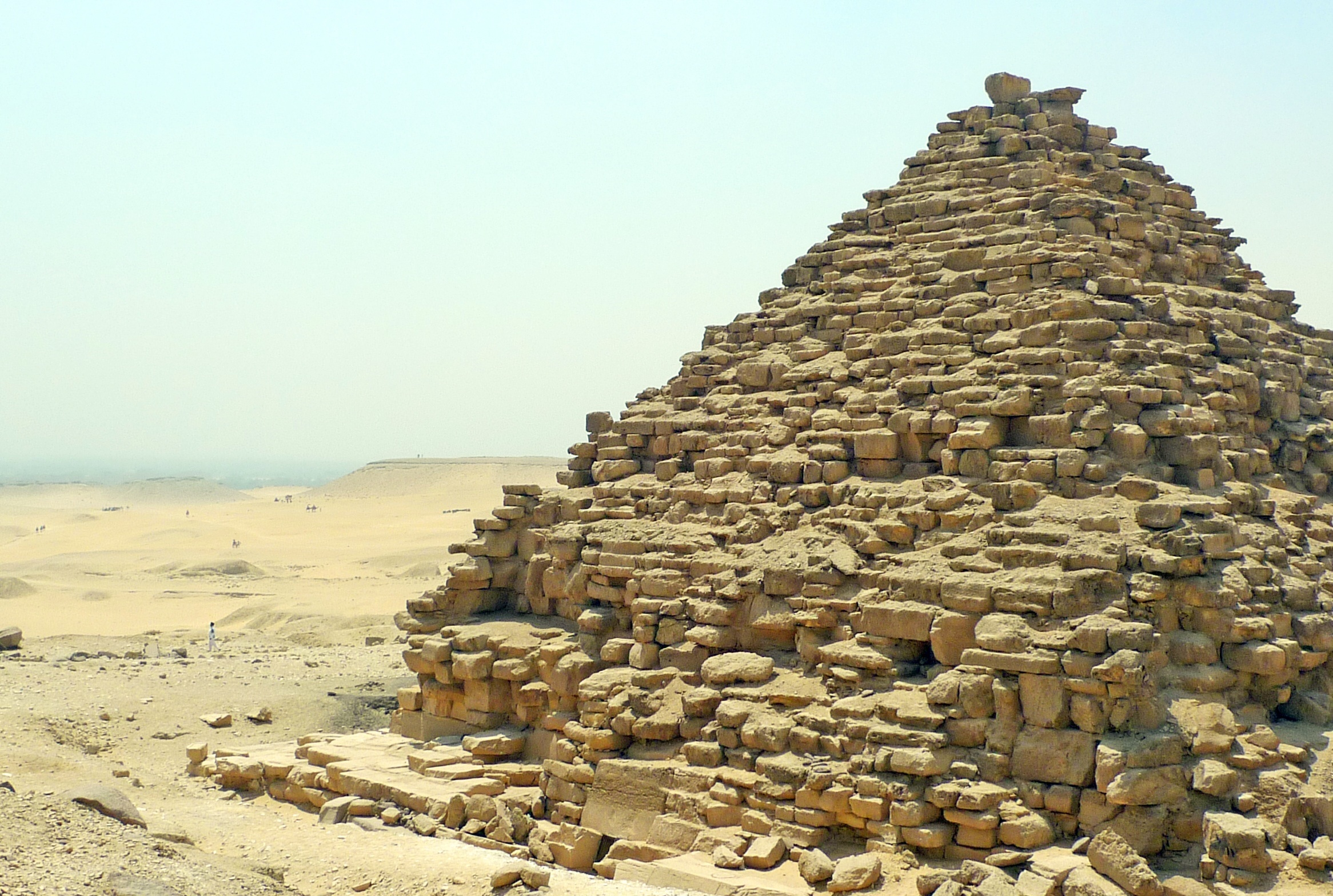
At the back of the main Giza complex, looking toward the desert.


Overview of Giza. If you point your camera in the right direction, Giza looks like it’s the middle of nowhere. But central Cairo is only about 20 minutes away.


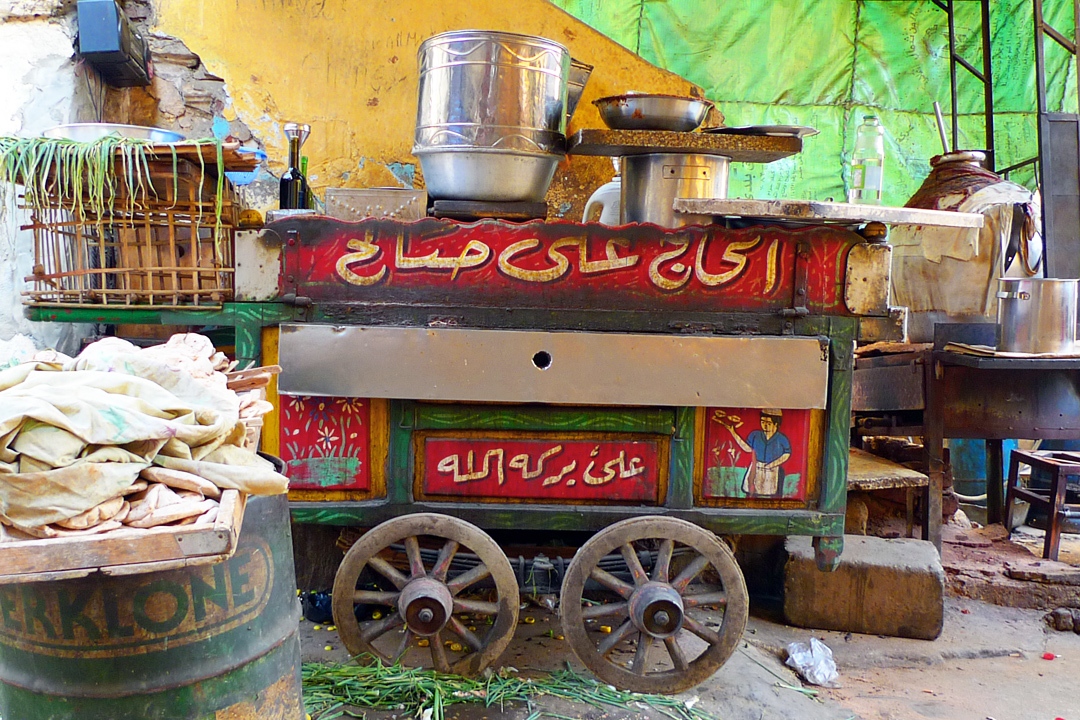
Bean cart.


One of my favorite pictures. Typical Cairo street scenery.


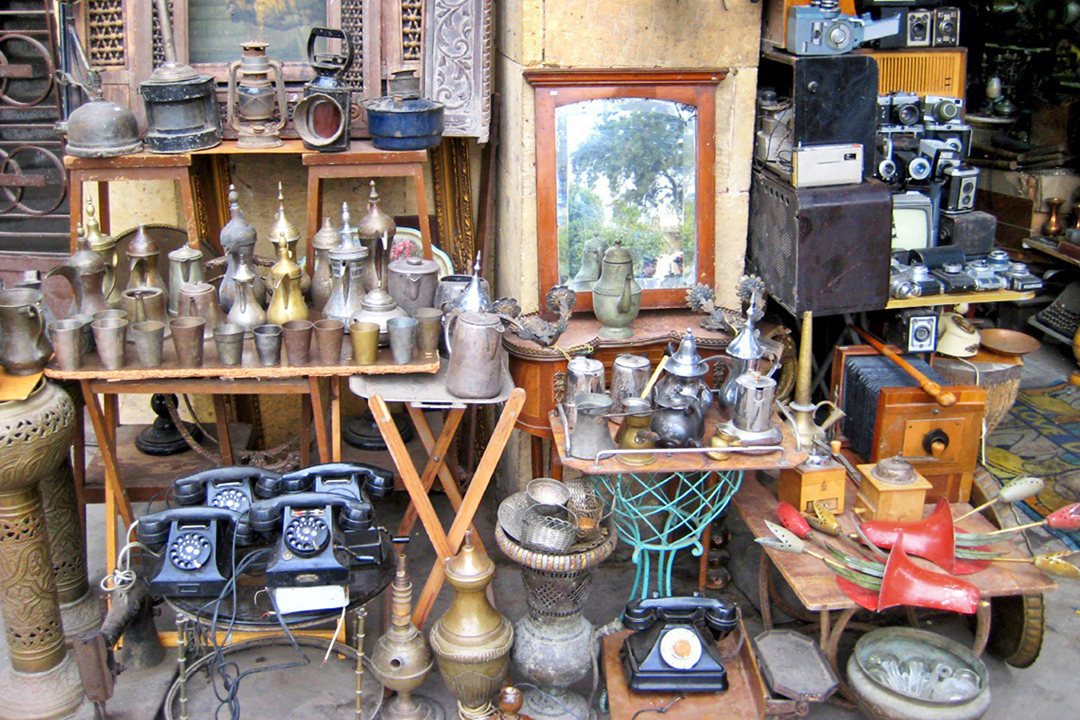
Antique souvenirs in a shop in Cairo’s Coptic section.


I can’t remember where exactly this was taken. In the Coptic area somewhere.


Sultan Hassan Mosque, downtown Cairo. The last Shah of Iran is entombed in this building.


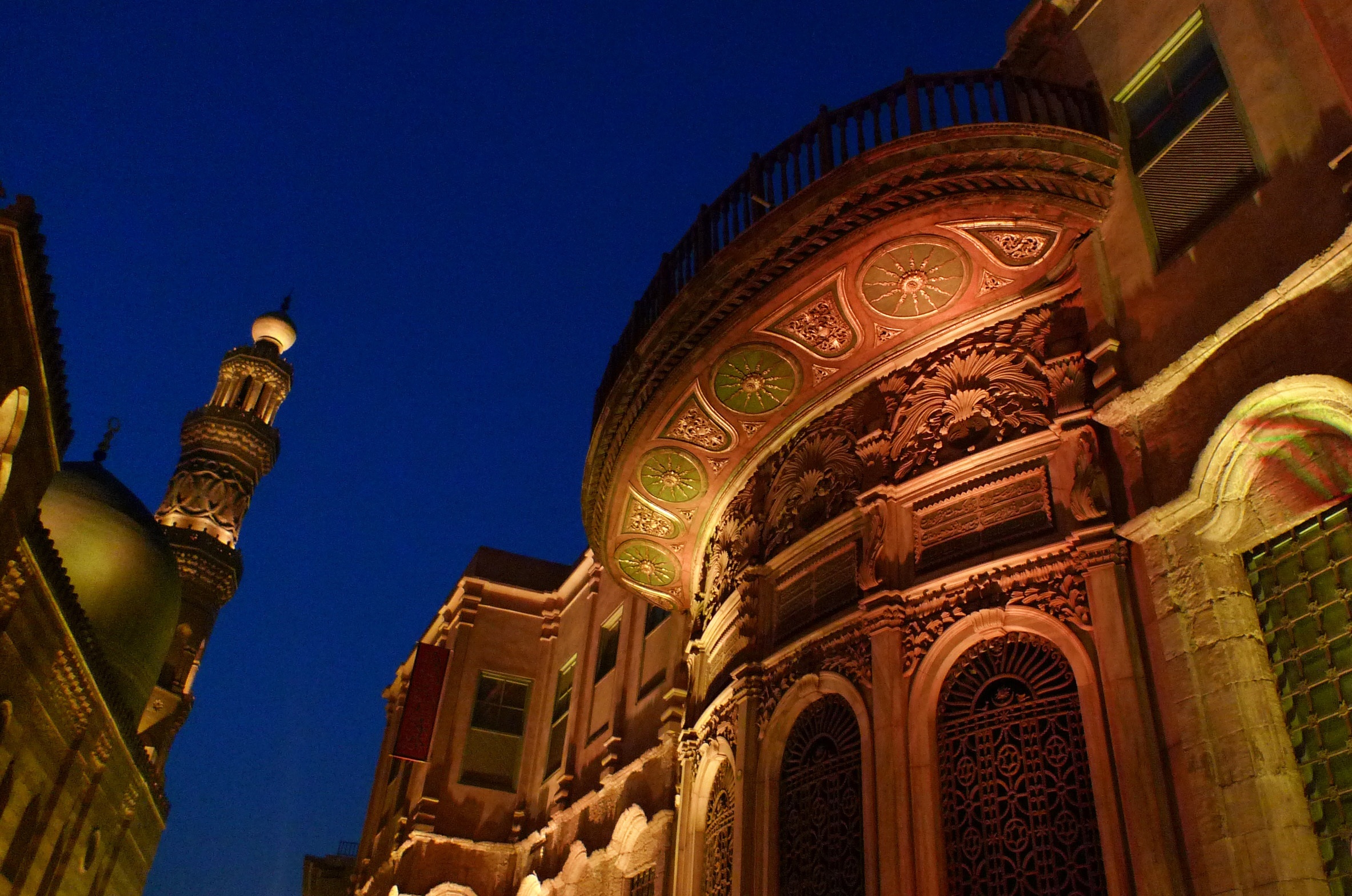
Nighttime in the famous Khan el-Khalili


One of my favorite travel photos, this is an overview of the Ibn Tulun mosque. I got this shot after climbing one of the mosque’s minarets (after paying an “entrance fee” to one of the guards).


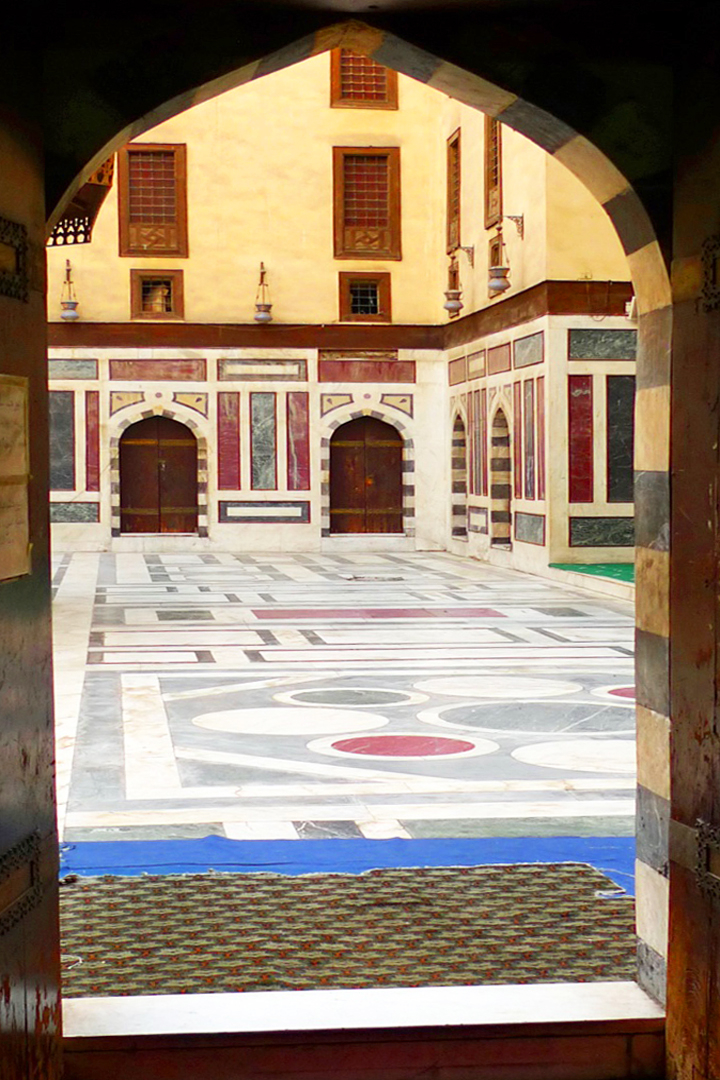
Rooftop of the same Ibn Tulun.


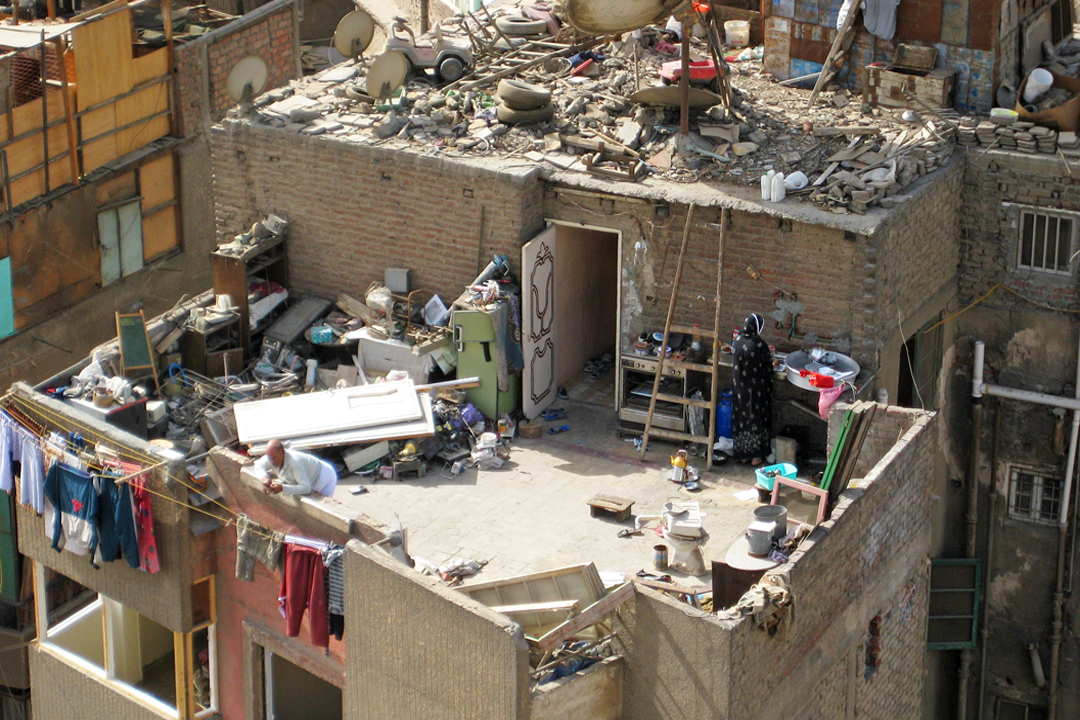
Rooftop life, central Cairo.


I can’t recall which mosque this is. Does anybody recognize it?


Strawberry cart in the Khan el-Khalili


Dumpster denizen.


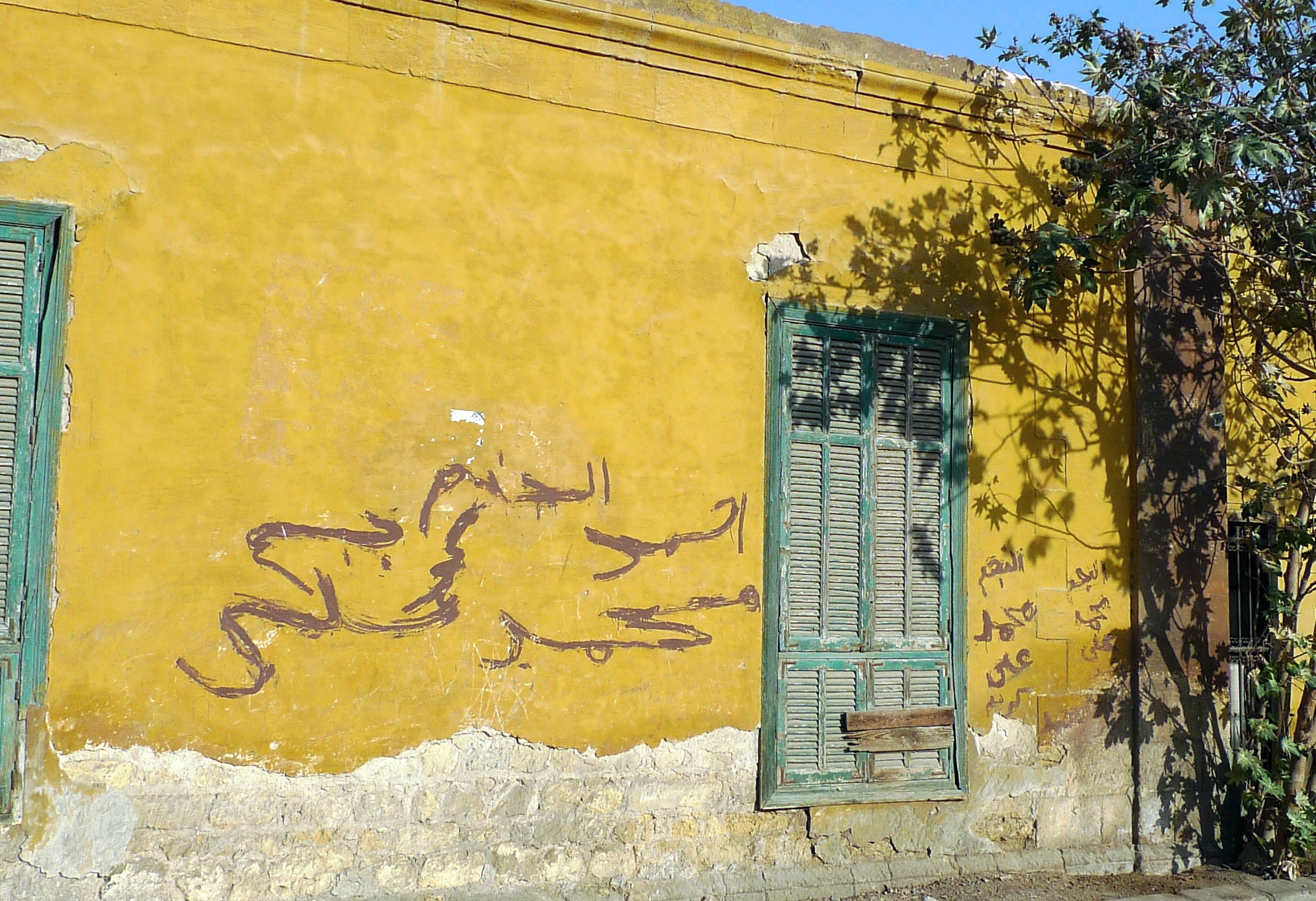
Wall and shutters in Cairo’s City of the Dead.


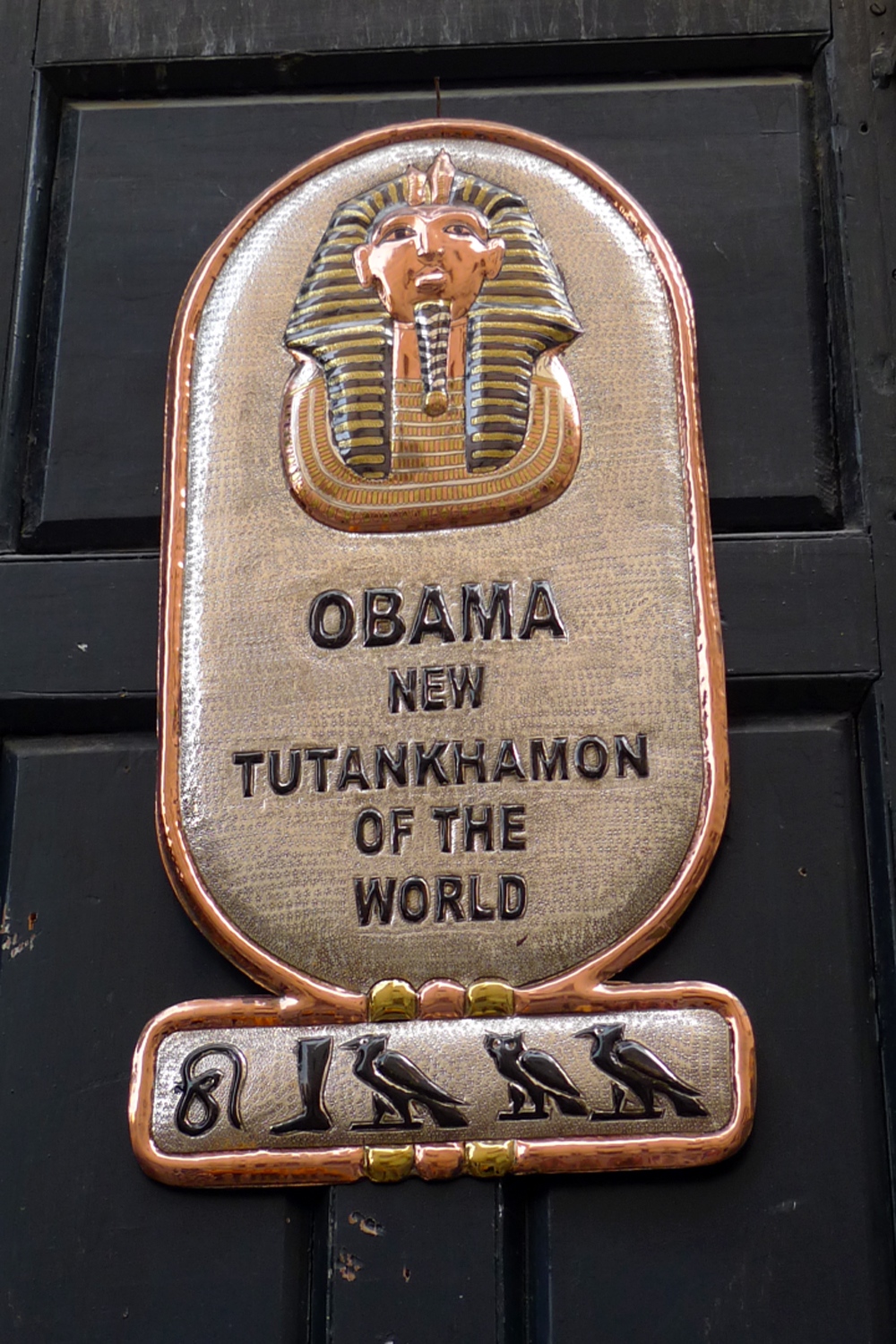
This one more or less speaks for itself.


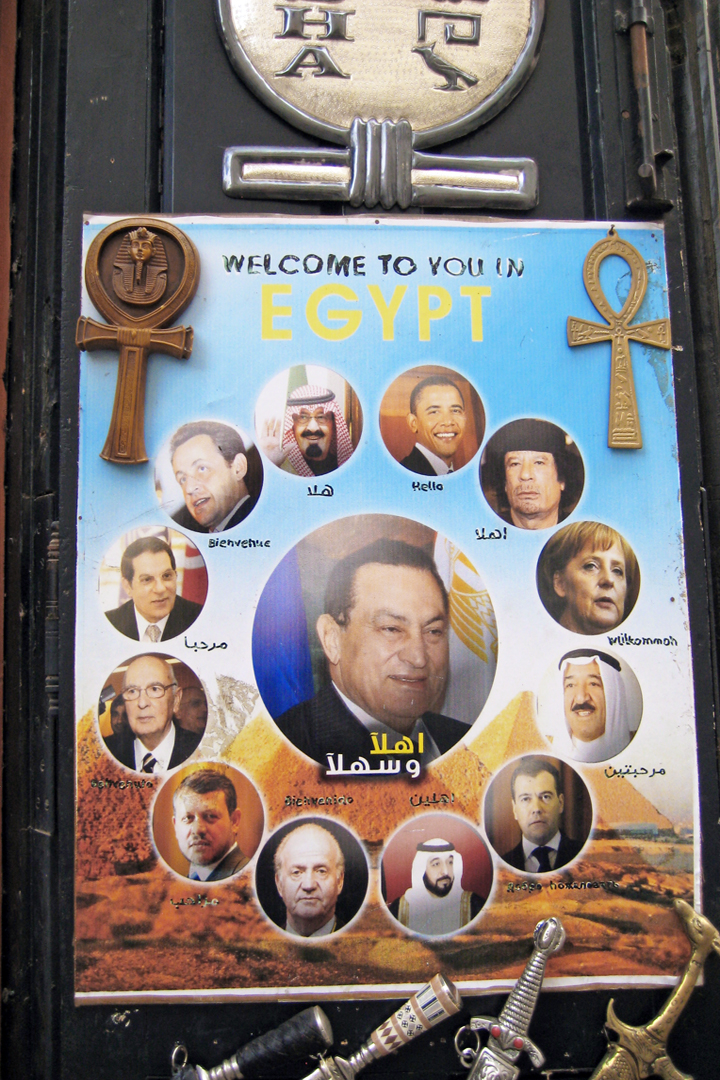
Then and now. Was it by accident, do you think, that Obama and Khadafy were placed right next to each other. And at the center, of course, the now deposed Hosni Mubarak.


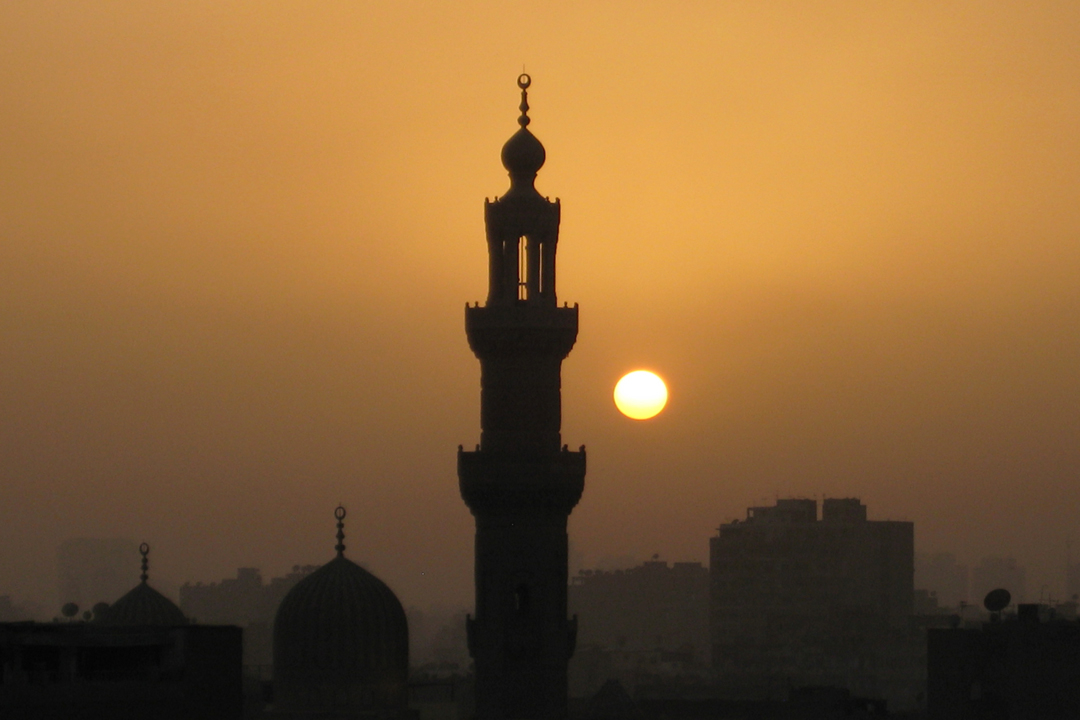
Sunset from Al-Azhar Park


Lastly, the greatest restaurant in the entire world. The inimitable Abou Tarek!

When you’re done looking at the pictures, I hope you’ll click over to YouTube and have a look at my “Twenty-Four Hours in Cairo” video. It’s a mish-mash montage from one of those layovers a few years ago. The best part is right at the beginning, the opening twenty seconds or so where I’ve got the camera out the window of Abdou’s taxi. The sound is what I’m talking about. Blaring above the traffic noise is a sunset call to prayer, which concludes with an amazing echo effect. Then, just as the echo peters out comes this booming, apocalyptic groaning noise. It’ll make your hair stand up. Is it a truck horn? A bus? Whatever it is, it gives me the chills. The whole sequence was recorded more or less by accident, but it’s very dramatic. Play it loud!

I have no idea if Abdou is still doing the tour guide thing, but if you’re headed to Egypt and need somebody to show you around, here is a scan of his business card. I can’t recommend him more highly…

Abdou's Business Card


Portions of this post originally ran on the website Salon.
Salon.com logo


Comments (9)

Pilot Report: Long Live Air Malta!

April 30, 2015

Here’s a new feature, the “Pilot Report,” in which I review and grade flights aboard different airlines. Welcome to the first installment: a trip with Air Malta.

Flight KM397, Amsterdam to Malta
Business Class, Airbus A319
Duration: 2.5 hours

Let’s start with a disclaimer: we hereby acknowledge that experiences aboard a given carrier can vary flight to flight, depending on the class of service, the temperament of the crew, and so on.

I wasn’t sure what to expect from Air Malta, particularly after lackluster flights on SAS and Air Portugal recently, but I came away impressed.

The online booking process was quick and hassle-free. I set out to book in economy, but decided to splurge when I was offered an upgrade to business class for only a couple of hundred dollars extra, round-trip. The carrier’s website is user-friendly and allows for advance seat selection even with last-minute reservations like mine.

The check-in staff at Amsterdam were contract employees, but friendly and helpful nonetheless. We departed right on time.

Air Malta Fold-Down

The Airbus A319 was packed almost full in economy, but was mostly empty up front. Air Malta doesn’t have a formal business class, per se. Instead, in the forward rows, the center seat of each three-seat block folds down, forming a table between the remaining two seats. It’s a kind of on-the-fly business class that allows them to adjust the number of rows based on demand. Other European carriers do the same thing.

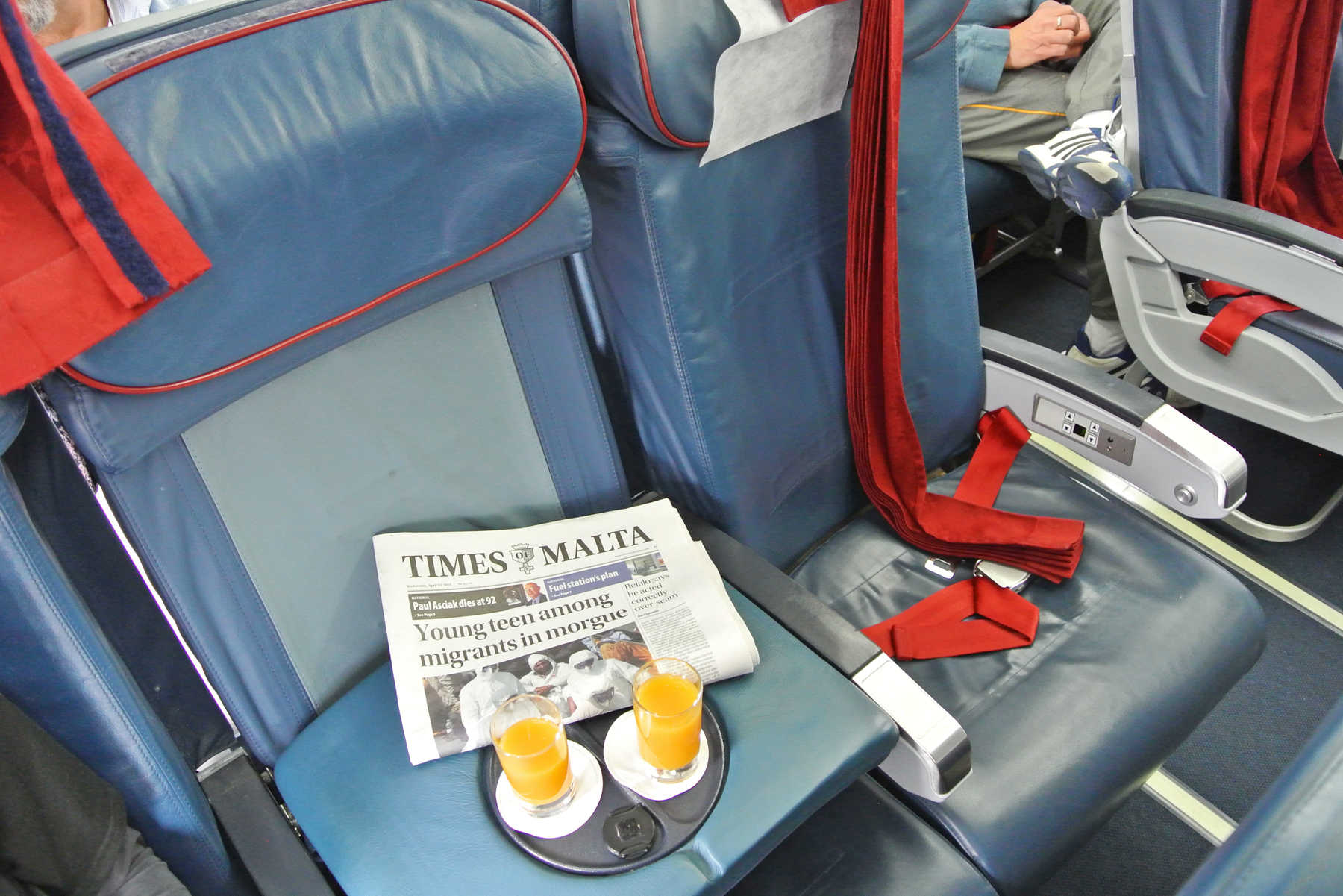
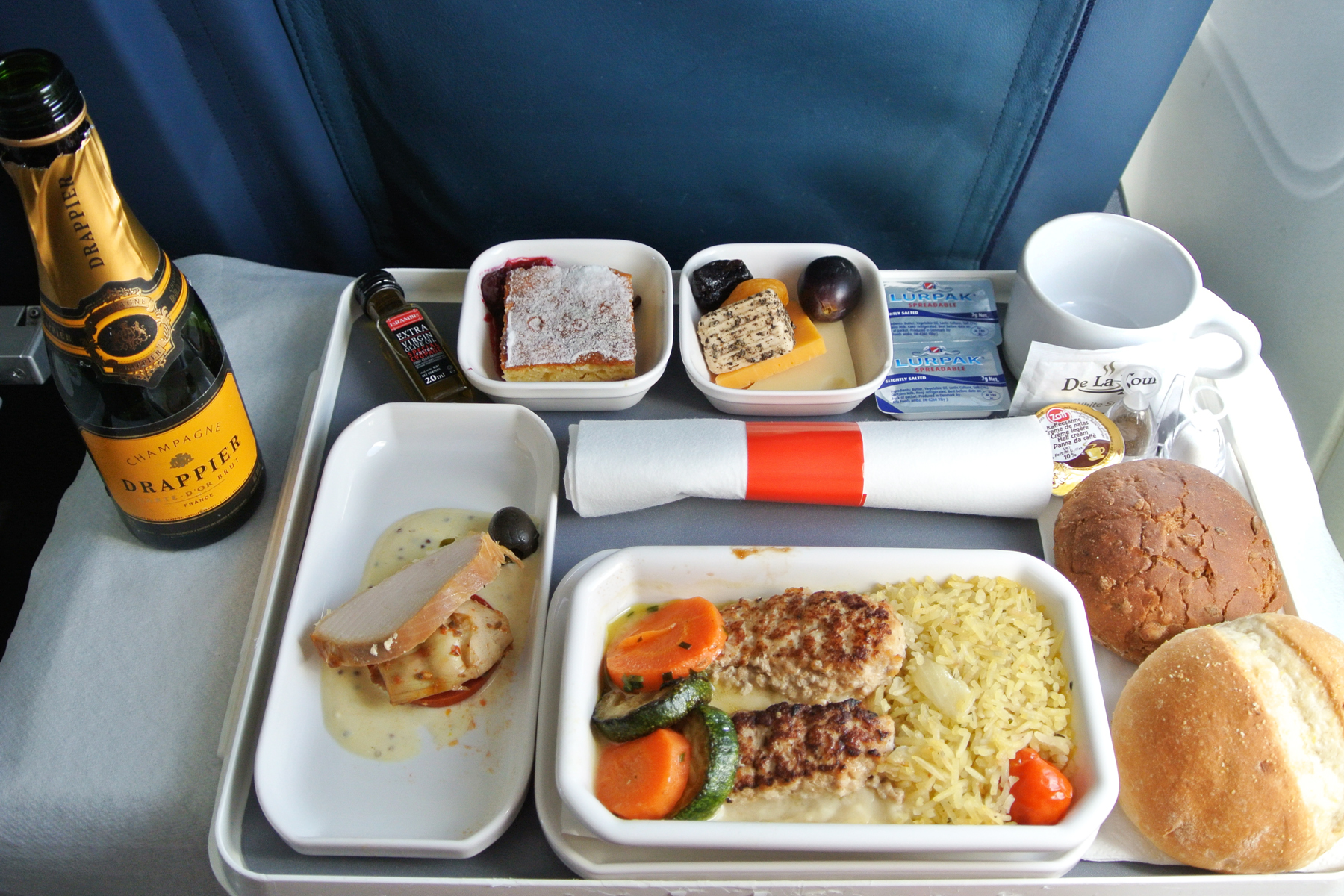
Juice or champagne were offered prior to push-back, along with a selection of newspapers. There was a hot towel service shortly after takeoff, followed by a hot lunch. The meal was served economy class style, with everything together on a single tray rather than separate courses.

Neither the presentation nor the food itself was anything fancy, but it was perfectly satisfactory for a short-haul airline whose network doesn’t expand beyond Europe, with flight times seldom exceeding three hours.

Air Malta Lunch

The personal-sized champagne bottles were a nice touch. Cabin attendants were gracious and attentive.

After landing, I was walking through the arrivals hall when I realized that I’d left my passport in the seat pocket. Air Malta’s airport staff were patient and helpful, and I had the passport back within fifteen minutes.

Air Malta’s uniforms are stylish and professional, both for ground and inflight employees. In fact the carrier’s whole identity — its uniforms, its Maltese cross logo and its livery — is handsome and distinctive.

There was just a good feeling to the whole experience, start to finish. To satisfy fussy fliers, both the creature comforts and the human touch have to be done right, and Air Malta seems to understand this.

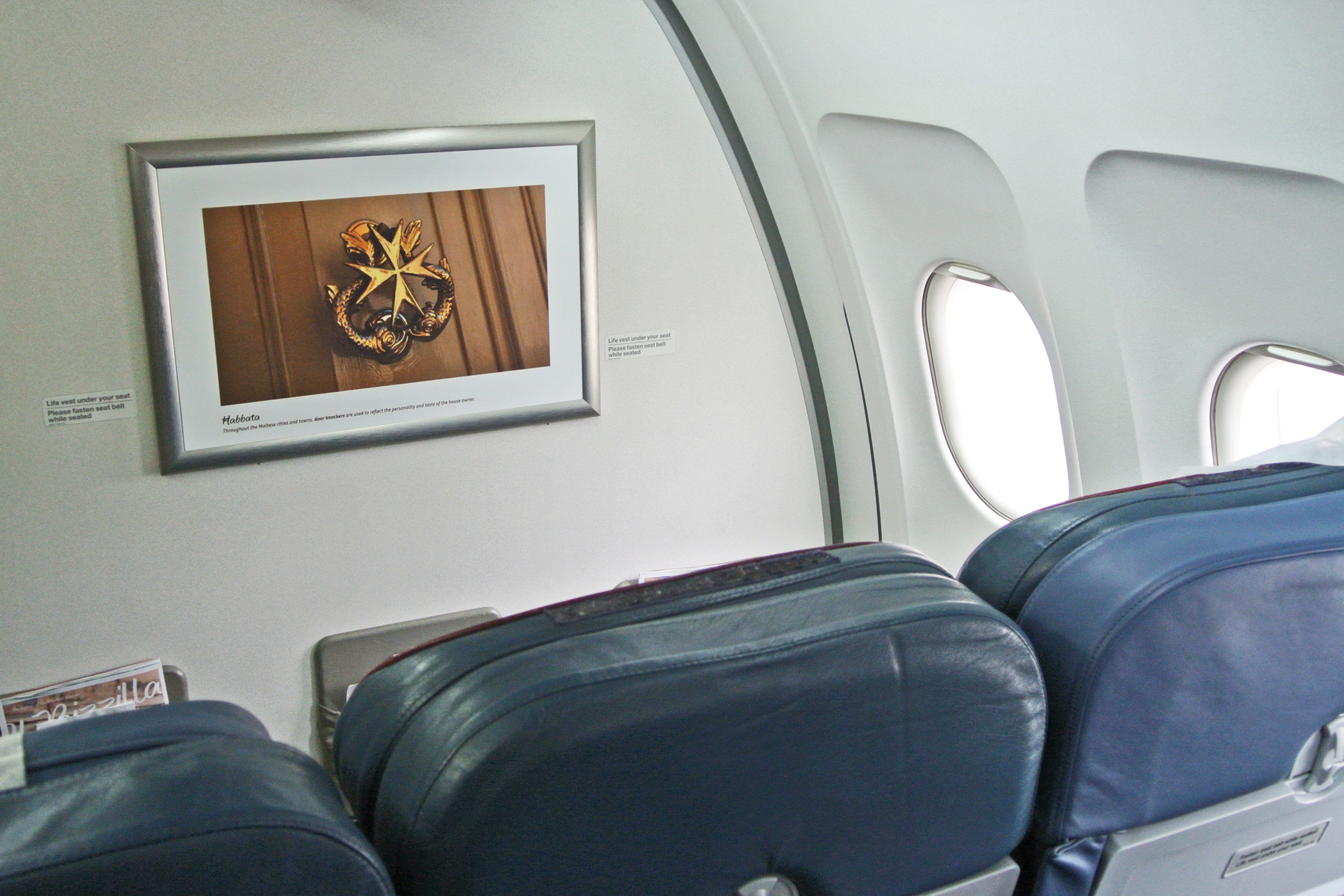
Air Malta Bulkhead

Here’s hoping they survive.

Malta is primarily a leisure destination, with a busy summer season and a much quieter winter. This is a tough environment for any airlines to operate in, with very thin margins on fares.

And the discount carriers are making things tough. On the return flight to Amsterdam, the Air Malta check-in line was mostly empty. Just across the lobby, the lines for Ryanair and EasyJet were teeming. For those headed further afield, Emirates now flies to Malta via Cyprus.

Air Malta was founded in 1974. In the old days its mainstay fleet was the Boeing 737 and 720. Today it operates only ten aircraft, all of them narrow-body Airbuses, serving about 35 destinations throughout Europe and the Mediterranean, some of them seasonally.

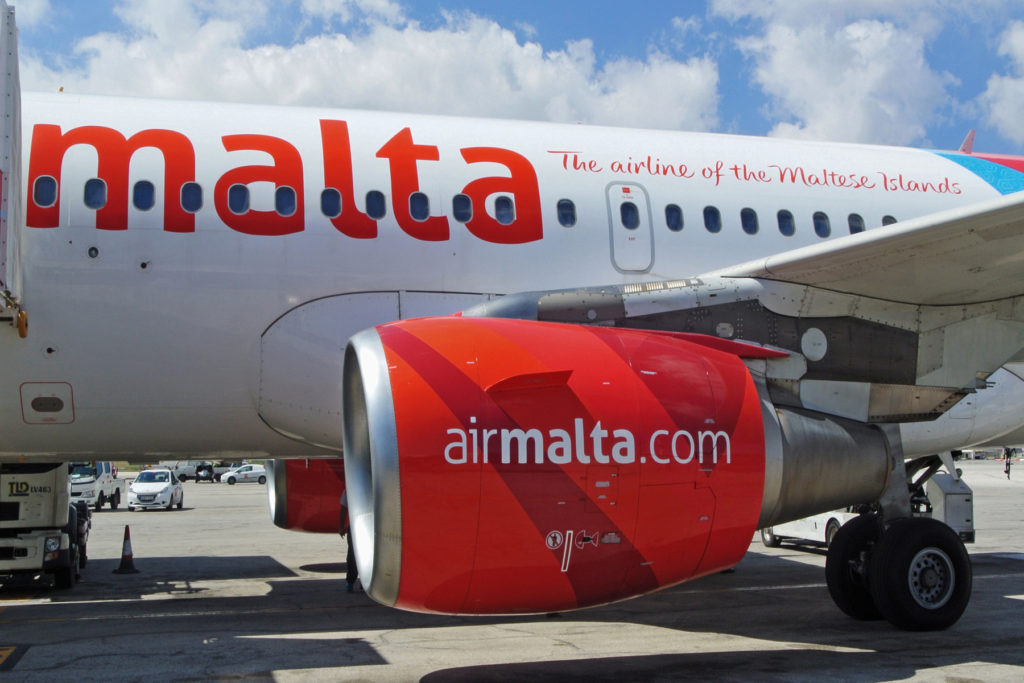
Air Malta Engine

It’s maybe unfair to mention this, but Air Malta also played a role, albeit unwittingly, in one of the worst terrorist attacks in aviation history.

It was an Air Malta 737 onto which Libyan operatives smuggled the bomb destined to blow up Pan Am flight 103 over Lockerbie, Scotland, in 1988. The explosive device, hidden inside a radio and packed into a suitcase, traveled from Malta to Frankfurt, where it was transferred to flight 103, bound for London and onward to New York.

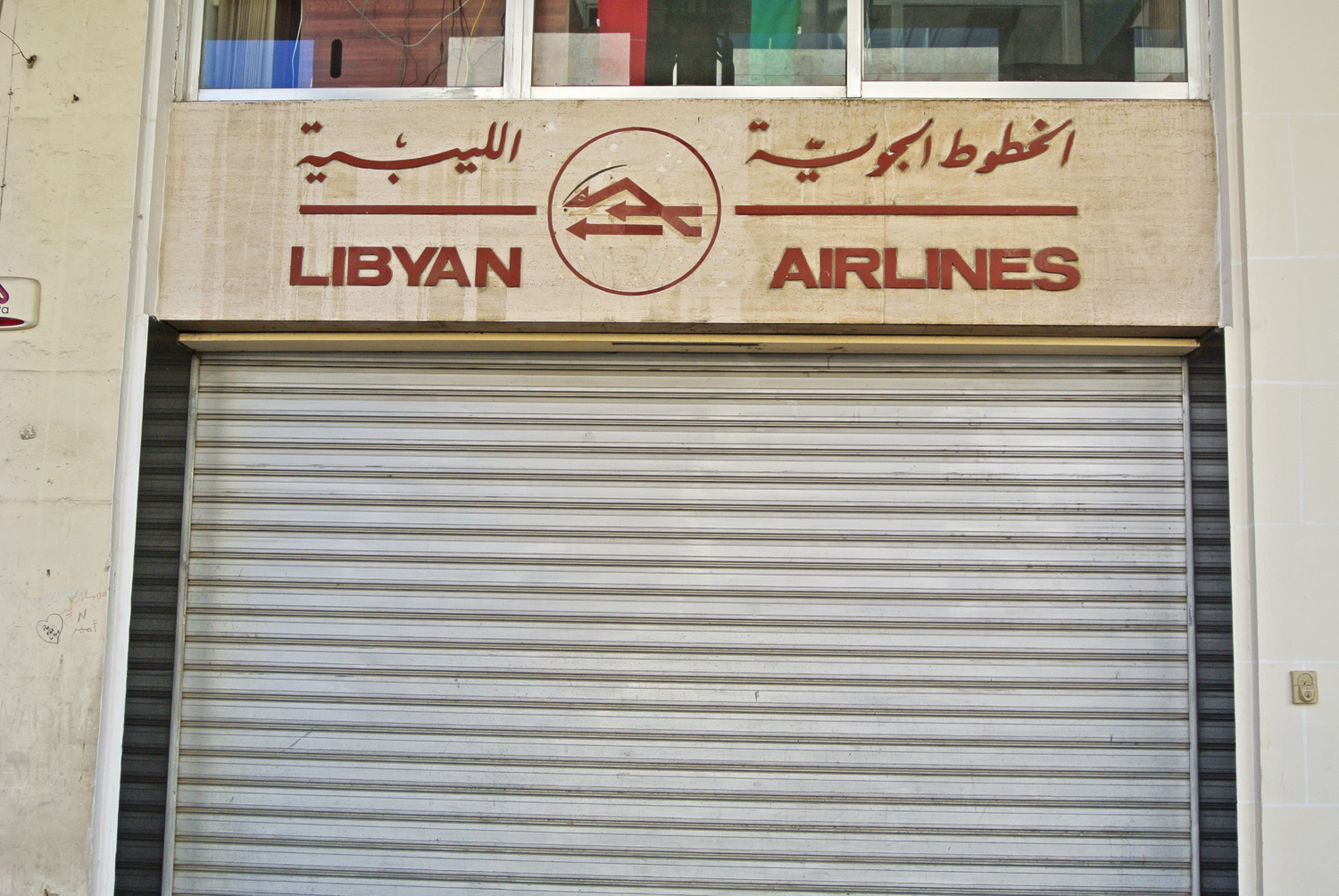
The two men who stood trial for the Lockerbie bombing, Abdelbaset al-Megrahi and Lamin Khalifah Fhimah, had been employees of Libyan Arab Airlines. Fhimah was the station manager in Malta. Much of the investigation into the bombing took place on the island. During my vacation there, it was a little eerie walking past the Libyan Airlines ticket office, just inside the gate to the old city of Valletta.

Libyan Airlines Office

By the way, the term “pilot report,” which I’m adapting into a gimmick for my blog, is in fact a technical term quite familiar to aircrews. PIREPs, as they’re known in shorthand, are reports of meteorological phenomena encountered in flight. Conditions are passed along to company dispatchers or air traffic control, and made available to other aircraft. If a captain comes over the public address system to warn of impending rough air, often he’s acting on the advice of a fresh PIREP.

PIREPs make their way into the pre-departure paperwork as well, topping off a hefty and at times indecipherable sheaf of charts, bulletins and forecasts. Approximately three-quarters of a pilot’s training is devoted to unraveling the secrets of weather coding, which come in the form of byzantine transcriptions like this one:

KCMH UA / OV APE 230010/10TM 1516/FL085/TP
BE20/SK BKN065/WX FV0 SM HZ FU/TA 20/TB LGT

That’s a single, simple PIREP (something about smoke or haze near Columbus, Ohio). The archaeologists who figured out the Rosetta Stone practiced for years on aviation weather packets. Unless you’re a professional cryptographer, you’ll have to agree my own PIREPs are more enjoyable.


ALL PHOTOS BY THE AUTHOR

Comments (41)

Pilotless Planes? Not So Fast.

NY Times Hat

UPDATE: April 21, 2015

ON APRIL 10th, The New York Times published an op-ed of mine about cockpit automation and the future role of the airline pilot. This was my sixth op-ed to run in the Times, but easily my favorite, given my long-simmering frustration over the topic in question.

As my regular readers are aware, one of my biggest pet peeves is the public’s widely held belief that jetliners essentially “fly themselves” — the result of a too-gullible media that takes at face value the claims of researchers, professors and tech writers who, valuable as their work may be, often have little sense of the operational realities of commercial flying. Consequently, travelers have come to have a vastly exaggerated sense of the capabilities of present-day cockpit technology, and they greatly misunderstand how pilots interface with that technology.

YOU CAN READ THE STORY HERE.

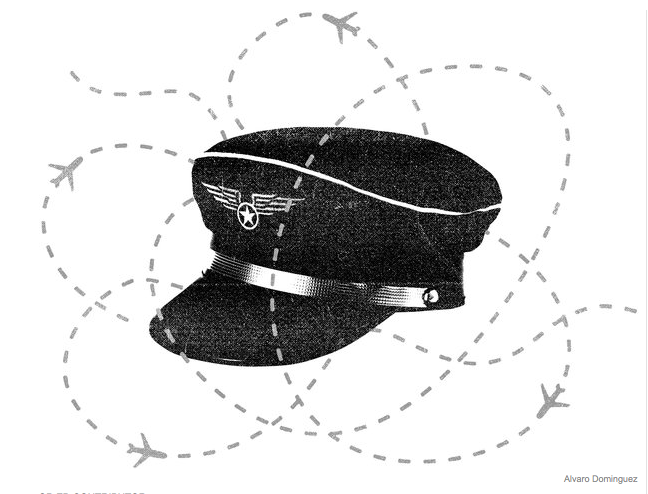
In the actual newspaper they gave it excellent placement, center of the page, with a graphic showing a Chinese military hat being buzzed by mosquitoes. I’m right between David Brooks and Paul Krugman. Brooks is pretty well-known. Krugman won a Nobel Prize. Not sure what my big claim to fame is. I hope you’ll share the link with friends, and feel free to jump in and leave your thoughts in the Times‘ comments section.

Really the piece is less about the future role of pilots than it is about our current role. My main point being is that it’s pilots, not some computer, that is flying your plane. I only wish they’d give me more space. There’s plenty more to say on the subject. Since the Germanwings disaster, the cable channels, op-ed pages and blog sites have been chattering away about the supposedly diminishing role of human beings in the cockpit.

For instance there was Flying magazine’s Peter Garrison writing in the Los Angeles Times. “From shortly after takeoff to shortly before touchdown,” explains Garrison, “airplanes fly themselves while pilots talk with controllers and one another and punch data into flight management systems.”

That’s up there among the most insulting and misleading characterization of how commercial airplanes are flown ever to appear in print. Garrison is an experienced pilot and should know better than to reinforce this pervasive mythology through such flip and deceptive descriptions. Pilots become their own worst enemies sometimes, not realizing how statements like this are interpreted by the public.

Not to be outdone was John Cassidy on the New Yorker website. “In some ways, human pilots have become systems managers,” Cassidy says. “They prepare the aircraft to depart, execute the takeoff and landing, and take the controls in an emergency. But for much of the time that a routine flight is in the air, a computer flies the plane.” That was good of him to remind us that pilots indeed “execute the takeoff and landing,” which is to say they perform them by hand, but the rest of it is more of the usual nonsense.

The photo accompanying Cassidy’s story shows a simple button marked “autopilot.” I’m not sure what that blue button is for, or what aircraft the picture is from, but the actual autoflight control panel on any jetliner is, suffice it to say, a lot more complex.

There’s more: In the Toronto Globe and Mail, reporter Paul Koring wrote an article called, “Aviation is Fast Approaching the Post-Pilot Era.” He quotes David Learmount, a “veteran aviation expert,” who predicts that “pilots won’t be in cockpits in 15 years but in an airline’s operations room, rather like the U.S. Air Force pilots flying Global Hawks [military drones].” What utter and shameless rubbish.

And my old friend Missy Cummings was at it again, this time fooling a reporter at CNN.com. “Pilots only spend three minutes per flight flying a plane anyway,” she spouts. That’s a disgusting and deceptive thing to say. What she might mean is that pilots spend a relatively little amount of time (though it’s more than three minutes) steering the plane by hand. But they very much are flying it for the entirety.

Occasionally, well-intentioned people will bring up U.S. Airways hero pilot Chesley Sullenberger as a good example of why pilots are still necessary. Point accepted, but still I don’t like this, because it implies that pilots are only valuable in the event of an emergency or some unusual circumstance. On the contrary, even the most routine flight remains a very organic, hands-on operation subject to almost limitless contingencies that require human input. Cockpit automation is merely a tool, and it needs to be told what to do, how to do it, when to do it and where. And though a pilot’s hands aren’t gripping the steering column for hours at a time, as it might have in the 1930s, they are manipulating, operating, and commanding the various systems and subsystems that carry you to your destination.

Here, let me give you a quick demonstration:

I was asked by somebody to talk them through a typical maneuver. A descent, for example. How would I descend my 767 from, say, 25,000 feet to seven thousand feet, with the autopilot on? Well, it’d happen as follows. This is going to be incomprehensible to most of you, but that’s part of the point:

After being cleared to the new altitude, in this case 7000 feet, I’ll first reach up and dial “7000” in the altitude window on the mode control panel. The other pilot will verify this. The next series of steps depends where exactly on the arrival profile we are, but it’s common to activate a VNAV descent using the DESCEND NOW prompt from the descent page of the FMS. Typically I’ll already have the page set up for maybe Mach .79 and maybe 315 knots. This will give you a pretty good rate of descent.

At around 11,000 feet or so, we need to slow down in order to hit the 250 knot restriction below ten thousand feet. You can let the plane do this on its own, in VNAV, but sometimes that carries you off the profile and creates more work, so I come out of VNAV by hitting the VERTICAL SPEED switch. The VS window opens and I dial it back to 1,000 feet-per-minute, or maybe less. The plane’s rate of descent immediately begins to slow. And the instant I hit the VERTICAL SPEED switch, the IAS window also opened, allowing me to set in 250 knots. The thrust levers come back and the plane decelerates.

Now, all I have to do is tweak the rate of descent until I safely hit 250 at or near the 10,000 foot target. I might use 1000 feet-per-minute initially, then reduce it to 500. Whatever it takes. Using the spoilers can be helpful here too (the rectangular panels that rise from the top of the wings). I may already have been using them earlier in the descent if VNAV wasn’t quite holding the profile, or if ATC seemed antsy, etc.

Then, at 10,000 feet and 250 knots, I select FLCH. The 250 knots is now locked in the window and the plane will now hold that speed. I can descend at idle, or use thrust to play with the vertical speed rate, speed-on-pitch style, depending. We’ll be issued several more altitude changes, and I’ll stay with FLCH the rest of the way down, at least until joining up with whatever instrument approach is being used. Some instrument approaches, though, are flown in VNAV, which I’ll reengage later, when it’s needed, and use the speed intervene function of the IAS control to maintain the approach and landing speeds.

And that’s just the altitude control. We’ll have a number of course changes as well, to be dialed in and flown using whatever methods are appropriate (LNAV, heading select, LOC or APP mode…)

And so on. So, why not have the autopilot do this? It is doing it. The autopilot has been on throughout this scenario. This is the automation at work. Point being: it’s the pilots, not a computer, that is controlling the operation. And this is why it is so infuriating when Missy Cummings says pilots are only flying the plane for three minutes.

Granted the 767 is an older plane. It was designed in the late 1970s. There have been a few minor upgrades to the plane’s avionics since then, but nothing major. The plane is still operated exactly as it was when the first 767s were delivered. Frankly, though, even on the newest models, the basics of cockpit automation haven’t changed that much in thirty or more years. The interface between pilot and technology on a 787 or an A350 isn’t drastically different from how it was on a DC-10 or an old 747-200 in 1972. And the Airbus A320, like the one in the Germanwings crash? Its platform technology was developed in the 80s.

People will speak of planes being “highly computerized.” In some respects that true, but not in the sense that people think, and in fact it’s pretty rare for a pilot to refer to any piece of cockpit equipment as a “computer.” That’s just not a word that we use. Obviously certain components are computerized, but look around the typical cockpit and what you’ll see are lots of levers, knobs and switches. Hands-on stuff. Even the most advanced flight deck is yet to have a QWERTY keyboard anywhere on board. Pilots still use an old, ABCD EFGH style keypad to enter data into the FMS or ACARS. Much of our allegedly high-tech equipment is clunky, old-fashioned and user-unfriendly.

To be clear, I’m not arguing the technological impossibility of a pilotless plane. Certainly we have the capability. Just as we have the capability to be living in domed cities on Mars. But because it’s possible doesn’t mean that it’s affordable, practical, safe, or even desirable. And the technological and logistical challenges are daunting to say the least.

To start with, it takes the better part of a decade to design, build, and test-fly a conventional commercial plane. Neither Boeing nor Airbus has a new aircraft platform currently under development, let alone one flyable by remote control.

Not only that, but pilotless planes would require a gigantic — and gigantically expensive — rebuilding of pretty much the entire civil aviation infrastructure, from a totally new air traffic control concept to the redesign of airports. How many hundreds of billions would that cost, globally? And that’s after developing a fleet of tens of thousands of aircraft that are safe and reliable enough for automomous operations. And you’d still need pilots to operate these aircraft from afar!

It’s not impossible, but it would be a hugely more formidable task than people are led to think.

As I write in the Times, though, it’s not the future that concerns me so much as the present. I’ll be long retired and probably long dead before anybody is zipping around on pilotless planes. What riles me up is the simple wrong-ness of so much of what people think they know about a profession that in fact they know very little about, how simple they think this concept would be to develop, and the smugness with which they pronounce pilots as all but obsolete. It really insults me. And the public, for its part, deserves an accurate understanding of how planes fly, and of what pilots actually do for a living.

SEE THE NEW YORK TIMES STORY HERE.

New York Times illustration by Alvaro Dominguez.


Patrick Smith is the author of COCKPIT CONFIDENTIAL.


Comments (115)

Q&A With the Pilot, Volume 1

AN OLD-TIMEY QUESTIONS AND ANSWERS SESSION.

Eons ago, in 2002, a column called Ask the Pilot, hosted by yours truly, started running in the online magazine Salon, in which I fielded reader-submitted questions about air travel. It’s a good idea, I think, to touch back now and then on the format that got this venerable enterprise started. It’s Ask the Pilot classic, if you will.

Q: I was on a flight and the emergency hatch next to us made the most awful squealing noise during takeoff and landing. We were told it was nothing to worry about, but needless to say I spent the whole flight a nervous wreck.

What you describe isn’t terribly uncommon. Such sounds are caused by small leaks around the door seal as the plane’s pressurization levels fluctuate (sort of like those that result when you stretch the neck of a balloon as it deflates). It’s noisy but it couldn’t be less dangerous. Tiny air leaks pose no hazard. There’s always a little bit of flexibility built into certain airframe components — there has to be — and this is one result.  Usually, after a while, the door will settle into a sweet spot and the sound will stop. A similar thing happens in the cockpit sometimes around the seals of the sliding side windows.

On some aircraft — usually smaller ones — the door seal consists of an inflatable gasket. Occasionally this gasket will burst or deflate, causing a gradual depressurization, which is a big hassle that could result in a diversion (having to fly at a lower altitude means having to burn more fuel). The 19-seaters I used to fly had an inflatable seal around the main boarding door. When it failed, as it did once in a while, it made a hideous noise — a sort of hypersonic flatulence, like a motorcycle roaring through the cabin. It scared the hell out of the people closest to the door, but all in all it was harmless.

Q: We flew from Miami to JFK on an MD-80. The jet is laid out with two seats on one side of the aisle and three on the other. The question came up: does the asymmetric 3/2 configuration cause any kind of imbalance?  

No. Even on a smallish plane like the MD-80 series (a derivative of the even older DC-9), the imbalance is less than negligible. In the cabin, longitudinal balance is a lot more important that lateral balance.  But even there it tends to be a minor factor — at least on bigger planes, where the weight of passengers makes up a surprisingly small percentage of a plane’s overall weight.  As covered in the first chapter of my book, in the case of a fully loaded 747, the weight of 400 passengers plus their luggage accounts for less than 10 percent of the plane’s total weight.

Q: What are the normal climb rate and decent rates for jetliners? I know it probably varies, but as a student pilot I was wondering how steep the average rates are.

Indeed it varies. It varies so much that I’m not sure what answer to give you. Really there’s no such thing as a “normal” climb or descent rate. It depends on the weight of the plane, your altitude, the temperature, how many feet you’re trying to lose or gain, ATC constraints, etc. During cruise, if we have to climb or descend only slightly — say 1,000 or 2,000 feet — I’ll usually set up the autopilot for a mild, 500 foot-per-minute rate.  On the other hand, I’ve seen rates as high as 5,000-6,000 feet-per-minute both climbing and descending. In the 757s and 767s that I fly, planes I fly, takeoff and initial climb can be anywhere from 2,000 to 5,000 feet-per-minute, depending on the aircraft weight and what segment of the departure profile you’re flying.

Five thousand feet-per-minute sounds like a lot, but so long as any climb or descent is initiated gradually, with minimal change of g-force, even the steepest rates will be barely detectable from a passenger’s seat-of-the-pants perspective.

Q: How come it feels as if Ryanair pilots land at higher speeds than pilots at other carriers? And Ryanair’s pilots always seem to land hard.

Landing speed isn’t subjective. Approach and landing speeds are determined by weight, wind, and flap setting, and aren’t really negotiable. No airline’s pilots land faster (or slower) than anybody else’s. As to the second part of your question, Ryanair tends to serve smaller, outlying airports that often have shorter, less forgiving runways. The technique when landing on a short runway is to not try and finesse it. A slightly firmer touchdown using less runway is preferable to a smoother touchdown that wastes pavement.

Q: Is it true that airlines always hold out one seat in first class for the pilot? And does that mean if, online, it shows two seats left in first, really there is only one?

Long-haul flights carry extra pilots that work in shifts or in teams. The pilots on their rest break retire to a designated rest area. On some aircraft this means a first or business class seat that is pre-reserved for crew. These seats are considered “booked” just as if a passenger had reserved them. So, if an airline says two seats are open, then yes, two seats are open.

On most bigger planes, though, the crew rest quarters are entirely separate from passenger seating. Typically there are bunks or other accommodations tucked away somewhere — above, below, or on the main passenger deck — and accessible only to the pilots (flight attendants have their own rest quarters located elsewhere). In that case, no, there are no seats held for the pilots.

All of this is separate from crews that might be “deadheading.” That is, pilots or cabin staff who are riding as passengers as part of a repositioning assignment. In this case too, the seats occupied by these employees are blocked ahead of time and will not show up as open inventory.

Q: After landing and taxiing into the apron, we came to a stop a couple of hundred feet from the terminal, shut down the engines, and finally were towed to the gate by a tug-tractor.  This seems to be common procedure at many airports. What’s the reason?  

Many gates at congested airports are tow-in only. The proximity of ground equipment, vehicles and workers makes it hazardous to maneuver using the engines. Even at low power a jet engine produces a considerable amount of thrust that could easily flip over a baggage container — or a person.

Q: I understand for example that a Boeing 747-400 is the -400 variant of the basic 747 model. But what does it mean when I see a picture of an aircraft and the photographer displays the code 747-430?

Maximum geek on this one. The second two numbers of the suffix — the “30” in this case — are the customer code. Boeing assigns each airline has its own two-number code. The 30 code (I Googled it) belongs to Lufthansa. All 747-400s sold to Lufthansa are 747-430s.  A 777-200 delivered to United Airlines would be a 777-222. And so on. This is to help account for engine type, cabin configuration and other customer-specific options. Even if these planes are subsequently sold to another carrier, the designation remains.

The original 747s, the -100s, were actually 747-121s. The 21 suffix belonged to Pan Am.


EMAIL YOUR QUESTIONS TO patricksmith@askthepilot.com

Related Stories:

Q&A WITH THE PILOT, Volume 1
Q&A WITH THE PILOT, Volume 2
Q&A WITH THE PILOT, Volume 3
Q&A WITH THE PILOT, Volume 4
Q&A WITH THE PILOT, Volume 5
Q&A WITH THE PILOT, Volume 6

Portions of this post appeared previously in the magazine Salon.

Comments (27)

Attention Media: Copilots are Pilots

Epaulets


UPDATE: February 4, 2015

I don’t know what caused the TransAsia Airways ATR turboprop to crash earlier today — an accident caught spectacularly and horrifically on video. Early reports suggest an engine failure that was improperly handled by the crew. Whatever the cause, it’s clear that CNN didn’t read my original blog post, below. The emails I sent them on this topic also went unheeded.

In the network’s coverage of the TransAsia accident, reporters Euwan McKirdy and Vivian Kam wrote: “The plane’s pilot and two co-pilots were among those confirmed dead, authorities said.”

On and on it goes. This wouldn’t be bothering so much if I hadn’t just been complaining about it only a few days ago:


ORIGINAL POST: January 30, 2015

I CAN’T TAKE IT ANYMORE. How many times can the media, whether it’s a print reporter or a celebrity newscaster, make the same mistake? And why aren’t the supposed experts, often right there on camera with these people, putting them straight?

What I’m talking about is the characterization of the copilot. This has been a topic du jour since earlier this week, when it was revealed that the copilot of AirAsia flight 8501 had been at the controls when the Airbus A320 was lost, and then on Thursday when the captain of a Delta flight was locked out of the cockpit, requiring the copilot to land the plane in Las Vegas.

Good god, a copilot at the controls! The media apparently has no idea this is perfectly normal.

“Is that a problem?” CNN’s Anderson Cooper asked expert Dave Soucie the other night, in a discussion of the AirAsia crash. Soucie’s half-baked answer did nothing to sway the accepted notion that a copilot is something less than a “real” pilot and thus not entitled to actually fly an airplane.

I’ve harped on this before. It’s in my book. I wrote about it numerous times in my columns at Salon, and in earlier posts on this site. That nobody is getting the message is a testament either to my own lack of reach or to stubbornness on the part of journalists. Maybe it’s both. Either way, allow me to cut and paste:

Dear Anderson, et al:

There are always at least two pilots in a jetliner cockpit — a captain and first officer — and both of these individuals are fully qualified to operate the aircraft.

The first officer is known colloquially as the copilot. But a copilot is not an apprentice. He or she shares flying duties with the captain more or less equally. The captain is officially in charge, and earns a larger paycheck to accompany that responsibility, but both individuals fly the aircraft. Copilots perform just as many takeoffs and landings as captains do, in pretty much all weather conditions, and both are part of the decision-making process.

In fact, while protocols might be slightly different carrier to carrier, it’s not unusual during emergencies or other abnormal situations for the captain to delegate hands-on flying duties to the copilot, so that the captain can concentrate on communications, troubleshooting, coordinating the checklists, etc.

Do I seem sensitive about this? That’s because I’m a copilot.


And a copilot becomes a captain not by virtue of skill or experience, but rather when his or her seniority standing allows it. And not every copilot wants to become a captain right away. Airline seniority bidding is a complicated thing, and a pilot can often have a more comfortable quality of life — salary, aircraft assignment, schedule and choice of destinations — as a senior copilot than as a junior captain. Thus, at a given airline, there are plenty of copilots who are older and more experienced than many captains.

Now, in some areas of the world, including parts of Asia, the experience disparity between captains and copilots tends to be more pronounced, and the typical new-hire copilot has considerably less experience than his counterpart would in America. The captain of AirAsia 8501 had ten times as many flight hours as the first officer, who even after working for three years at AirAsia had logged less than 2,500 hours total. In America that would be unheard of; the average new-hire at a major airline has around 6,000 hours and often many more. In the AirAsia copilot’s defense, the raw totals in one’s logbook are only part of the story and aren’t necessarily representative of skill or talent. Airline training is never easy, and any pilot, no matter his or her background, needs to be good to succeed at that level. Still, it’s not surprising for people to wonder why such a comparatively inexperienced person would have been flying the plane during violent weather. Maybe, when this is all said and done, the correct question isn’t “Why was the copilot flying the plane?,” but rather “Why are such low-time pilots in these cockpits to begin with?” That’s a different conversation altogether. And it remains to be seen if either pilot’s actions had anything to do with the accident.

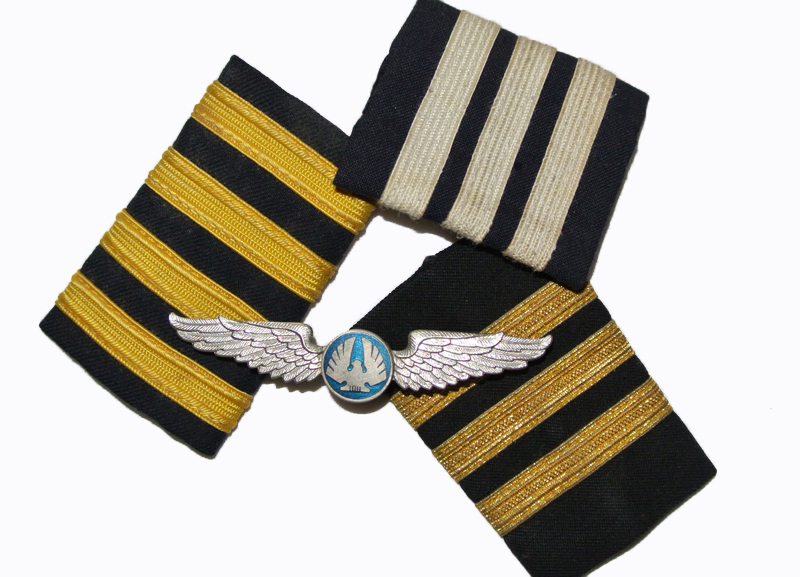
It can vary country to country, but captains usually wear four stripes on their sleeves and epaulets, and copilots wear three.

On older planes there was a third cockpit station occupied by the second officer, also known as the flight engineer. (I spent four years as a flight engineer on a cargo jet in the mid-1990s.) Once upon a time planes also carried navigators, but the last known navigator in these parts was the old Howard Borden character from the original “Bob Newhart Show.”

Long-haul flights carry augmented crews that work in shifts. There might be two copilots and a captain, two captains and a copilot, or two captains and two copilots. It varies airline to airline and with the length of flight. For example, at my airline, a ten-hour flight will carry three pilots: two copilots and a captain. Each crew member will have roughly one-third of the flight free. He or she retires to a bunk room or designated crew rest seat, while the other two remain up front.

In most conversations the term “co-” implies equal. With cockpits though, the presumption is of something less. I’m not sure exactly from where this stems. The cockpit cultures of years past probably have something to do with it. In the decades prior the advent of “cockpit resource management” and all that, the cockpit hierarchy was very rigid and the captain’s authority went unchallenged. Copilots were expected to be subservient and were seldom treated as equals by imperious captains. This culture has not entirely disappeared in some parts of the world.

Reporters’ frequent use of the term “the pilot” is another part of the problem. “The pilot” did this, “the pilot” said that. Well, which pilot exactly? Use of the singular implies that the other person in the cockpit is something other than, and presumably less than, an actual pilot. I’m not sure if reporters have a style guide for these things, but this is nothing a simple “s” can’t fix: “the pilots.” Alternately, one could say “the cockpit crew.” If a differentiation in rank is needed, I’d recommend using the terms “captain” and “first officer.” Just be aware that either pilot may be at the controls during a particular incident.


Epaulets photo by the author.


For more about pilot training, lifestyle and culture, see chapter four in the new book.


Comments (94)

Should Kids Be Banned From First and Business Class?


Two Experiences Rekindle the Debate.

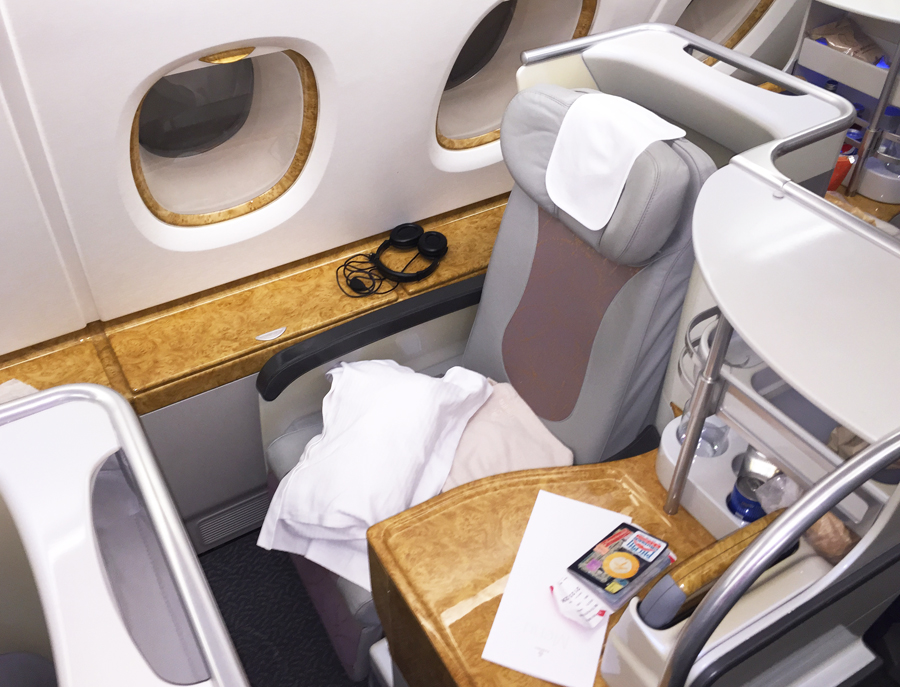
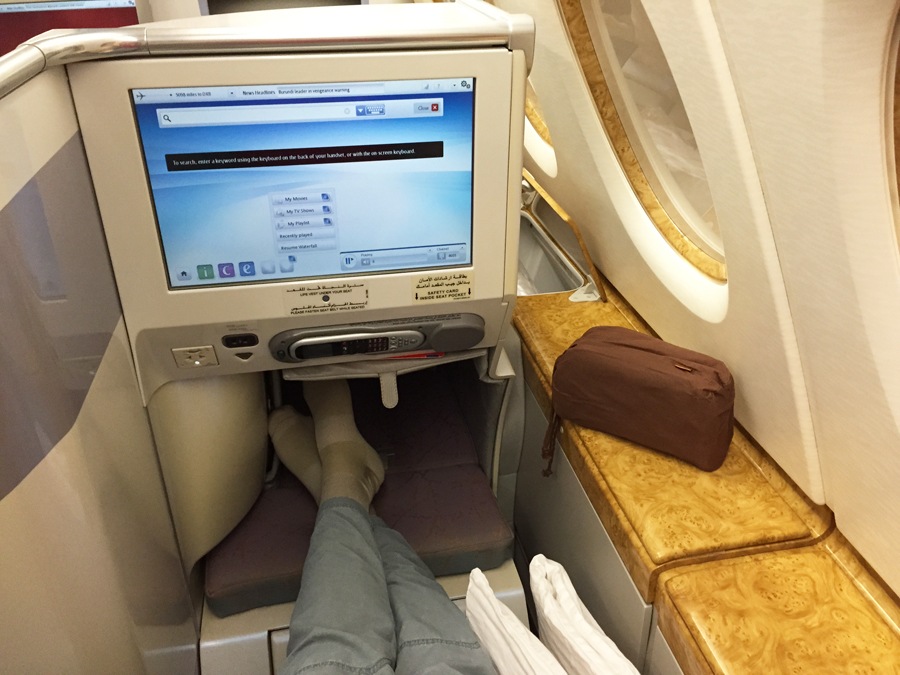
Business class digs on the A380. What could possibly ruin this?   Photo by the author.

Fancy digs on the A380. What could possibly ruin this?


I CONTINUE to be astounded by the sheer number of people traveling around the world with babies, toddlers, and other preschool-age children. Even more astounding is how many of these kids are traveling in first or business class. These tickets cost thousands of dollars, yet it seems there’s no shortage of travelers well-heeled enough to be jetting around in the forward rows with two, three, even a half-dozen small children. How the demographics of air travel have changed, indeed.

Kids are kids. They cry, they run around, they yell, they misbehave. I understand this completely. It’s nobody’s fault, and I accept it. To a point.


Experience 1:

I was in Bangkok, looking for a way home. Poking around on Kayak.com, I found an excellent last-minute fare on Asiana, one-way to JFK via Seoul-Incheon, for a little over $2000. I was excited. Asiana is a five-time SkyTrax winner and onsidered by many to be a top-tier carrier. I bought my ticket, picked out my window seats, and couldn’t wait to get to the airport.

And it was downhill from there.

It starts at Bangkok’s Suvarnubhumi airport. My ticket gives me access to Thai Airways’ Royal Orchid Lounge, shared by the various Star Alliance members, of which Asiana is one. Getting access to the lounge is of course part of the whole premium class experience, and I left the hotel extra early to enjoy it.

But when I get there, I discover the lounge isn’t simply overcrowded (as so many premium class lounges tend to be these days). It’s overcrowded with kids. I cannot find a quiet place to sit. The kids are everywhere and they won’t shut up: yelling and crying and running around like it’s recess on the school playground.

The centerpiece of this chaos is an obnoxious guy in a Russian soccer shirt and his belligerent offspring. He’s something of a Vladimir Putin lookalike, sprawled sockless on a sofa with his naked feet hanging over the rail, playing a game on his phone. Around him is a spray of plastic toys deposited by his five — count ’em, five — preschool-age children, who when they aren’t tossing toys around are shrieking and throwing food at each other. They’re unbearably loud. Every so often Vlad claps his hands and scolds them in lazily indignant Russian. They ignore him and carry on.

The waitstaff, for their part, couldn’t care less. When I complain to the woman at the desk, she simply smiles and says “Oh so sorry sir.” Absolutely no effort is made to actually quiet the kids down.

And if the Putin clan isn’t annoying enough, elsewhere in the room at least three infants are crying.

I try not to let it get to me. I distract myself with the buffet, helping myself to a gin and tonic, a miniature pastry-pillow labeled “chicken roll,” and some finger sandwiches made with institutional-looking white bread. I close my eyes and imagine myself on the plane, only minutes from now, sitting back in my business class seat, surrounded by peaceful luxury.

When boarding is announced, I practically run onto the plane. I stow my things and settle in for the five-hour ride to Incheon. I’m relaxed and happy.

And then I hear the sound. It starts as a crackle. Then a whinny. Then a staccato series of gasps and yelps and piercing cries. These are the noises that only a baby makes, and that baby is in business class, three seats over from me.

And as babies are wont to do, the little darling treats the rest of us to a five-hour long, blood-curdling repertoire of periodic yelping and screaming fits. It’s the unpredictability of these fits that’s the worst part: It’s quiet, quiet, quiet; then suddenly there’s screaming. It’s quiet, quiet, quiet again; then suddenly there’s more screaming. This repeats over and over, at erratic intervals of varying duration and loudness.

But it’s all right, you see. It’s okay, because the best and most important parts of this journey is yet to come: I’ll have two hours to kill at Asiana’s lounge at the amazing Incheon airport, followed by the 13-hour flight to JFK in my state-of-the-art “Smartium” business class seat on the 777. Fine, kid, go ahead and cry. The rest of this trip will be great.

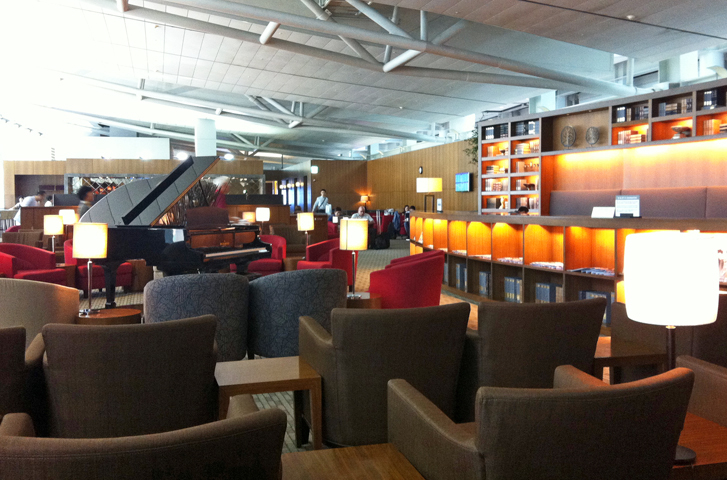
Asiana has separate lounges at ICN for first and business class. The business lounge is a sumptuous room of dark wood-tones, plush chairs, a piano and rows of bookshelves. The shelves give it an almost library aesthetic, and I like that. Libraries are quiet. I help myself to a triple espresso and set up my computer at a table near the back. There’s nobody around and I have the whole rear corner to myself.

Asiana lounge at ICN.   Photo by the author.

Asiana lounge at ICN.

Once again, at least for a moment, I’m relaxed and happy.

Until, hardly three minutes later, as I’m scanning through some emails, again I hear a tell-tale noise. It’s a creak-creak-creak-creak — the sound of a wheeled apparatus approaching. Somebody’s roll-aboard bag? No. It’s a baby carriage. Actually, it’s a baby carriage flanked by a mom and two toddlers, one on either side of a strapped-in infant. And this foursome of noisemakers is aimed directly at the table next to mine.

As the carriage wheels in alongside, there’s a great and sudden clattering of toys, food containers and juice cartons. Things spill to the floor as the mom yells orders in Korean at the two toddlers, who answer back in barks and squeals and a chorus of hollering.

I gather up my stuff and bolt for another table. This is only marginally helpful, however, because by now the place has filled up, and no shortage of the visitors are kids, most of whom are carrying on. A man comes out of the restroom with his two tiny sons, maybe three or four years old. The kids burst into a run, and as they pass me one of them lets out a scream so shrill that I think my coffee cup is going to crack.

And now, finally, it’s time for the Big Flight.

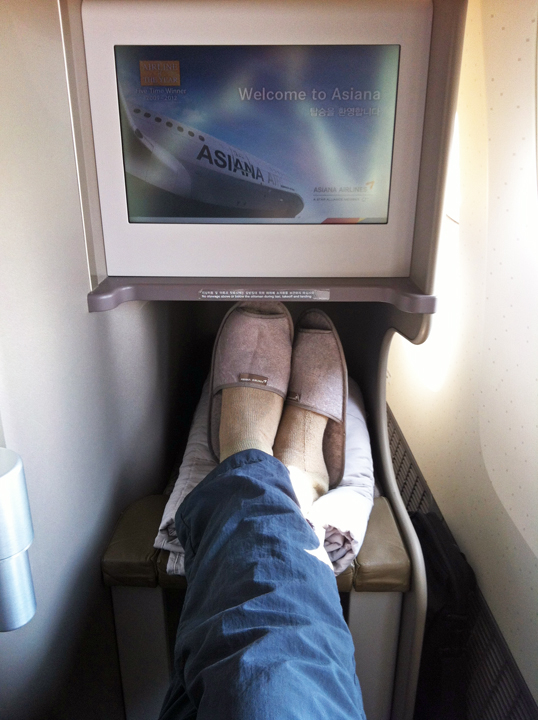
I made sure to choose one of the window seats with the console facing outward, toward the aisle — this creates a cubicle effect, as if you’re sitting there in your own little private jet. I’m gonna put on my Asiana slippers, drink some wine, watch some movies, and dine on gourmet food before stretching out to rest in my full-flat sleeper.

Asiana business class.   Photo by the author.

Asiana business class.

That’s the plan, anyway. Until.

Until I look up from my complimentary newspaper and there — there! — one row ahead of me, and directly diagonal to my seat, is, you guessed it, a baby. My skin goes prickly hot and and my pulse starts racing. There’s just…. it can’t…. I mean… how can…..? No!

Yes!

And I would love to tell you that this time I got lucky, and this was one of those quiet and well-behaved babies who whines for a minute and then, miracle of miracles, utters nary a peep for the rest of the flight. Don’t you love when that happens? Those are the flights that restore our faith in both air travel and humanity at large. Look at that adorable child napping peacefully like that.

But this is not one of those times. This is not one of those babies. This kid is neither napping nor quiet. He’s as loud and angry as a lawnmower.

Nothing shuts him up. And he’s of that certain age — that age between infant and toddler, when a voice begins to gain the sonic traction that allows it to really carry. At the height of his discomfort this tiniest of humans is pushing ninety decibels. It’s a wailing, electric, claxon-like sound, like a nuclear attack alert, loud enough to rattle my tableware.

The racket comes and goes, comes and goes. Reading is impossible; sleeping is out of the question. The only escape is watching movies with the volume cranked up (unfortunately Asiana’s entertainment system is terrible and offers only a few boring choices). The last hour of the flight is the worst. The kid cries nonstop. It is so loud you cannot hear the public address announcements from the crew.

When we touch down at JFK in September sunshine just before 11 a.m., I don’t feel the least bit sated, refreshed or relaxed. On the contrary I am exhausted and stressed-out.


Experience 2:

There’s a lot to like in Emirates business class on the Airbus A380. The sleeper seats are spacious and comfortable. The carrier’s “ICE” entertainment system is second to none. The menu is eclectic and the food is tasty. Amenities are all around you, from the duvet and mattress to the luxurious lounge and bar in the back of the upper deck. What could possibly ruin this?

I’m at Schiphol airport in Amsterdam, walking up the jet bridge that leads to the upper deck, when a huge family of at least a dozen, six of them kids, rudely cuts the line. Please, I say to myself, don’t let them be sitting near me. There are almost a hundred seats in the A380’s business class, so my chances are good, right?

Wrong. They aren’t just seated near me, they are seated all around me. They are in the row ahead of me, in the seats next to me, and in the row behind me too. The adults in the group are obnoxious enough, shouting across the aisles at each other. The kids, though, take it to the next level. They’re screaming, running up and down the aisle. They’re climbing over the seat-backs, their heads popping up, whack-a-mole style. One of the little girls is yelling out to her sister, whose name sounds like the word “Bay.” Every two minutes, for the next seven hours, she will scream,”BAAAAAAAAAAY!”

When I can’t take it any more I walk over and ask the mother to please control her children. I feel like the biggest asshole in the world, but this cost me a lot of money, and the whole point was to be comfortable and away from the usual racket.

Slouched in her chair, the woman looks up at me contemptuously. “They are only children.”

This is a standard rebuttal. We paid for the tickets, the argument goes, so we have a right to be here, and hey, it’s just kids being kids, right? Actually, no, I’m sorry, this is not a legitimate justification.

As the flight goes on, there’s no escape from the racket. Not even in the bar in the A380’s rear cabin — the bar! — which as the hours pass has becomes a sort of day-care center full of mothers clutching their crying children. Perhaps they are congregating here out of courtesy? After all, people in the bar are socializing and drinking, not trying to sleep. Maybe, but that doesn’t excuse the one woman who has placed her toddler on one of the bar’s semi-circular sofas and is playing The Screaming Game. The Screaming Game goes like this: The kid screams, and mom screams back. The kid then screams louder, and mom screams back, also louder. The kid then lets out a piercing, blasting, hell-on-earth screech of enough decibels to blow the rudder off the airplane. Mom screams back yet again, louder still, in demented encouragement, then looks around, smiling, as if to say, isn’t my shrieking child just the cutest darned thing in the world?

I am not making this up.

Trying to chill at 35,000 feet.   Photo by the author.

Trying to chill at 35,000 feet.

And here’s the thing:

When you’re flying in long-haul first or business class, you aren’t merely paying for transportation. You are paying for comfort. For luxury, even. This is premium class, not economy class. That includes not having your experienced wrecked by disruptive passengers of any age. This isn’t about protecting the “arrogant” flyers up front from the noisy riffraff in steerage. But in premium class there’s a higher standard and greater expectations. And while perhaps you have the right to bring your kids along with you, you do not have the right to ruin the experience of those around you.

Unlike a high percentage of the people who travel up front, I was not flying on company expense or cashing in frequent-flyer miles. I paid out of pocket for my ticket, and I did so to be as comfortable and pampered as possible. This is not something I normally can afford, and my expectations were high — as they should have been. And the fare I paid was a steal. What about those people who pay six, seven, or ten thousand dollars for a premium seat? Shouldn’t there be some assurance that they won’t be subject to needless discomfort over the course of their journey?

Neither is it the offended passenger’s responsibility to deal with the problem by, say, buying a pair of noise-cancelling headphones (a commonly offered non-solution). For one thing, most premium cabin seats are already equipped with noise-reducing headphones, and they do not block out the sound of a yelling kid. But more importantly, it throws the onus onto the person being annoyed, rather than the party doing the annoying. It’s like saying: I reserve the right to destroy the peace and quiet of those around me, and it’s their responsibility to deal with it.

Notice also that my experiences cover two different phenomenon. The first involve infants crying through no fault of their own; the other involves children, which is to say their parents, simply not giving a damn. Both are vexing issues, but it’s the latter that’s the much bigger problem. This isn’t so much about kids crying, annoying as that can be, than it is about kids, toddler age and frequently older, who scream and who shriek, and whose parents seem to find this either entertaining or otherwise unimportant. Thus, it’s less an issue about children being brought into a place where they simply don’t belong, than an issue about adults who fail to control them.

How carriers might deal with this is a tough question. Noisiness in the context of a lounge can easily be addressed by asking the offenders to please hush down, and, should this fail, being asked to leave. On the airplane, though, you can’t simply relegate families to another section of the plane. Maybe it’s time for more airlines to start enforcing an age limit. It’s is a difficult issue, because more and more high-end flyers are traveling with youngsters, and the last thing airlines want to do is alienate their most valuable customers. The key, maybe, is knowing the point at which you begin ticking off more people than you’re making happy. Some carriers, including Malaysia Airlines and AirAsia, already have restrictions, either banning kids below a certain age outright, or establishing kid-free zones within a particular cabin.

Nobody in any section of the plane wants to deal with a noisy kid for thirteen hours. But if you’re going to do something, it would only makes sense to start at the front, in premium class, where there’s a much greater expectation of comfort.


Note to readers…

You are welcome to leave your comments below, but please refrain from insults and, especially, threats. Since this post was first published in 2015, I’ve received buckets of hate mail, up to and including threats of bodily harm. It astounds me how frequently certain people insist on making this a personal thing.

Rarely will you hear somebody say, for example: “I feel that families with small children have every right to be in business class, and the fact that children might be noisy is a risk that any premium class passenger has to accept.”

Instead, I am called “despicable” and “disgusting” and there is something “obviously wrong with” me. Or, as one letter-writer put it, I “should be pitied.”

And the most pompous, insufferable, and insulting comments of all are those that insinuate non-parents are somehow less humane than everybody else, existing in some half-developed state where true empathy and understanding are impossible, simply by virtue of not having children.

Another thing that keeps coming up in angry letters and comments is the concept of “entitlement.” A passenger who sits in business class and dares to complain about screaming children is guilty of demonstrating “entitlement.” This is a common buzzword these days, and the intent here, I think, is to reframe the topic in sociopolitical terms — where it clearly does not belong.

Some people buy fancier houses than other people. Some buy more expensive cars. Some buy organic groceries. We all have our preferences and our choices for certain comforts. We pay extra for them. And, therefore, yes, absolutely, we are “entitled” to whatever they are designed to offer. Paying for business class on a plane is no different than paying a premium for any other product.

Let’s say you that splurge and spend a lot of money for a top of the line mobile phone. You’ve been saving up for this phone. It’s got certain features that you really want, and you’re willing to pay extra for them. But after you purchase it and take it home, you realize it doesn’t work. Or maybe it half works. When you bring it back to the store and ask for an exchange or a refund, as well you should, does the manager sneer at you and accuse you of being an “entitled jerk”?


Addendum:

Update: July 1st, Kennedy Airport; a good example of what I’m talking about:

A woman with a stroller is standing in a crowded boarding lounge. In the stroller is a two or three year-old girl. The girl is not crying, she is screaming, at the top of her lungs — just shrieking and shrieking and shrieking, angry as a tornado, throwing things and carrying on and demanding to be let out of the stroller. It’s so loud that you can’t even hear the boarding announcements. The mom, for her part, simply stands there, chatting away on a mobile phone, as if none of this is happening. She makes absolutely no effort — nothing — to quiet the apocalyptic wailing of her kid. This goes on for about fifteen minutes.


All photos by the author.

Related Stories:

FIRST CLASS, NO CLASS. THE PASSENGER HALL OF SHAME.
TO RECLINE OR NOT TO RECLINE?

Comments (856)

Letter From Hanoi

On the Streets of Vietnam’s Capital, it’s Traffic as Art and Chaos. Plus: a Ride With EVA Air, Taiwan’s “Other Airline.”

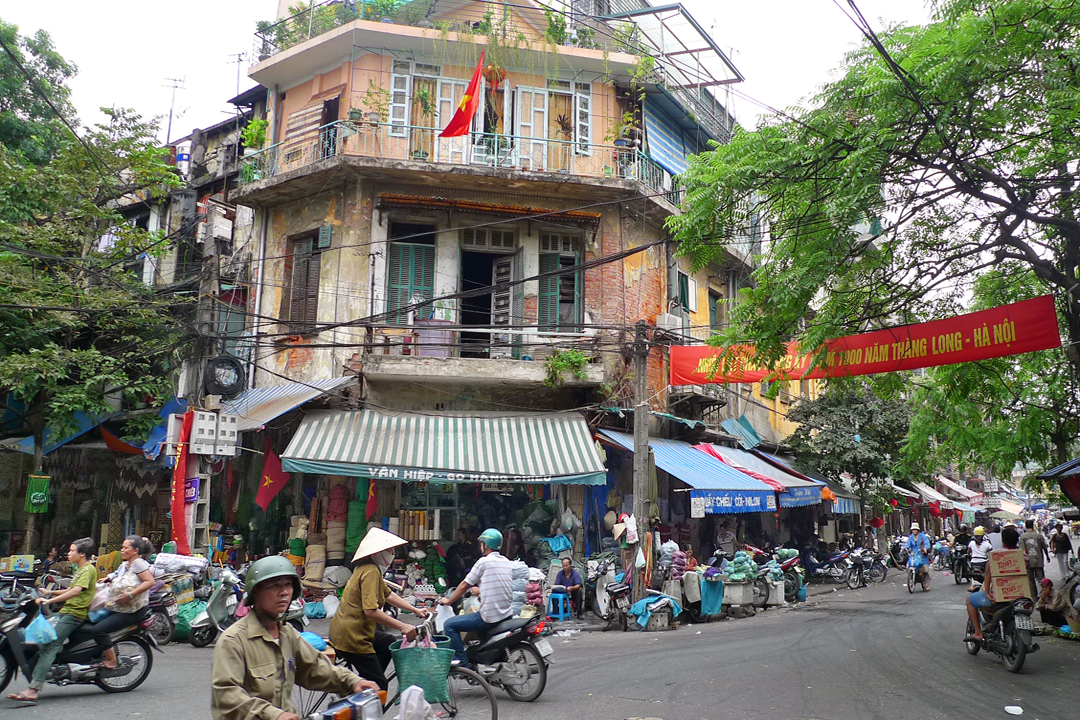
Hanoi, Street Scene

PHOTOS AND STORY BY PATRICK SMITH


HANOI, VIETNAM

THE GUIDEBOOKS will tell you that the highlight of a trip to Hanoi is an excursion to the Ha Long Bay, about three-and-a-half hours drive east of the city. And maybe they’re right. Ha Long, a UNESCO World Heritage Site, is easily one of the world’s most scenic places, with its insane vista of sawtooth karsts — thousands of them, each hundreds of feet high — jutting from the sea.

But it’s the traffic, above and beyond anything else, that I’ll best remember about Hanoi itself.

If all the world’s travel writers joined forces to describe the capital’s traffic, I reckon they wouldn’t do it justice. I’ll give it my own pedestrian take (pun intended), ill-equipped as my talents may be at coloring such a vivid spectacle.

It’s a peculiar kind of traffic, unlike, say, the aggressive chaos of Cairo or the steam-cooked gridlock of Bangkok. It’s not a traffic jam, per se, for the flow seldom stops. Rather, it moves as a river moves: unyielding, yes, but steady and predictable in both volume and velocity — an incessant whitewater of internal combustion.

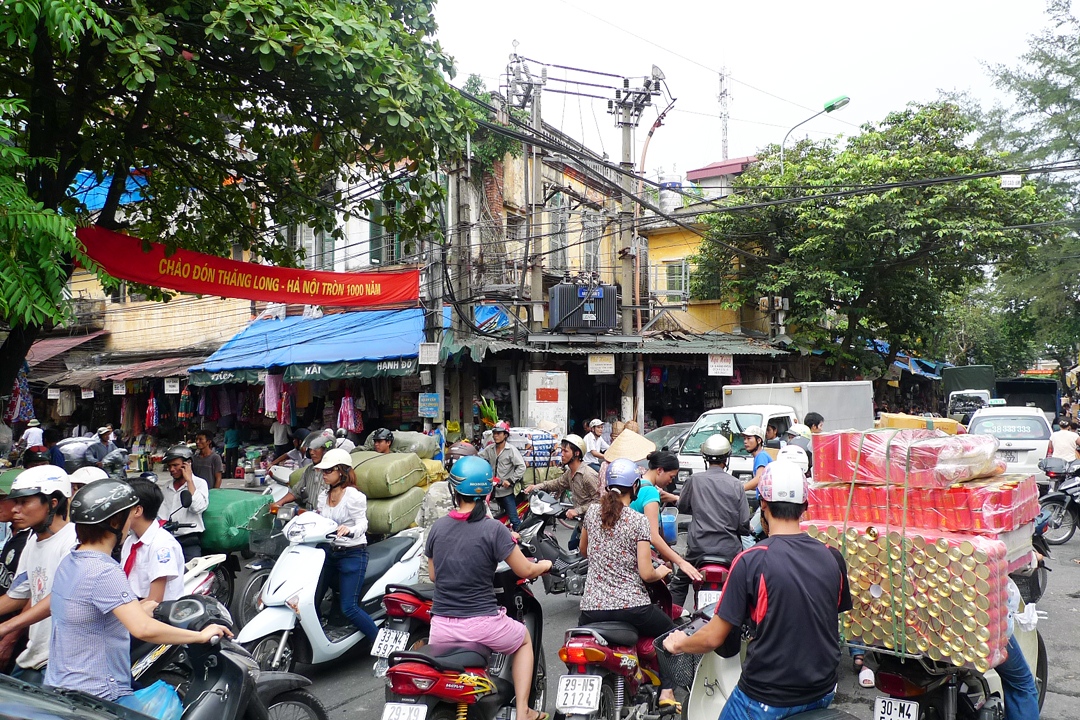
Hanoi, Traffic

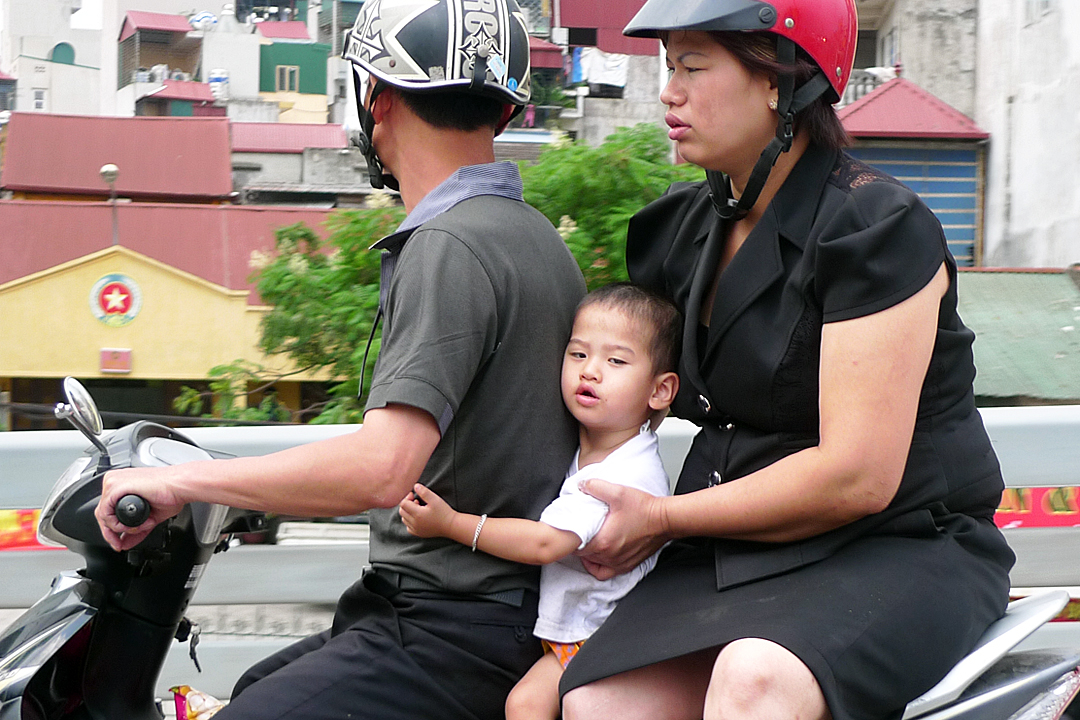
And the majority of vehicles are neither cars nor trucks, but hundreds of thousands of scooters, motorbikes and a dwindling number of bicycles. The people of Hanoi are in constant motion atop some form of two-wheeled transport or another: men and women; sidesaddle girls with parasols; toddlers (sans helmets) clutched to the backs of their parents.

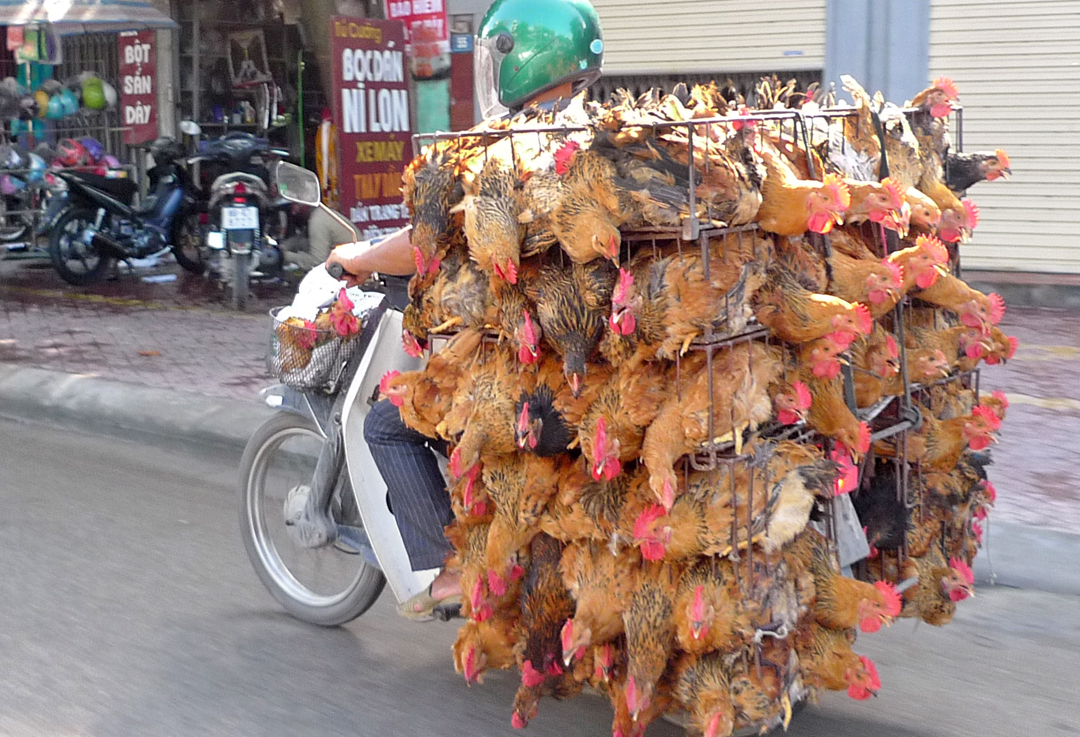
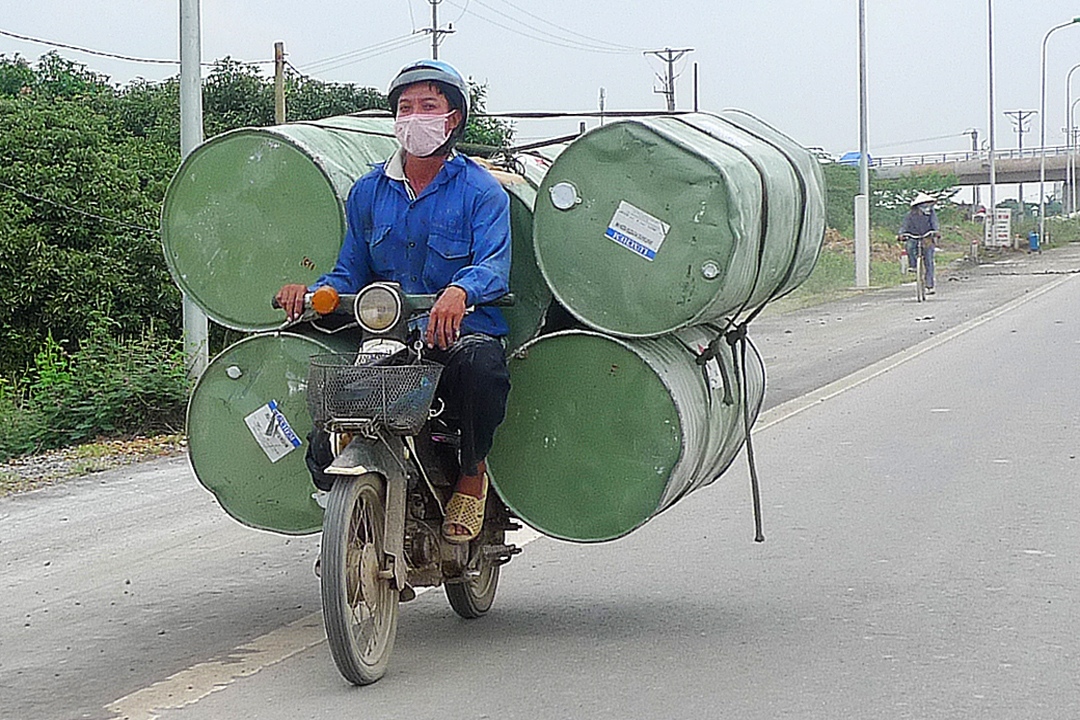
Much, if not all, of Hanoi’s commerce, too, moves this way, with bales, boxes and everything else towering above the driver (plus, often enough, a passenger or two). It quickly becomes a game of sorts, pointing out the various and impossible cargoes tottering around the city in great, center-of-gravity-defying loads: a foursome of 50-gallon drums; an outboard motor; a 300-pound pneumatic drill; stacks of caged chickens; a tree.

Everything but the kitchen sink, you’d say, except, wait, there it goes: an old Chinese two-stroke hauling not one but two porcelain sinks, complete with countertops and plumbing, their metal legs pointing dangerously at adjacent vehicles.

Hanoi Chickencycle

Hanoi, Barrels

The rules of the road, if we can call them such, are pretty straightforward: go, go and keep going, eyes locked ahead. There is no slowing down, no veering for the benefit of other motorists — and certainly not for pedestrians. Every intersection is a hive of crisscrossing vehicles that somehow, against any logic and seemingly against physics as well, manage to miss each other.

Whatever forces keep the vehicles from crashing, it is invisible to the naked eye. Only in slow motion, perhaps, would some system of order, some measure of give and take, actually be revealed. The traffic acts as a single organic thing, with each participant, like the legs of a caterpillar, responsible for a series of rapid, almost imperceptible moves.

From the tourist’s perspective, it’s difficult to fathom how anybody is able to cross a street and survive to tell the tale. It’s tempting to wonder if perhaps they don’t: the people on either side of a road having spent their entire lives apart, separated by a kind of Berlin Wall of impenetrable traffic.

But they do cross. And the tourist, too, has little choice but to eventually give it a try. You creep ever so gingerly into the swarm. You do not wait or ask for the right of way, you take the right of way, in a steady procession of quick, head-to-head duels with each oncoming rider. The pedestrian moves slowly, but fluidly. It’s a swim, a battle dance.

Of all the perilous, even hilarious things to see, few are more unnerving than the sight of young children, even entire families, crammed onto a single motorbike, swerving down the boulevards and racing through intersections. Most of the children are unhelmeted and many are unrestrained.

Hanoi, Kid On Scooter

There is nothing remotely safe about this practice, don’t get me wrong, but I feel there’s a lesson in there somewhere — in the stark contrast it provides to the smothering, hyperprotective form of parenting we’re accustomed to seeing in the U.S. This is the other extreme, of course, but in a way it makes you wonder where the sane middle ground might lie.

At one point, as a storm moved in, I watched as a woman frantically affixed a plastic rain slicker to her toddler as he hung precariously to the back of her Honda scooter. Moments later, mother and son were roaring through traffic again, neither with a helmet, the child grabbing on as best he could.

 __________


I’d flown to Vietnam on EVA Air. Economy class.

You don’t hear much about EVA, Taiwan’s “other airline” and chief rival of the better-known if not better regarded China Airlines. EVA was set up in 1989 as an affiliate of the Evergreen shipping conglomerate, and today operates a fleet of over 50 aircraft headquartered at Taipei’s Taoyuan International Airport. It ain’t quite Singapore or Cathay Pacific, but EVA was recently ranked ninth best international carrier in the world according to Travel & Leisure magazine.

The first leg was Los Angeles to Taipei aboard EVA’s flight 001. Flight 1, how cool is that? There’s something prestigious, almost glamorous about single-digit flight numbers. Carriers usually assign these identifiers to their highest-profile pairings. New York to London, say. Or in EVA’s case it’s LAX-TPE, a 13-hour run operated by a Boeing 777-300.

Stepping on board for the 1 a.m. departure, the first thing that struck me was the immaculate-ness of the airplane. You’d swear the thing had just rolled off the assembly line that morning. Not a spot, stain, smudge or single scrap of litter to be found. Of course, this kind of sparkle and shine isn’t unique to EVA, and in sad fact such high standards of cleanliness don’t normally apply to U.S. carriers. Heck, the heirloom DC-9 that I flew aboard in Venezuela a few years back was better groomed than most of the newest generation Boeings and Airbuses flying in the States. Our planes are cleaner — and service is better too — than was the case five or 10 years ago, but we still have a way to go.

EVA does its cabins in a muted gray-green — a decor that is somehow both earthy and industrial. This oddly calming, yin-yangy scheme, together with the 777′s beautifully sculpted ceiling and bins, give the jet a distinctly cozy feel. Cozy, need it be said, is not a word normally associated with commercial planes.

Ergonomic touches include contoured seatbacks, cloth fabric (temperature neutral and less slippery than leather), adjustable tray-tables with cup holders, and legroom a good two inches more than standard coach. There were slippers in the seat pocket and a big, tiltable video screen with actual headphones, not ear-buds. In the lavatory was an assortment of balms, sprays, creams and a bouquet of orchids (plastic, but still) sprouting from a wall-mounted vase.

EVA 777 Interior

EVA 777 Seatback

EVA Air & Me

I will also mention, perhaps at my own peril, something that every passenger was duly aware of, whether or not he or she was willing or able to acknowledge it. That being the attractiveness of the EVA Air cabin staff, every one of whom appeared to be a Taiwanese beauty queen, impeccably uniformed and smiling.

Now, there were some kinks. That great big video screen is only useful when there’s something worth watching, and EVA’s video selections are even worse than those in the clearance bin at Target. (Air-to-ground camera views, now common on many overseas carriers and an exciting touch during takeoff and landing, also were absent.) And although the beauty queens came around repeatedly with drinks, and although a snack buffet had been set up in the rear of the cabin, the meals were bland and the portions lacking. Oddest of all, the trays came with no condiments whatsoever — no salt, no pepper, no dressing for the tiny cup of iceberg lettuce.

The key to surviving 13 hours in economy is compartmentalizing your time. Take the hours one-by-one, with a series of tasks for each. Eat, watch a movie, read an article, do some computer work, play a game. Repeat. Another proven method is to sleep for as long as you possibly can. For a lot of folks this technique requires ample doses of pills or alcohol, but it’s a simpler (and less dehydrating) task on those rare occasions when the coach cabin is empty and you’re able to lay claim to a block of three or four seats. Flip up the armrests and you’ve got yourself a pretty comfortable bed. It’s funny, on underbooked flights, watching people stake out their territory, sliding over to the middle seat to ward off infiltrators from the left or right aisles, hoarding pillows and blankets.

I was one of those people en route to Taipei, and was fully horizontal within minutes of finishing my non-salad and papier-mâché noodles. It was that or watch “Toy Story 3.”

I woke up about nine hours later, pretended to enjoy a tin of flavorless eggs, and soon enough we were nosing down over the mountains of old Formosa.

And as the plane touched down in the ashen, pre-dawn sky, something struck me — one of those moments when you’re reminded of the remarkable capabilities of air travel, be they awe-inspiring or just plain weird: Between the time I’d landed in California and our arrival in Taipei, thanks to my consistent westward direction, it had been dark out for 19 hours and counting.


Click here to see more of the author’s travel photos.

This story ran originally on the website Salon.
Salon.com logo

Comments (18)