Author Archive

The Airport Lounge Crisis
UPDATE: February 12, 2023

MAYBE MY EXPECTATIONS are out of whack, but I’ve always thought the airport lounge was supposed to be an exclusive sort of place. A place of luxury and comfort, where premium class passengers could escape the noise and bustle of the terminal. In my younger days, before I could afford to travel in the forward cabins, I’d walk past those smoked-glass doorways and think, wow, it must be pretty luxe in there. I mean, isn’t that the point?

Well, as anyone who travels regularly and visits these lounges will attest, this is increasingly not the case.

The main issue is overcrowding. Lounges are often so jam-packed that customers are turned away or asked come back later on. I’ve seen lines going halfway down the concourse. If you do get in, there’s nowhere to sit and noise levels are off the charts.

One night I’m at the airport in Bangkok, at the Thai Airways’ Royal Orchid Lounge, which is shared by the various Star Alliance members. For me access to the lounge is part of the whole premium class experience, and so I left the hotel early to enjoy it. In the entryway vestibule, everything is peaceful, elegant and quiet. The hostess scans my boarding card and welcomes me. But when I turn the corner into the main hallway, everything changes. There must be five-hundred people inside. Literally every seat is taken. There’s trash all over the floor and it’s louder than a football stadium.

After standing around for ten minutes I finally score a seat. I’m wedged between four other visitors. My table is cluttered with the last person’s cups and plates, but if I wait for it to be cleaned, someone else will grab it. There are kids everywhere, and they will not shut up: yelling and crying and running around like it’s recess on the school playground.

The centerpiece of this chaos is an obnoxious guy in a Russian soccer shirt and his belligerent offspring. He’s something of a Vladimir Putin lookalike, sprawled sockless on a sofa with his naked feet hanging over the rail, playing a game on his phone. Around him is a spray of plastic toys deposited by his five — count ’em, five — preschool-age children, shrieking and throwing chips at each other. Every so often Vlad claps his hands and scolds them in lazily indignant Russian. They ignore him and carry on.

And here come the waitstaff with their carts. They’re flinging dishes into the bin, rapid-fire, and it’s BANG, CLANG, SMASH, BANG, SMASH, CLANG.

I try not to let it get to me. I distract myself with the buffet, helping myself to a gin and tonic, a miniature pastry-pillow labeled “chicken roll,” and some finger sandwiches made with institutional-looking white bread. But it’s so noisy and crowded that it’s impossible to relax. At one point I look up and can hardly believe my eyes. Walking past me is a mom and her two year-old toddler… in a diaper.

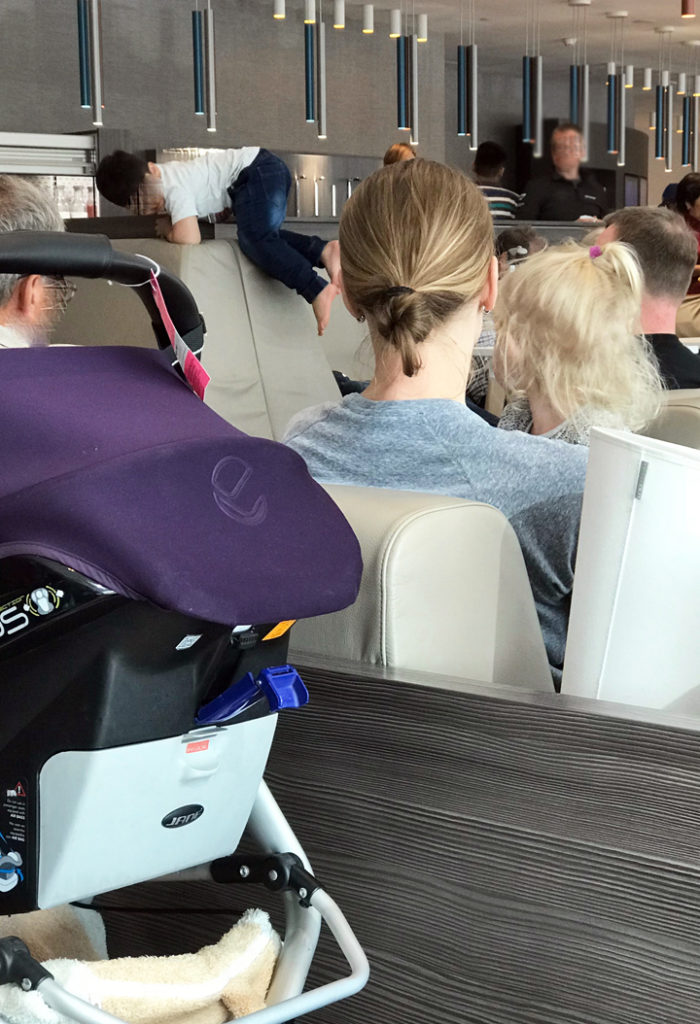
The photo at the top of this post was taken at the Aspire lounge (shared by multiple carriers) at Amsterdam-Schiphol. Every seat was occupied and the morning sun was blasting through the unshaded windows, heating the room like a sauna. At least a dozen babies could be counted, half of whom were shrieking at any given time, while a group of rambunctious, slightly older kids ran amok, throwing themselves over the furniture. Aside from the free food — which kept running out — what exactly was the advantage of being here versus any random spot in the terminal?

Silly me. I remember the first time I stepped into the Cathay Pacific business lounge in Hong Kong, and how, not knowing better, I was literally nervous. I had this idea that I was stepping into some rarefied chamber of privilege where everyone inside would look like like James Bond. I’d be seen as an interloper and asked to leave. Instead, here was a room overflowing with the same people you’d see in any shopping mall, most of them younger than me, in cargo shorts and ballcaps, jostling with baby strollers and wolfing down beer and noodles.

I was in the Avianca lounge at Miami International not long ago. There was a guy, early thirties, sitting across from me, with his headphones cranked so high that everybody within fifty feat could sing along. The music was obnoxious enough, but then I noticed his t-shirt. It was black and emblazoned with two simple words in large block letters. It said… well, here’s a picture of it:

If that’s not an indicator of just how far air travel — even premium class air travel — has fallen, I don’t know what is.

This is by no means across the board, of course. It’s hit or miss, depending on the airport, the airline, and the time of day. The trend, though, isn’t a good one. There are a lot more loud, dirty, and overcrowded ones these days than pleasant or luxurious ones. What was intended to be a place of comfort and relaxation has become a cross between a day-care center and a cafeteria.

The cause is twofold. For one, more people are flying than ever before, in all classes, and/or with whatever mileage or frequent flyer status gets you in. The bigger factor, though, is the rapidly growing number of folks using third-party perks to gain entry. Credit cards, mainly. There’s American Express platinum, for example, and a host of others granting entry through the Priority Pass program.

I don’t know how it happened, exactly, but the number of people accessing lounges via credit card has exploded since the end of COVID. Four years ago the crowds and noise were bad enough. Now the problem is significantly worse. Somehow, in the middle of a pandemic, millions of people went out and acquired high-end cards with huge annual fees.

(In the interest of full disclosure, I’m as guilty of this as anybody, my Priority Pass benefits getting me into the same lounges I’m apt to then complain about.)

I should point out, too, that the same thing is happening in hotels. Have you been to the executive lounge in a Marriott or a Hilton or a Hyatt lately? A topic for another time, maybe, but the mechanics of the issue are no different.

This won’t be an easy one to fix. There aren’t many options aside from tightening up entry qualifications or building bigger lounges. The latter is difficult, if often impossible. The former risks alienating a large number of customers who’ve gotten used to easy entry.

Airline lounges restricted only to premium class passengers do exist, but carriers make a lot of money from those credit card deals, so I don’t see the Priority Pass situation getting better. One idea would be for the card-issuers to increase their yearly fees, seeking out that sweet spot where the number of customers who drop out would be offset by the higher premiums.

I’m not optimistic. Look at airport security as an example, whereby a tediously inconvenient, jury-rigged system became the new normal. Sure there’s PreCheck, but the basic structure of the system is irrational and frankly chaotic. If you could time-travel back twenty years and describe our security protocols to a passenger, he or she wouldn’t believe you. The whole thing would be seen as ridiculous and unacceptable. Yet here we are.

It’s amazing what we grow accustomed to and eventually accept with a shrug. The lounge, as a place of luxury and quiet, may be yet another relic of the past.


Ask the Pilot lounge awards…

BEST: The Emirates first class lounge in Dubai, concourse A. The private boarding bridges, the gourmet food, sumptuous surroundings and complimentary massage. Where to start? And no, your AmEx ain’t getting you in here.
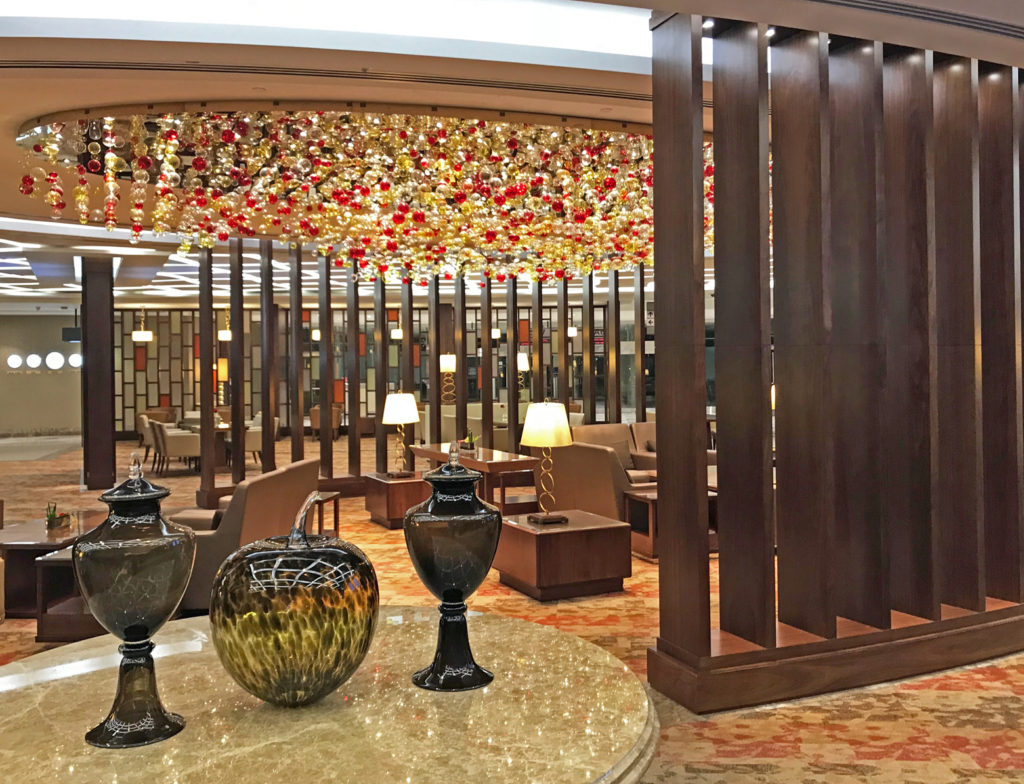
Dubai Decadence.

MOST DISAPPOINTING: The Wingtips lounge at JFK’s terminal 4. Another of those shared lounges, which tend to be worse than the airline-specific ones, this is a singularly awful space. Cramped seating, noisy kids, rickety unwashed tables, and it’s always a hundred degrees inside. As for the food…
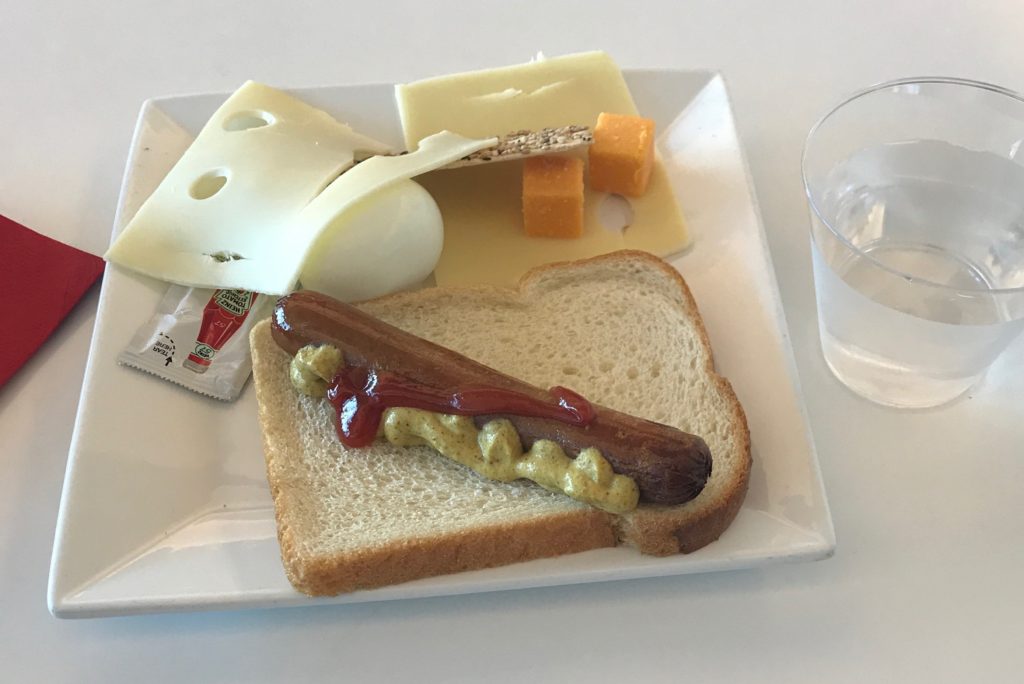
Bon appétit !


All photos by the author.

Related Stories:

FIRST CLASS, LOW CLASS, NO CLASS. THE PASSENGER HALL OF SHAME
THE SCOURGE OF INFLIGHT GARBAGE
WHAT’S THE MATTER WITH AIRPORTS?

Comments (82)

Air Force One, Redone

Donald Trump Wants to Revamp America’s Presidential Aircraft.

July 16, 2018

THE FIRST TIME I saw it was in the fall of 1992. I was walking along the Revere Beach seawall in the company of our family Weimaraner, when it approached from the northeast, head on, lumbering down the coastline. My initial though was Aer Lingus. The afternoon sun had turned blue into green, the forward fuselage taking on the distinctive mossy hue of the Irish national carrier, whose 747s were a regular sight at Logan. Or so it seemed.

But then, as the jet swung closer and into profile, green went blue and I could see, clearly and with some astonishment, that it was Air Force One.

The plane passed less than a thousand feet overhead, then sank past the hills of Beachmont toward runway 22L. I remember it fishtailing slightly — a wobble and a yaw — and silently chuckling. Not even the President’s plane is immune to the push of a good crosswind.

It was a handsome sight. One thing that has always pleased me about Air Force One is the modesty of its livery. Conceived by industrial designer Raymond Loewy during the JFK administration, it’s a look that has gone mostly unchanged for six decades. And for good reason. If you ask me, Air Force One is easily the most elegant state aircraft in the world. The current version, a modified Boeing 747-200 (there are two of them, actually), carries virtually the same markings as the old 707 it superseded: the sweeping forward crown, the Caslon typeface and simple tail hash. The old-timey window stripe and subtle gold highlights, in concert with a couple of judiciously placed flags and the Presidential seal, give the plane a dignified, statesmanlike demeanor. It’s patriotic in the best sense of the word: proud but a little humble.

I bring this up because Donald Trump wants to change it. He wants to change it because of course he does. Declaring the plane’s robin’s egg blue under-trim a “Jackie Kennedy color,” Trump would prefer something “more American” instead. In keeping with his tastes and temperament, that can only mean a scheme that is frightfully garish and in-your-face. This is a man whose aesthetic leans heavy on the gold and gaudy — more Saddam Hussein and less Jackie Kennedy, and not remotely humble. We envision the final product looking something like a 1920s brothel. If he gets his way, two replacement 747-8 aircraft, on schedule for delivery in 2021, would a wear new uniform.

Those who find this idea distressing include U.S. Air Force Brass, countless Americans with good taste, and presidential historian Michael Beschloss. “Why would anyone want to discard an Air Force One design that evokes more than a half-century of American history?” asked Beschloss in an Axios magazine story. “Every time you see that blue trim and the words ‘UNITED STATES OF AMERICA’ spelled out in that same typeface as an early version of the Declaration of Independence, it brings back JFK landing in Germany to speak at the Berlin Wall, Richard Nixon flying to China, Ronald Reagan stepping off the plane to see Gorbachev in Iceland and a thousand other scenes of Presidents in our past.”

Moreover, this shouldn’t be the President’s call. Air Force One belongs to the nation, not to the President, and its livery shouldn’t be subject to the whims of whomever is holding office at the time.

Officially, “Air Force One” is merely a radio call sign, not the name of a particular aircraft. Any United States Air Force plane with the President on board is Air Force One. Normally this is the 747 we’re familiar with, but occasionally it’s a much smaller Gulfstream jet. The President’s helicopter, operated by the U.S. Marines, is “Marine One.”

In 1959, Dwight Eisenhower’s modified Boeing 707 became the first aircraft to use the Air Force One designation. Prior to that, various propeller planes were supplied by the armed forces or contracted commercially for the job. In 1943, Franklin Roosevelt traveled to the Casablanca Conference in a Pan Am flying boat, the Dixie Clipper, celebrating his 61st birthday in the plane’s dining room. Roosevelt himself had created the Presidential Pilot Office to supply the President and his staff with air transportation.

Elsewhere heads of state and their officials do it similarly — or differently, depending. Some travel in standard military transports or will borrow jets from their country’s national airline. Others arrive in stylish airborne limos not unlike our Presidents. For reasons not entirely clear, when Kim Jong-un met with Donald Trump in Singapore last month, he arrived from Pyongyang in a chartered Air China 747.

During the 1990s at Logan, I remember, it wasn’t unusual to spot a Saudia Airlines L-1011 TriStar, chocked and secured for the weekend at the north cargo ramp. As the story went, members of the Saudi royal family would drop in for three-day shopping junkets or to visit relatives at local colleges, making use of the huge jetliner the way one might borrow a company car.


Related Story:
PILOT BLACK MAGIC. THE JINX IS IN.

Leave a Comment

Q&A With the Pilot, Volume 4

AN OLD-TIMEY QUESTIONS AND ANSWERS SESSION.

Eons ago, in 2002, a column called Ask the Pilot, hosted by yours truly, started running in the online magazine Salon, in which I fielded reader-submitted questions about air travel. It’s a good idea, I think, to touch back now and then on the format that got this venerable enterprise started. It’s Ask the Pilot classic, if you will.

Q: Why is engine power cut back shortly after taking off? Takeoff is the scariest part of flying to me, and suddenly, only seconds after leaving the ground, it feels like the plane is falling.
Planes routinely use more thrust than is necessary to take off, and the output of the engines is routinely drawn back to what we call “climb thrust” or “climb power” after reaching a thousand feet or so. This saves wear and tear on the engines, reduces noise on the ground, and keeps the jet from overspeeding (there are speed limits, yes, varying with altitude or the departure procedure). The sounds and sensations of this cutback are sometimes quite noticeable, but trust me the plane is not descending, or even decelerating. It’s simply not climbing as sharply, and the rate of acceleration is reduced.

Q: Sometimes while a plane is accelerating for takeoff, there’s a repetitive, rhythmic thumping from below: bang-bang-bang-bang, all the way down the runway like we’re hitting a string of potholes. A friend tells me this is an indication of flat spots on a plane’s tire, or a tire that isn’t inflated properly.

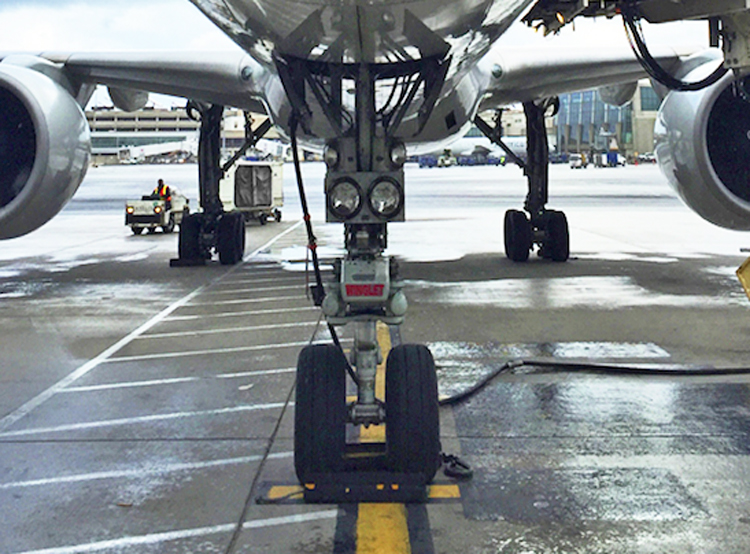
Another good reason to ignore your friends. What you’re hearing is the plane’s forward landing gear — its nose tires — hitting the recessed lights along the runway centerline. These centerline lights are inlaid flush with the pavement, but they’re not that flush and almost always you can feel them. One technique is to track a few feet off-center. The takeoff roll is seldom perfectly straight, however — especially during strong crosswinds — and so the bumps might start and stop, start and stop.

Q: I understand that a plane’s control wheel or side-stick is used for turns during flight, but what about on the ground? Is this same method used to guide a plane along taxiways, like the steering wheel in a car?

The main control wheel or side-stick links only to the ailerons and has no function on the ground. Instead, steering is controlled mainly through use of a tiller — a steering wheel-like device that is side-mounted near the pilot’s knee and connected to the forward (nose) landing gear.  On some planes only the captain’s side has a tiller; other planes have them on both sides. The rudder pedals also have limited control over the nose gear. Pedal steering is used during takeoff, and after landing until the plane has reached a safe taxi speed. The plane I fly has a tiller only on the captain’s side. After one of my extremely smooth landings I can easily maneuver the jet clear of the runway using the pedals. The captain then takes over with the tiller.

Q: On the ground, can a plane move backwards under its own power?

A plane’s wheels are equipped with highly sophisticated brakes and anti-skid technology, but they are not geared or directly driven like the wheels of an automobile — such hardware would be heavy, complicated, expensive, and then only of marginal use. The tires roll free; the plane moves only in the direction that engine thrust tells it to move. Thus, give it enough reverse thrust, and sure, a plane can be made to roll backwards. For reasons of both cost and safety, however, this is almost never done. Instead, a tug is used.

American Airlines was among a few carriers that once authorized so-called “powerbacks” for its MD-80 series planes. The MD-80 was a good choice for this, as its engines are aft-mounted and high off the ground, keeping jet blast clear of people and equipment. Still, while it saved a little time and reduced wear and tear on the nose-gear struts, it wasn’t worth the ruckus and added fuel costs. Also, directional control is difficult and braking has to be managed carefully. Rolling backwards, a tail-heavy plane is liable to tip on its rear end if the brakes are applied forcefully enough.

There’s usually a small team of dudes or dudettes that pushes the plane from the gate. One of these people is connected to the cockpit via a headset. The apron or ground controllers will sometimes give complicated pushback instructions — and/or they will change them in the middle of the push — so the pilots needs to let the ground team know where, exactly, to maneuver the plane. The ground team lets the pilots know when its safe to start the engines, and then verifies that the tug has been safely disconnected from the landing gear.

Q: I was reading about a 747 that lost all four engines after flying through volcanic ash over the Pacific several years ago. That got me thinking. If a 747 or other large plane is forced to glide, how far can it travel, and how much control would the pilots have?

Well, from 30,000 feet you could figure on a hundred miles worth of glide, give or take. Failure of all engines is, to be clear, a full-blown emergency, yet there’s no more a prospect of instant calamity than taking your foot off the accelerator when coasting downhill in a car. The car keeps going and a plane will too. In fact the power-off performance of a large jet is better than that of a light Piper or Cessna. It needs to glide at a considerably higher speed, but the ratio of distance covered to altitude lost — close to a 20:1 ratio — is almost double.

While it may surprise you, it’s perfectly routine for jets to descend at what a pilot would call idle thrust, i.e. with the engines run back to a zero-power condition. They’re still operating powering the various systems, but providing very little push — not a lot different from switching them off entirely. You’ve been gliding on almost every flight without knowing it.

As for control capability, that depends on the aircraft type. An airplane’s internal systems are powered hydraulically, electrically, or pneumatically, and they react differently to power failures. Multiple engine loss will render many components inoperative, but no aircraft will tumble from the sky. They all can glide. On some aircraft, multiple engine failure causes a small wind turbine to utomatically deploy into the slipstream to help provide control authority.

Total engine loss is about as probable as a flight attendant volunteering to give you a shoe-shine, though it has happened:

Southern Airways flight 242 (1977). Hail and water ingestion. Fatalities: 72

United flight 173 (1978). Fuel exhaustion/negligent fuel management. Fatalities: 10

British Airways flight 009 (1982). Volcanic ash. Fatalities: 0

Air Canada flight 143 (1983). Human error and fuel exhaustion. Fatalities: 0

TACA Flight 110 (1988). Severe rain ingestion. Fatalities: 0

KLM flight 867 (1989). Volcanic ash. Fatalities: 0

Varig flight 254 (1989). Crew error and fuel exhaustion. Fatalities: 13

SAS flight 751 (1991). Severe ice ingestion. Fatalities: 0

Ethiopian Airlines flight 961 (1996). Hijacking and fuel exhaustion. Fatalities: 125

Hapag-Lloyd Flight 3378 (2000). Crew error, mechanical problem, fuel exhaustion. Fatalities: 0

Air Transat flight 236 (2001). Mechanical problem and fuel exhaustion. Fatalities: 0

British Airways flight 38 (2008). Fuel system problem. Fatalities: 0

US Airways flight 1549 (2009). Bird strike. Fatalities: 0

LaMia flight 2933 (2016). Fuel exhaustion/negligent fuel management. Fatalities: 71

That might seem like a pretty long list, but in the grand scheme of things such events are exceptionally rare. And notice all those zeroes. (The Ethiopian incident in 1996 would have had a much better outcome had the hijackers and pilots not been wresting for control at the time of impact.)

The British Airways incident in 1982 occurred after an encounter with an unforecast ash cloud from Indonesia’s Mount Galunggung. The crew managed to re-start three of the engines, then pulled off a nighttime, non-precision localizer approach into Jakarta even though the ash had scraped up the windscreen to the point where visibility was almost nil. Captain Eric Moody, in one of aviation’s all-time greatest quotes, described the landing as, “a bit like negotiating one’s way up a badger’s arse.”

Q: What do you think of this great idea: The plane should have a video camera aimed through the cockpit windshield, with the view wired into the seatback video screens letting passengers see what the pilot sees.

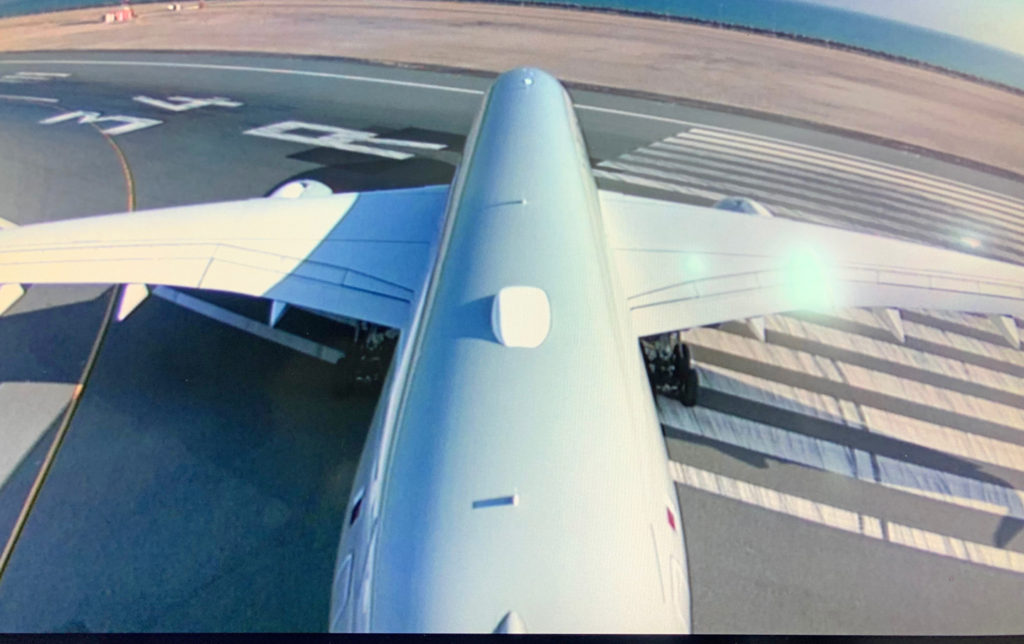
What I think is this already exists. Many airlines — alas, most of them outside the United States — display one or more camera views on the seatback screens. Often there are multiple angles, and passengers can click between them.  There are cameras showing what the pilots see, others that point straight down. Sometimes there’s one aimed backwards, off the tail, providing an unusual, some would say harrowing view of the ground falling away during takeoff. It depends on the aircraft and airline. You’ll typically find this on the A330, A340, A380 and 777.

For a while in the 1970s, American Airlines had a camera mounted on the aft cockpit wall of its DC-10s.  The view was projected onto the bulkhead movie screen and passengers could watch the pilots doing their thing during takeoffs and landings. The footage could be grainy and washed out, but it was, for its time, quite a novelty.

Q: Why can’t video cameras be embedded at various places on the exterior of the aircraft as a means for the pilots to evaluate the condition of the aircraft?

There are a lot of little things in aviation that could, or should, be standard, but aren’t for reasons that almost nobody can fathom. Things in aviation progress glacially, and are generally about ten generations behind whatever the rest of technology (and common sense) is doing. 

But, to be fair, it’s also because merely seeing something doesn’t necessarily tell you how or if it’s working properly.  Because a set of landing gear is visibly extended does not mean that it’s locked in place or otherwise is fully operational. In a lot of ways, the gauges and status screens in the cockpit are more valuable than what some poor-quality video might show. All of that said, some newer planes do have exterior cameras to assess the condition of landing gear, wingtip clearance and whatnot.  


ALL PHOTOS BY THE AUTHOR

EMAIL YOUR QUESTIONS TO patricksmith@askthepilot.com

Related Stories:

Q&A WITH THE PILOT, Volume 1
Q&A WITH THE PILOT, Volume 2
Q&A WITH THE PILOT, Volume 3
Q&A WITH THE PILOT, Volume 4
Q&A WITH THE PILOT, Volume 5
Q&A WITH THE PILOT, Volume 6
Q&A WITH THE PILOT, COVID EDITION

Portions of this post appeared previously in the magazine Salon.

PHOTOS BY THE AUTHOR

Comments (21)

A Trip to Bhutan

All text and photos by Patrick Smith.

April 30, 2018

“Bhutan? Never heard of it.” This I heard over and over again during the weeks leading up to the trip. So, presuming you need an introduction, Bhutan is a small Himalayan kingdom nestled between Tibet and India. “It’s near Nepal,” is how I explained it most of the time. This is true, though it doesn’t actually border that country, a small sliver of India rising up to separate the two.

Our route to Bhutan, encompassing just over 29 hours of flying, went like this: Boston-San Francisco-Dubai-Bangkok-Paro. It was Emirates to Bangkok, and then the little-known Drukair onward to Bhutan. (If you’re traveling to this part of the world, Bangkok, Southeast Asia’s megahub, is the best jumping off point.)

Boston to Bangkok:

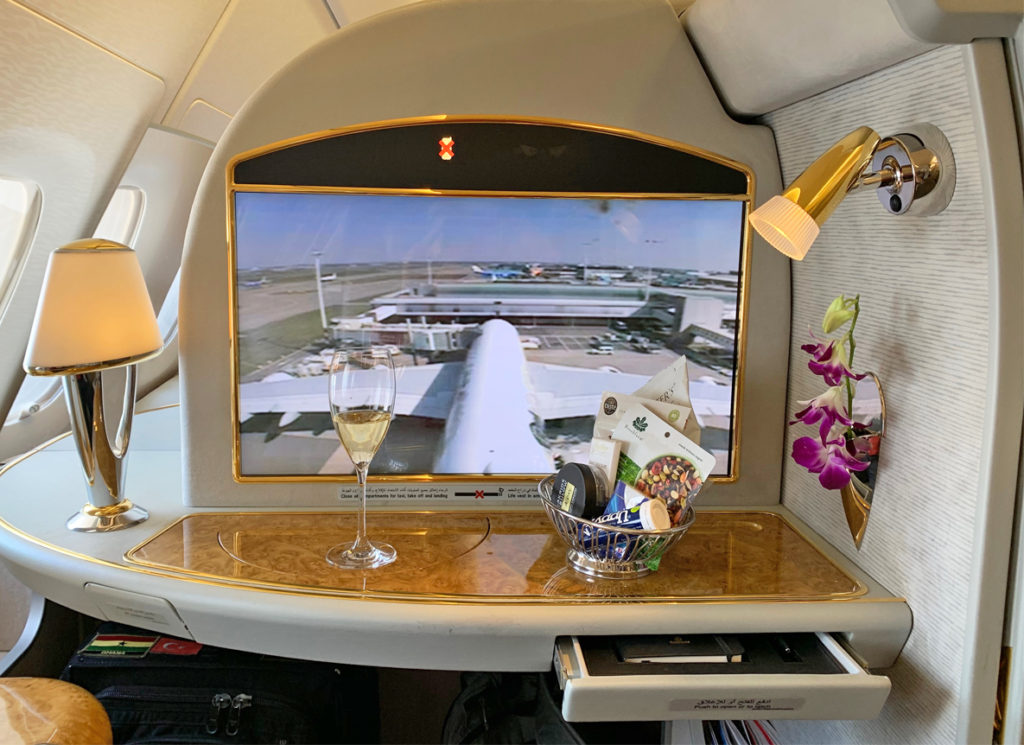
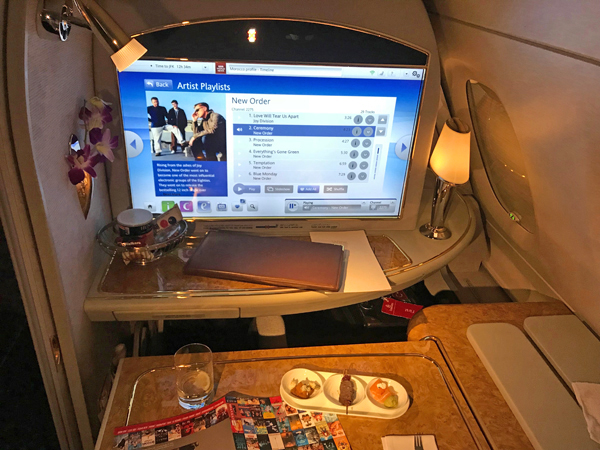
You’ll notice some backtracking in that itinerary on the front end, between Boston and San Francisco. This was done for no other reason than to maximize the flight time with Emirates. I had a bucket full of miles to cash in, and the Emirates flight from SFO to Dubai was the longest flight from the U.S. with upgrade seats available. If flying six hours in the wrong direction, with an overnight stay at the SFO Marriott, sounds insane, you’ve probably never flown first class on the Emirates A380: the onboard showers, the fully enclosed suites with your own private closet, the two onboard bars, the caviar and Dom Perignon. And so on.

I’m not claiming that Emirates competes on a level playing field with other carriers. We’ll save that controversy for later. In the meantime, if like me your favorite guilty pleasure in life is sampling the world’s luxury airline cabins, the experience is tough to beat.

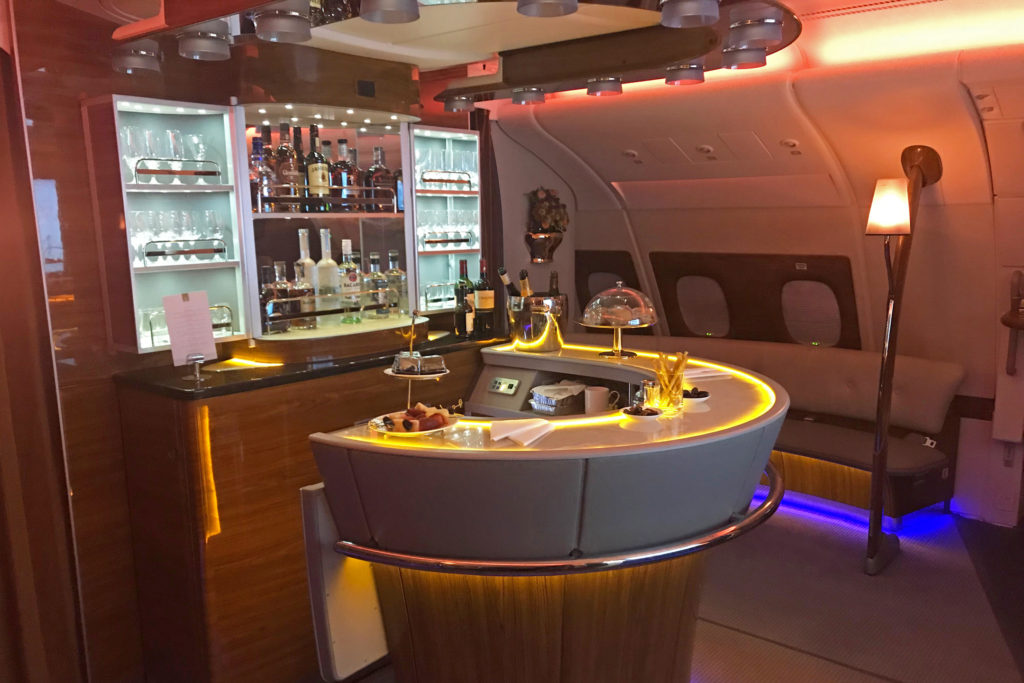
An unusually quiet moment in the aft lounge.

Bangkok to Paro:

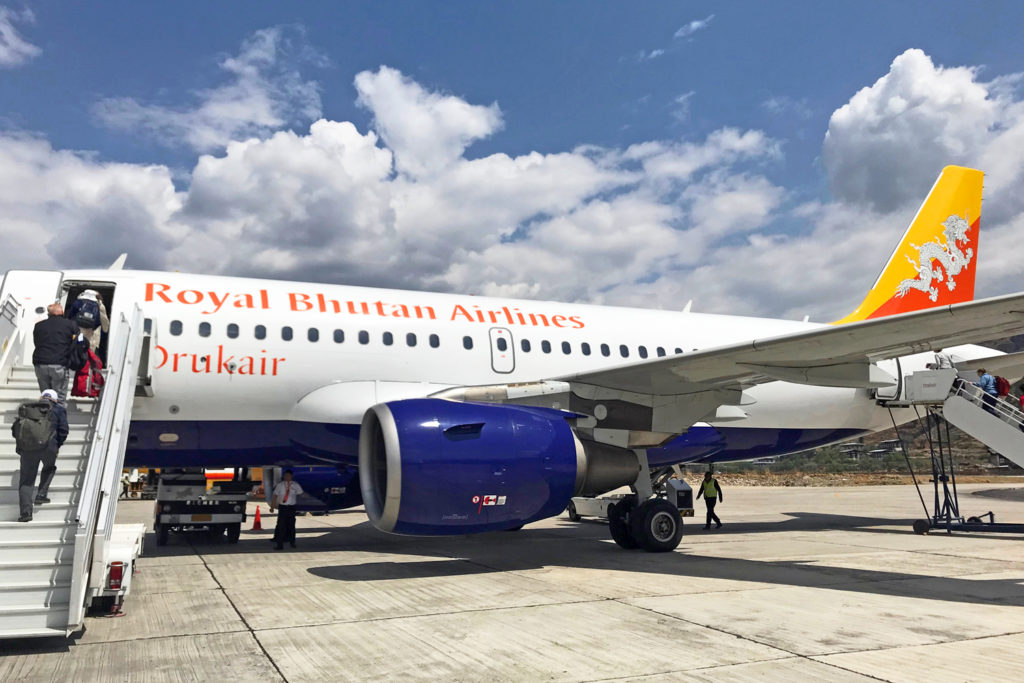
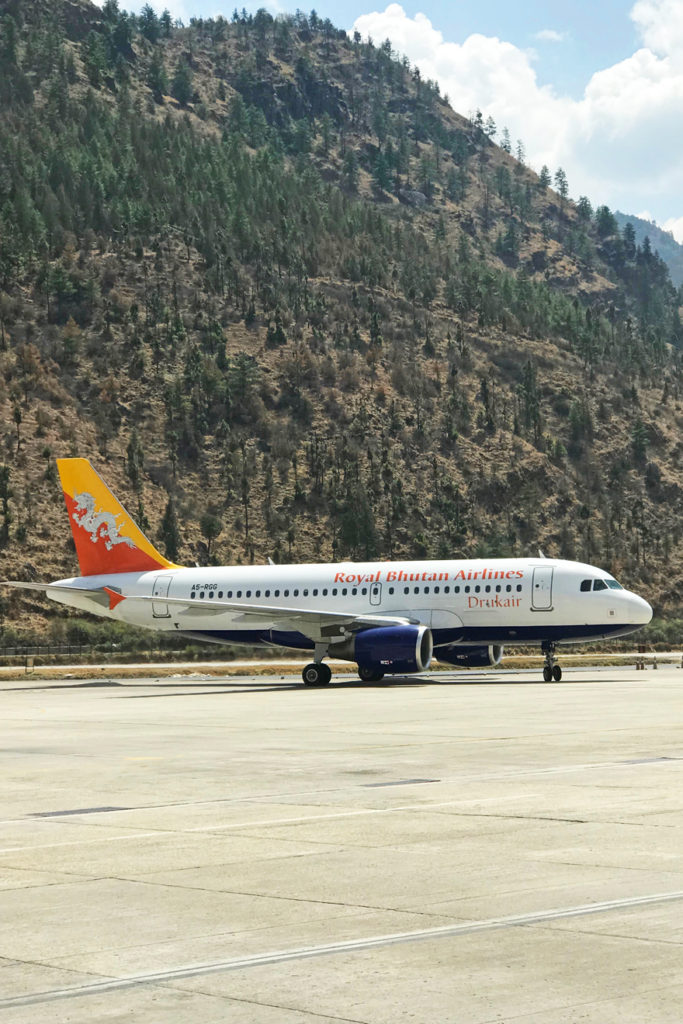
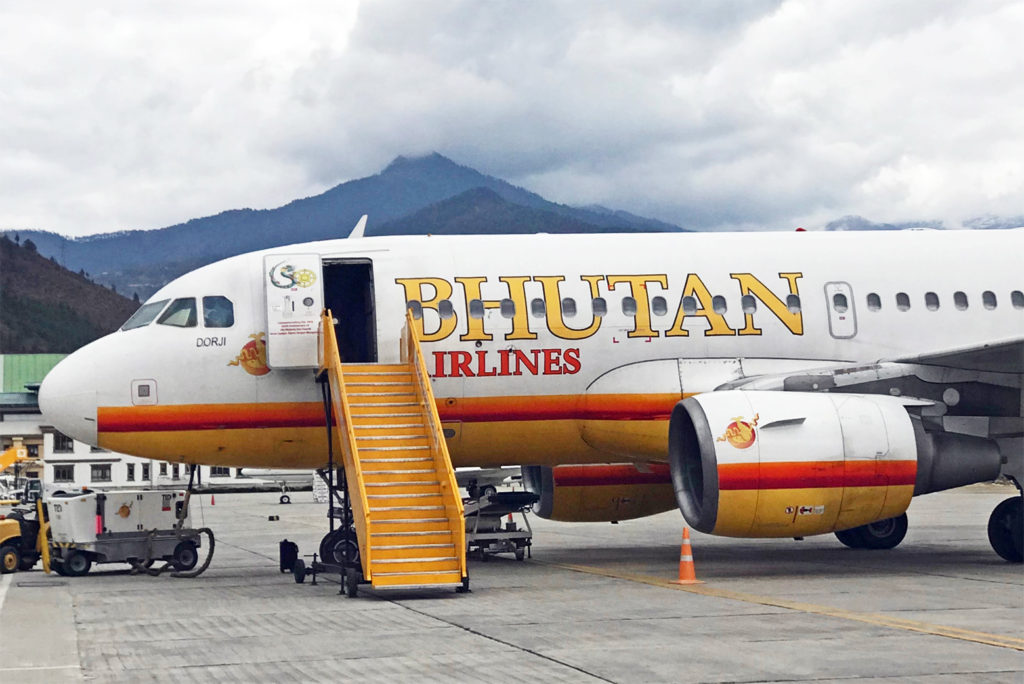
We airline geeks have lists; airlines that we hope to someday fly on. Drukair, the government-run carrier of Bhutan, was on my list for years, so it was especially exciting to finally be walking up the airstairs and onto a Drukair A319 at Bangkok’s Suvarnabhumi Airport. The carrier also goes by the name Royal Bhutan Airlines, but the local name has more character. The “Druk” (dragon) prefix is a popular trade name in Bhutan, and you’ll see it on banks, hotels, restaurants — and the national airline.

Drukair’s network, centered at Paro airport in the western part of Bhutan, extends to Bangkok, Singapore, Delhi and Mumbai. For years the company was operating the four-engine British Aerospace 146, but has since upgraded to the more modern Airbus A319. The Airbus has good high-altitude, short-runway performance, which is important when your hub airport sits at 7,300 feet with a stubby, 6,400-foot runway. It’s pretty unusual when an airport’s elevation exceeds the length of its longest runway!

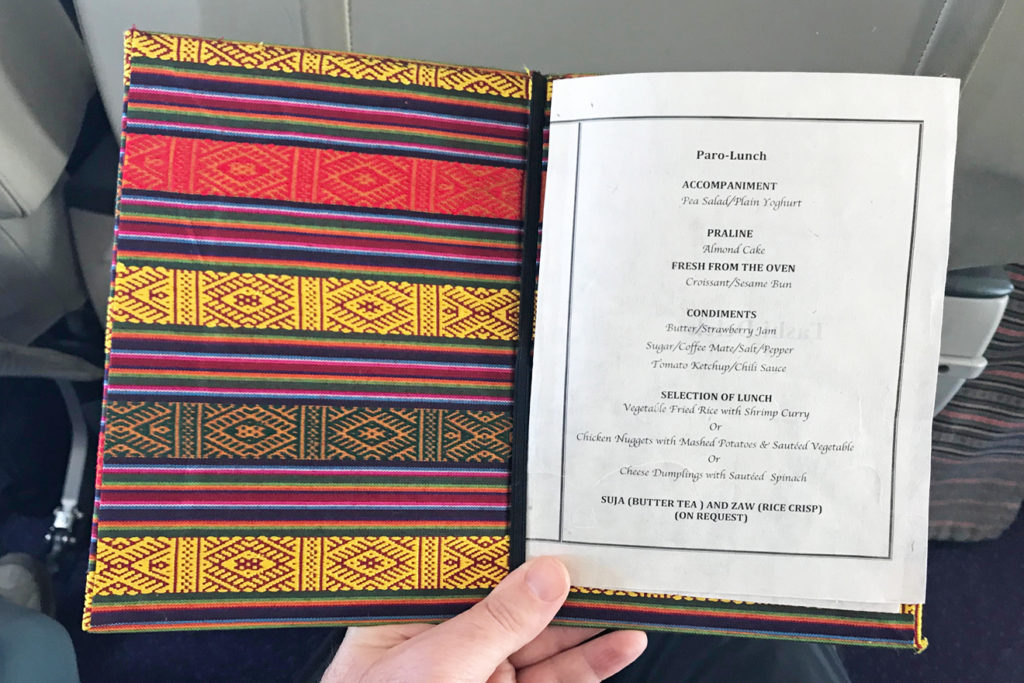
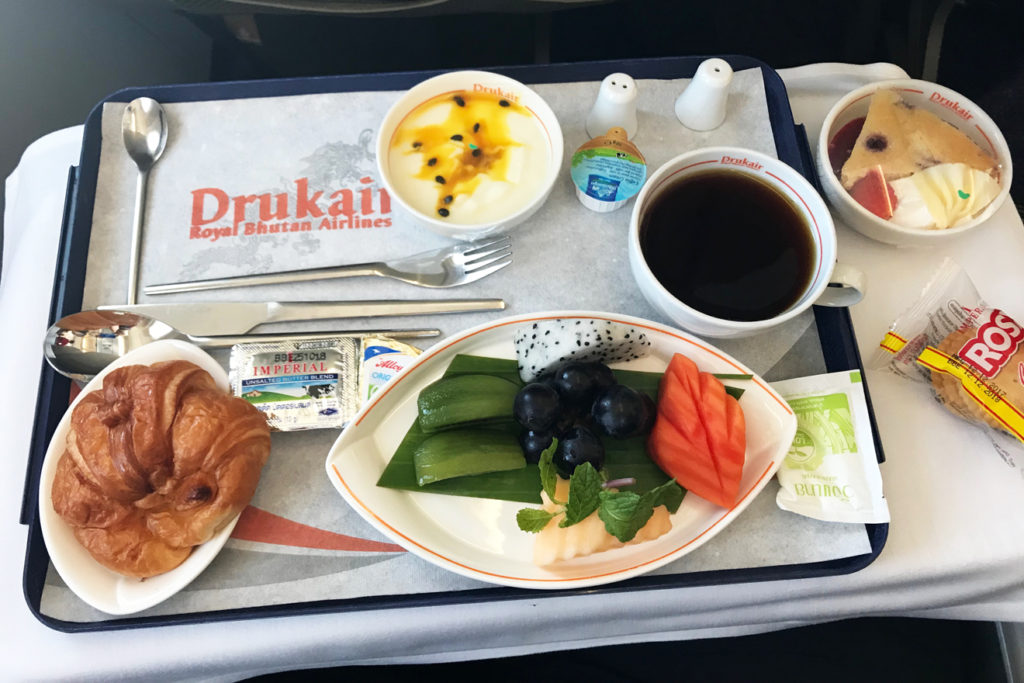
I’d splurged for business class, which on Drukair is a four-abreast, four-row cabin. The seats are the old-fashioned, semi-recliner types; a bit blandly upholstered and perhaps not cleaned as often as they should be. I was appalled when I lifted the center armrest console and discovered a verifiable dune of peanut crumbs and dust. That aside, the experience was perfectly pleasant. The food was tasty and the cabin crew attentive. The menus, stitched with a Bhutanese cloth design, were simple but very pretty.

This was a one-stop flight, with a half-hour layover in Gauhati (Guwahati), India. This was the first time in my life that I boarded an international flight headed to a city that, prior to showing up at the airport, I had never heard of before. I’m very good at geography, which made it all the more mystifying. I stared up at the check-in monitor for a few seconds — Gauhati? — wondering vaguely where I was and where I might be going. I’d later discover that Gauhati has a population of almost a million people. I guess that’s India for you.

Drukair business class menu.

Drukair business class breakfast, fruit course.

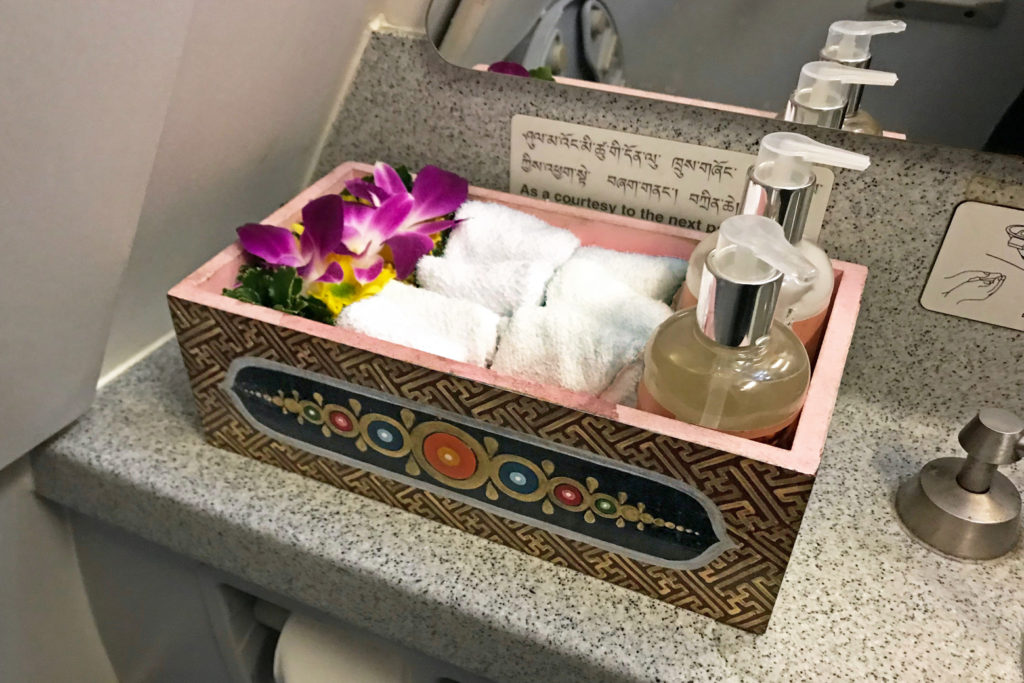
Sometimes it’s the little things. Like this lavatory display.

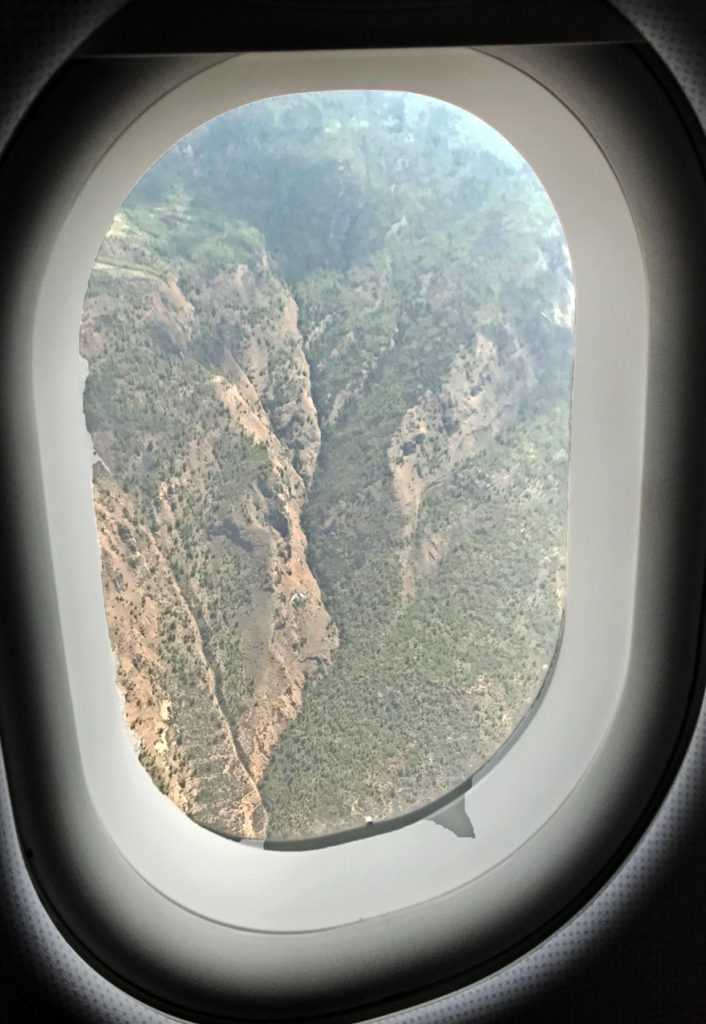
Not your typical airport topography.

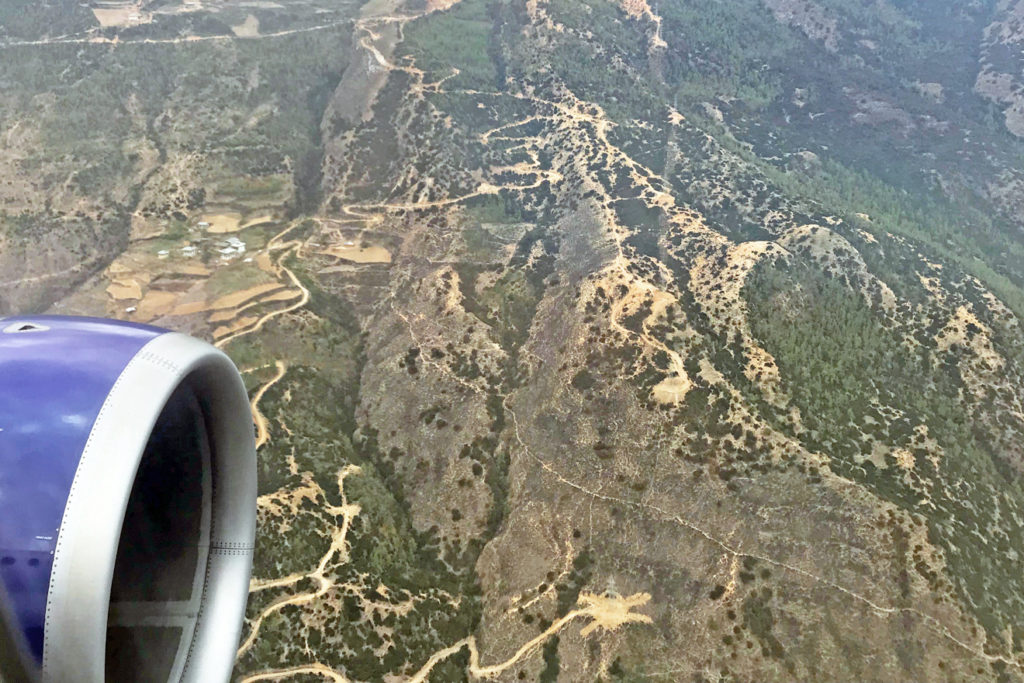
During the descent into Paro they played traditional Bhutanese music over the PA. This was an evocative touch, adding a certain exotic-ness to the arrival, especially once the mountains came into view. The initial descent had been through a heavy overcast, occluding that view of Everest I’d been dying to catch, but suddenly the rainclouds gave way to an almost fairy tale panorama of jutting emerald peaks. The lower we got, the more exhilarating it got. The landing gear clunked down at what felt like 15,000 feet, and suddenly we were doing hairpin turns in sheer mountain valleys, with 17,000-foot summits on three sides.

Yeah, I’d read about the arrival into Paro and watched a couple of videos, but that doesn’t prepare you for the visceral thrill of it. Especially that last, very low-altitude turn toward the numbers of runway 33. The expressway visual at LaGuardia has nothing on the landing at Paro. This was the closest I’ve ever come to being truly white-knuckled on a commercial airplane.

Himalayan High. Arrival into Paro.

The expressway visual this ain’t.

Drukair has four A319s in its fleet.

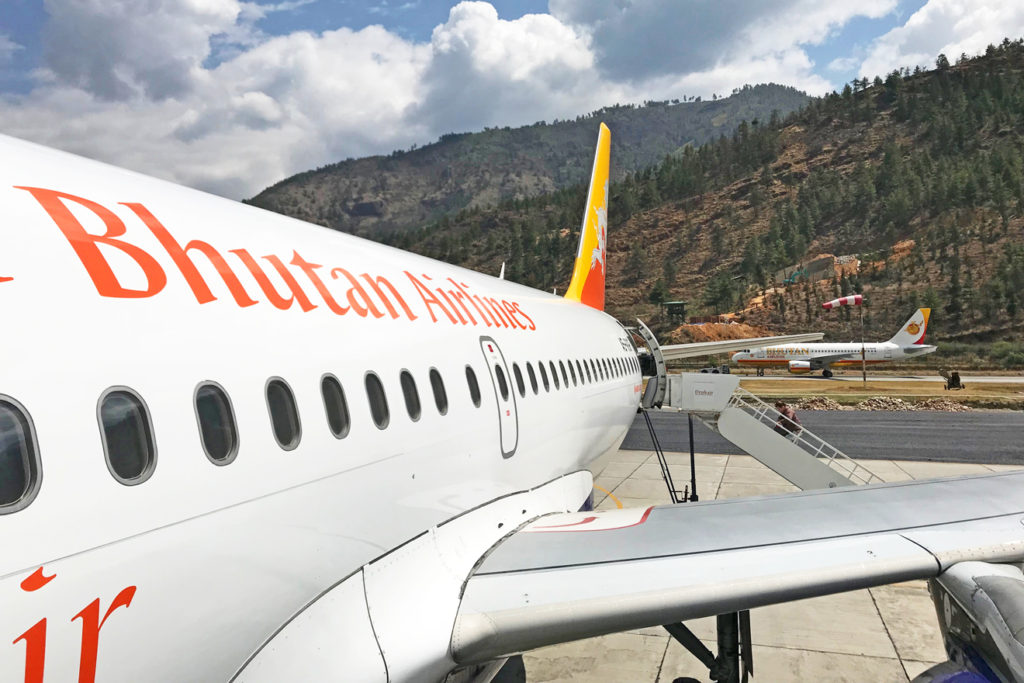
Only two scheduled carriers operate into Paro — Drukair’s privately owned competitor, the unexcitedly (and confusingly) named Bhutan Airlines is the other — and only a few dozen pilots are qualified to fly there. Frankly, this is how it should be. I’d be quite uncomfortable flying into Paro with any crew that wasn’t intimately familiar with the local terrain and its complex arrival and departure patterns.

(So, to be clear, there’s Drukair, a.k.a Royal Bhutan Airlines, and the privately held Bhutan Airlines. If the names aren’t confusing enough, they both fly A319s, in similar paint schemes, on overlapping routes.)

Only two airlines have scheduled service to Paro. Bhutan Airlines is Drukair’s competitor.

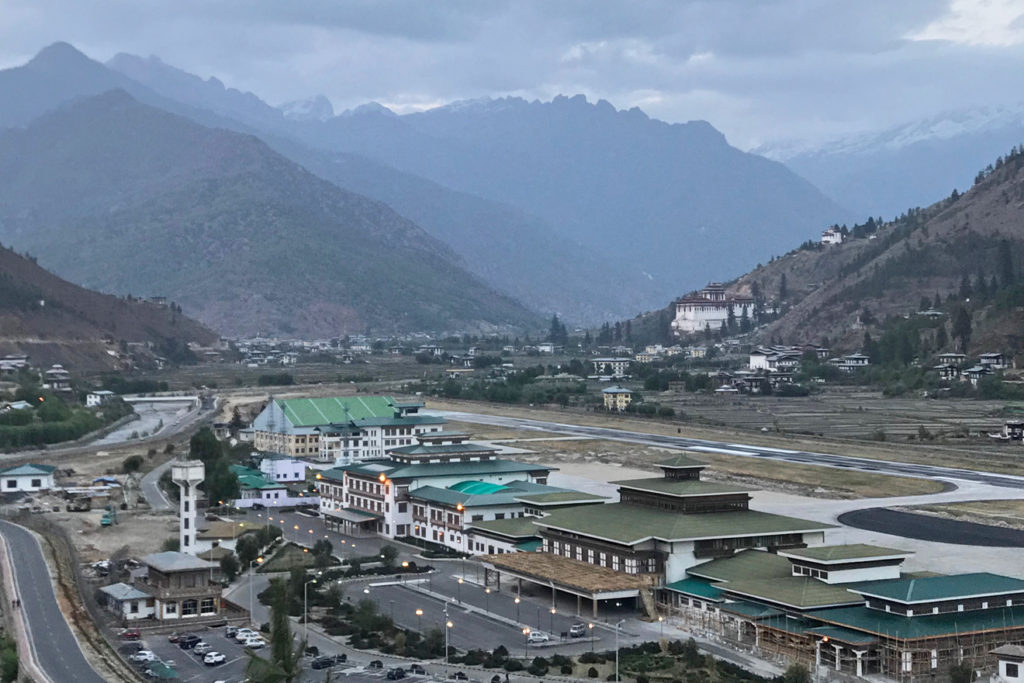
Part airport at dusk. Nearby peaks approach 17,000 feet, and Mt. Everest is only a short hop away.

In addition to the dirty seat consoles, two more gripes against Drukair: First, the carrier’s business class lounge in Paro is located outside security and immigration. I imagine this is due to space constraints; the airport is very small. Just the same, nobody wants to relax in a lounge, then have to get their passport stamped and stand in a security line.

And speaking of lines, during check-in, the queue for business class was extraordinarily slow, to the point where virtually all of the economy passengers were able to check in ahead of us. When I attempted to use the economy line, which by that point was empty, I was rudely sent back to the business line and forced to wait another fifteen minutes. Several agents on the economy side now sat behind their podiums with nothing to do, yet refused to check us in.

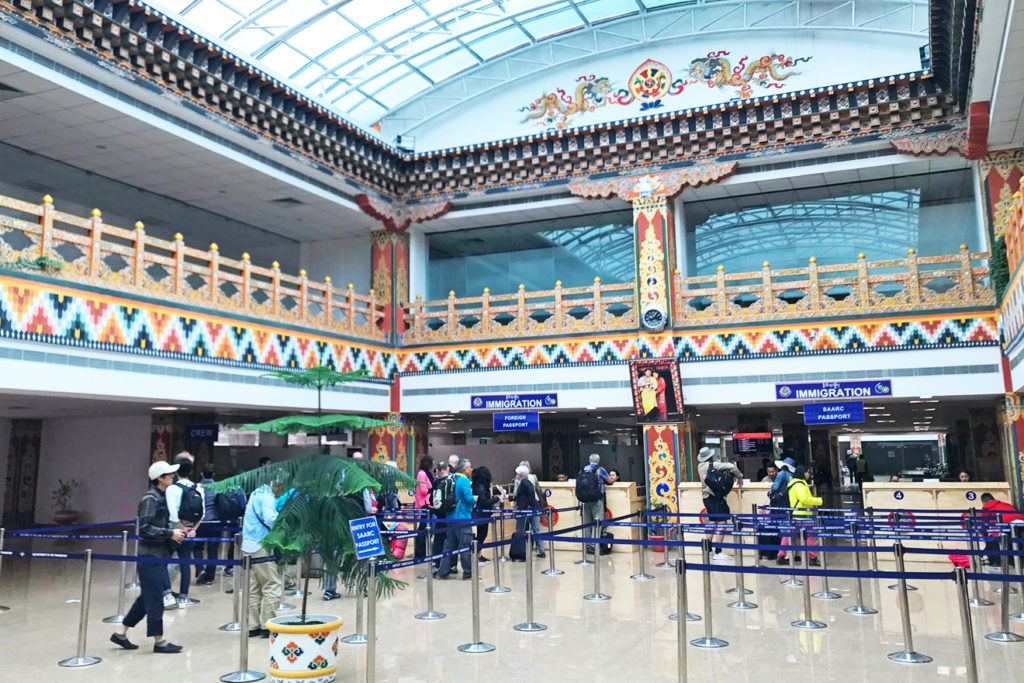
Paro’s arrival and departure halls are crowded and noisy (departure in particular), but they’re charming in that way of certain small airports. The architecture is in the style of a traditional Bhutanese home, and the decor riffs heavily on the artwork and ornate craftsmanship seen in the country’s many temples, monasteries and dzongs (fortresses).

The terminal at Paro, with mural of the beloved royal family.

Arrivals hall, Bhutan style.

In country:

“Life is suffering.” That’s the first of the Four Pillars of Buddhism, which is somewhat ironic when you discover that Bhutan, in addition to being perhaps the most intensely Buddhist country on earth (prayer flags cover the Bhutan landscape from end to end, like a sort of heavenly confetti), is also one of the most content. This is the country that invented the Gross National Happiness index, and which frequently tops those “world’s happiest countries” lists.

And for a poor nation in an isolated area, little Bhutan seems to have its act together in ways that few developing nations ever do. As Lonely Planet puts it: “Bhutan is one of the few places on earth where compassion is favored over capitalism. Issues of sustainable development, education and health care, and environmental and cultural preservation…are at the forefront of policy making.” The people of Bhutan are happy and comparatively well educated; healthcare is decent and universal. The roads are in good condition, mobile phone service is everywhere, and 98 percent of citizens, even in remote locations, have clean drinking water — an astonishing statistic, as anyone who has traveled in the developing world will acknowledge.

Granted, these things are comparatively easy for a country with fewer than a million people. An honest, uncorrupt government and a Buddhism-based sense of civic responsibility doesn’t hurt.

The Bhutanese government is also acutely concerned about the effects of climate change. The swelling and potential bursting of glacial lakes, for one, threatens to destroy some of the country’s most historic sites. Doing its part, Bhutan currently the only carbon-negative country in the world. It has banned the of chemical fertilizers and no longer imports food that was grown with them. Thus almost all of the country’s produce is organic.

In nearly a week in the country, I never saw a person smoking. Turns out the import or public use of tobacco products is against the law. As are western-style commercial billboards and advertising. There are, for now, no global consumer chains anywhere in Bhutan. No Starbucks, no KFC, no Ikea.

And bring your Tums, or your Prilosec. Pretty much all Bhutanese food, even breakfast, is centered on the chili pepper.

It was all the more surprising, meanwhile, once in the country, after so many friends and acquaintances of mine seemed to have no idea what or where Bhutan was, to encounter so many Americans. Only India, which shares the country’s southern and western borders, sends more tourists. Americans accents were everywhere: in the temples, dzongs, hotels and restaurants. In an age when many Americans seem aggressively incurious, this was encouraging.

Short of turning this into a full-on travelogue, here are a few of the better pictures from the trip. Sightseeing highlights were the beautiful Punakha Valley, and, it hardly needs saying, the thousand-foot climb to the breathtaking Taktshang Goemba — the famous Tiger’s Nest Monastery.

Prayer wheels at the 7th-century Kyichu Lhakhang temple.

Taktshang Goemga: the Tiger’s Nest.

Pagodas at the Duchu La mountain pass.

Monks climbing the stairs at the Punakha Dzong.

Sunset over Punakha Valley

At the temple in Thimpu.

Prayer flags mark the countryside like a heavenly confetti.

At the Punakha Dzong.


Book your tour with Bhutan Swallowtail


Comments (28)

Moving in Place

THERE’S NO SUCH THING as a “typical” airline layover. They run the gamut, from eleven tired hours at an airport motel in Pensacola to multiple days in a five-star property in Cairo or Cape Town. The worst of them are depressing; the best are exciting, even a little glamorous, and crewmembers are known to bring along their spouses and kids, turning a work assignment into a mini-vacation.

I’m not as adventurous during my downtime as I used to be, but almost always there’s something to discover. And in keeping with my ends/means philosophy of air travel, I’d be remiss not to share some of these discoveries with my readers. Thus, “Moving in Place” is a new feature, a travelogue of sorts, in which I’ll periodically share unusual highlights from this or that destination.

I might recommend a restaurant or share photos from a tourist attraction, but the subject, most of the time, will be something peculiar or unexpected.

All text and photos by the author.


COLONIAL DAKAR

The best way to see Dakar, Senegal, is with someone who speaks French and has spent some time there. That person isn’t me, but I lucked out on my last visit. One of my colleagues, a 767 captain, grew up in French Africa and knows the town’s nooks and crannies. He played tour guide and took us around. I’ve been to Dakar at least three dozen times, but Billy took us places I never knew existed.

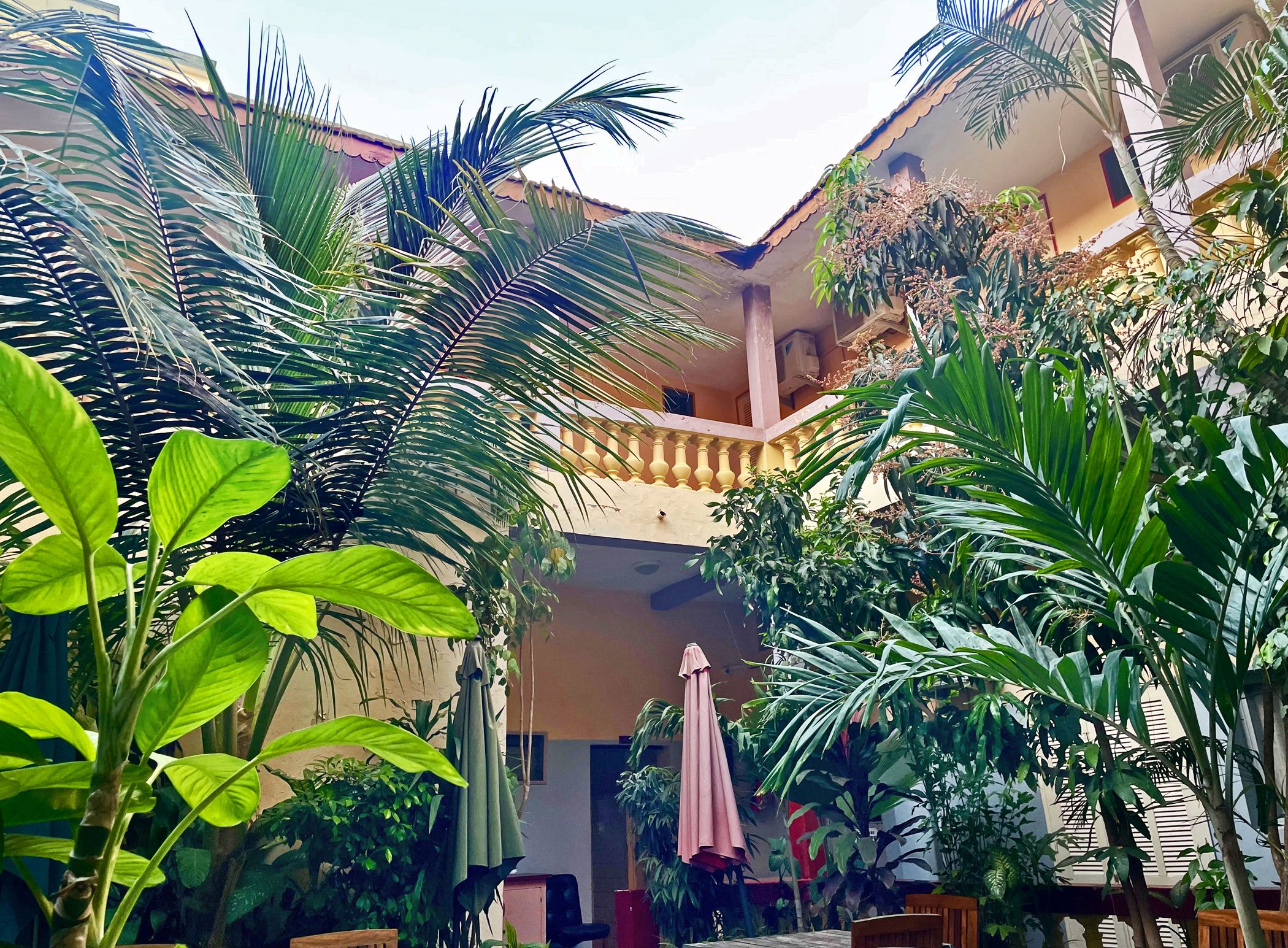
My favorite spot, by far, was the little courtyard restaurant at the Hotel Saint-Louis Sun, a brown stucco establishment on Rue Felix Faure, in the city-center neighborhood known as the Plateau, not far from the waterfront. The restaurant is set amidst garden, surrounded by spindled balustrades and open to the sky. There’s Senegalese food on the menu, or just stop in for a drink.

Saint-Luis Sun probably qualifies as what we nowadays call a “boutique hotel,” but there’s nothing pretentious or prissy. It’s charming in an old-school way, authentic and simple. Here you’re transported to another age. Colonial times, for better or worse, yet lovely just the same. An evocative respite from the bustle of the city. Dakar is losing much of its colonial architecture and quickly becoming just another glass and steel capital. Here’s a chance to savor some of what’s left.

The older I get, the less adventurous I am on layovers. These days, a place like the Saint-Louis Sun hits the spot. Quiet and easy to deal with. Once upon a time, though, Senegal was the setting for what was probably the most thrilling on-the-job excursion I’ve ever taken: a two-day trip down to the Sine-Saloum Delta, where we slept in a forest lodge and rode boats through the mangroves. You can watch the highlights of that trip here and here.


The Cincinnati Mosaics

The derelict spaces beneath America’s highway overpasses are among the nation’s bleakest and best-avoided locations. What’s found there is typically some combination of neglect, decay, danger or despair. But not always. And for that we travel to Cincinnati, Ohio.

There, in a litter-strewn no-man’s land beneath the rusted superstructure tangle of routes 75 and 71, just north of the Ohio River, one encounters, of all things, an urban sculpture garden — a sprawling, somewhat haphazard collection of statues, murals and mosaics composed of mortar, glass shards, pebbles, shells and tile fragments. The artwork depicts mainly bird and marine life, plus a number of abstract shapes and patterns.

I could find nothing about the project online, but according to a plaque it was the work of a dozen students — city kids, presumably — working under the supervision of a team of professional artists in affiliation with the Cincinnati Arts and Technology Center. Whatever its origins, it’s one of the oddest and most intriguing pieces of public art I’ve ever encountered.

The installation is just a few minutes’ walk from downtown Cincinnati. To find it, go a couple of blocks west of Paul Brown Stadium, where the Bengals play, just off Pete Rose Way, below the scary-looking snarl of highway towers.


Paris in Four Bridges.

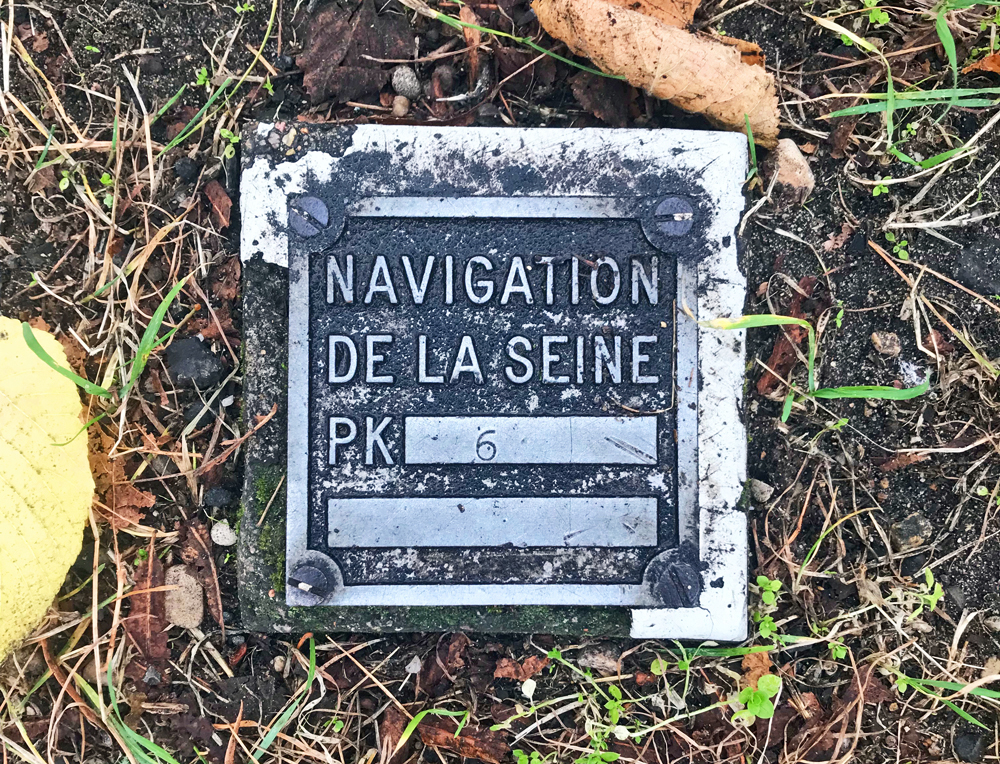
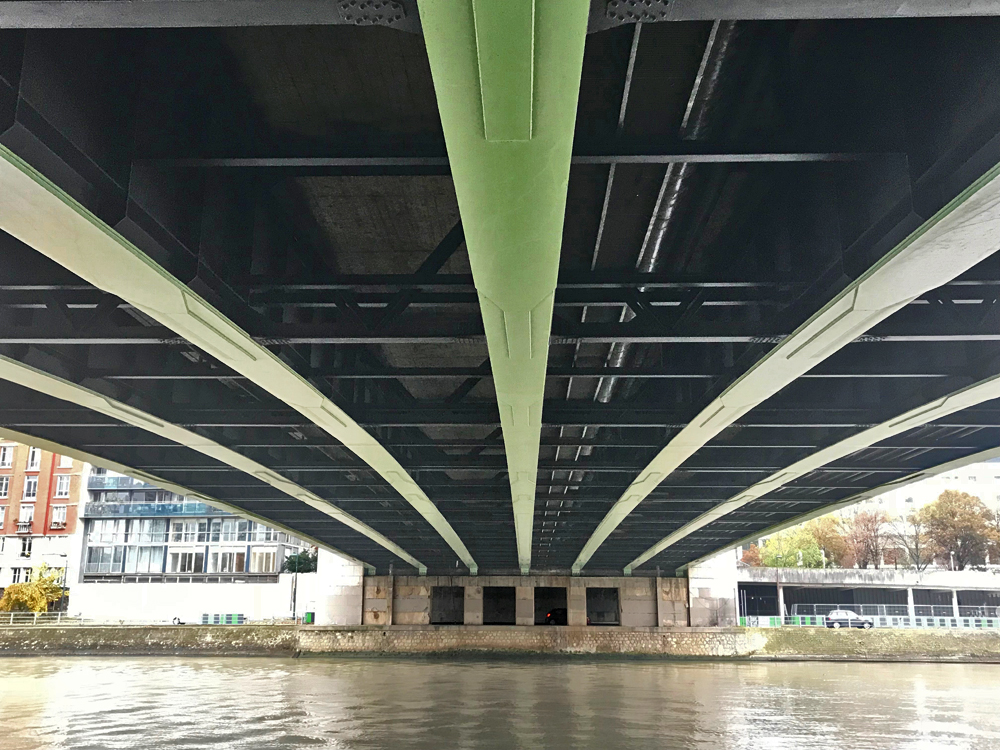
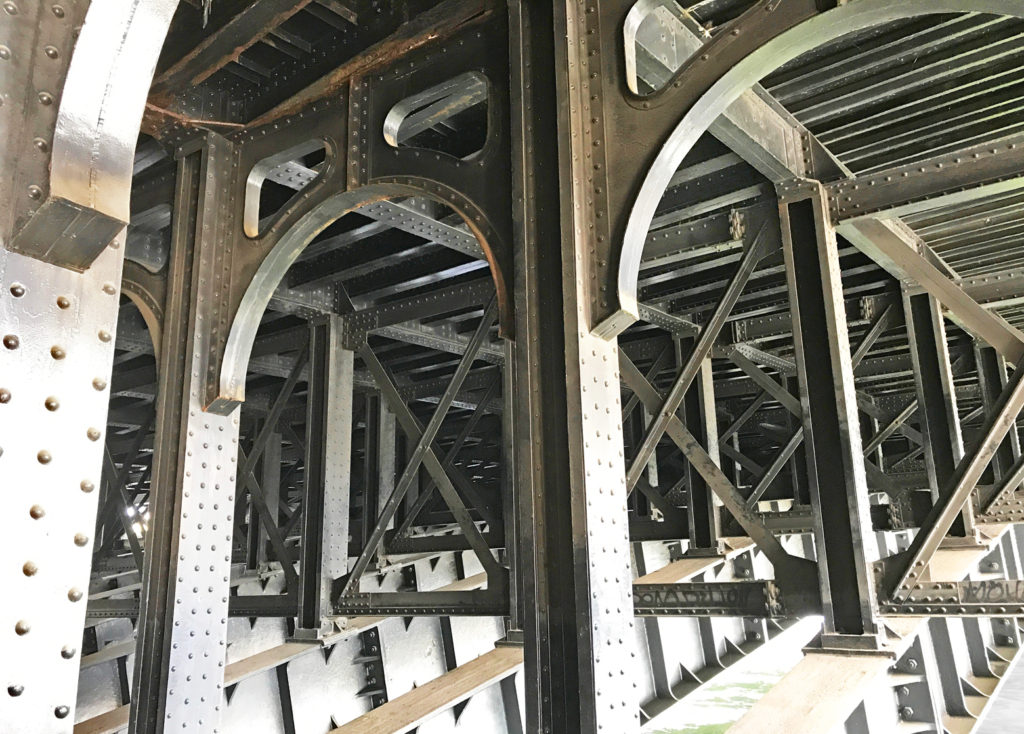
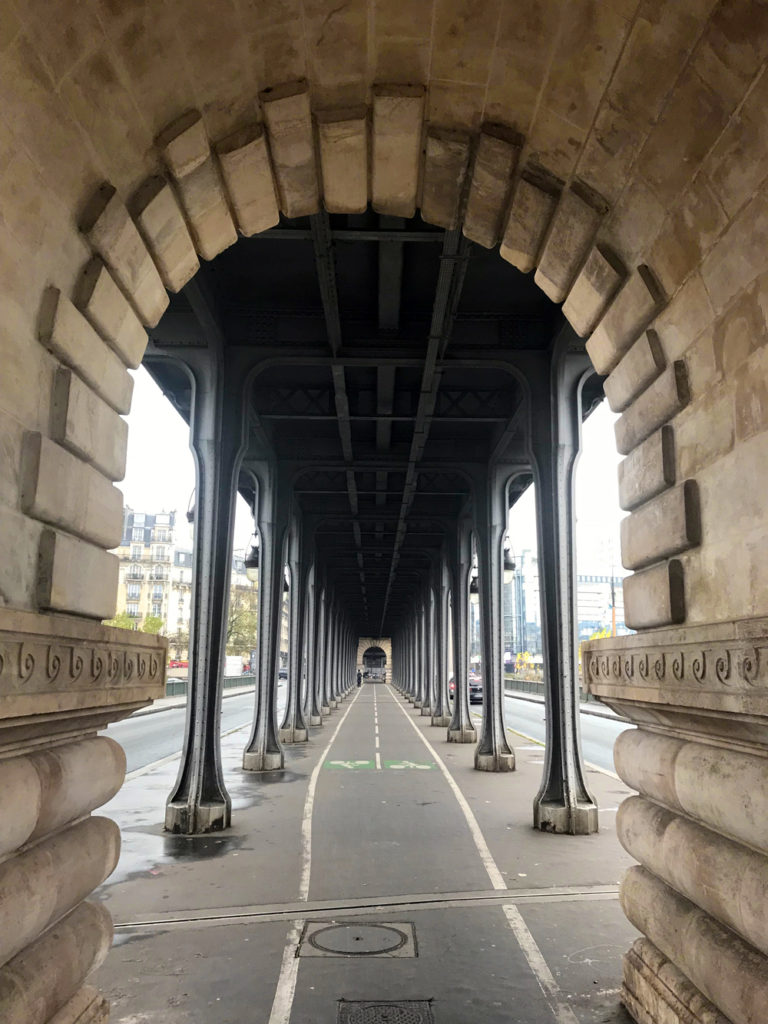
There are 37 bridges that cross the Seine, but my normal morning walk (about 13,000 steps round trip, according to my Garmin Vivofit) takes me past, or below, four of them. It’s the understructure of these bridges that fascinates me most.

My walk starts on the Île aux Cygnes, a skinny, mid-river island popular with dog-walkers, and it’s the pont de Grenelle that comes first. This is the kind of nondescript span that you’d see in any of a hundred American cities (indeed, a quarter-scale replica of the Statue of Liberty, dating to 1889. abuts the center stanchion), but there’s a sleekness to the metalwork that I like.

Pont de Grenelle

Further along the island is the pont de Bir-Hakeim. Formerly the pont de Passy (1905), this is a two-level bridge with a railway crossing above and a roadway, pedestrian and cycle crossing below. Chinese tourists come here by the dozen every morning to have wedding pictures taken — more than a few of whom have been inadvertently photobombed by yours truly.

Pont de Passy

The Pont Alexandre III, finished in 1900, connects the Invalides and Eiffel Tower on the south side with the Champs-Élysées and Grand Palais (my favorite building in Paris) on the north. The Beaux-Arts style bridge is the fanciest in the city, decorated extravagantly with ornate masonry pedestals, lampposts, cherubs and winged horses. Beautiful for sure, but check out the underside!

Pont Alexandre III

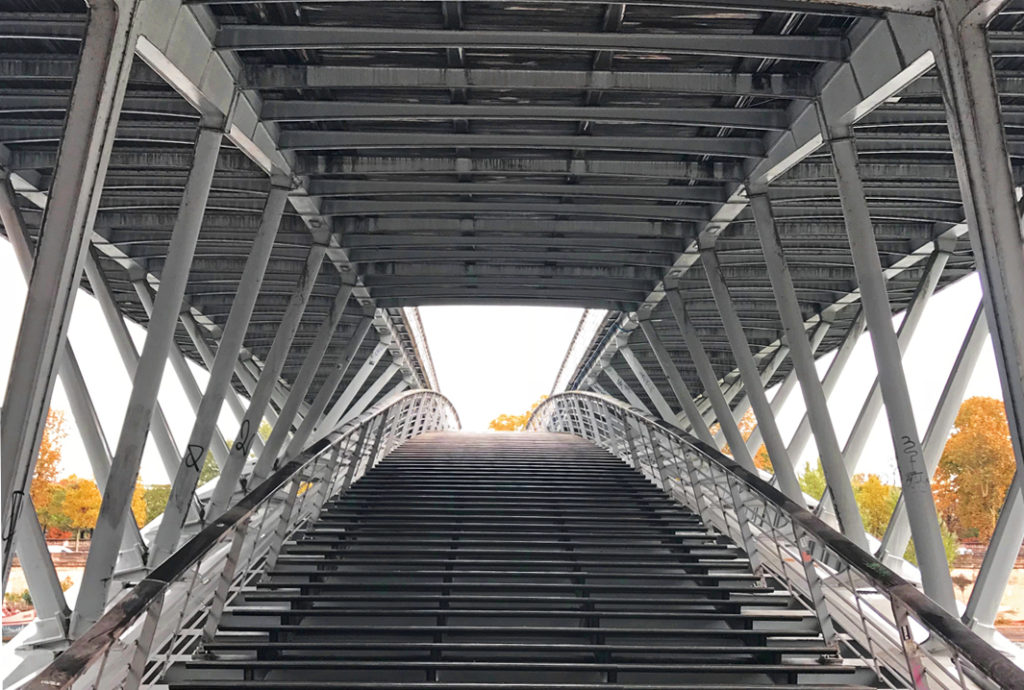
Further along, the passerelle Léopold Sédar Senghor links the Musée d’Orsay with the Tuileries gardens on the other side. It’s named after the first president of the former French colony of Senegal, in West Africa.

The old airport in the Senegalese capital, Dakar, is also named after Léopold Sédar Senghor. The footbridge in Paris is considered something of an architectural marvel and is planked with exotic hardwoods. The airport in Dakar… well, I once described it as “the world’s worst.” Which I’m sure it’s not, but it made for a good story.

A new airport serving Dakar, named after Blaise Diagne, the first black African elected to the French parliament, has since opened after a long series of delays. Maybe Diagne will get a bridge across the Seine.

The Léopold Sédar-Senghor footbridge

Comments (13)

Letter From Maho Beach

September 21, 2017

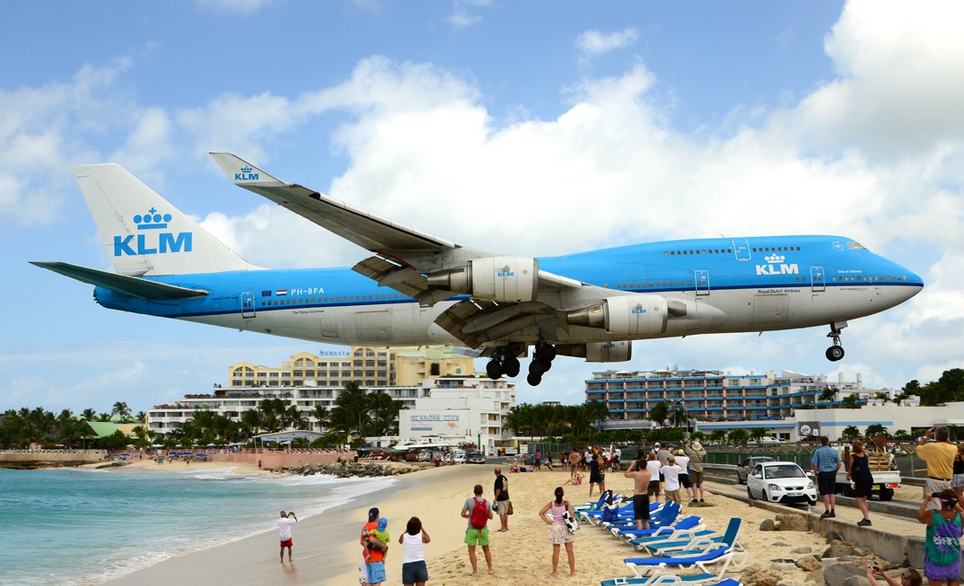
IF YOU’VE SPENT any time on the internet, you’ve seen Maho Beach, the thin strip of sand and surf abutting Princess Juliana International Airport on the Caribbean island of St. Maarten.

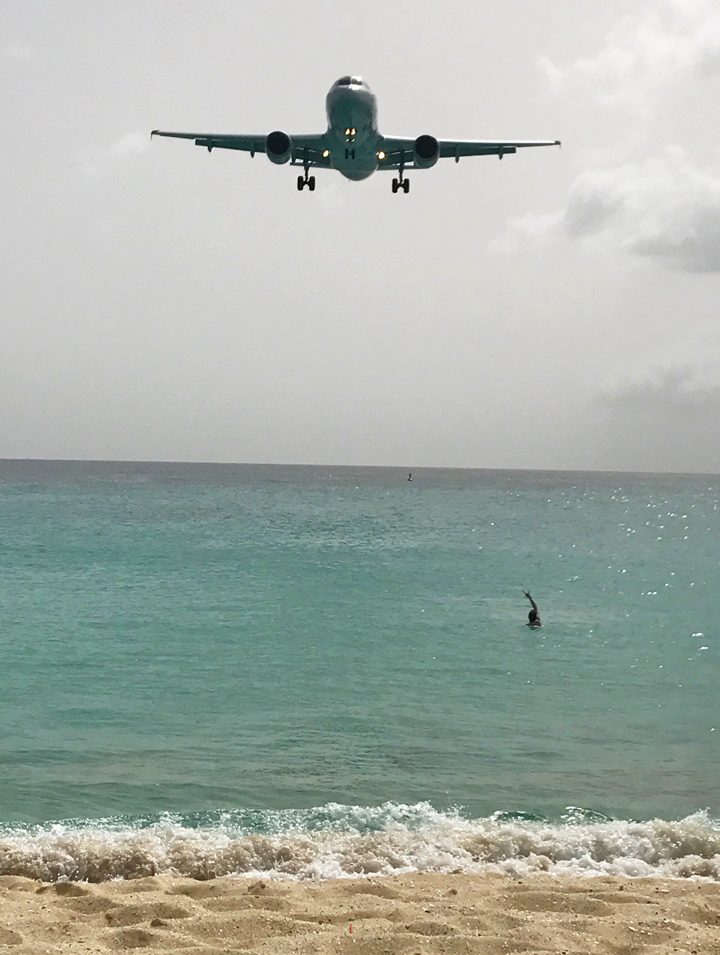
St. Maarten — or St. Martin — is part French and part Dutch. Princess Juliana (SXM) is in the Dutch section, and Maho sits just off end of runway 10. And when I say “just off,” I mean only a few hundred feet from the landing threshold. As arriving planes cross the beach, they are less than a hundred feet overhead. For an idea of how close this is, you can check out any of a zillion online pics. Like the one above. Or this one, or this one, or any of hundreds of YouTube videos. Unlike so many other scary-seeming airplane pictures you’ll come across, they are not retouched.

Thus, planespotting at Maho beach is an experience unlike any other in commercial aviation. Not that you need to be an airplane buff to enjoy it. For anybody, the sights, sounds, and sensations of a jetliner screaming overhead at 150 miles-per-hour, nearly at arm’s reach, are somewhere between exhilarating and terrifying.

How and why, exactly, are hard to understand. Is it the sense of danger, maybe? Or just the sheer novelty of it? Whatever it is, I felt it this past summer, during my first-ever flight into SXM. I landed a Boeing 757 there, coming in over Maho at about 2 p.m. on a perfect afternoon. It was fun being at the controls, but at heart, I didn’t want to be flying the plane. I wanted to be under it.

Our hotel was just around the corner, and as soon as I could I changed into a swimsuit and a t-shirt, and headed over.

The beach itself isn’t particularly pretty. It’s small, hemmed in between a pair of unattractive restaurants. The water is turbid, and there’s an ugly, two-lane road at the top of the sand. But that’s not the point, I guess. There are better places to swim, but none with a view like this one.

SXM isn’t a busy airport. Only a dozen or so jets land each day, and the nearby hotels and bars post the arrival and departure times. I was staying at the Sonesta, and they had a placard in the lobby listing the day’s flights. People tend to cluster whenever a plane is due — especially when it’s one of the widebodies coming in from Amsterdam or Paris. Air France brings in an A340. KLM was flying the 747 into SXM for years, but recently switched to the Airbus A330. The A330 is significantly smaller, but still breathtaking when it’s close enough to scrape the top of your beach umbrella. Charters from Europe are common too, using A330s, 787s, and other heavies.

I didn’t get to see any of those during the 90 or so minutes I spent there. I saw only smaller jets — a 737 and a couple of A320s. Still it was exciting. At Maho, pretty much any airplane gets your adrenaline going. And the noise will shake your bones. I also got to watch the same 757 that I’d brought in, piloted by the outbound crew, take off to the roar and applause of onlookers.

My landing at SXM wasn’t the smoothest one, if I can be perfectly frank, which I partly blame on the excitement of flying there for the first time. Procedurally, though, it was little different from landing anyplace else. The media will often speak of the Maho Beach experience from the perspective of the airplane — and wrongly so. Planes are described as “swooping in low,” or “low-flying,” or coming in at unusual angles. I found an online article describing SXM as “one of the world’s most dangerous airports.” Another cites the “risky approach” that pilots make to the runway. The Guardian writes that pilots are “forced to approach at low altitude.”

That’s just baloney. The runway at SXM is short, but there’s nothing different or unusual about the approach to it. The altitudes, speeds and angles that we fly all are normal. There happens to be a beach at the foot of the runway, but that’s the beachgoer’s concern, not ours.

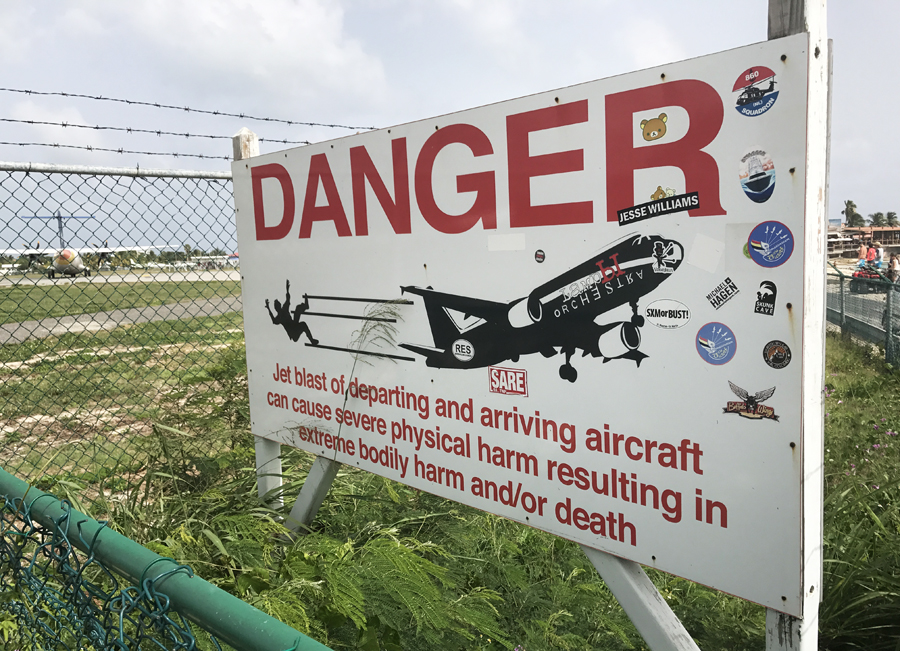
And I don’t say that lightly. Jet blast and wingtip vortices at Maho routinely upends people and sends their belongings skittering into the ocean. Or worse. This past July, a 57 year-old woman from New Zealand was killed there after the blast from a departing 737 slammed her into the ground. The takeoff threshold of runway 10 is even closer to the shoreline than the landing threshold, and the tails of departing jets practically throw shadows over the sand. And the fact it was a little-old 737, and not a larger aircraft, attests to both the power of jet engines and the proximity of the beach. Check this out.

The woman was among a group of thrill-seekers who’d tried hanging onto the perimeter fence as the pilots throttled up. Hurricane-force thrust from the engines then slammed her into the pavement. Although she was the first fatality, several others have been injured over the years after recklessly grabbing onto that same fence — some of them sent tumbling head-first into one the concrete barriers that line the roadway — despite the presence of signs warning people to stay clear.


PHOTOS BELOW BY THE AUTHOR


Top-of-page photograph by Fyodor Boris

Note to readers: This story was published shortly before the island of St. Maarten, along with much of the Caribbean, was devastated by Hurricane Irma. Both Maho Beach and the adjacent airport were badly damaged by the storm. Our best wishes go out to the people of St. Maarten.


Comments (31)

Turbulence: Everything You Need to Know

August 10, 2017

For passengers made uneasy by inflight turbulence — and I know there are lots of you — the following article, reprinted this week in Business Insider magazine, can help put you at ease.

Click Below

This article is a re-write of an earlier piece I did on the topic. It will appear in the second edition of my book, Cockpit Confidential, due to be published in March, 2018. It also appears in the Questions and Answers section of this site. Nervous flyers may wish to bookmark the Q&A page, here.

Comments off

A “Life List” of Planes

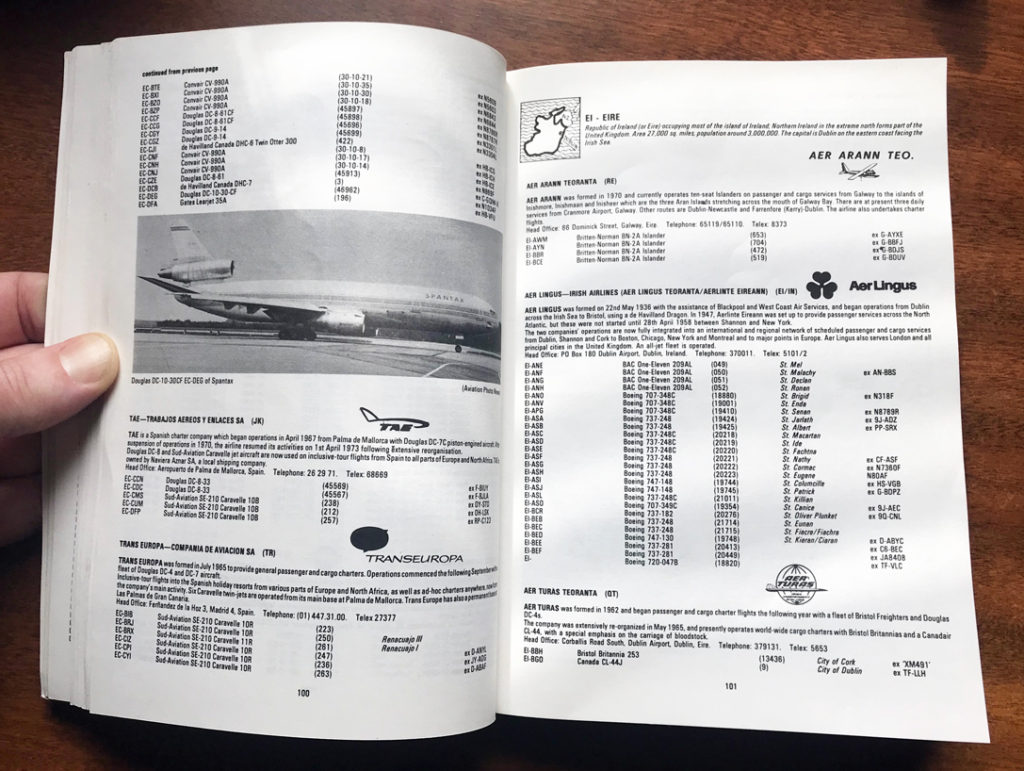
Pages from “World Airline Fleets, 1980.”  


UPDATE: March 1, 2026

AIRLINER ENTHUSIASTS are like birdwatchers in a lot of ways. We dress funny and tend to own expensive binoculars. And, we’re into lists.

As I kid I was a planespotter. I’d spend entire weekends holed up in the 16th-floor observation deck at Logan Airport, logging the registration numbers of arriving and departing jets. There were books you could buy — annual global fleet directories with the registrations and specs of every commercial plane in the world, arranged alphabetically by country and airline. There were little boxes where you could check off each plane once it was “spotted,” or, you could just line through the listing with a highlighter.

World Airline Fleets, I remember, was one of these books. It came from the U.K. and was edited by a fellow named Gunter Endres (who, the Interweb tells us, is still writing aviation books). An even bigger volume, published in Switzerland, was called J.P. Airline Fleets. The idea was to mark off as many planes as you could.

Up there on the 16th floor, things could get competitive. I’ll never forget the jealousy I felt toward a legendary Boston spotter named Barry Sobel, because he’d been there to record a Pakistan International 707 freighter that landed unexpectedly one weekday while I was in school.

At one point, way back when, I could have told you the model and airline of every commercial plane I’d ever seen. Birders have tallies like this, too. They call them “life lists.” Braniff DC-8, El Al 707, Aeroflot IL-62… check, check, check. There were hundreds. Somewhere along the way I stopped keeping track, and all these years later I couldn’t begin to reconstruct such a catalog.

What I can do, however, easily and accurately, is present a slightly different life list: a record of each airplane type, and each airline, that I have flown aboard. It appears below. I’ll also include which classes I’ve sat in, using the traditional industry codes:

F = First
C = Business
Y = Economy

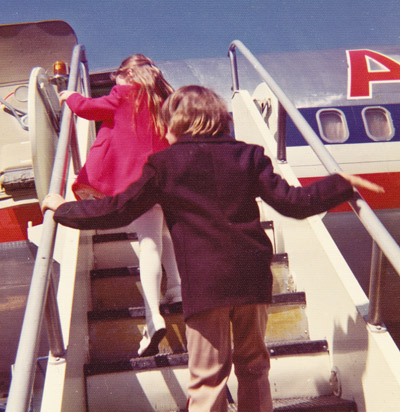
The accompanying photo is from April, 1974. That’s my sister and me walking up the stairs to an American Airlines Boeing 727, on our way to Washington, D.C. This was the first airplane, large or small, that I ever set foot in. I’m fortunate to have the moment preserved like this.

Even then, at eight years-old, I knew it was a 727.

BOEING 727

American   F,Y
Northwest   F,Y
Eastern   Y
Delta   F,Y
Pan Am   Y
TWA   F,Y
USAir/US Airways  Y
Trump Shuttle   Y
Fawcett (Peru) Y
Aeroamericana (Peru)  Y
DHL (cargo, cockpit jumpseat)


BOEING 707

TWA Y


BOEING 737 CLASSIC

Piedmont  Y
USAir   Y
United  Y
Delta  Y
Aloha Y
Rutaca (Venezuela)  Y
Cayman Airways Y
Sky Airline (Chile)  Y
PLUNA (Uruguay) Y


BOEING 737 (Next Generation)

American Y
United  Y
Delta   F,Y
Southwest  Y
KLM  C,Y
Malaysia Airlines  Y
SAS  Y
South African Airways  Y
Jet Airways (India) C
Turkish Airlines  Y
Thai Lion Air Y

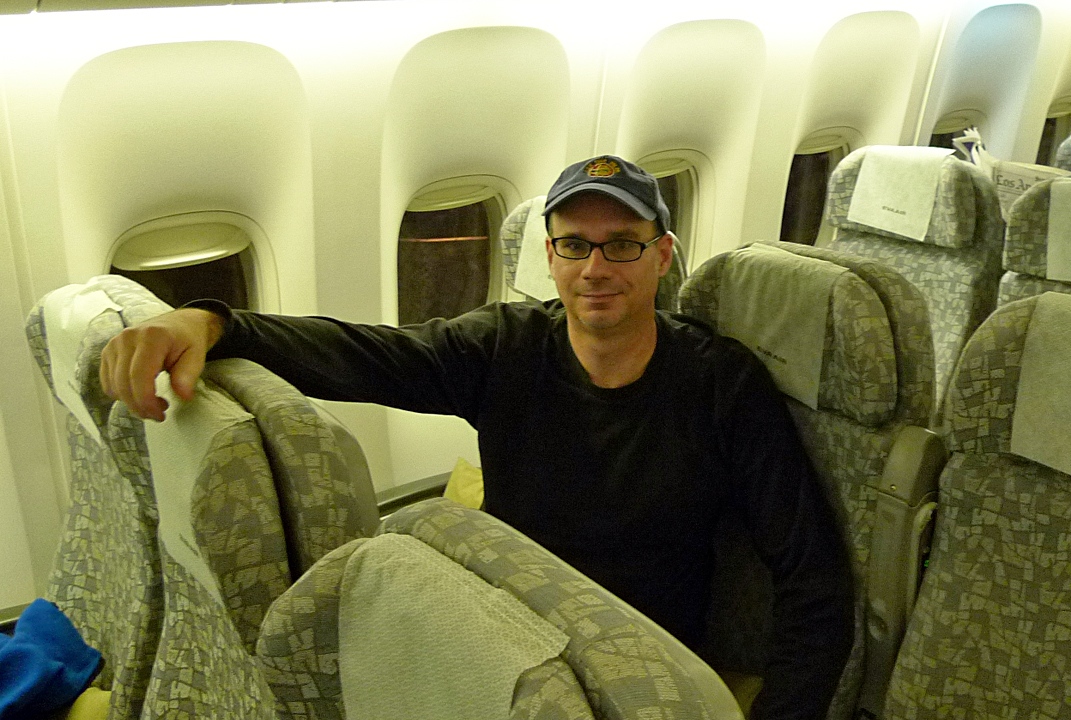
En route to Taipei on an Eva Air 777.

BOEING 747 (All series)

Pan Am Y
Northwest F,C,Y
El Al  Y
United  C
British Airways  C,Y
Air France  Y
Qantas  Y
Singapore Airlines  Y
Thai  C
Delta  C,Y
Korean Air  F,C
Royal Air Maroc Y
South African Airways  Y


BOEING 757

Northwest  Y
American  F,Y
United  F,Y
Delta  F,C,Y
British Airways  Y
Icelandair  Y


BOEING 767

United F,C,Y
Delta  F,C,Y
TWA C
All Nippon  Y
Kenya Airways  C


BOEING 777

United  Y
American C
Delta  C,Y
Emirates  F,C,Y
Malaysia Airlines  Y
Thai  C,Y
Eva Air  Y
Korean Air Y
Royal Brunei  Y
Cathay Pacific  C
Qatar Airways C
Singapore Airlines  C
Jet Airways (India) F
China Eastern C

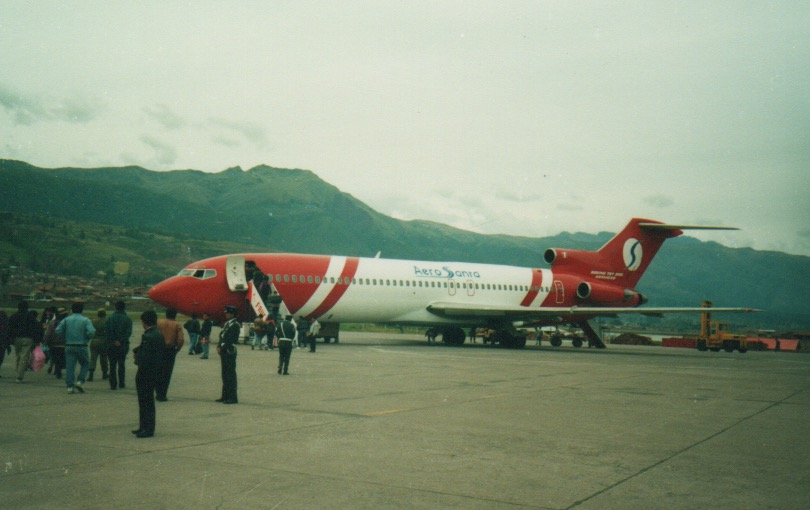
AeroSanta 727 at Cuzco, 1994.   Author’s photo.

BOEING 787

Japan Airlines  Y
Qatar Airways C
Virgin Atlantic C
Korean Air C


DOUGLAS DC-8

Air Canada  Y
DHL (cargo, cockpit jumpseat)


McDONNELL DOUGLAS DC-9 (Classic)

Northwest Y
USAir  Y
Delta  F,Y
Air Canada  Y
Finnair  Y
Aeropostal (Venezuela)  Y
ValuJet  Y


McDONNELL DOUGLAS MD-80 Series (DC-9 Super 80, MD-88/83/87, etc.)

TWA  F,Y
Delta  F,Y
American F,Y
New York Air  Y
Continental  F
Austral (Argentina)  Y


McDONNELL DOUGLAS MD-90 Series (MD-90, Boeing 717)

Delta  F,Y
Bangkok Airways  Y
Uni Air (Eva Air)  Y


McDONNELL DOUGLAS DC-10

American  F,Y
Northwest  F,C,Y
Aeromexico Y
Finnair  Y
British Airways  C
Continental  Y


McDONNELL DOUGLAS MD-11

Delta  C,Y

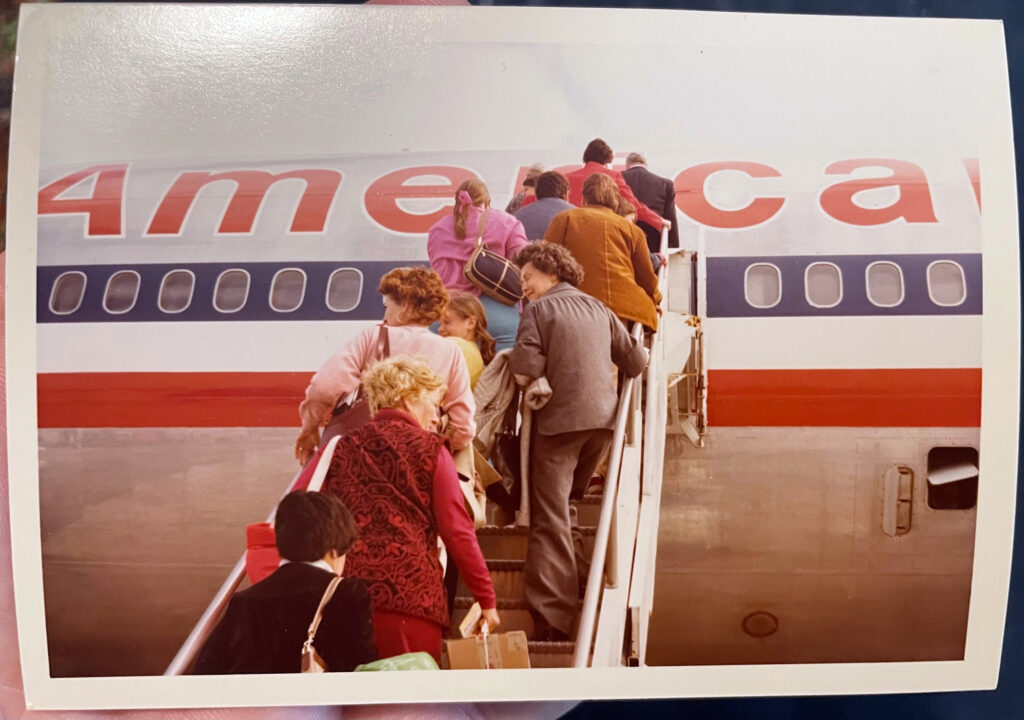
Boarding a DC-10 in Bermuda, 1979.   Author’s photo.

LOCKHEED L-1011

Eastern F,Y
Pan Am  Y
Delta  Y


FOKKER F-28

USAir  Y


AIRBUS A300

Eastern  Y
American  Y
Thai  Y
DHL (cargo, cockpit jumpseat)


AIRBUS A310

Lufthansa  Y


AIRBUS A320 Series (A319, A320, A321)

United F,Y
Delta  F,Y
America West F
US Airways Y
British Airways  Y
Air France  Y
Lufthansa Y
TAP Y
Royal Brunei Y
Air Malta   C
SAETA (Ecuador) Y
LanPeru  Y
AirAsia  Y
JetBlue  Y, C
China Eastern F
Drukair (Royal Bhutan Airlines) C
Avianca C
VietJet Y
Qatar Airways C
South African Airways Y
Aegean Airlines Y


AIRBUS A330

Air France  Y
Sabena  Y
Delta  C,Y
Cathay Pacific  C,Y
Thai  Y
Asiana  C
Singapore Airlines  C
Turkish Airlines C
China Airlines  C
Philippine Airlines C
Qatar Airways C
South African Airways C

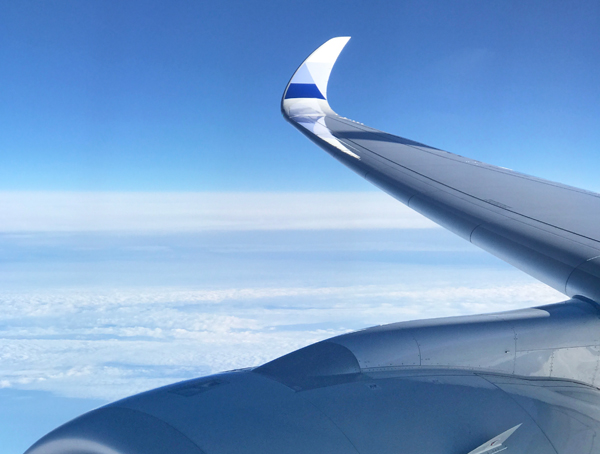
On board a China Airlines A350.   Author’s photo.

AIRBUS A340

Air France  C,Y
EgyptAir  Y
SriLankan  Y
Cathay Pacific Y
China Airlines Y
Qatar Airways C


AIRBUS A350

Qatar Airways  C
China Airlines   C
Cathay Pacific C
Delta C, Y
Thai Airways C
Qatar Airways C


AIRBUS A380

Emirates  F,C
Qatar Airways C
Asiana  C


AIRBUS A220 (Bombardier C-Series)

Delta  F,Y
airBaltic Y


EMBRAER 190

JetBlue Y
American  Y
US Airways  Y
Aerorepublica (Colombia)  Y


EMBRAER 190

JetBlue Y
American Y
US Airways Y
Aerorepublica (Colombia)   Y


TUPOLEV Tu-134

Aeroflot  Y


TUPOLEV Tu-154

Aeroflot Y


As you’ve probably noticed, I’ve left out regional jets and turboprops. Partly because they’re boring, and partly because, for that same reason, I can’t remember them all. Highlights would include a Pan Am Express Dash-7, an Air New England FH-227, an Aeroperlas (Panama) Shorts 360, and a cargo-carrying Twin Otter in which I sat on the floor during a hop from St. Croix to San Juan.

The winners, if we can call them that, are the 737 and A320, predictably enough. That’s not very exciting, and it’s pleasing to see the infinitely more impressive 747 coming in third place. Somehow I’ve managed to fly aboard 747s from 13 different carriers.

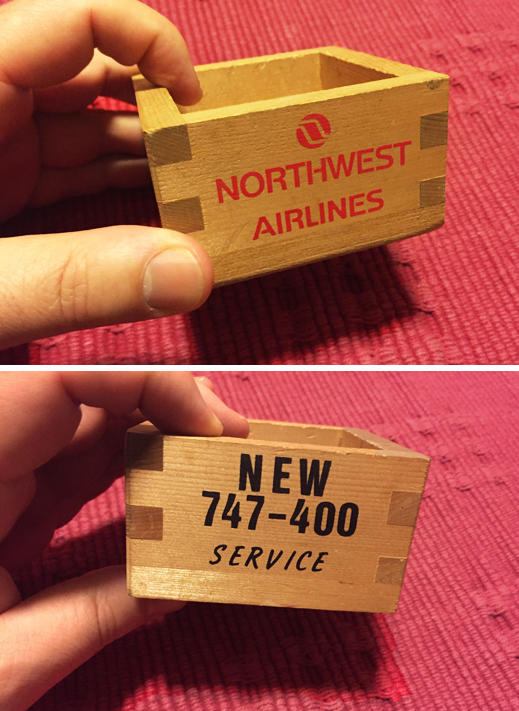
Northwest Airlines, some of you might recall, was the launch customer for the 747-400, back in 1989. That spring, they had been using the jet on domestic “proving runs” mainly between Minneapolis and Phoenix. Finally on June 1st, they inaugurated international service. The first departure was flight NW 47, from JFK to Narita. My friend Ben and I were passengers on that flight. It was the day after my 23rd birthday. I still have one of the commemorative sake cups that they handed out.

747SakeCup

Of all the planes that ought to be on the list, but aren’t, the most painful example is the Concorde. Years ago, when I was a regional airline pilot, British Airways used to offer a special “interline” Concorde fare to London, available only to industry employees. It cost $400, and it was what we call “positive-space” — as opposed to standby.

A remarkable bargain, looking back on it. But when you’re a young pilot making twenty grand a year, $400 is a lot of money, and so I kept putting it off, putting it off. I’ll do it later, I promised myself. Next year.

And then it was gone.


Comments (74)

Flying: A Look on the Bright Side

May 28, 2017

Is Air Travel Really As Bad As Everybody Claims? Here Are Some Reasons Why Not.

AN OP-ED IN THE NEW YORK TIMES BY PATRICK SMITH

Click the Picture to Read


Some follow-up notes:

This is the sixth op-ed that I’ve had published in the Times, and I’m always grateful for their interest. I’m a little disappointed, though, at the headline they chose for this one. It’s misleading. The article isn’t about flying in the old days; it’s about flying today. I’m making a case that the golden age of air travel is in many ways happening right now, not in some mythologized past.

As expected, the angry and sarcastic letters have been pouring in. A lot of them are flip and fail to acknowledge my points. Here’s a typical example, sent anonymously…

We need to look at this objectively. Is flying cheaper than it used to be, yes or no? Is it safer, yes or no? Is it faster and, in a surprising number of ways, more comfortable and convenient? Either it is, or it isn’t. And the answer, in each case, is yes. That’s not me talking; it’s simply the facts. That doesn’t mean flying is a wonderful experience. And, if you’re at all familiar with my writing over the years, you’ll know that I’ve amply criticized the airlines when that criticism has been due. Poor communications, terrible customer service, lousy onboard products, miserable airports — I’ve covered that stuff countless times without pulling punches.

Duly Noted

What I’m doing in the Times piece, though, is pointing out a few of the good things that are seldom acknowledged.

No matter, a number of readers already have insisted that not only am I wrong, and that flying is truly awful, but in fact it’s never been worse. To which I ask: really, are you sure? And if so, let’s try this: Imagine that you’re planning an economy class trip from, I don’t know, Seattle to Paris. You have two theoretical options. Option number one is that you can fly the route tomorrow, on the carrier of your choice, and experience flying exactly as it is. Or, option two, you can travel back in time and do it in 1964. What’s your pick? Just keep in mind that if you choose the latter, you’ll get a couple of extra inches of legroom, shorter lines at the airport, and maybe a chirpier flight attendant. Your journey also will take several hours longer, cost more than twice as much, and you will sit in a cabin with no personal entertainment system, filled with people smoking. And, just for good measure, your chances of being in an accident will be about eight times higher.

Are you still down for it?

For what it’s worth, a colleague and I were talking the other day, and we both agreed that so much of what people hate about flying isn’t really airline-related, per se, but rather infrastructural. The decrepit state of our airports, for example, and our outdated air traffic control system, contribute significantly to delays and congestion. Then you’ve got TSA. Our security checkpoints are badly overcrowded and poorly designed. Customs and immigration procedures, too, are flyer-unfriendly. These are bureaucratic and government-funding issues more than anything else. Fix them, and I estimate that 75 percent of passengers’ frustrations would disappear.

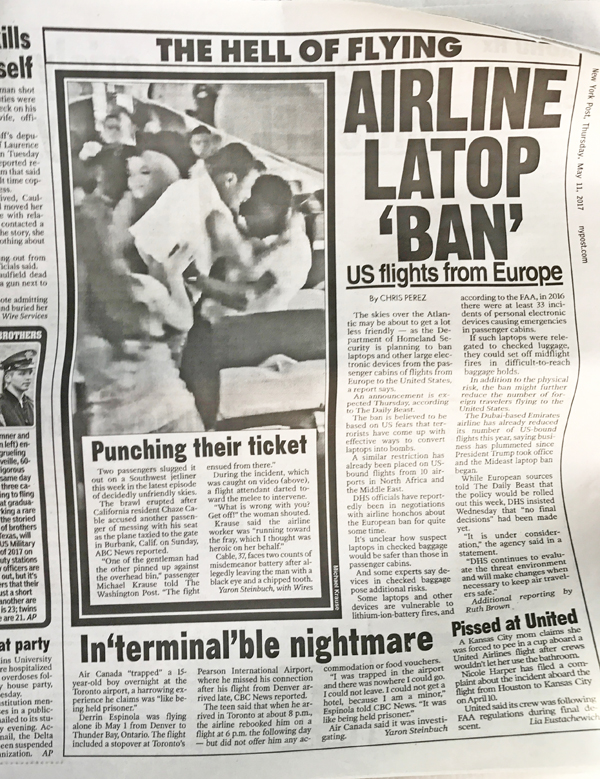
In the meantime, how trendy has it become to bash the airlines? The New York Post even has a “Hell of Flying” section…

Comments (82)

The Scourge of Inflight Garbage

January 24, 2017

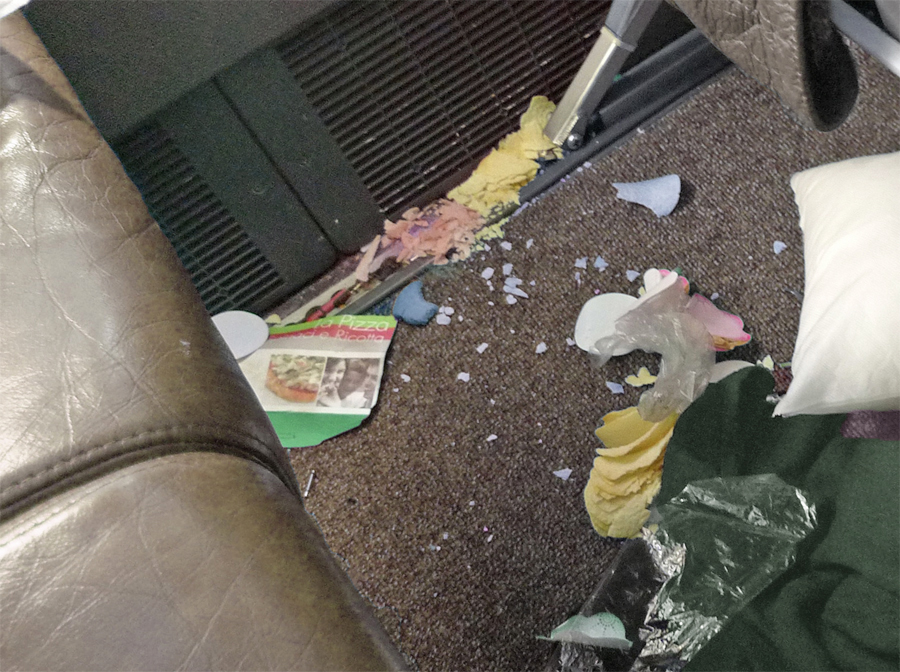
DEAR PASSENGER: Look, I know it’s a long flight, and I realize that, at least in your aggrieved mind, commercial air carriers are the most malevolent entities the universe has ever known, fully deserving of your disrespect. But must you? Must you throw your garbage all over the floor? I realize that you’re seated for an extended period of time in cramped quarters, and it’s not like there’s a waste receptacle at every seat. But I’m afraid that’s not a good enough excuse for, say, leaving leaky Chinese food cartons or a half-eaten Chick-fil-A sandwich under your feet.

It’s a sobering spectacle, standing at the forward bulkhead and looking down the aisles once the passengers have disembarked. Arriving from Europe or the West Coast, the cabin of my 767 looks like a typhoon has blown through it. I’ve seen an entire can of Pringles mashed into the floor like sawdust. I’ve seen a mixture of chips and soda trampled and congealed into a kind of carpet-eating concrete. There are newspapers, cups, cans, plastic wrappers of every conceivable color and size, candy, gum, cookies, apple cores, and even sullied diapers, thrown under seats or crammed into pockets. By the time the cleaners have finished, they’ll have stuffed several oversized bags full of waste.

Thousands of long-haul flights operate every day, and each leaves hundreds of pounds of trash in its wake. (Much of this refuse is recyclable; unfortunately, regulations require all garbage be incinerated when a flight is coming from overseas). The amount of litter seems to be more or less proportional to the time spent aloft, but it can be astonishing even after a short flight. The sheer volume of it is depressing enough; the fact that some people are obnoxious enough to dump it on the floor makes it worse.

Airlines, for their part, could and should enact a few sensible, and cheap, countermeasures:

1. Put a lunch-sized, recyclable paper or plastic trash bag in each seat-back pocket. Or, if that itself is deemed too wasteful, supply a bag for each block of seats, to be shared. 

2. Have the cabin crew make more frequent trash collection runs, especially toward the end of flight, accompanied by a PA announcement. Some carriers already do this; alas, many flyers find it easier to simply dump their crap on the floor. Maybe that PA announcement needs to be a little more specific? “Ladies and gentlemen, we’ll be coming down the aisle to collect any items you wish to discard. Please do us a favor and not leave your trash under your seat.”

3. Cut down on the insane amount of plastic that accompanies the typical inflight meal (cellophane wrappers, cups, etc.).

(I was going to suggest, too, that carriers maybe get away from the types of snacks that are, by their nature, messy. Things like peanuts, chips and mini-pretzels are all but destined for the carpet and seat tracks. But then, what are the alternatives? Carrots?)

As a result of any or all of these ideas, interiors would be less soiled, while turnaround times would be quicker and require less labor. I’ve watched cleaning crews spend a better part of an hour picking up trash after a long flight. Am I wrong, or would a few pennies per plane save an airline millions in annual cleaning costs? Plus you’d have a more attractive product.

Until then, here’s a tip: In a pinch, an airsickness bag might be too small for cans, but it otherwise makes a semi-useful trash container. (Just remember, though, that you’re taking it away from the next person). Or, better, if you’re up in first or business class, your blanket or duvet frequently comes wrapped in a plastic sheathing that, if carefully removed, makes for a roomy receptacle.


Related Stories:

FIRST CLASS, NO CLASS. THE PASSENGER HALL OF SHAME

THE UNITED STATES OF DOG CRAP, RUBBER BANKDS AND DENTAL FLOSSERS

Comments (40)