Author Archive

Arrivederci, Alitalia

October 18, 2021

LATE LAST WEEK, Alitalia operated its final flight and officially ceased to exist. For seventy-four years, Linee Aeree Italiane S.p.A., as it was formally known, had carried Popes, kings, despots, movie stars, and tens of millions of tourists, across a network that once spanned six continents.

Its demise was both a complete surprise and not the least bit shocking. The airline spent its existence in a more or less permanent state of distress, yet it always managed to pull through, be it from a government bailout, cash from a foreign partner, or some combination. Not this time. Thus, one of the most recognized names in the industry has disappeared, joining the likes of Swissair, Sabena, Malev, and the other classic European carriers that have vanished.

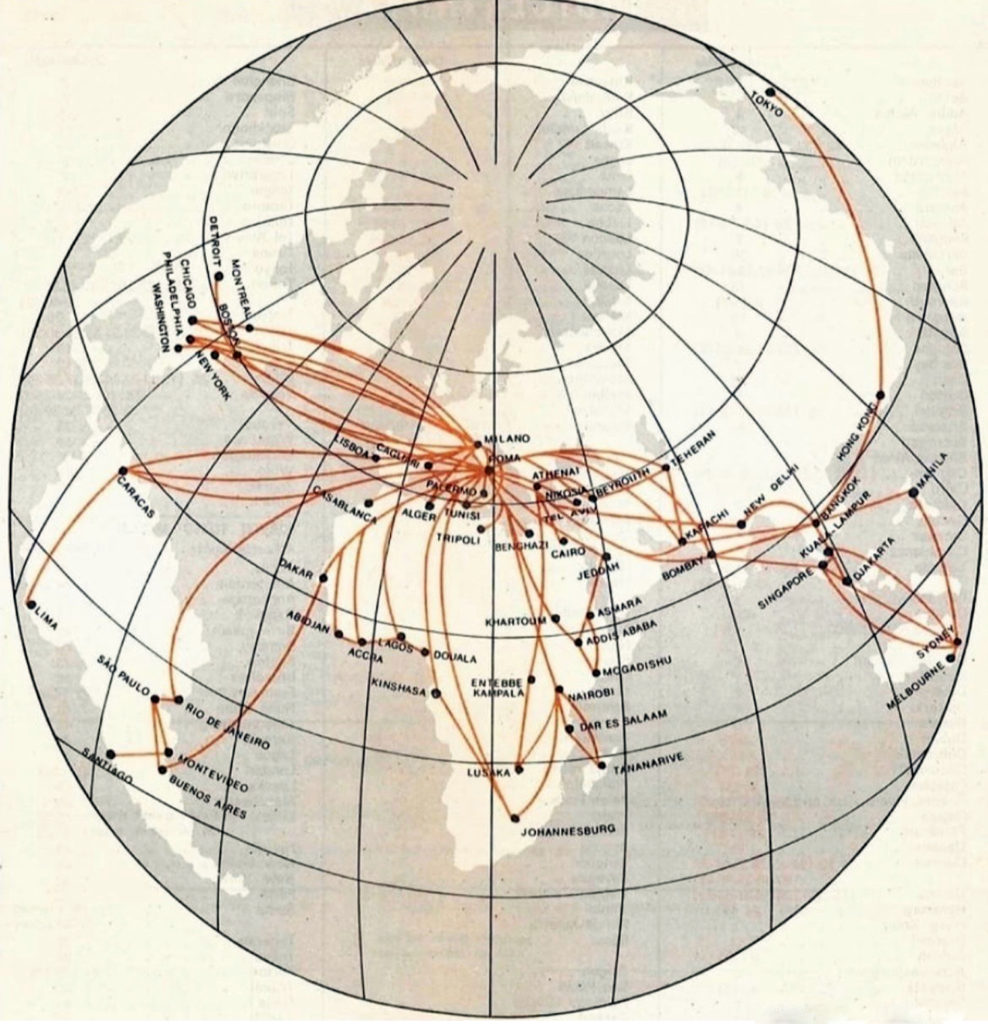
Alitalia long-haul routes in the early 1970s

A new, government-owned entity, Italia Trasport Aereo (ITA) is taking its place. With the whole thing being schemed out in advance, it’s more of a reincorporation — a reinvention — than a shut-down in the traditional sense, with ITA absorbing most of Alitalia’s assets and employees. Could they not have done this without totally dissolving such a well-known brand? Though, maybe, having left such a legacy of struggle, that was the point.

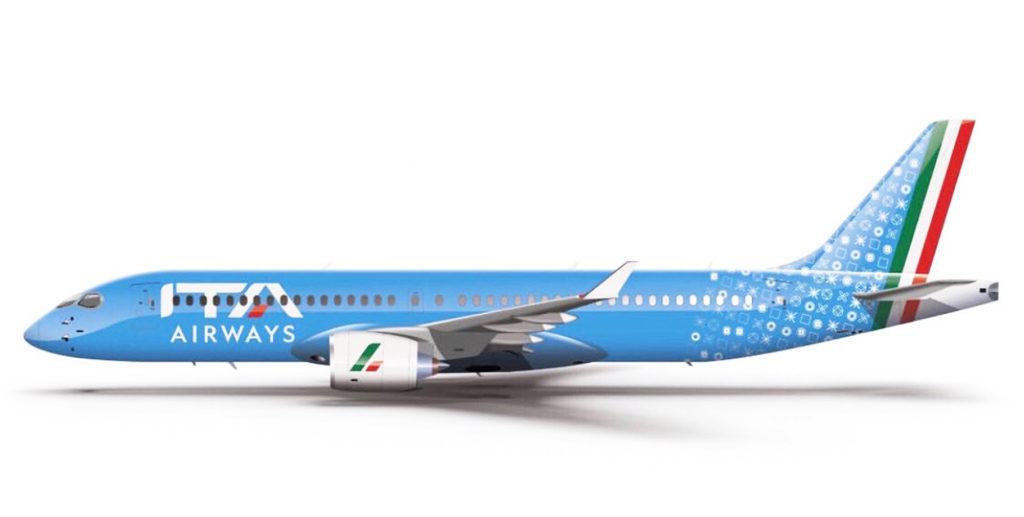
The transition has so far been messy. The ITA website and mobile app have been plagued with problems, and the new airline has struggled to receive U.S. government approval to operate here. While they sort things out, let’s do the fun thing and have a look at the identity they’ve come up with…

I can’t get my head around this one. It’s not ugly so much as confusing. Or maybe it’s confusing and ugly. The colors and styles are so mis-matched as to seem almost arbitrary — a big, weird, non-sequitur. The patterned tail motif reminds me of a doily, or the kind of tablecloth you’d find in certain Italian restaurants. To replace Alitalia’s iconic “A” emblem, worn since the ’70s, they needed to step up. They didn’t.

About the only positive thing is the ITA logo. The typeface is distinctive and elegant in an old-school sort of way. (In fact it’s almost too old-school, reminiscent of a made-up airline from a movie.) And, smartly, they’ve kept the red, white and green, which is a nod to Alitalia and the colors of the flag. On the airplane, however, the blue background requires the letters to be rendered only in white, so the whole effect is lost.

In an annoying last-minute decision, they went and added “Airways” into the carrier’s name. “ITA,” just by itself, was smoother, simpler, and perfectly adequate. But no, they had to jam “Airways” in there, because apparently passengers are stupid and might forget that it’s an airline. Loosely translated, the carrier is now called “Italian Air Transport Airways.”

With or without the extra word, it lacks the poetry of “Alitalia.” Still, it’s better than “Italian Air,” “Prego,” or any of several other garish possibilities. We may have dodged a bullet there.

Grade: D


Alitalia photo from author’s postcard collection.

Related Stories:

ART OF A LOGO
THE MANGLING OF AIRLINE NAMES
THE NIGHTMARE CONTINUES

Leave a Comment

R.I.P. William Langewiesche

June 18, 2025

WILLIAM LANGEWIESCHE, pilot and celebrated journalist, has passed away at age 70.

Langewiesche’s articles covered a lot of ground, from the 9/11 attacks to the Iraq War to nuclear proliferation. But it’s his air crash chronicles, which appeared in Vanity Fair, the Atlantic, and the New York Times, that to me are the most unforgettable. His accounts of EgyptAir 990, the 2006 midair collision over the Amazon, and the disappearance of MH370, among others, are the best examples of aviation journalism I’ve ever read.

William was a National Magazine Awards finalist eight times, and held a degree in cultural anthropology from Stanford. Not your typical reporter or your typical aviation nerd. He was on another level. In an era of “content creation” and slapdash news coverage, his meticulously researched stories and vivid narrative style will be sorely missed. Nobody did it better.

I never met William, but we exchanged emails and phone calls many times, and he was kind enough to contribute a blurb to my book.

His father was Wolfgang Langewiesche, author of the seminal art-of-flying primer, “Stick and Rudder,” which has been in print since 1944.


Related Story:
PLANE and PILOT

Comments (1)

Thoughts and Theories on the Air India Disaster

UPDATE. July 14, 2025

The preliminary crash report on Air India flight 171 is out, and what it says is startling.

It contends that at the moment of takeoff, both fuel control switches “transitioned” from the RUN to CUTOFF positions, essentially killing both engines.

One of the pilots is then heard asking the other why he did this. The second pilot responds that he did not. (Which pilot was speaking to whom is not specified.)

A few seconds later the switches transitioned back into the RUN position. The engines began spooling up again, but there was nowhere near enough time for them to produce adequate power.

In other words, it seems that one of the pilots switched off the fuel intentionally.

Or did he? Notice the investigators’ use of the word “transitioned.” The report is not fully clear as to whether the data recorder was tracking the flow of fuel independent of the switch position, or if it shows the switches themselves were, in fact, physically moved by hand. If they weren’t, it remains possible that an electronic glitch in the plane’s digital engine control system could be the culprit.

But if the switches were moved to CUTOFF manually, the billion-dollar question is why? Were they moved by accident, or nefariously? Was it an act of absurd absent-mindedness, or one of willful mass murder, a la EgyptAir, Germanwings, and (almost certainly) MH370.

As preposterous as the idea of a pilot mistakenly shutting off the engines sounds, I’ll note that it’s happened before. Consensus, however, is trending toward premise number two.

At least to me, though, the dynamics of the crash don’t really fit the suicide theory. You’re saying that the pilot’s plan was to cut both engines and let the plane glide into the ground? That seems an awfully conservative scheme. There would be a lot of unknowns in such a scenario, and no guarantee that the ensuing impact would be as disastrous as it turned out to be.

Just to the left of the impact zone was an area with no buildings and fewer obstructions. Perhaps with just a little more altitude they could’ve reached it, resulting in a crash that was partly survivable. Calculating the exact impact point ahead of time would’ve been nearly impossible.

Further, the second pilot denied shutting off the engines when queried by the first one. Why?

Rumors are circulating that the captain was going through a divorce and had been treated for depression. Whether or not this turns out to be true, just keep in mind that although depression sometimes turns people suicidal, only in the rarest cases does it also turn them murderous.

One thing that should pique interest is the report’s inclusion of a Boeing service bulletin issued a few years ago. The concern was fuel control switches failing to properly lock. The bulletin pertained to 737s, but the same basic switch is used on the 787 as well. Is it possible the fuel switches on Air India 171 were defective, and were moved from RUN to CUTOFF by nudge or vibration?


UPDATE. July 9, 2025

The focus now is on the fuel control switches. These are a pair of manually positioned cockpit controls that effectively turn the engines on or off.

These switches lever-lock into place cannot move automatically. Whichever position investigators say they were in, a pilot had to put them there.

If an engine fails during flight, one of the steps in securing that engine is to shut off its fuel control. In the case of Air India, what’s being whispered is that an engine may have failed on takeoff, and one of the pilots then grabbed the wrong switch, thus rendering both engines inoperative only a few hundred feet over the ground.

The biggest problem with this idea is that engine failures aren’t handled this way. All pilots are trained to wait until a safe altitude — usually at least a thousand feet — before commencing any steps to secure or troubleshoot a malfunctioned engine. You don’t start moving critical controls until there’s adequate time and altitude. Additionally, any time a fuel control switch is lifted out of the RUN position, both pilots must verbally confirm the correct one is being manipulated.

Is it possible a pilot could’ve have reacted in a panic and done exactly the wrong and catastrophic thing? Yes, and it’ll be quite troubling if it turns out one fuel control switch was found in RUN, with the other in CUTOFF.

And what if they were both found in CUTOFF? Well, putting aside the a possibility that the plane was crashed on purpose, this would make some sense. One of the steps addressing a dual engine failure — rare as such things are — is to cycle both fuel control switches. That is, move them from RUN to CUTOFF, then back again.

If something in the plane’s electronics went haywire and caused the engines to lose power simultaneously, we can imagine a desperate crew, with only seconds to spare, attempting the re-start process, with both fuel controls repositioned to CUTOFF and not enough time to get them on again.

Nothing in the preliminary report will be definitive, but if the switches were found in different positions from one another, this hints at pilot error. If both were found in CUTOFF, this hints at a dual failure and a last-ditch re-start effort.


UPDATE. June 24, 2025

It’s looking more and more likely that flight 171’s ram air turbine (RAT) was indeed deployed just prior to the crash. If so, this more or less confirms a loss of power in both engines.

Why it lost power is another issue altogether, and a potentially calamitous one for Boeing.

See below for more.

June 15, 2025

AIR INDIA flight 171 plunged into a neighborhood seconds after takeoff from Ahmedabad airport on Thursday afternoon, killing more than 270 people. The exact death toll is uncertain, as the search for bodies continues. One passenger survived.

My rule this soon after an air disaster is to avoid conjecture. Crash investigations can run for months before causes are nailed down, and first-glance theories, however convincing they seem in the moment, often turn out to be wrong.

That being said, evidence suggests the Boeing 787 suffered either a loss of thrust in both engines, or an inadvertent retraction of the plane’s flaps and slats before reaching sufficient speed.

The plane climbed to only about 400 feet above the ground (the 650 feet being reported by the media is the altitude above sea level), leaving the pilots no time to troubleshoot or turn back. All they could do was glide straight ahead. The flight path was stable, but the jet slammed into buildings at over 150 miles-per-hour, exploding into a fireball.

The loss of thrust theory is evidenced a few different ways. Most notably, one of the pilots, in a mayday call to air traffic control, reported power loss to air traffic control. In addition, some of the video footage appears to show deployment of the 787’s ram air turbine (RAT), a device that extends from the fuselage automatically, triggered by the loss of both engines, to provide flight control power. The “bang” heard by the surviving passenger could have been the RAT dropping into place, and the buzzing noise in one of the videos could be the sound of the device doing its thing (it’s essentially a propeller driven by the oncoming air). The footage is grainy and unclear, however.

Engine failures are rare. A loss of both engines is exceptionally rare. A bird strike, a la Captain Sullenberger, would be one possible culprit, but so far nothing points to this. Other possibilities include a malfunction of the 787’s electronic engine controls, fuel contamination, or ingestion of runway debris. There’s also the chance, however far-fetched, that a pilot shut the engines down, either out of carelessness, or, in a worst-worst-worst case situation, deliberately.

Getting back to those grainy videos, it’s hard to see much detail, but the wings look strikingly “clean,” which is to say the flaps appear retracted. Flaps, which extend from the trailing edge of the wing, together with slats, which extend from the front, provide critical lift at low speeds. Jetliners almost always take off with these devices extended (the particular setting varies with weight and runway length). The pilots then retract them incrementally as speed increases. Perhaps in this case they were brought up inadvertently — or by way of some bizarre malfunction — immediately after takeoff, resulting in a loss of lift without enough altitude for recovery.

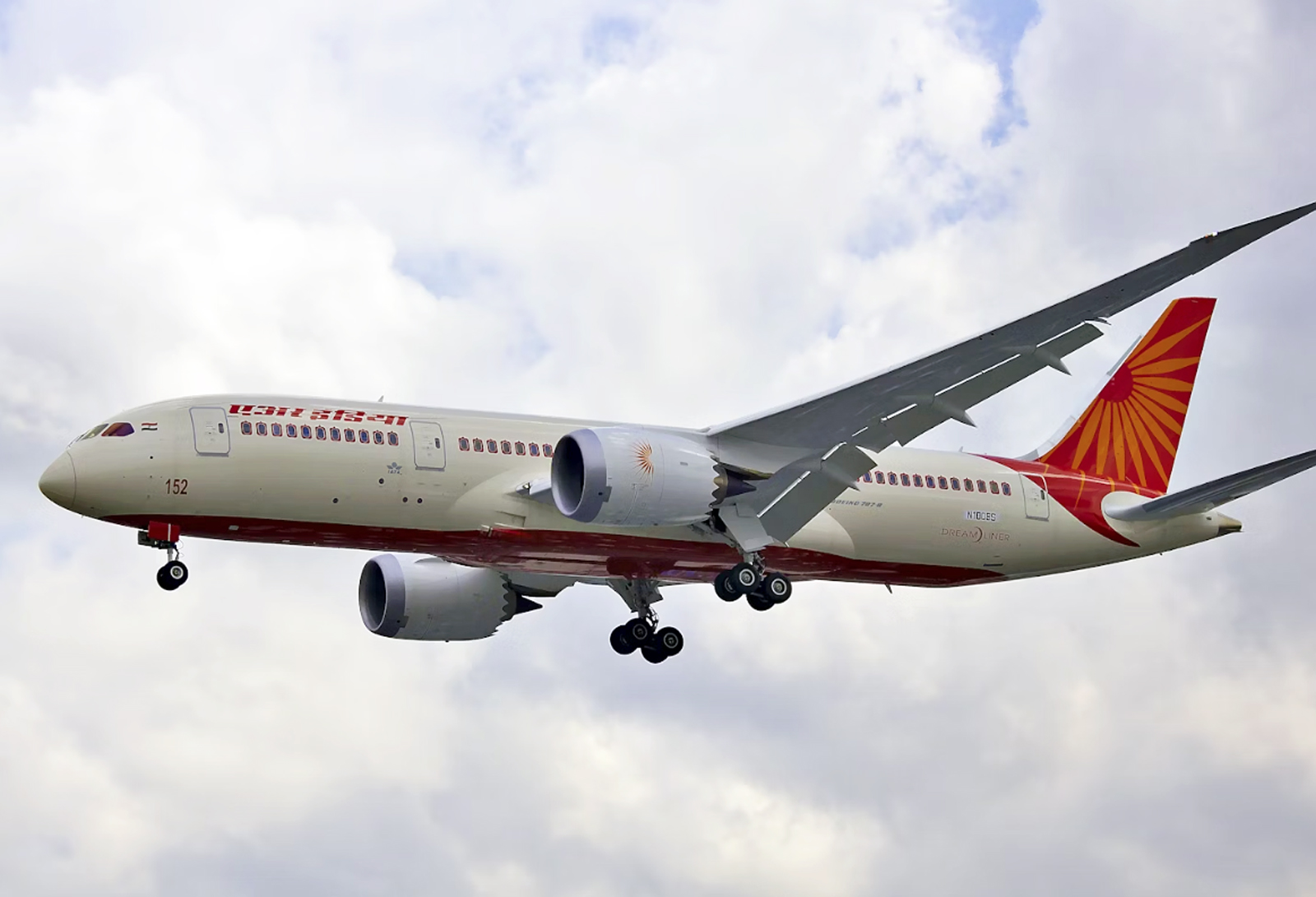
An Air India 787.

Then we have the landing gear. It was not retracted after liftoff, as normally would be the case. Curiously, this hints at either of the two scenarios just discussed. In the first one, we imagine the pilots, distracted by engine warnings and a sudden loss of power at the worst possible time, simply neglecting to raise it. In the other, a pilot mistakenly retracts the flaps rather than landing gear. The probability of such a mistake is absurdly low, but it’s bigger than zero.

On the other hand, the 787’s aerodynamics are uniquely sculpted, and when the flaps are extended the wings take on a camber, a smoothly downward curve, front-to-back, that makes the flaps less conspicuous than they are on other airplanes. Looking at videos of 787s taking off under normal circumstances, loads of which can be viewed online, those wings, too, look very clean. And photos from the crash site show a wing with flaps and slats that appear to be extended, at least partly.

The stronger evidence points towards power loss. My hunch is that something went wrong with the jet’s digital-electronic engine management system.

Whatever it was, the data and voice recorders will tell us shortly. That would be the how. Figuring out the why might take more time. For Boeing’s sake, let’s hope it’s not a design flaw buried in the plane’s high-tech architecture.

This is the worst crash since the downing of Malaysia Airlines flight MH17 in 2014, more than a decade ago. As of June 20th the body count is 274 people, including dozens killed on the ground.

The media keep reminding us how terrible the last twelve months have been for aviation, with at least four high-profile accidents. It hasn’t been a good run, but as I underscored in a recent post, historical perspective and context are important. Even including the past year’s spate, we see far fewer plane crashes than we used to. Heck, in 1985 there was a serious accident every 13 days, on average (including the bombing of an Air India 747 that killed 329 people). Multiple deadly disasters were once the norm, year after year. This is no longer the case, despite the number of commercial flights more than doubling since the 1980s.


Related Stories:

MH370: A STORY IN PIECES
PILOTS AND MENTAL HEALTH
WHAT’S GOING ON?

Photo courtesy of Unsplash.

Comments (75)

Old Dog, New Tricks

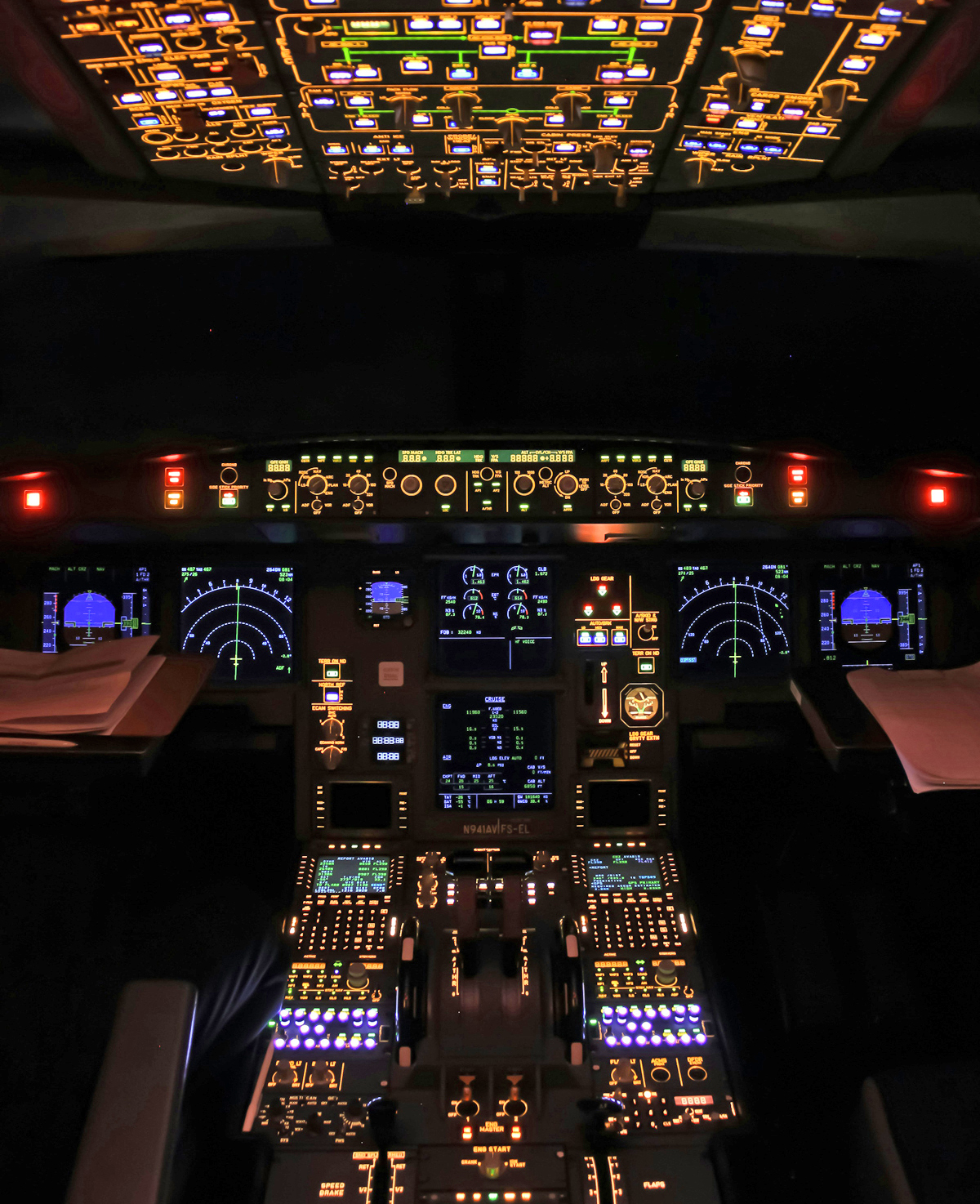
An Airbus A330.

May 10, 2025

AFTER SEVENTEEN YEARS of flying the Boeing 757 and 767 — plus several earlier years on an assortment of other types — I’ve switched over to the Airbus.

The transition wasn’t easy, entailing more than a month of study and simulators, with a series of tests and evaluations along the way. For those of you who buy into the old “jetliners just fly themselves” mantra, five weeks of A330 training might change your mind.

You may already know that Boeing and Airbus operate quite differently, each with its own platform of control, automation, and flight management. You’ll be expecting me to expound on the challenges of learning to use a side-stick control rather than a yoke, for instance, and understanding the Airbus’s unique “flight control laws,” and so on.  As it happens, I don’t have much to say on those things. Stick versus wheel… sure, it’s different, but the adjustment is quick.

What you might be surprised to hear me say, however, is that I find the Airbus a less sophisticated machine than the Boeings I’d been flying, even though its baseline technology is newer (late 1980s versus early 1980s). Conventional wisdom holds the Airbus in higher technological esteem, but to me the pilot-machine interface is a more cumbersome and work-intensive one. Tasks that took one or two button-pushes in the Boeing might take five in the Airbus. Is there a Frenchman Rube Goldberg?

And there were several moments during training that where I caught myself asking, “What do you mean it can’t…?” Certain things about it are peculiarly old-fashioned. At one point I starting calling it “the Soviet Boeing.”

This by no means makes the plane less safe. The things I’m talking about are stylistic, idiosyncratic. There’s a grace that’s missing. If Boeing is Apple, Airbus is most certainly Microsoft. They both get the job done safely, but Boeing does it more elegantly.

Among the A330’s attributes, none is more impressive than its ability to take off and land at remarkably low speeds. It owes this to a huge and beautifully sculpted wing (its span is over 200 feet) that is able to excel both at high-speed efficiency and low-speed docility. At typical weights, the jet is off the ground by 150 knots and touching down at 135 or so. For a plane of its size that’s amazing.

Neither is it bad looking. I’m always bemoaning the bland aesthetics modern jetliners, but I have to say, the A330 is a sexy exception, the -900 variant especially.

But truth be told, so much of what enamors pilots to their planes is creature comfort. And on that count, I’ll take the Airbus over the 757/767 any day. The cockpit is roomy and quiet. There’s a downstairs bunk room to rest in on long-haul flights, and instead of a clunky control wheel in front of me, I’ve got a table to write on. 

I expect I’ll grow to like it.

One thing I haven’t done, to the consternation of some of my friends, is make the upgrade from first officer to captain. I remain a lowly copilot, for now.

This by design. Staying in the right seat offers me extremely high seniority — single digits within my category and base — allowing me to pick and choose my trips, vacation weeks, days off, and so on. And the biggest bonus of all, it allows me to be based at home, no longer slogging to and from New York each time I have to work. As captain I’d be commuting still, and working much harder. Pay-wise, I can almost make up the difference by pulling a monthly overtime trip.


Related Stories:

ODE TO THE 767
ODE TO THE 757
SENIORITY EXPLAINER

Upper photo by the author.
Cockpit photo courtesy of Andres Dallimonti and Unsplash.

Comments (27)

Safety Video Hell

November 5, 2019

I’ve pretty much had it with the safety demo arms race: the noise, the gimmickry, the hoary attempts at humor.

The competition has been tight in this mad contest, with various carriers attempting to out-cute one another, setting their briefings to music, using animation, adding celebrity cameos, and so on. Some months ago, Virgin America brought us this unforgettable, five-minute fever-dream. We also had this, courtesy of Taiwan’s Eva Air. Could anything be worse?

Oh, yes. In what has to be the most excruciating of all the many efforts, comes the latest from Qatar Airways. Yes, we know, the world loves football. Which in no way excuses the skin-crawling awfulness of this production. It’s lifeless, aimless, and very, very long. We have a winner.

There’s no denying that airline safety briefings are dull. However, setting all of this ornamental gibberish to music or humor, while it might generate a little publicity and a bit of social media buzz, does not make it more compelling. It also undermines the purpose of the briefing in the first place. If safety is really the point, the briefing should be taken seriously. Here, you’re watching it for fun — wow, like, that’s so edgy and interesting and cool — rather than to learn something that could save your life. The informational aspects of it, many of which are important, are buried in the noise.

Here’s a better idea: shrink it. The reason people don’t pay attention to the safety demos is because they are too damn long — a kind of legal fine print come to life. They do contain some important and useful info, but it’s so layered in babble that people tune out and ignore the entire thing. With a pair of shears and some common sense, most of this ornamental gibberish could be trimmed away to create a lucid oration that passengers might actually listen to, and remember something that could save their lives.

Hit the bullet points and be done with it. No pre-flight demo, be it a video or the old-fashioned “live” version, should be more than about ninety seconds long.

And, of all the blather that is crammed into the typical briefing, one of the most potentially valuable pieces of instruction is frequently glossed over or is missing entirely: a warning that passengers leave their carry-on items behind during emergency evacuation. In the past few years, we’ve seen several runway evacuations during which passengers came down the escape slides with their roll-aboard bags and other heavy items. I cannot overemphasize how dangerous this is. This should be a bold-print, high-emphasis item in any briefing. Instead we get complicated, twenty-step directions on how to use a lifejacket — as if anybody might remember them. I could also mention that while neither is likely, a runway evacuation is a lot more likely than a water landing.

Flying is a noisy enough experience as it is, and airline passengers are already instructed, talked to, and yelled at enough, from the barrage of public address announcements in the terminals to the various on-board spiels. We don’t also need five minutes of singing and ridiculous performance art. I’m all for airlines thinking outside the box and getting creative. We need more of that, frankly. Just not like this.


Comments (1)

Terminal Memories

March 24, 2025

APROPOS OF nothing, aside from the nagging frustrations of getting older, it dawns on me that, at one point or another during the course of my beleaguered career, I’ve worked at three of commercial aviation’s most historically significant airline terminals.

And I don’t mean just passing through. I was based in these buildings.

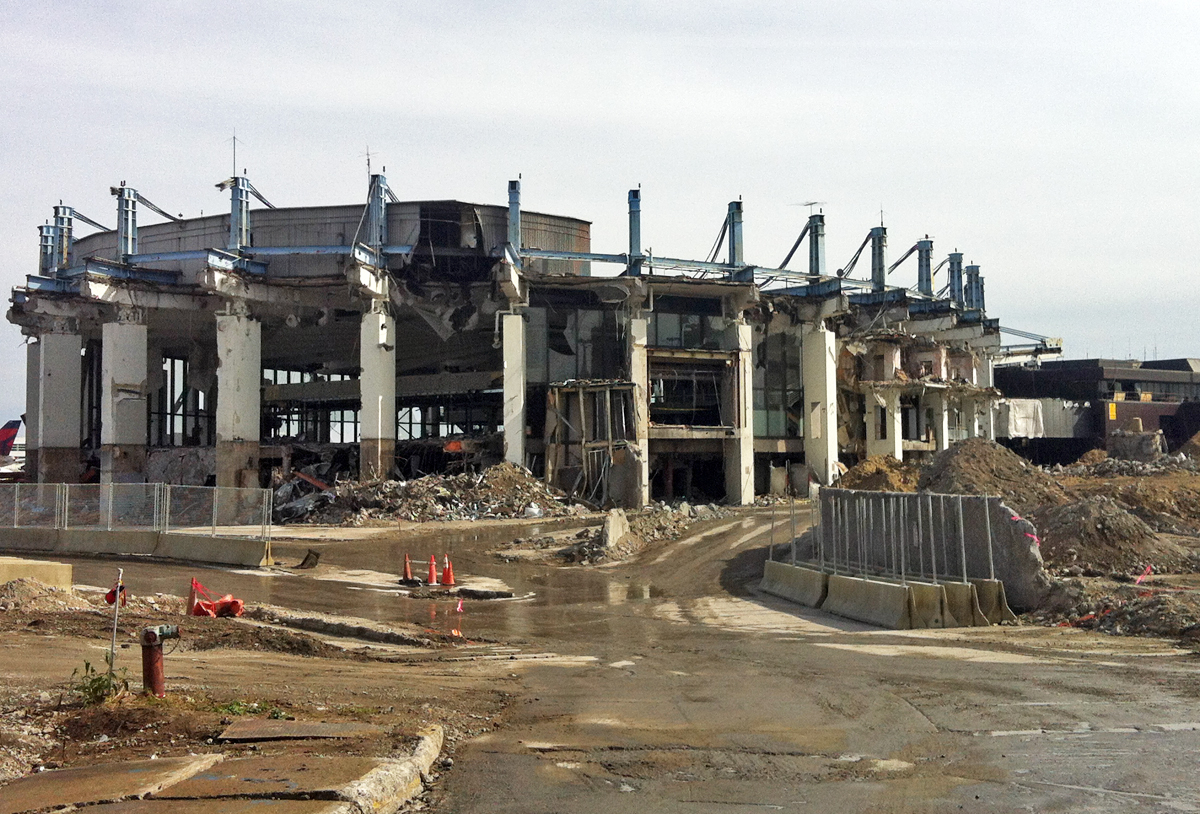
In the early and mid-2000s I worked New York’s JFK Airport out of what, at the time, was known ignominiously as “terminal 3.” In its heydays, though, this was the Worldport, the home hub of Pan American World Airways.

The Worldport was never beautiful, architecturally, but it was one the most distinctive airport buildings ever constructed — a Jet Age fantasy topped with a dramatic elliptical rooftop that loomed over JFK like a giant flying saucer. Kings and queens, sheiks and ambassadors, statesmen and spies all had walked its corridors. And me, of course, headed off to Paris or Sao Paulo or Dakar.

Even before I worked at the Worldport, I more or less knew my way around it, having flown Pan Am several times as a kid. My first-ever visit had been in the spring of 1979, when I was in seventh grade. Me and a friend embarked on a secret trip to JFK — a sort of junior pilot’s planespotting pilgrimage, in which we’d spent the entire Saturday afternoon up on roof, watching and photographing the jets. We’d used our birthday money to buy round-trip tickets from Boston. We brought packed lunches, binoculars, and an old Kodak 110 camera. Our parents had no idea.

By the 2000s, long after Pan Am’s glory days, it was dilapidated and falling to pieces — a grimy warren of dimly lit passageways and peeling paint. Strategically placed buckets and sheets of canvas collected the rainwater that poured through ceiling cracks. The great flying saucer was still there, but its crumbling masonry evoked little beyond a crying need to be torn down.

Which, in 2013, it was…

Also in the early 2000s, prior to my time in terminal 3, I operated some flights from the Marine Air Terminal over at La Guardia.

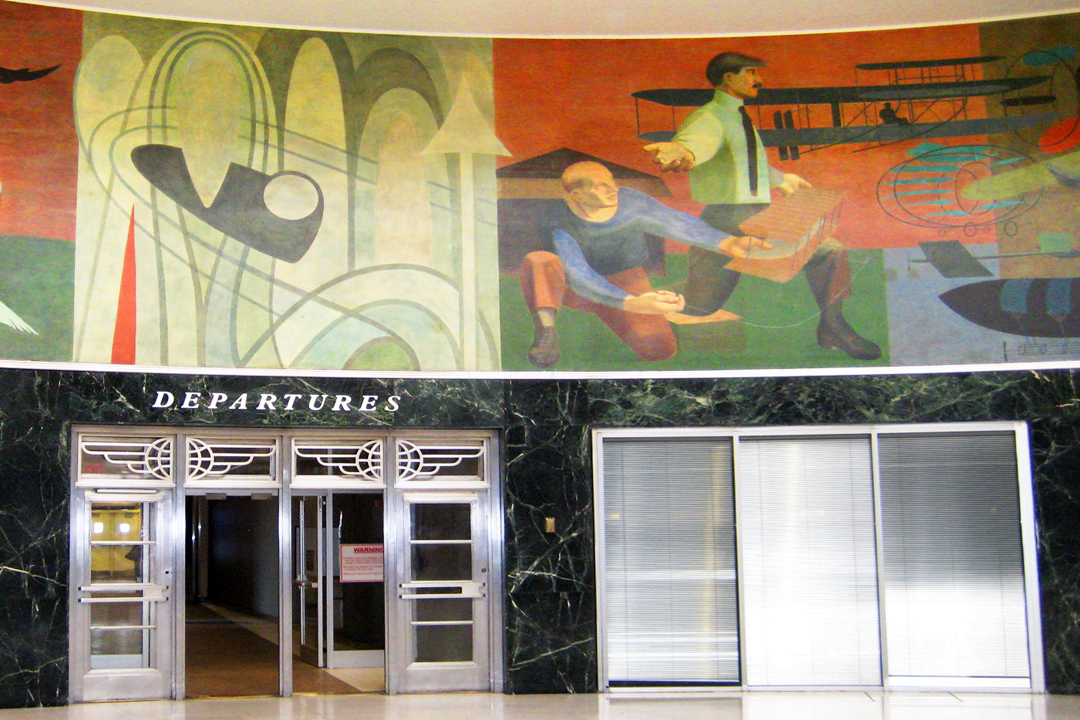
The M.A.T. is William Delano’s Art Deco jewel in La Guardia’s southwest corner, right on the water. Opened in 1940, it was originally the embarkation point for Pan Am’s flying boats. Inside the rotunda is the famous “Flight” painting by James Brooks.

Unlike terminal 3, it remains standing, kept from destruction by the good sense of Gotham preservationists. The building’s newer extension is used today by Spirit Airlines, which is maybe an example of the worst kind of irony. Most passengers pass through the newer section without ever seeing the original atrium or the Brooks mural, but you can detour through if you want.

Commissioned in 1952, the mural traces the history of aviation from mythical to (then) modern, Icarus to Pan Am Clipper. The style is a less-than-shy nod at Socialist realism, and at the height of ’50s McCarthyism, in a controversy not unlike the one surrounding Diego Rivera’s mural at Rockefeller Center, it was obliterated with gray paint. Not until 1977 was it restored.

There’s even a cozy garden and picnic spot just outside, to the right of the gleaming Art Deco doors as you face them, where you can relax beneath the blue and gold frieze of flying fish.

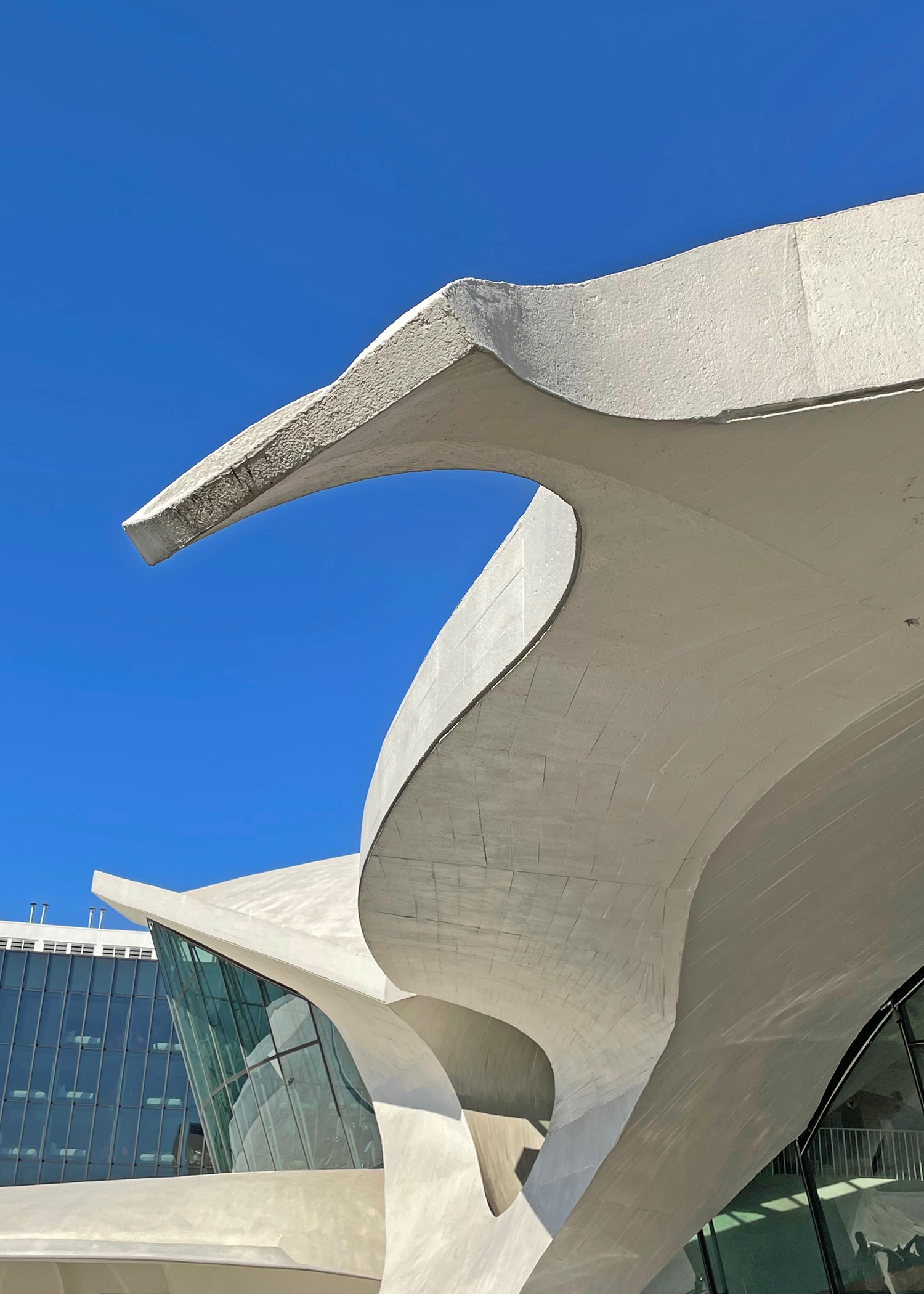
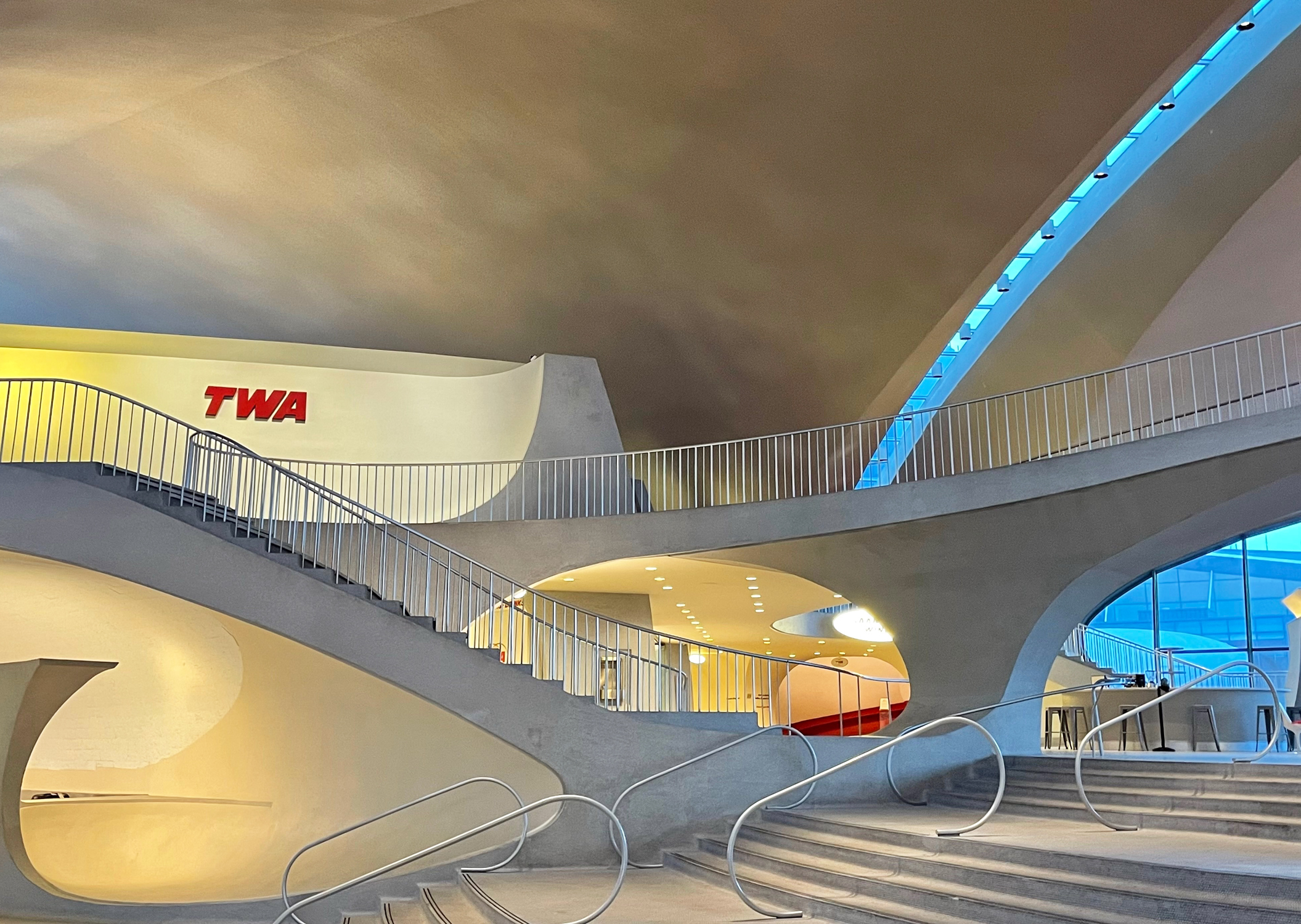
And, swinging back to JFK, in 1996 I flew out of Eero Saarinen’s landmark TWA terminal.

This is the most famous of the three terminals, and probably the only one that deserves to be called iconic (fewer words are more overused these days, but here’s one time it belongs).

“All one thing,” is how Saarinen, a Finn whose other projects included the Gateway Arch in St. Louis and the terminal at Washington-Dulles, once said of it. It’s a fluid, unified sculpture of a space, at once futuristic and organic; a carved-out atrium reminiscent of the caves of Turkish Cappadocia, overhung by three cantilevered ceilings that rise from a central spine like huge wings.

In 1996, though, when I was working there as a captain for TWA Express, it had long since fallen into disrepair. Clutches of sparrows lived in the rafters, I remember, bouncing across the floors in a hunt for crumbs. The walls were discolored and the carpeting gave off an ammonia stink. It was a wretched place in swift need of a wrecking ball.

What happened, instead, was a miraculous reinvention. After sitting empty for several years, it was turned it into a hotel. Or, more accurately, it was renovated and a hotel was added on.

The TWA terminal is now the TWA Hotel, with the original section serving as a check-in lobby and, though it’s not described as such, a museum. It’s been kitch-ified a touch, but overall the preservation efforts were beautifully executed. If you can afford the rates, come stay the night. If you can’t, stop in and wander around for an hour.

So there it is. My New York City “terminal triangle.”

I have six more years before the government makes me hang up my wings. These are things I think about.

I think, too, about how our airports have changed — devolved, maybe, is the better word — in the decades since Eero Saarinen or the Marine Air Terminal. With only scattered exceptions, they’ve become unspeakably generic, lacking of any real architectural vision or grandeur.

Right next to the TWA terminal at JFK used to stand the National Airlines “Sundrome,” a glass-and-steel beauty designed by I.M. Pei. Think about it: Saarinen and Pei, at the same airport, a few hundred feet from each other. The Sundrome was demolished about ten years ago, and on that hallowed ground today sits the hulking nothingness of jetBlue’s “terminal 5.”

Functionality and efficiency are now the only measure. Like so much of the air travel experience, it ain’t what it used to be.


ALL PHOTOS BY THE AUTHOR

RELATED STORIES:

A NIGHT AT THE TWA HOTEL
ODE TO AN AIRPORT

Comments (16)

What’s Going On?

March 14, 2025

TWO THINGS jumped to mind as I watched the footage last week of the American Airlines jet in Denver, its engine on fire, passengers evacuating onto the wing.

The first thing was the recklessness of the people who brought their carry-ons with them as they evacuated. Fewer things are more stupid, or more dangerous, particularly when there’s a fire. We’ve seen this before, and I’m sure we’ll see it again. Airlines and regulators need to come up with something.

Second thing was a wave of consternation. Here we go again, I thought. Jeju Air, Azerbaijan, Washington D.C., Toronto. Now this. Another incident, another round of media hype, another feeding frenzy on social media. Here come the emails asking, “What’s going on?”

Whatever it is, it’s bad enough that, according to airline execs, the demand for air travel is softening. How much of this is economics-related rather than fear-related is hard to quantify, but the CEOs believe the latter is part of it.

This is frustrating, because on the whole flying remains remarkably safe. Much, much safer than it was in decades past.

I don’t mean to downplay recent mishaps too much; the Potomac crash, especially, was tragic, and there’s no denying that aspects of our system need funding and shoring up. But what are we actually dealing with? Are these incidents symptomatic of something dangerously broken? Are they warning signs of catastrophes to come?

I’m not sensing that. At worst, we can see it as a correction. Perhaps what’s surprising isn’t the spate of accidents, but rather how long we’d gone without such a spate. Perhaps we were too lucky for too long. Around two million people travel by air every day of the week, aboard tens of thousands of flights. The idea of perfect safety is foolish.

What the traveling public needs more than anything is a sense of perspective. For that, I recommend a trip through the history books, a dig through the crash chronicles of a generation ago, and the generation before that. Many Americans, younger ones especially, have no knowledge, or no memory, of how bad things used to be. From the dawn of the jet age in the 1950s, through the early 2000s, deadly air disasters were soberingly common, year after year after year.

And I don’t mean engine fires where people lined up on the wing. I’m talking about major accidents with, in many cases, fatalities in the hundreds.

Just how common? In 1985, the worst year on record, there were 27 crashes — an average of one every two weeks. This included two of the deadliest air disasters in history (JAL flight 123 and Air India 182), which occurred within sixty days of each other and killed over eight hundred people. And that’s not counting the incredible hijacking saga of TWA flight 847, which also happened in ’85.

The year 1974 saw nine disasters, including a TWA bombing and an Eastern Airlines crash three days apart. In 1973, when a Delta jet crashed in Boston killing 89 people, the accident was recorded on page two of the New York Times, below the fold. Ten crashes occurred between the fall of 1988 and the fall of 1989, three of them terrorist bombings.

As recently as the year 2000, we saw eleven crashes in which a dozen or more people perished, including the Air France Concorde disaster and Alaska Airlines flight 261, plus a cargo jet crash in California in which a former colleague of mine died.

This doesn’t happen anymore. Primarily through advances in training and technology, we’ve engineered away what used to be the most common causes of accidents. The number of planes in the sky has tripled since the 1980s, while the accident rate has plummeted. The events of the last several weeks, however unfortunate, hardly nudge the big picture data. Neither would another crash — even a big one, knock on wood.

It’s not that we’re spoiled, exactly. But we’ve grown accustomed to the rarity of disaster. And the result is a double-edged sword. On the one hand, we’re a lot safer. On the other hand, we’re primed to overreact when something goes wrong.

This is human nature, I suppose. When an engine catches fire, it grabs our attention. Fair enough. What it shouldn’t do, however, is cause you to call off your business trip or cancel your vacation.

 
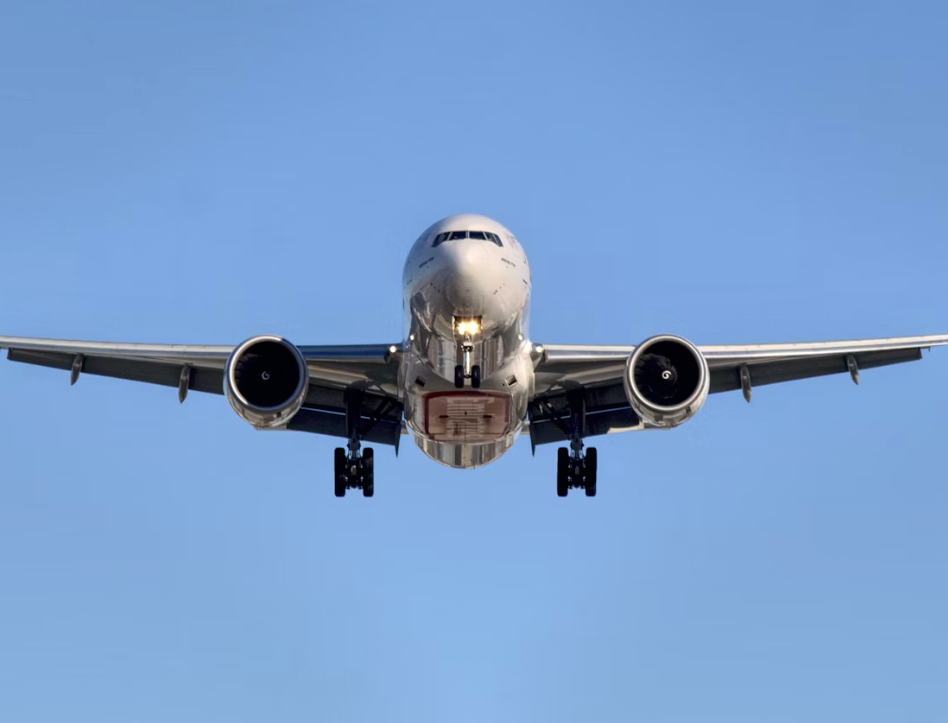
Photo courtesy of Unsplash

Comments (38)

The Rolling Report Card

AS MY REGULARS know, critiquing airline liveries is my favorite thing in the world. Especially the ugly ones, which nowadays is pretty much all of them.

From now on, rather than grading them individually in separate articles, we’ll compile them here, one at a time. This post will act as a sort of rolling report card, updated with every new reveal.


AURORA OVERLOAD

Beginning next year, Alaska Airlines will launch flights to Iceland and the U.K. — the Seattle-based carrier’s latest foray into the long-haul realm. As part of the celebration, it’s painting up some 787s in a flashy new scheme. “Our new 787 exterior embodies Alaska’s transition to a global airline with beauty, grace and a nod to our heritage,” says the company CEO Ben Minicucci.

Color me bored. It’s not the ugliest thing I’ve ever seen, but the aurora theme is overdone (see Icelandair, below) and was all too predictable. As for the “heritage” invoked by Mr. Minicucci, the longstanding Alaska tail, starring the parka-wearing Inuk man, is a classic of American airline branding and should absolutely, no question, be up there for the 2026 route launches — an iconic emissary to the carrier’s newest outposts. Instead we get some neon nonsense. It looks like someone spilled anti-freeze across the back of the plane.

GRADE: D


ITA RECONSIDERED

A few years back, ITA Airways became the Italian flag carrier, replacing the chronically troubled Alitalia, which had been in and out of solvency for decades. I wasn’t a fan of ITA’s livery. “The colors and styles are so mis-matched as to seem almost arbitrary,” I wrote in an earlier post. “The patterned tail motif reminds me of a doily, or the kind of tablecloth you’ll find in certain Italian restaurants.”

That part about the tail is still true, but overall the look has grown on me. One thing you don’t notice in most photographs is the beautiful iridescence of the blue. And that mis-matching I decried isn’t so; there’s a sly synchronicity to the colors.

That blue, it turns out, is formally known as “Savoy Blue,” or “Italian Blue,” and has been associated with Italian royalty since the Middle Ages. It’s also the traditional color of the Italian national sports teams.

Indeed there’s an Italian-ness to it all, helped along, of course, by the Tricolore striping along the rudder. (The doily patterning is subtle enough not to steal the show.) It’s stylish, tasteful, and culturally apropos. Yet simple at the same time, as any good branding should be. My apologies for missing it the first time.

My gripe is no longer with the uniform, it’s with the name. Annoyingly, they went and added “Airways” to the carrier’s moniker. “ITA,” just by itself, was smoother, simpler, and perfectly adequate. But no, they had to jam “Airways” in there, because apparently everyone is stupid and might forget it’s an airline. They’ve even painted it on the fuselage, in a smaller typeface below the main titles, throwing off the livery’s balance (hence my B-plus grade instead of an A).

Loosely translated, the carrier is now called “Italian Air Transport Airways.” And with or without the extra word, it lacks the poetry of the old “Alitalia.”

ITA’s radio call-sign is “Itaro,” which is kinda sexy and wouldn’t be bad as a name on its own.

GRADE: B-plus


UP THE YIN YANG
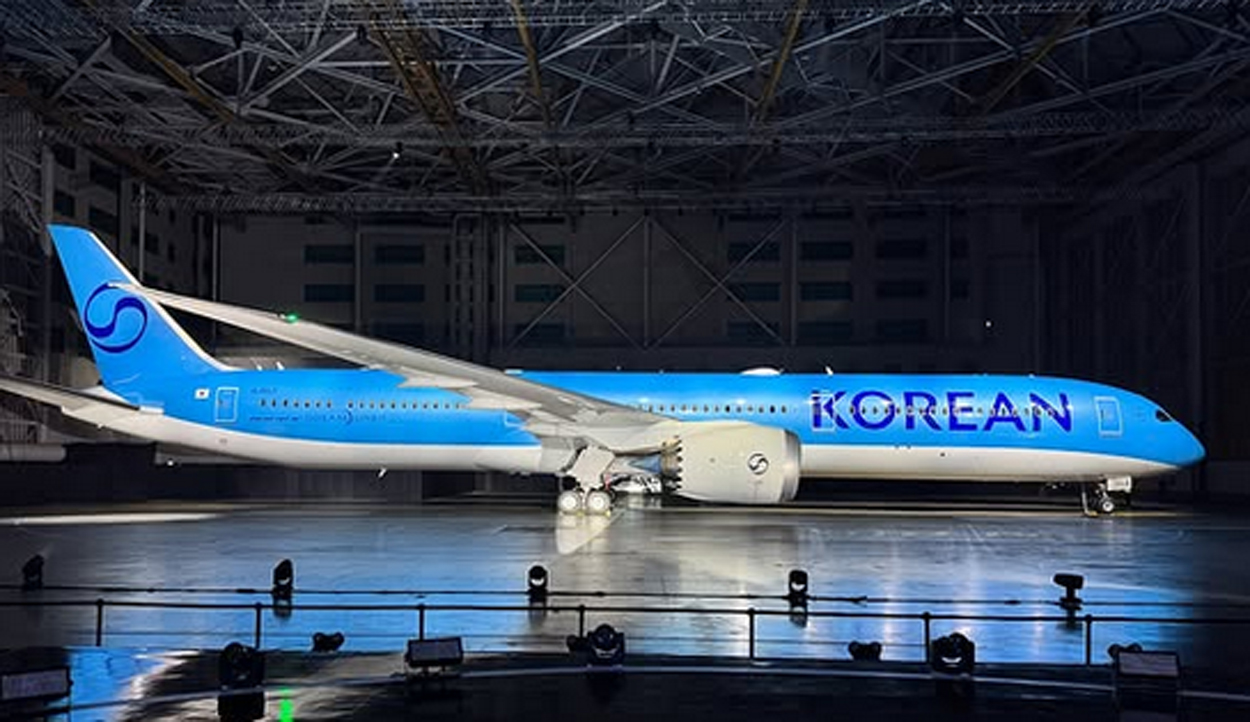
Korean Air has been making some buzz, unveiling its first brand refresh in three decades. And in doing so they win the “If It Ain’t Broke…” award for terrible decision-making.

The new look fails for two big reasons. First, it’s ugly. Or spiritless, maybe, is the better word. Second, there was no need for it; the scheme it replaces was among the industry’s best, a pleasant reprieve from the plague of all-white fuselages and lookalike swooshes.
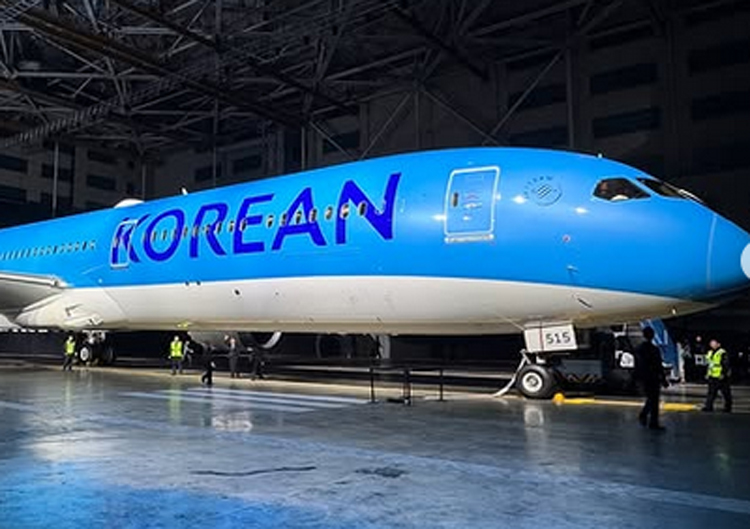
I don’t know which part irks me more: the boring typeface, the blank bottom, or the tail emblem, which is a neutered version of the one it replaces. The blue is pretty, but all in all it’s a livery without character. It looks like it was cooked up on a computer in about two minutes.

GRADE: D-plus


GOOFY GOLD
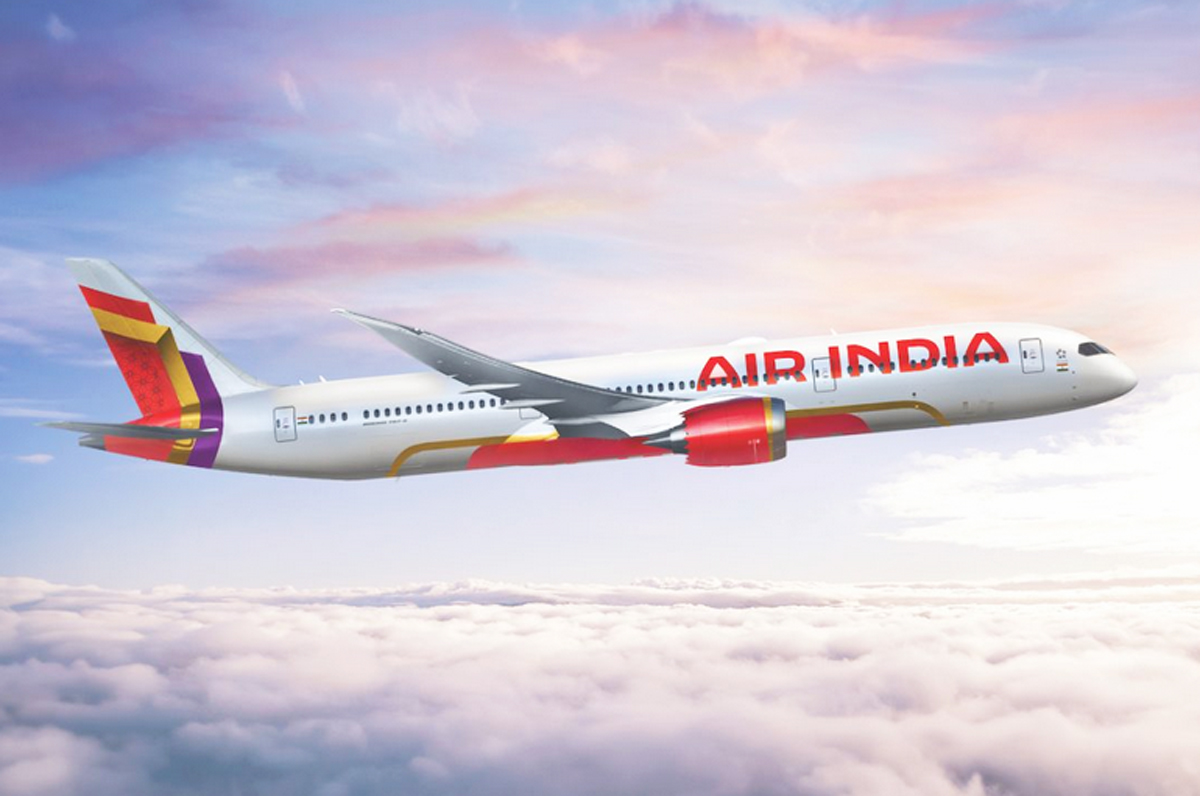
Air India was taken over not long about by the Tata Group. The new owners are expanding and hoping to establish the long-beleaguered carrier as a world-class brand. These sorts of reinventions are often accompanied, dangerously, by livery changes. To wit…

There’s a press release explaining all the meanings and symbolism here. It’s a brilliant self-parody. Someone asked ChatGPT to come up with a bullshit announcement full of pseudo-inspirational blather, and it happily obliged. “Purposeful and confident.” “Premium cues.” “Personality and storytelling.” It goes on like this.

Let’s keep it simpler. First of all, the lettering is too big. Billboard lettering is common these days, and Air India, like many others, crosses the line between assertive and overblown.  

Then we have the tail. Where do we start? The airline describes this weird-looking thing as a “hero signature window frame.”  Do we have any idea what this means? Heroes? Windows? What? I’m told the design is an evolution of the Rajasthani-style window decals that have heretofore been part of Air India’s livery for decades (do we dare call them iconic?). Possibly, but what most people will see is just a random, strangely angled pattern. The colors are pretty but the message is unintelligible. Neither does it work from a branding standpoint: it’s a pattern, not a logo, without any context or clarity. 

The element that really wrecks it all, though, is the gold accenting at the bottom. Specifically, the way it detaches from the red and goes off on its own, fore and aft. The red field, with the Air India name across the lower fuselage, is an obvious jab at Emirates, whose planes are marked similarly, and whose domination of routes into India the Tatas are hoping to unseat. All well and good, but those gold brackets… it’s like they put the wrong numbers into the paint-sprayer. This alone knocks my grade from a potential C to a D-minus. “The gold frame detail adds storytelling and and premium cues,” according to Air India. No, it doesn’t. What it adds is a rather bizarre coup de grace.

A shame how Air India’s look has degraded over time, from the masterpiece red swoosh livery of the 1970s, with its beautiful Sagittarius logo, to this. 

GRADE: D-minus 


MINTY FRESH

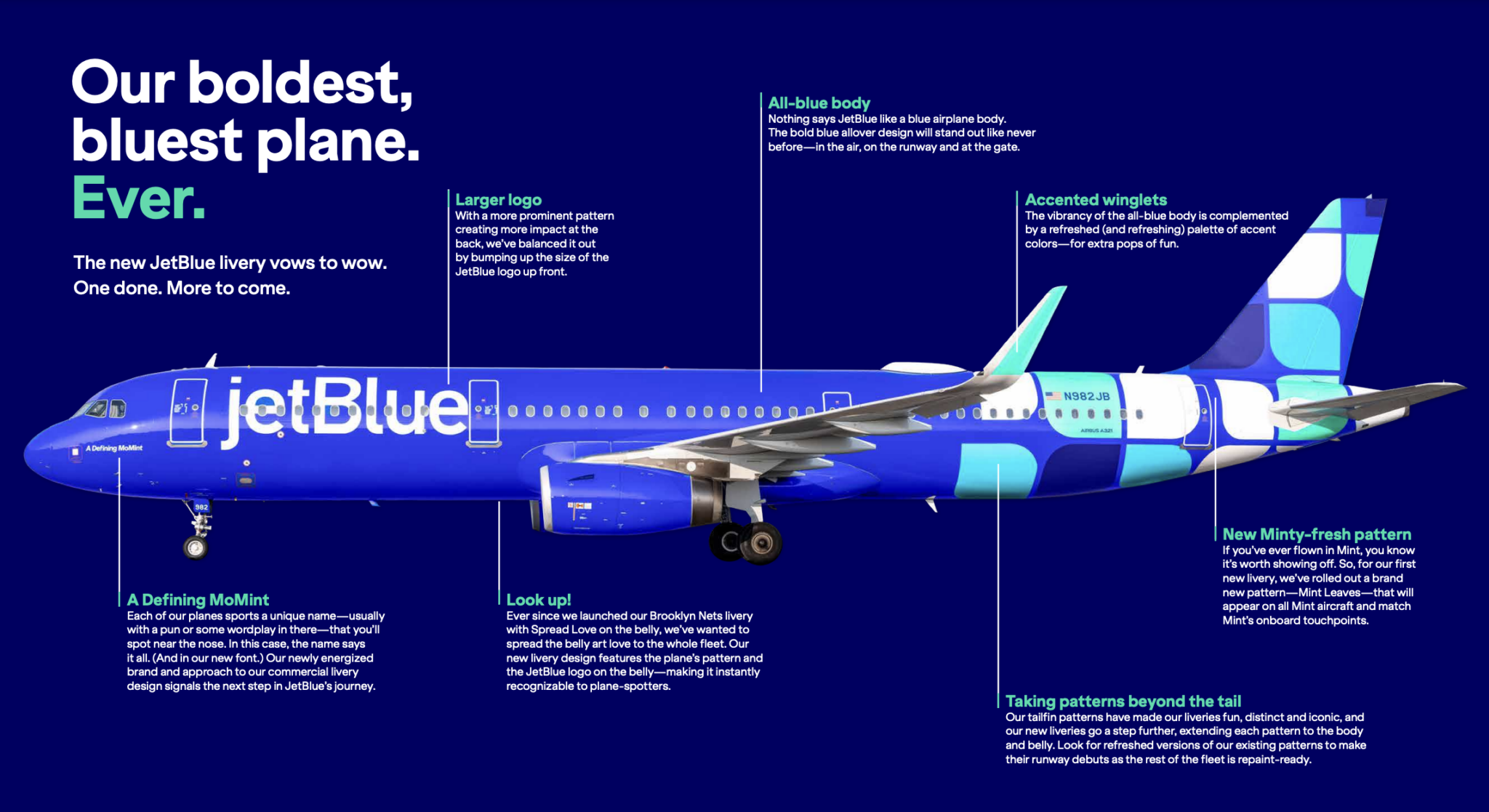
JetBlue’s livery features a grab bag of different tail patterns. According to the airline, these designs are “fun,” “distinct,” and — here comes that word — “iconic.” The latest one is named “Mint Leaves,” and it celebrates jetBlue’s premium class, branded as Mint. All planes outfitted with Mint suites will feature this look, which uses a scattering of the round-cornered “leaves” that serve as the Mint logo.
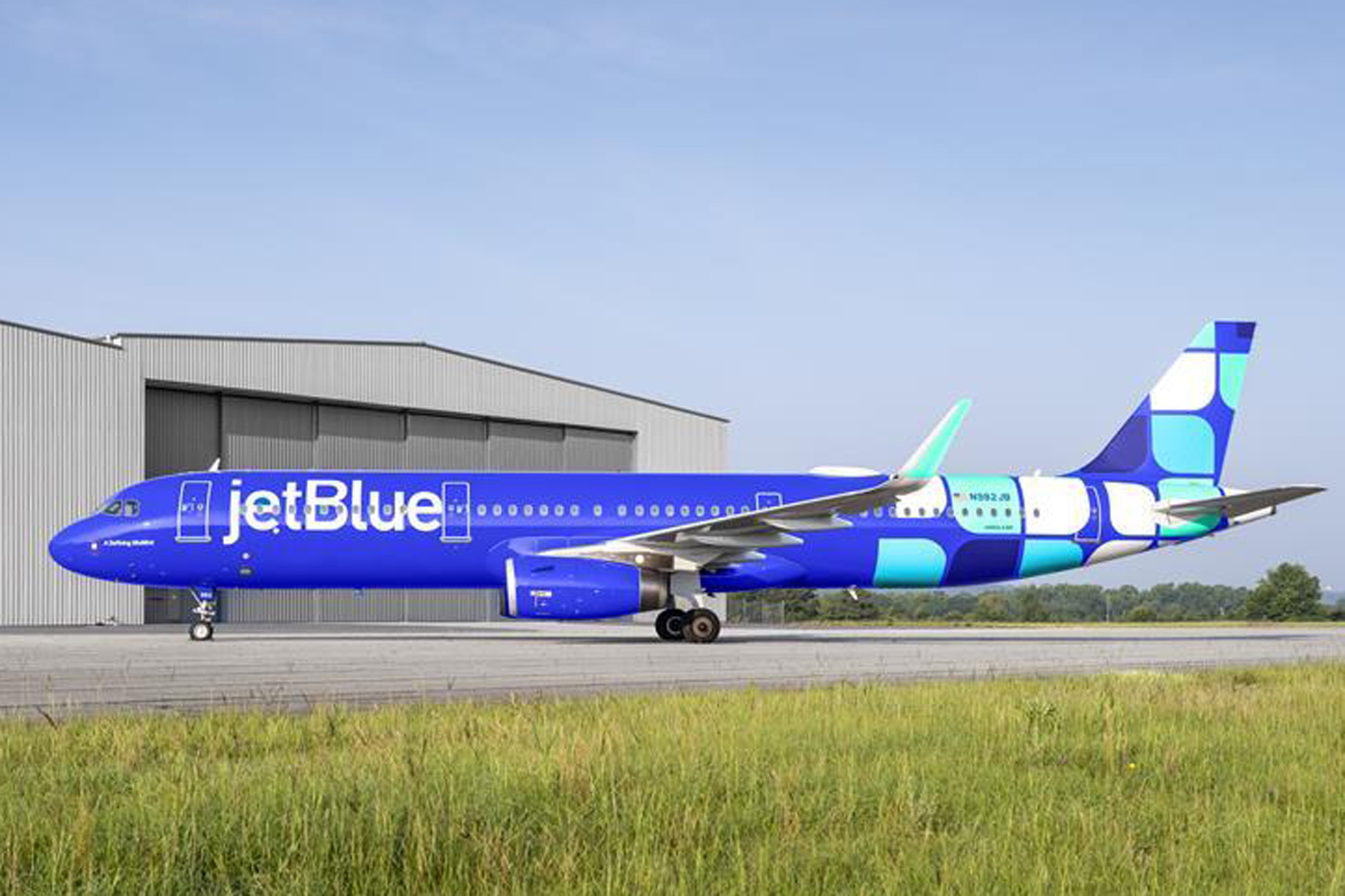
This is a nice idea, but it’s bound to be confusing to the average traveler, who has no idea what those little boxes represent. The Mint logo simply isn’t well-known enough. What most people will see is just a bunch of squares. And there are too many of them, top and bottom.

Up front, the oversized lettering is meant to balance out the heaviness of the tail, but it’s needlessly big and looks squeezed-in between the doors. The Southwest-style blue is too syrupy.

GRADE: C-minus


REALLY?
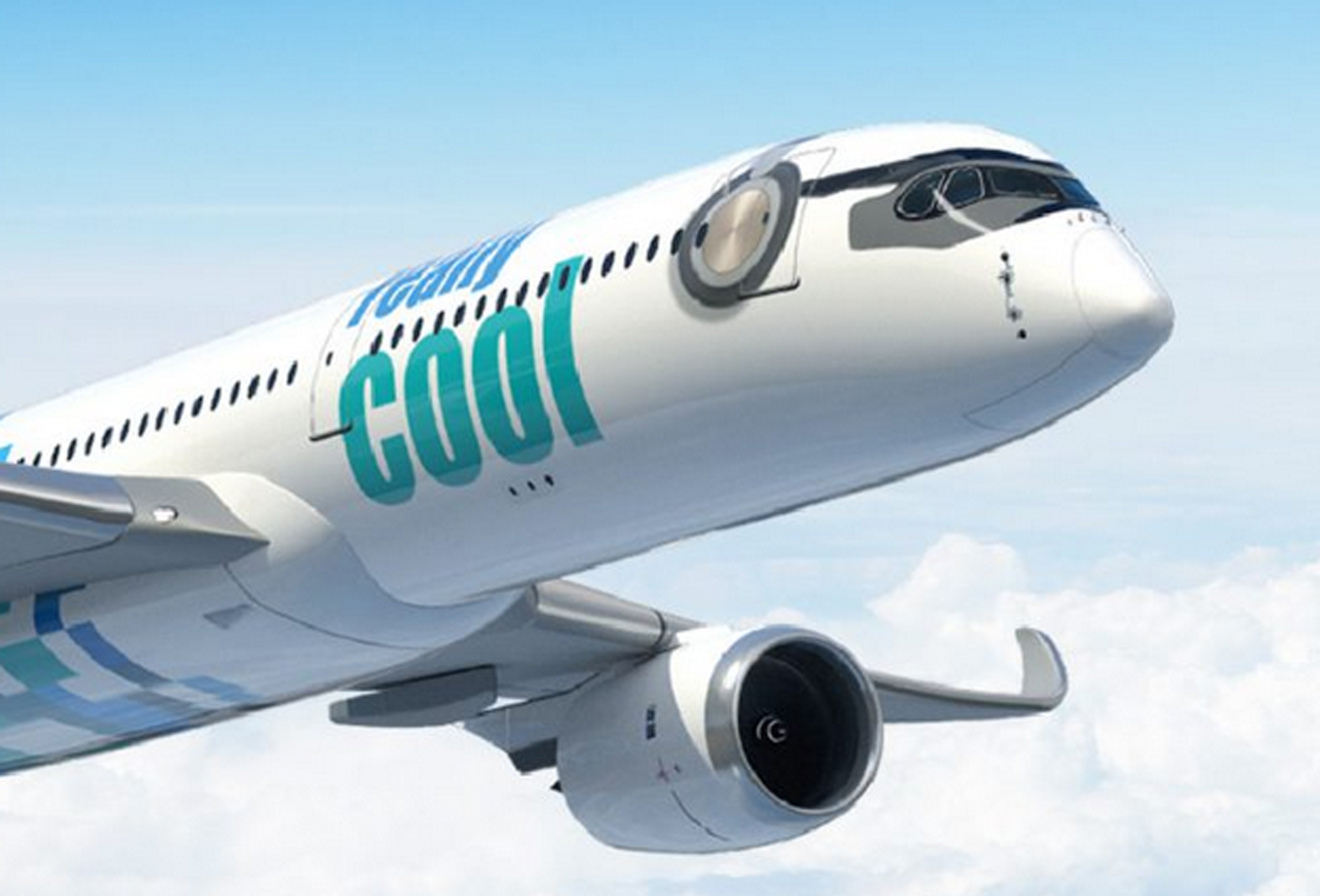
“Yesterday, our future was uncertain. Our economy in turmoil,” rumbles the home page. “Today, the dark clouds have passed. And we can take back to the skies. We were not ready for the turbulence that came before. Never again!” And with that we expect a grand crescendo, a sky-clearing crash of cymbals. Let the opening credits roll!

Welcome to Really Cool Airlines, a start-up out of Thailand that hopes to open routes around Asia using Airbus A350s. It should go without saying that any airline whose name requires an immediate set of parentheses to remind you that no, this isn’t a joke (this isn’t a joke), ought to maybe rethink its branding. But let’s save the name for another time. We shall defer, also, any exploration of the company’s business model, which has something to do with crypto and blockchains. (The carrier’s mastermind is Patee Sarasin, the same fellow who started Nok Air, a successful Thai LCC, so conceivably this could pan out.) To the livery…

The plane appears to be wearing headphones. So, there’s that.

I’m getting an LCC vibe here. Not a cheap LCC vibe, like you feel with Spirit or Southwest, but a more sleek and sophisticated one. The colors are part of this. I don’t know about really cool, but they’re cool. What drags this one down is the back of the fuselage: the design is tail-heavy. There’s way too much going on back there. Go easier with all those blue and green squares (ditto for jetBlue, above) and let’s talk again.

GRADE: C-minus


DUBAI DO-OVER

If one airline didn’t need a re-fresh, it was Emirates. Can’t leave well enough alone, I guess. The kids have to put their art school degrees and fancy graphic design apps to use. So they took one of the boldest, cleanest, most distinctive liveries in the world and had to get all showy with it. Lo and behold, yet another overdone design fixated on motion and texture.
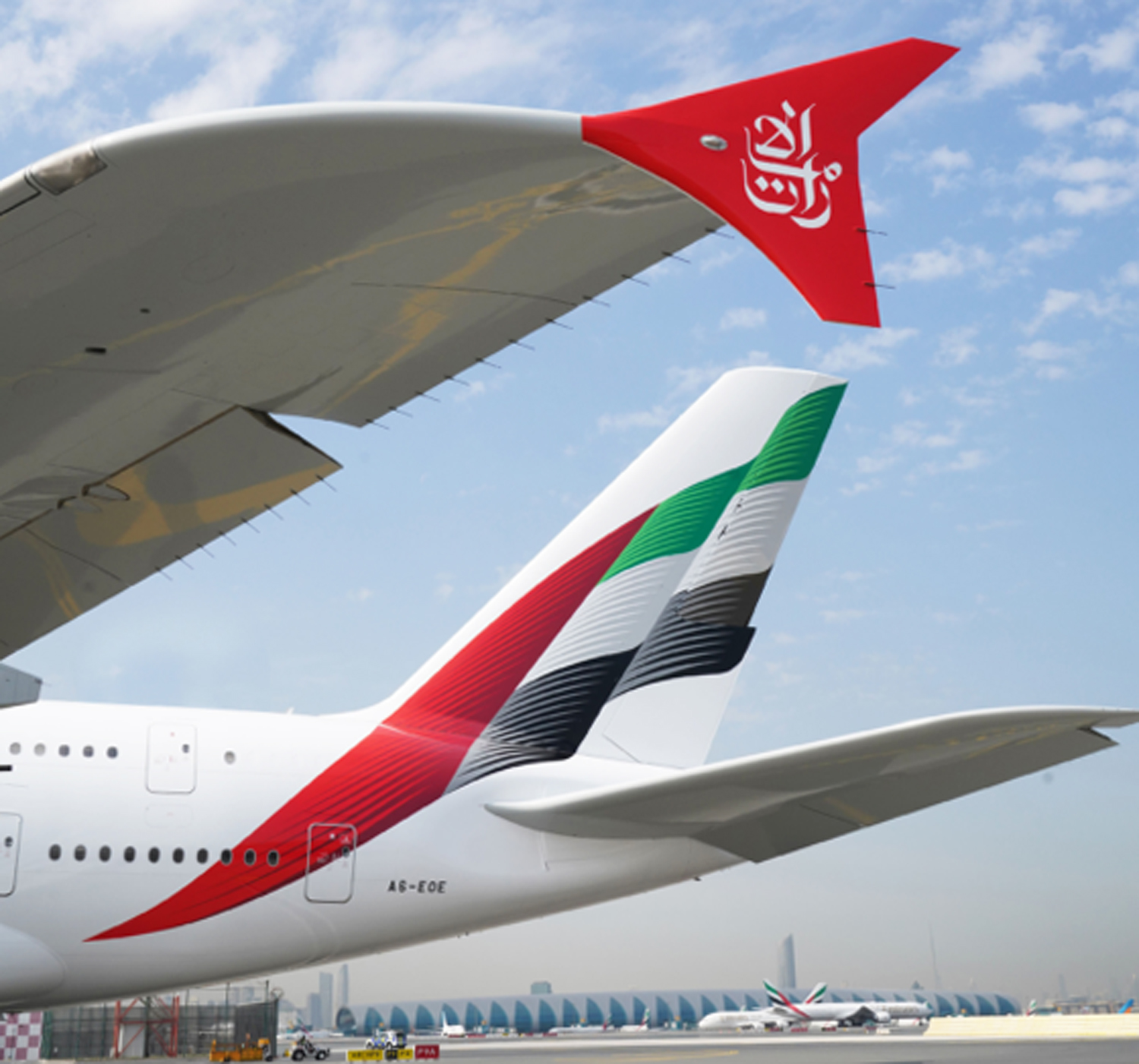
I don’t hate it. Truth be told, I like it, and if you insist it’s an improvement, I won’t argue. The basic blueprint — the Emirati flag — is still there, and it remains unmistakable. Just a little less so, because now it’s all wavy and scaly and even a little blurry. Identities are becoming less distinctive, not more, and sometimes it feels as if airline branding has been taken over by millennials trying to out-cool each other.

The red winglets are a great addition. The rest was unnecessary.

GRADE: B-plus


THE CONDOR BEACH TOWEL

Condor is a Frankfurt-based charter airline. The airline was set up in 1955 by Lufthansa, and for years its markings were handsomely reminiscent of that carrier’s: blue stripe, yellow tail, Lufthansa-esque condor logo. Later the Thomas Cook Group took control, and Condor adopted the group’s mostly inoffensive yellow and gray.

Today the airline is controlled by a European investment company, and in April, 2022, a bold new rebranding was unveiled, timed to coincide with delivery of Condor’s new Airbus A330-900s, which will replace a fleet of antique Boeing 767s. Each jet will feature a nose-to tail pattern of vertical candy stripes, in one of five colors. This, we are told, is to keep things more in synch with the leisure charter vibe: fun, friendly, easy, inexpensive and all that.
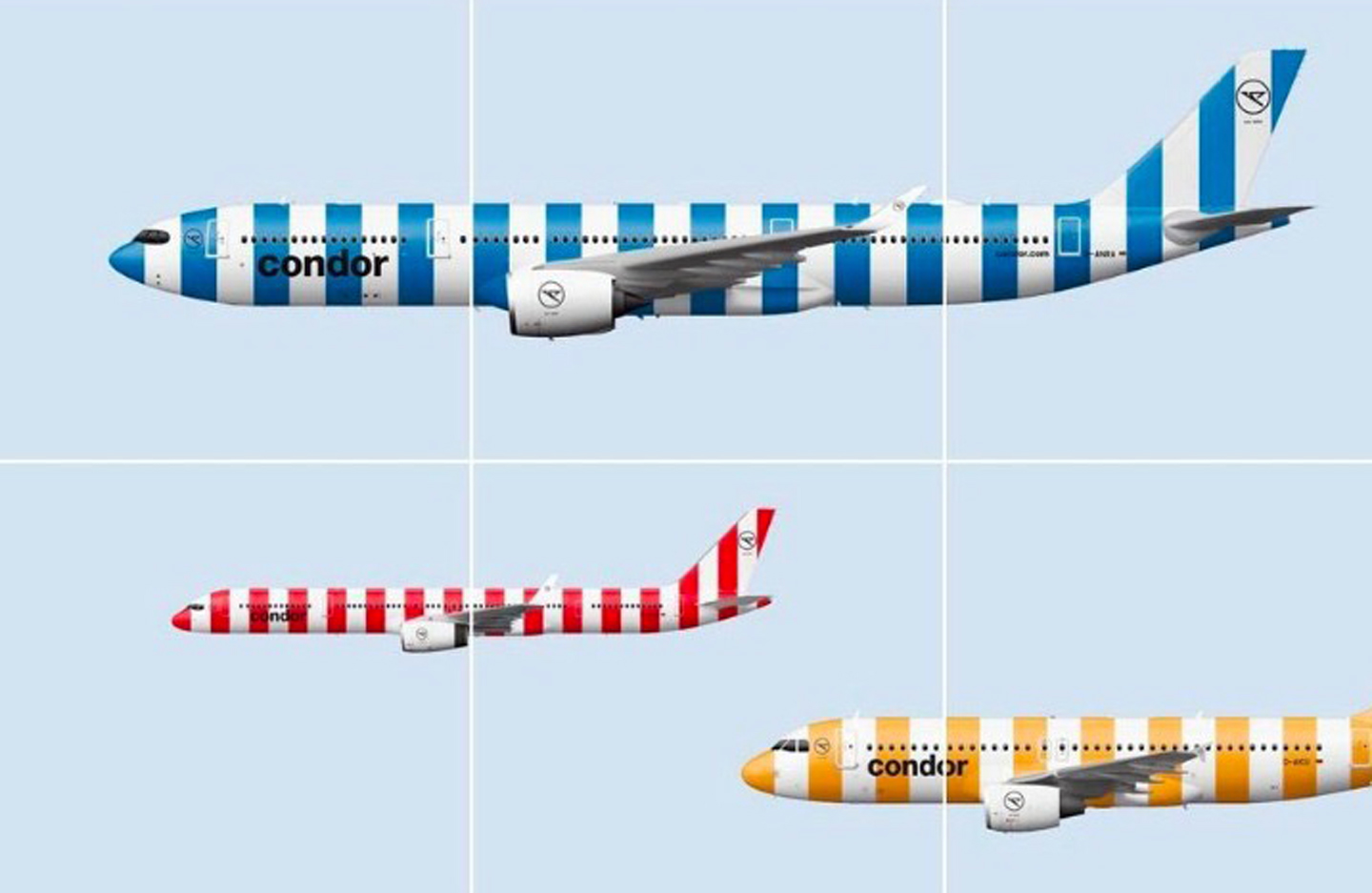
The main problem is, vertical stripes really don’t belong on a plane. The very shape of an airplane, in all its horizontal-ness, suggests motion, speed, and the traversing of distances. Vertical stripes suggest the opposite of that. The visual effect is one of negative motion, almost as if the plane is being held back and asked to stop.

Officially, according to the people who were paid to concoct this nonsense, the color representations go like this: blue for ocean; green for island; beige for beach, gold for sunshine, and red for “passion” — whatever that might mean. At least, for a change, there’s nothing here about the northern lights. I’m not seeing sunshine or passion. I’m seeing a picket fence, or maybe a couch cushion.

“Unmistakable,” is how Condor CEO Ralf Teckentrup describes it. And it certainly is — for the wrong reasons.

GRADE: F


CARIBBEAN CALAMITY

A hummingbird has long been the tail mascot for Trinidad-based Caribbean Airlines. For years the carrier used a photographic-style decal similar to the tails worn by Frontier. It was fetching. Here’s a picture I took one day at the airport in Georgetown, Guyana…
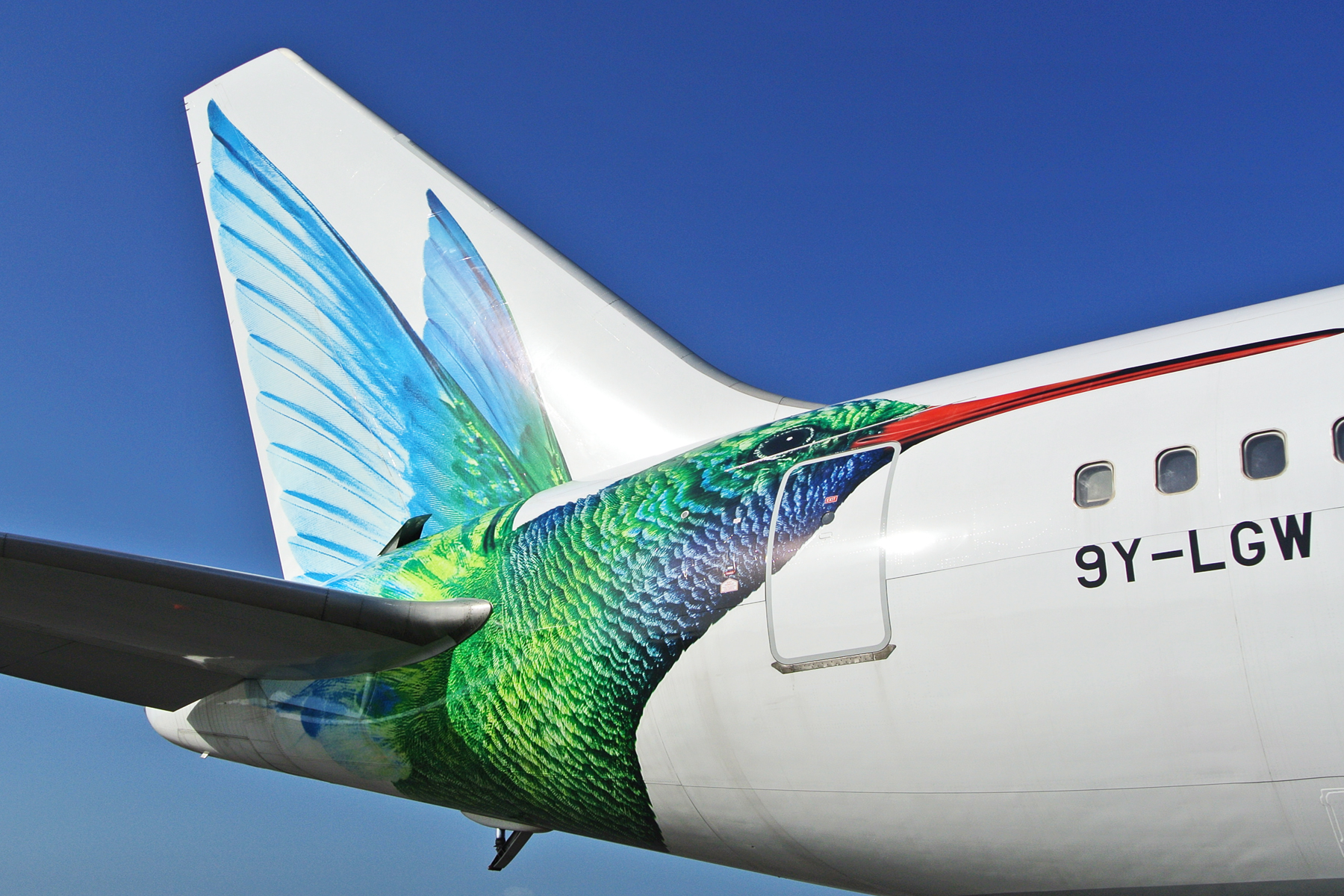
For reasons that can’t possibly be explained, this design has been made over into the abomination you see below. The updated magenta typeface (visible in the other links) is, in fact, an improvement. Nothing, however, can justify the psychedelic madness of the tail.
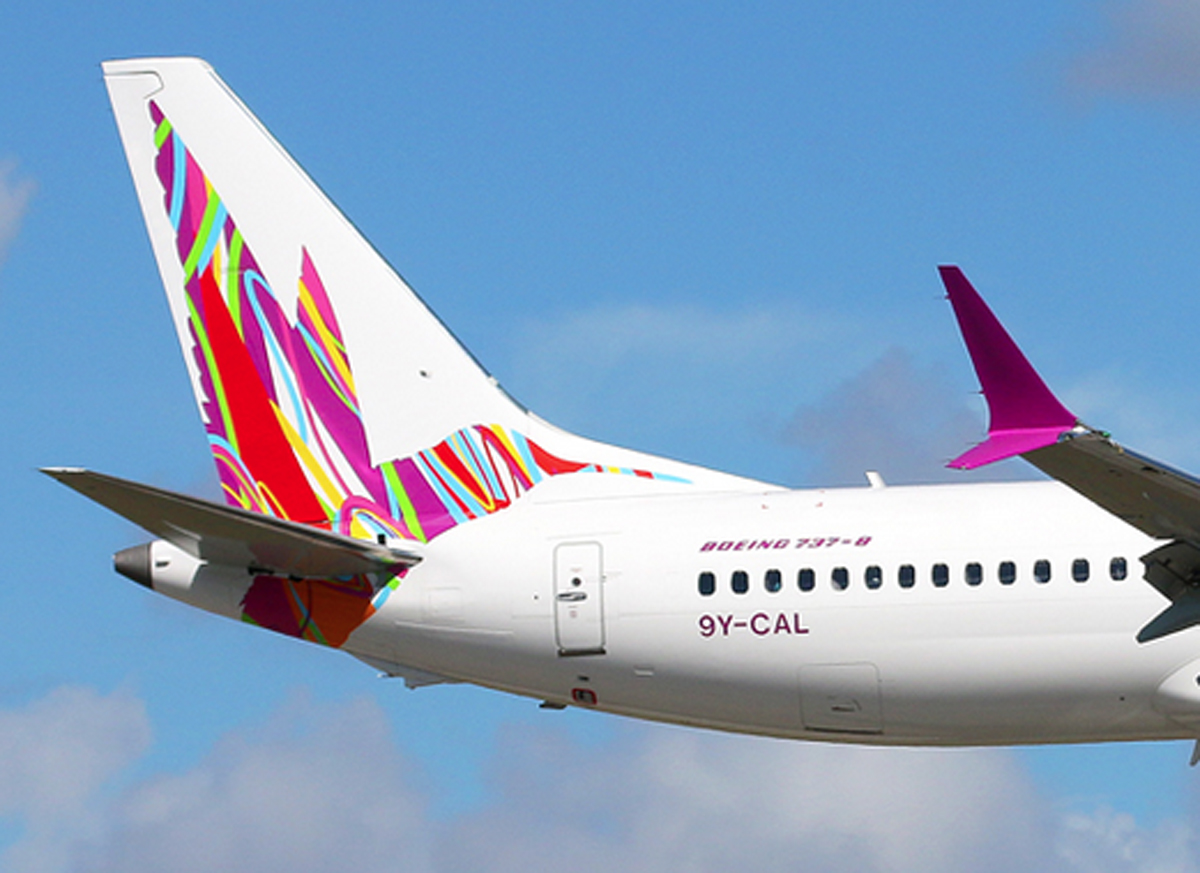
Caribbean is the successor to BWIA (British West Indies Airways), whose elegant livery and steel pan logo once graced the L-1011 TriStar. Talk about a devolution.

GRADE: F-minus


PRETTY IN PURPLE

Let’s ignore for a minute the question of whether we need another low-cost airline. Let’s also ignore the wisdom of operating 737s from the stubby runways at New Haven, Connecticut, one of Avelo Airlines’ hubs (the other is Burbank, where the runway isn’t much longer). Instead, let’s focus on their paintjob, which is rather pleasant.

The use of purple is unusual for an airline, and here it’s quite attractive. As is the typeface, which together with the engine nacelles and tail swoop, combine just right in a handsome, three-point balance.

This is one of those rare designs that works well even with a mostly bare fuselage. And unlike the looks of many LCCs, it’s not trying to be whimsical or amusing; it’s dignified.

I’m not sure the three-color, lightbulb filament tail was executed quite right. Maybe two colors instead of three, with thicker lines? It’s solid as a brand-mark, though, and it works.

GRADE: A-minus


UBERBLUE

This one, on the other hand. Were they having a hangar sale on blue paint? David Neelman is the founder of Breeze, which is opening a slew of routes from coast to coast, focusing mainly on secondary cities. Previously of jetBlue and Azul, blue has always been his thing. But come on, Dave, do you have to drown us in it, a light blue and a darker one?
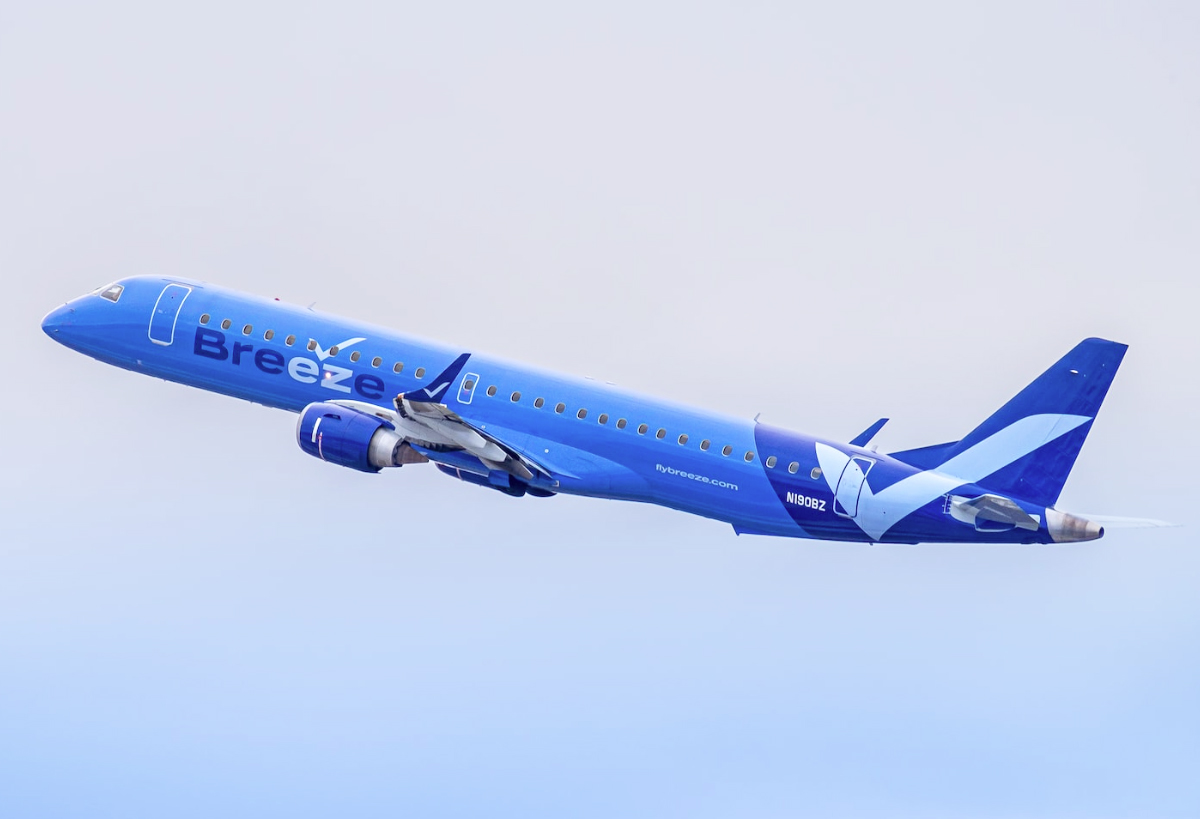
The checkmark motif is an effective one for an LCC — and affirmation of sorts, suggestive of ease and simplicity — but the rest of it is dead weight. Here’s a case where the fuselage isn’t painted white for a change, but probably should be.

GRADE: D


NORTHERN NONSENSE

Northern Pacific is a low-cost upstart out of Anchorage with plans to open routes within the western United States and to Asia. Behold their livery here.

Black is their go-to color. That’s not a bad thing, by itself, and we dig the raccoon-style shading around the cockpit. It’s a trendy flourish these days, but it’s cool. Can we stop there and award them a top grade? Alas, our survey of the wreckage must continue.

Let’s focus on that strange “N” logo. Except we can’t focus on it, because it’s vibrating uncontrollably. That’s not a shadow or a camera blur; that’s actually how it’s painted. Though maybe it’s better this way, seeing how, in its non-vibrating state, it resembles the logo for an amateur sports team.

On the engine nacelles, meanwhile, they’ve applied a completely different logo — a pair of offset thingies that remind us, painfully, of the American Airlines box-cutter. Then, up on the tail, we have yet another design. Isn’t that a black hole, or a special effect from “The Matrix”? The airline says its livery is meant to “evoke the natural beauty of Alaskan wilderness.” What I see here is a bending of time and space.

And sure, why not, go ahead and throw another “N” up in the corner, but this time make it turquoise. While you’re at it, paint the wingtips in turquoise too, because the northern lights or something.

What a garble of elements and patterns — a good example of a livery trying to out-clever itself at every turn.

GRADE: F-minus


SPANISH FLY FLOP
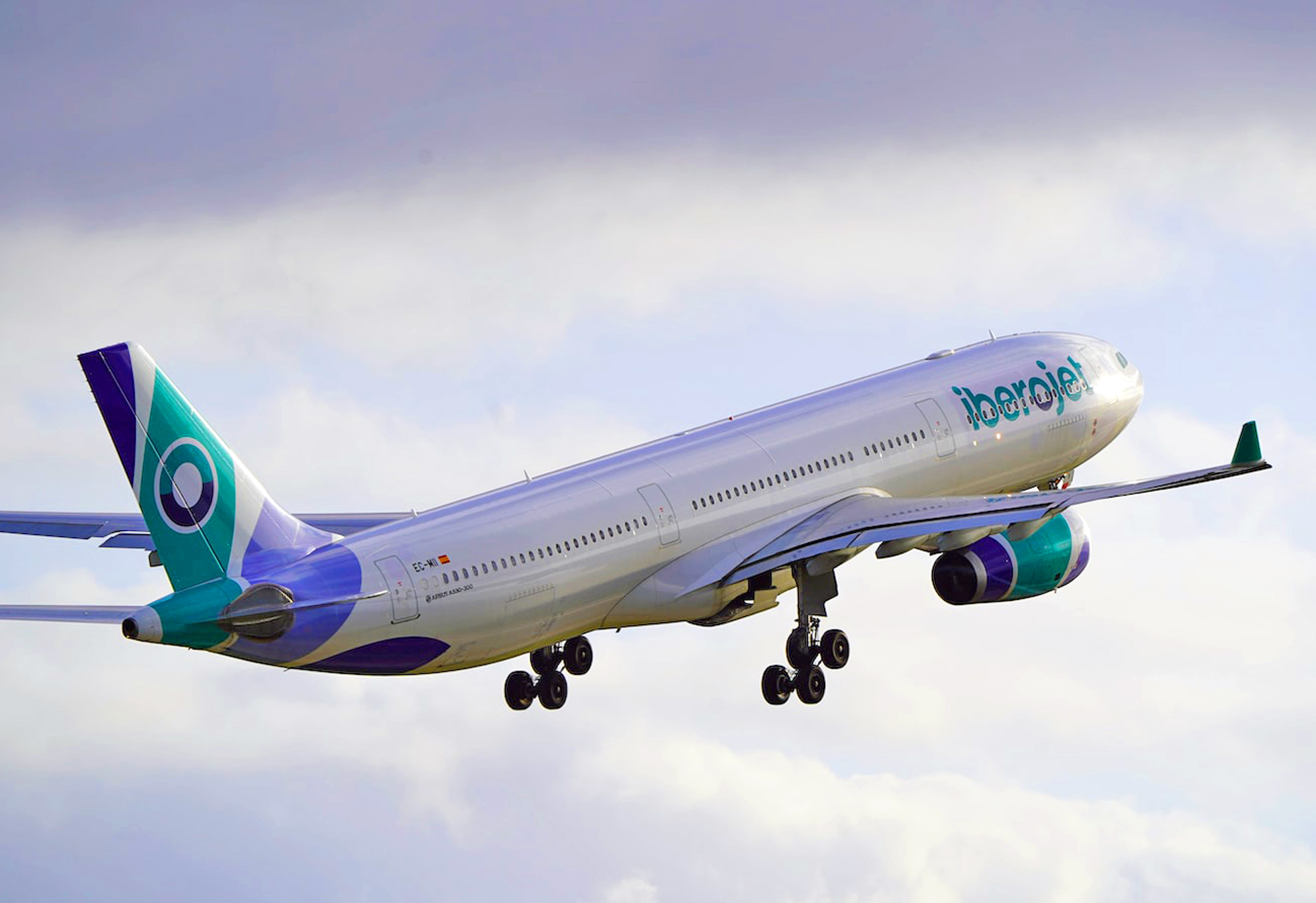
My plan is to start a Spanish charter carrier. Step one is to think up the stupidest name possible. I like “Iberojet,” as it sounds like it came from a third-grader. On the tail I want three bands. Mute the colors, and have that same third-grader do the painting so that the bands are warped and pinched, diverging/converging in bizarre random directions. If there’s any paint left over, add a navy blue arc to the underside of the aft fuselage. Do the same thing, more or less, on the engine nacelles, and then write “Iberojet” on the side. Use lowercase letters, because why not.

GRADE: F-minus


BOREAL BOREDOM

So, Icelandair has a new look, featuring, guess what, a Eurowhite body with blue titles. How novel.

The tail, though, is the exciting part, because each will boast one of five highlight colors apparently inspired by the people who make Sharpies. Wait, don’t tell me, the colors are meant to suggest… the northern lights! Which every smart tourist knows are best viewed in Finland or Norway, not Iceland.

Officially, according to a company press release, each of the accents “represents a different phenomena in Icelandic nature.” If true, they should include a gray, a black, and maybe a fiery volcanic red. What we get instead is lemon yellow, a magenta, a cyan blue. You could hunt around Iceland for a month and not see those colors. (Two additional colors are yet to debut. Surely they’ll be lovely.)
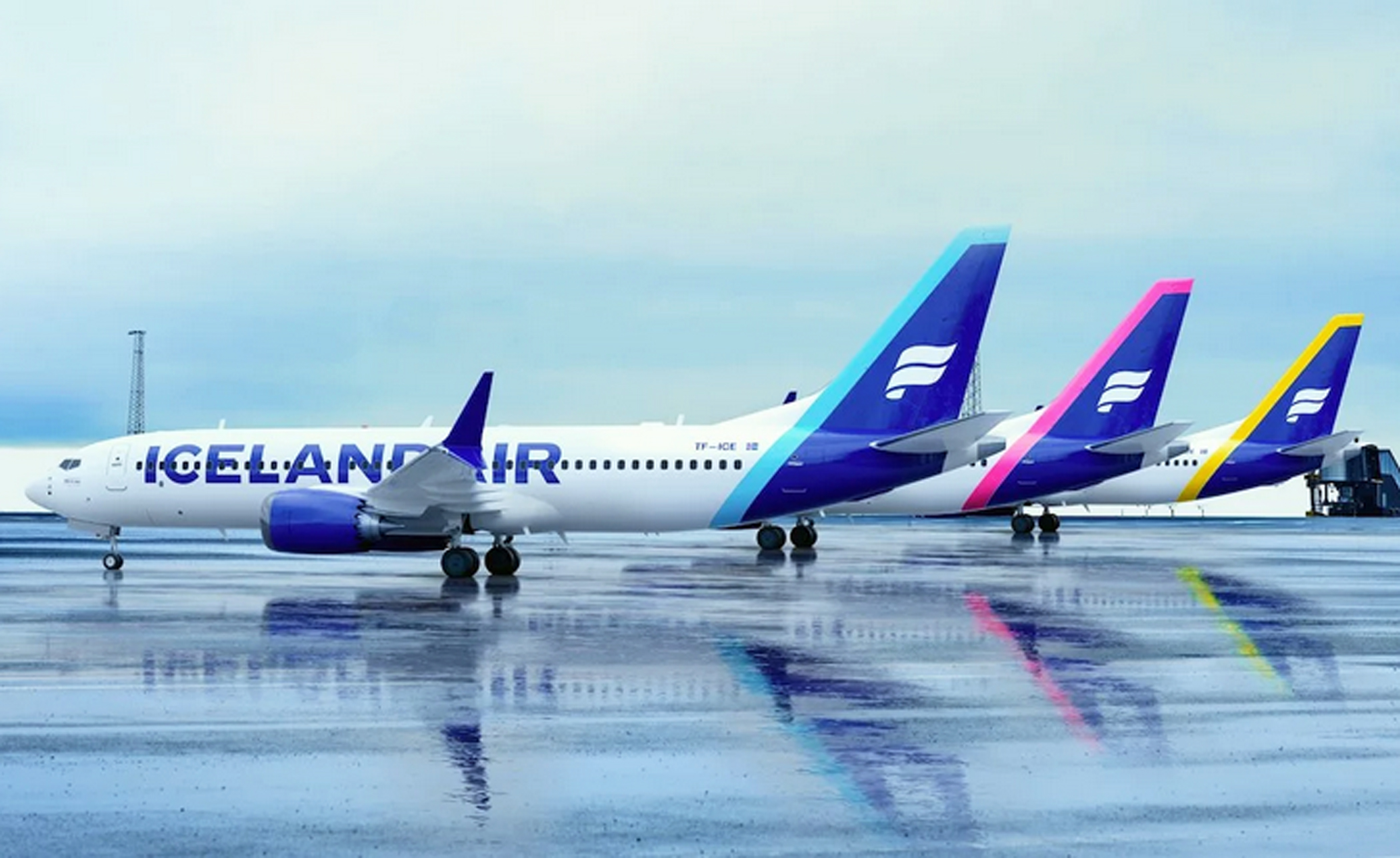
If they’d chosen only one accent color it’d be worse; the grab-bag keeps it lively, if nothing else. And when you really look at it, the problem is less the tail than the lettering. Sure, billboard-style lettering is meant to be big, but in this case it’s too big.

At least they’ve hung on to their logo, which for decades has been one of the most distinctive in the industry.

GRADE: D-plus


UNITED BLUES

After its merger with Continental Airlines in 2010, United came up with an amalgamation blending the United typeface with the Continental globe. Bland and ultra-corporate, it looked like something you’d see in a PowerPoint slide. A refresher was maybe inevitable. Unfortunately, they’ve gone way too far in the other direction. They’ve stayed with the 2010 template; except, now, they’ve sucked away whatever dignity it had.

We start with the “United” title, which has gone big. Big for big’s sake, unbalanced and oddly spaced, as if it were painted over some other name. The gold accenting is gone from the tail now, and the blue has been amped up, turning the old Continental globe into a fluorescent spider web. Is this the airline’s excuse for a logo? Do they even have a logo? It’s a tail that manages to be gaudy and boring at the same time.
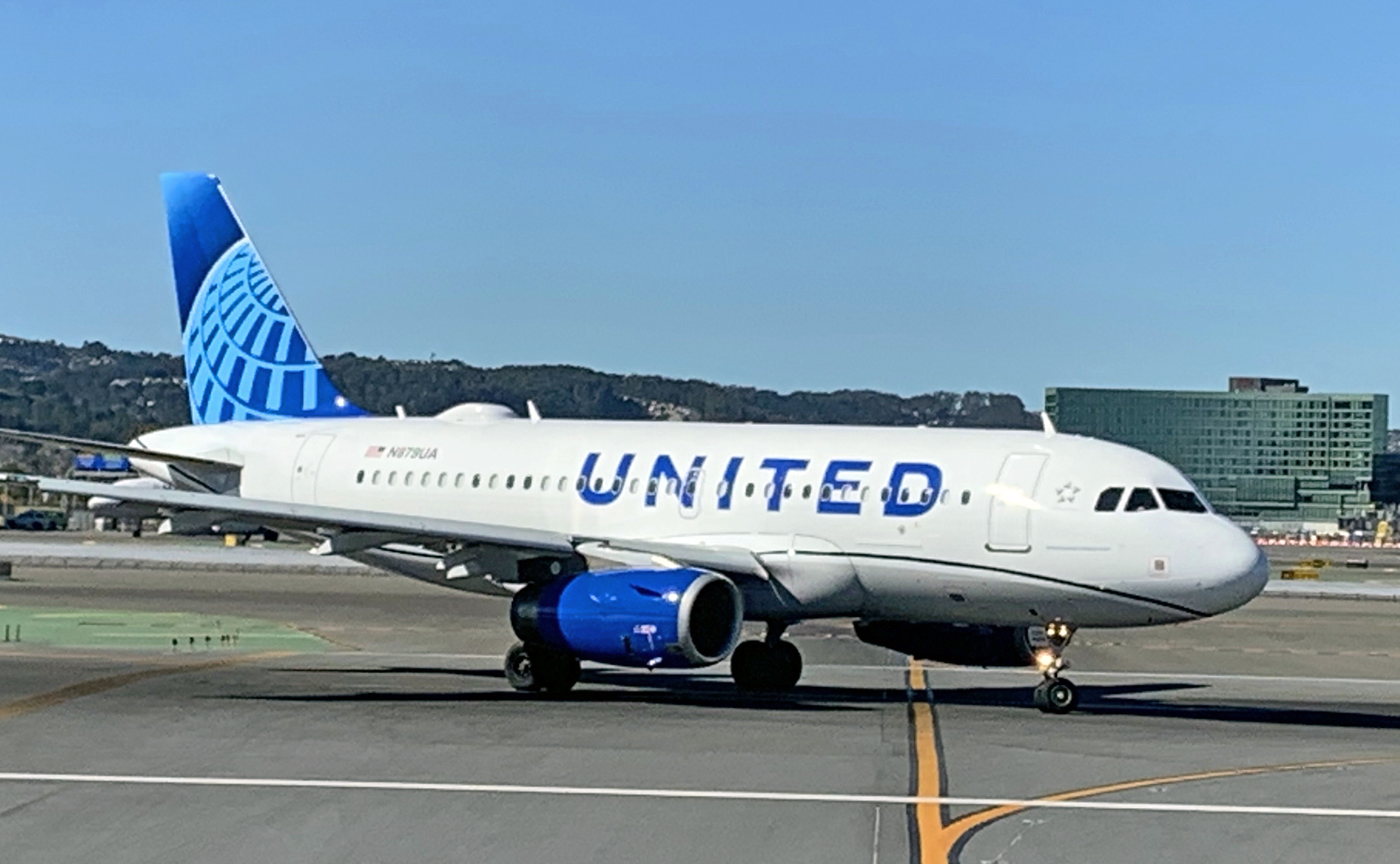
And, needless to say, you can’t have a livery these days without some annoying “in-motion” theme. United obliges with a mandatory curvy thing along the lower fuselage. Is it a worm? A garden hose? Worst of all it’s black.

Granted this isn’t as terrible as what American Airlines did a few years ago. It’s bold, I’ll give you that, and you can marvel in the simplicity of it. Or, you can call it what it is: an immature scheme that evokes the downmarket cast of a budget airline — hardly the look that a preeminent global carrier should hope to project.

GRADE: F


PHOTO CREDITS:

Alaska Airlines
Sam Chui (Korean Air)
Rocco Smet (Caribbean Airlines)
Daniel Shapiro/Unsplash (Breeze)
Jan Rosolino/Unsplash (Iberojet)
Patrick Smith (ITA)
Sam Chui (Korean Air)
Patrick Smith (United Airlines)


Comments (120)

Just Like Honey

March 6, 2025

MANY OF US associate the time of year with music from our pasts. Midsummer, maybe, reminds you of a song or an album. We all have our memory triggers, and often they correlate with a change in the weather, the turn of a season.

Here it’s the month of March, and for me that takes me back to 1986, when a strange band out of Scotland called the Jesus and Mary Chain was making a splash in the indie music scene. Their debut album, Psychocandy, had come out the previous fall, landing in my collection months later, after I’d developed a liking for the song “Never Understand,” which had gotten some radio play.

Once I started listening, I couldn’t stop. Over and over and over. The needle of my old JVC turntable must’ve gone incandescent from the friction.

I remember a lot of rain that month, and the grayness was a nice accompaniment to the album’s mood. Not maudlin, exactly, but heavy, and maybe a little creepy. Which is interesting, because, at heart, when you push past all the feedback and fuzz, this is the poppiest damn album in the world.

Stripped down, we hear a collection of kindergarten melodies that on their own would be tough to take seriously. The album’s conceit, it’s trick, is to crank the volume and soak them in waves of distortion. Cast the whole thing in a dressed-in-black, art school gloominess, and now the whole enterprise becomes cool — a masterpiece, even, of pop-Gothic-psychedelia.

This was an underground album, back when there were such things, but it had some mainstream bleed-over. Maybe you caught the kickoff track, ”Just Like Honey,” playing along with the closing credits of Sofia Coppola’s film, “Lost in Translation.” A great song, but better is the exuberant spookiness of “The Hardest Walk.” Or the creepy melancholia of “Cut Dead.”

Or, without a doubt the most astonishing song on the album, “You Trip Me Up,” a sort of haunted love poem sneaking out beneath a shrieking squall of feedback.

You may have heard the comparisons. “The Beach Boys on acid” or “The Velvet Underground meets Metallica.” And so on. Such descriptions are facile and one-dimensional. They’re also spot on, and only fair: this is a facile and one-dimensional album. In the greatest possible way.

There’s nothing complex here, and in a lot of ways Psychocandy plays like one long song. It’s pretentious and gimmicky, sure. And supremely addictive. This is the ultimate guilty pleasure album, and I’ve probably listened to it more times than any other record in my collection.

Just enjoy it for what it is.


Related Stories:

ZEN ARCADE AT 40.
NEW DAY RISING AT 40.

Comments (4)

Inflight Entertainment

February 22, 2025

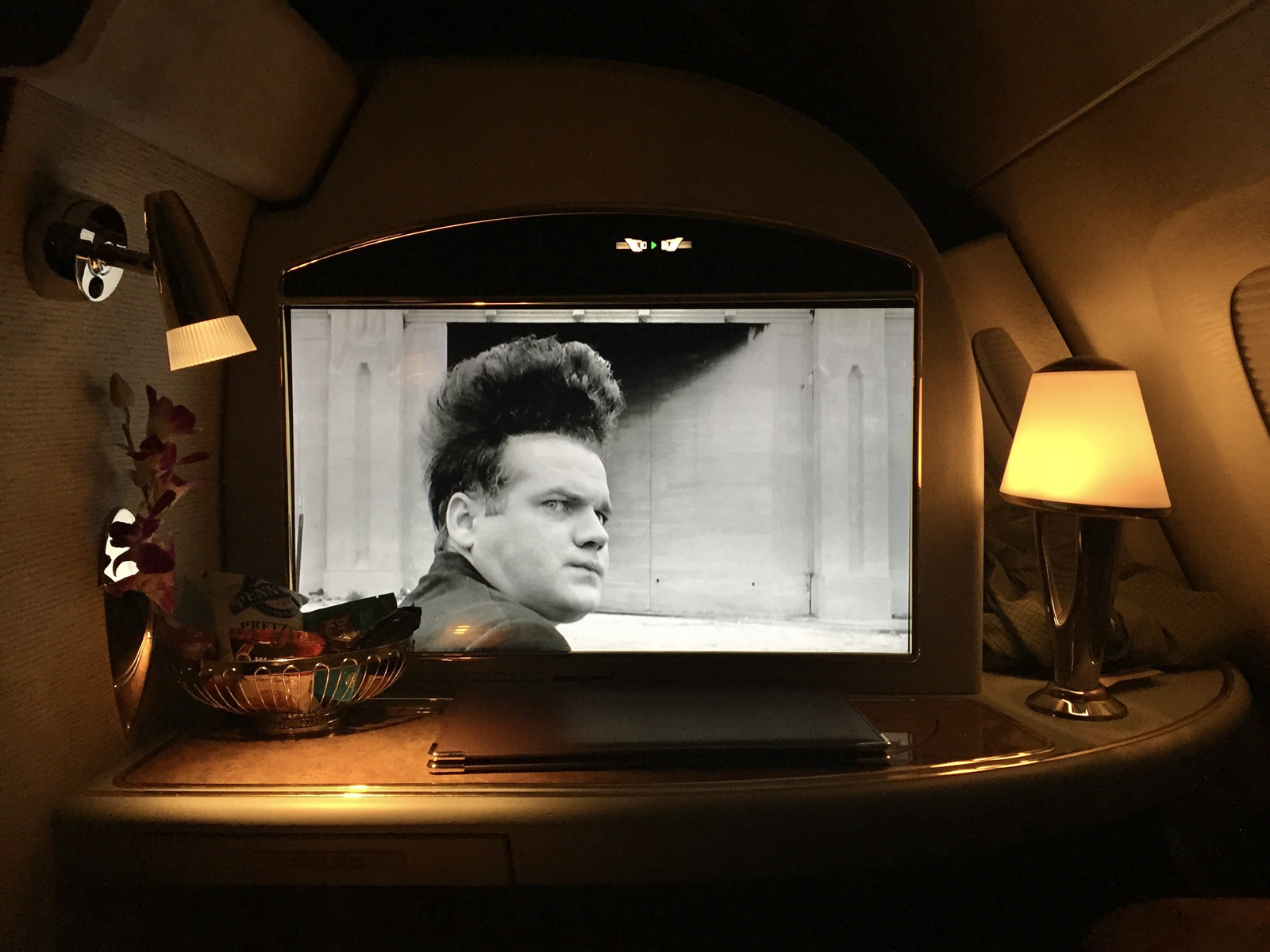
APROPOS OF the death of filmmaker David Lynch, I dug up this photo from a few years ago.

There I was, watching Lynch’s proverbial cult classic “Eraserhead” in an Emirates first class suite. It had been ages since I’d seen the movie and was surprised to discover it in the airline’s catalog.

I can’t think of a stranger venue in which to have watched this movie. If you know “Eraserhead” you’ll know what I mean. The contrast was ridiculous: the luxury of the cabin and the industrial bleakness of the film.

It was great to see it again, and the experience was extra-enjoyable thanks to the Bowers & Wilkins noise-cancelling headsets that Emirates provides in first class. Sound was always such an important element in Lynch’s movies, especially in “Eraserhead,” and the ambient whooshing racket of Mach .84 at 35,000 feet might otherwise have drowned out that critical aesthetic.

That said, I was never a huge fan of Lynch’s work, save for this one and “Blue Velvet,” which I probably watched 62 times and at one point had most of the dialogue memorized.

Meanwhile I can thank various inflight entertainment systems for having introduced me to many of my favorite movies and TV series.

I discovered “Arrested Development” on a business class seatback screen several years after it went off the air. The same with “Flight of the Conchords,” “Boardwalk Empire,” “Louie,” and, more recently, an excellent drama from England called “Happy Valley.”

I’m old enough to remember when airlines used to project movies onto a blurry bulkhead screen. If you didn’t fancy the carrier’s choice of the day, well, you were out of luck and had to read a book or peruse the inflight magazine. If you were lucky, on a longer flight, they might show two movies.

For the audio, they’d pass out plastic, stethoscope-style headsets that would plug into the armrests. The actors sounded as if they were yelling at each other under water.


Related Story:

SAVE OUR SCREENS!

Comments (8)