Author Archive

The Name Game

The Mangling of Airline Names is Nothing New. But What’s This, an Error in The New Yorker!

Warning: the post below, much like its author, is pedantic, petulant, overbearing and annoying. Reader discretion is advised.


August 20, 2014

EVERYBODY messes up airline names. They spell them wrong, say them wrong, add letters and breaks and apostrophes where none belong, and so on. In the aftermath of the MH370 and MH17 incidents, for instance, we’ve had one mangling after another of the Malaysia Airlines name. No, it’s not that important, and I’ve eased up on correcting people, but there are times when you just can’t let it go. I was startled the other day to come across a slip up in, of all places, The New Yorker. There are fewer if any more impeccably edited and fact-checked periodicals, but there it is, in an essay by George Packer on page 85 of the August 11th issue. Packer makes a reference to “Malaysian Air” flight 17.

George! Of all people!

The name of the company is Malaysia Airlines. It’s not “Malaysian Airlines,” “Malaysia Air,” or “Air Malaysia.” And it’s certainly not the doubly wrong “Malaysian Air.”

What is it, anyway, with the shortening of the words “Airlines” or “Airways” into “Air”? “British Air,” “Singapore Air,” “Virgin Air,” “Malaysia(n) Air.” Is it unfamiliarity with certain airlines from overseas? We don’t say “American Air” or “United Air.” I realize that it’s fewer syllables, but it’s ugly-sounding and wrong.

As maybe you’ve heard, Malaysia Airlines is considering a name change — not terribly surprising after two notorious tragedies in less than a year. This doesn’t shock me, but it does concern me for a couple of reasons. First, is it really necessary? People are squeamish, but the bulk of travelers aren’t irrational enough to avoid a particular airline because it happened to be tragically unlucky. If the carrier wants to prove itself proud and resilient, it needs to think long term and should keep its identity intact. Second, Malaysia Airlines is such a classy and dignified name. It should stay that way. If not, and if the current trend in airline branding is any indication, we’re liable to end up with something truly awful, like “Jet Fun Asia” or “Malay Sunshine Fly.”

Airline malapropisms aren’t limited to the media or to industry outsiders. People I work with, many of them long-time veterans of the airline business, will sometimes speak of “Air Italia,” and I’ve encountered just about every possible variant of the pronunciation and spelling of the name Lufthansa, from the crudely phonetic (“Liftunza”) to the inexplicable (“Lefthoonza.”)

I think we’re good on Malaysia Airlines, but they’re just one of many common victims. If you’re an editor or reporter, here are some simple guidelines that will keep you from receiving a letter of correction from yours truly:

• Let’s be clear on this “Air” thing. There are no such things as “British Air,” “Virgin Air,” “Alaska Air,” or “Singapore Air,” just to pick four. British Airways, Virgin Atlantic (or Virgin America), Alaska Airlines and Singapore Airlines are what you mean. As to that first one, you can earn extra credit by calling it “BA,” as savvy fliers like to say.

• There’s no “Malaysian Airlines,” and there’s no “Iberian Airlines” either. It’s Iberia.

• You cannot fly to Rome on “Air Italia” or “Alitalian.” It’s Alitalia.

• To camel cap or not to camel cap? The Egyptian national carrier is EgyptAir, not “Egyptair” or “Egypt Air.” On the other hand, it’s Icelandair and Finnair, not “IcelandAir” or “FinnAir.” (Alas now defunct, though still fondly remembered, it was neither “SwissAir” nor “Swiss Air.” It was Swissair.)

• Pardon my nitpicking, but there is no “Delta Airlines” based in Atlanta, Georgia. There is only Delta Air Lines. I wish more carriers used this old-timey three-word style.

• In the old days one flew to Seoul on KAL, as everyone called it. But did that stand for Korean Air Lines, or was it Korean Airlines? I’ve got photos of aircraft on which both are painted. No matter, in 2014 it’s a short and simple Korean Air.

• There is no such thing as “China Air.” There is, however, China Airlines, the national carrier of Taiwan, Republic of China (ROC). There also is Air China, based in Beijing, in the People’s Republic of China (PRC). Don’t mix them up: the PRC is the sworn enemy and claimant of Taiwanese sovereignty, and China Airlines and Air China crews are known to engage in airport brawls and run one another off taxiways.

• Beware of redundancies when tempted to tack on any kind of “Air,” or “Airways” suffix, as it might already be there. SAS, for example, needs nothing of the sort, lest it become “Scandinavian Airlines System Airlines.”

• I know of at least two carriers that rely on the singular “Airline.” Emirates Airline, and the lesser-known Sky Airline of Chile. Frankly they’d be better off with the “s.” (Why does there have to be an “air” suffix at all? “Emirates,” alone and unadorned, is such a great-sounding name. Similarly, the full and annoying name of JetBlue is JetBlue Airways. What’s wrong with just “JetBlue”?)

• Lufthansa is Lufthansa. Sort of. Officially it’s Deutsche Lufthansa, which means, basically, “German Air Company” (The name derives from Luft, the German word for “air,” and Hansa, a Latin term meaning “guild”). On the emblem of a Lufthansa pilot’s hat it says “DLH,” taken from the full German name.

• KLM? Why that’s Koninklijke Luchtvaart Maatschappij, or “Royal Airline Company.” But you knew that.

• There is no “u” in Qantas. It’s taken care of by the Queensland part of Queensland and Northern Territory Aerial Services, as it was named more than 90 years ago.

• Everybody remembers the Concorde. More properly, everybody remembers Concorde. The plane’s makers always insisted the article extraneous. In a haughty Oxford accent you might have heard, “We’ll be arriving on Concorde at noon.” This is possibly the most pretentious bit of nonsense in the history of aviation; most of the time I go ahead and use the the.

• The The? Does anyone remember that song “Uncertain Smile” from c. 1983? I once had the extended version on a 12-inch 45.

Let’s go back to Lufthansa for a minute. Of all the endless manglings of this fine and handsome word, perhaps the most atrocious version is one heard dozens of times daily at Boston’s Logan International Airport. The offense takes place on Massport’s inter-terminal shuttle bus and aboard the MBTA’s Silver Line connection from downtown, both of which share a common audio loop that announces the occupants of each terminal. As the only airline pilot alive who doesn’t own an automobile, I take public transportation to and from the airport. And every time the bus nears terminal E, I clench my teeth and close my eyes as the tape goes through its alphabetical listing. It starts out fine. “This stop serves Air, France, Aer Lingus, Alitalia, British Airways” Then then, here it comes… “Loof-THUND-za.”

Say what?

“Loof-THUND-za,” the woman’s voice repeats. Not only does she screw it up, she makes a presentation out of it. Her voice drops an octave and appropriates the accent of a Teutonic demon.

Being touchy about these things, I’ve thought about protesting to Massport. But imagine how that might go:

PS: Yes, hello, I’m calling to complain.

MP: Oh, is this about the toilets in Terminal C? Sorry, we’re trying to…

PS: No, it’s about the bus. The shuttle bus.

MP: The bus? Did the driver swear at you? We have a special number for that, let me…

PS: No, it’s the recording, the tape recording that calls out the airlines at each terminal.

MP: I see. No problem. Is the volume too loud? Is there an airline missing?

PS: No, it’s not missing. It’s just all messed up.

MP: Oh. Which one?

PS: Lufthansa.

MP: “Lefthinza?”

PS: Yes. Or, well, no. Lufthansa.

MP: That’s what I said, Lifthoonsa.

PS: See, this is what I’m talking about. You’re not pronouncing it right, and neither is the tape. It’s very confusing. [Actually, it isn’t confusing at all, it’s just irritating.]

MP: All right, I will have our audio tape team look into this and call you back.

PS: Great, thank-you.

[Four days later Massport returns the call.]

MP: Yes, Patrick, our engineers have reviewed the recording. They could not find any problem. The voice clearly says “Lifthonser.”

PS: [exasperated] In fact that’s not what it says. It says “Loof-THUND-za.”

MP: [sternly] That’s what I just said, “Luftownza.”

PS: That isn’t what you said. And either way it’s wrong. Can’t you keep your diphthongs straight? Geez. What the hell is wrong with you people?

And so on.

That conversation never really happened, though I suppose it could have. And those of you who long ago decided that I’m a petulant crank are, once again, amply rewarded. But I am of the belief that every field, every specialty and sub-specialty, no matter how esoteric, needs its obsessives, and is richer for their efforts. To the layperson, such intense adherence to detail might seem undue, or comical. But without it, standards fall, and the transfer of information becomes corrupt.

From there it’s a slippery slope: the very building blocks of society begin to fissure and crumble. The terrorists have won!

In any event, we shouldn’t push it, lest Lufthansa be tempted to change its name. The only thing worse than a recorded voice announcing “Loof-THUND-za” would be one announcing “Air Germany.”

If you haven’t noticed, the global expansion of commercial aviation has brought with it some truly awful carrier names. In the past few years, more than 250 commercial operators have entered the market, the bulk of them with identities ranging from inexplicable to embarrassing. Many, apparently, were thought up by twelve year-old girls (Golden International Airlines, Butterfly Helicopters), or junior high kids strung out on energy drinks (Maximus Air Cargo, Mega Aircompany).

Of course, nobody will ever outdo the accidental hilarity of Taiwan’s now-defunct U-Land Airlines, but particularly noxious has been the fondness for ultra-quirky, dare I say “fun” monikers. Zoom, Jazz, Clickair, Go Fly, Wizz Air. Enough already. Sure, it freshens things up, but can you really buy a ticket on something called “BMIbaby” and still feel good about yourself in the morning?

The idea, I think, is to personify the ease and affordability of modern air travel. One result, however, has been to undercut whatever shred of dignity the experience retains. In fairness, this trend is emblematic of the way too many products, not just airline tickets, are pitched these days, with everything presented as quick, quirky, snappy and hip. But as a pilot, if not as a traveler, I’m troubled by the incongruity of a $50 million jetliner that says “Zoom” on the side in cartoon letters the size of a house.

Here are some suggestions: Zip-Air, Neato Plane, CrazyJet. Shoot, I was going to type “Superjet,” but guess what? Superjet International — you can’t make this up — a joint venture between planemakers Alenia Aereonautica of Italy and Russia’s Sukhoi, is developing a new family of regional jets. And you thought “Airbus” was bad.

If it’s any consolation, there are, for now, some beauties still out there. Avianca, the flag carrier of Colombia, is one of the oldest airlines in the world, and maybe the prettiest-named. What a sweet word that is, both the way it looks and sounds: Avianca. You could almost name your daughter that.


Portions of this post originally ran in the magazine Salon.

Salon.com logo

Comments (70)

It Looks Like the Future. Up Close and Personal With the 787.

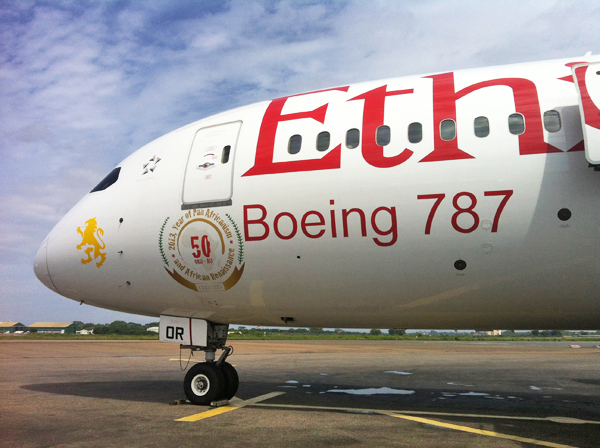
Ethiopian 787 1

UPDATE: June 14, 2017

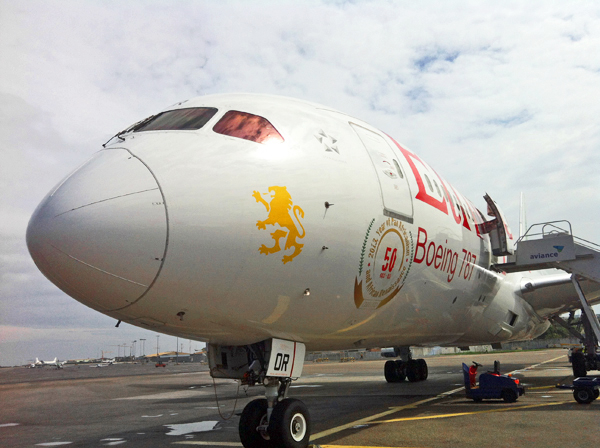
HELP ME OUT HERE. Let’s put aside the Boeing 787’s well-publicized technical attributes (and earlier foibles) for a moment, and focus on the lines of the thing — the way it looks. I can’t decide how I feel.

Mostly, I think, I like it. If nothing else it’s got something that too many jetiners sorely lack: personality. The scourge of jetliner aesthetics nowadays is same-ness. Gone are the days when each aircraft, even those of similar sizes, had a distinct profile, and even the casual planespotter could tell a DC-10 from an L-1011, or 727 from a DC-9, from five miles away. Then you had the outliers, the really unique beauties like the Caravelle or the Concorde, or the Soviet-made Ilyushins and Tupolevs. Today, every plane looks like every other plane. There are exceptions, of course, such as the 747, which is not only distinctive, but beautiful, and the A380, which is equally distinctive for all the wrong reasons. , Mostly, though, modern planes share the same generic blueprint: two boring engines, a nondescript tail, and a nose that could be any other nose. Planes used to look sculpted. Today they look like snap-together kits of interchangeable parts.

So, kudos to the 787 for venturing outside this boring box. And, unlike the A380, it does so in a way that is, for the most part, tasteful and stylish.

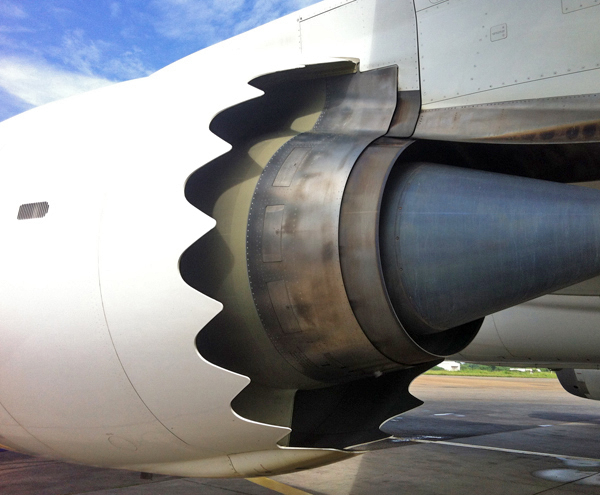
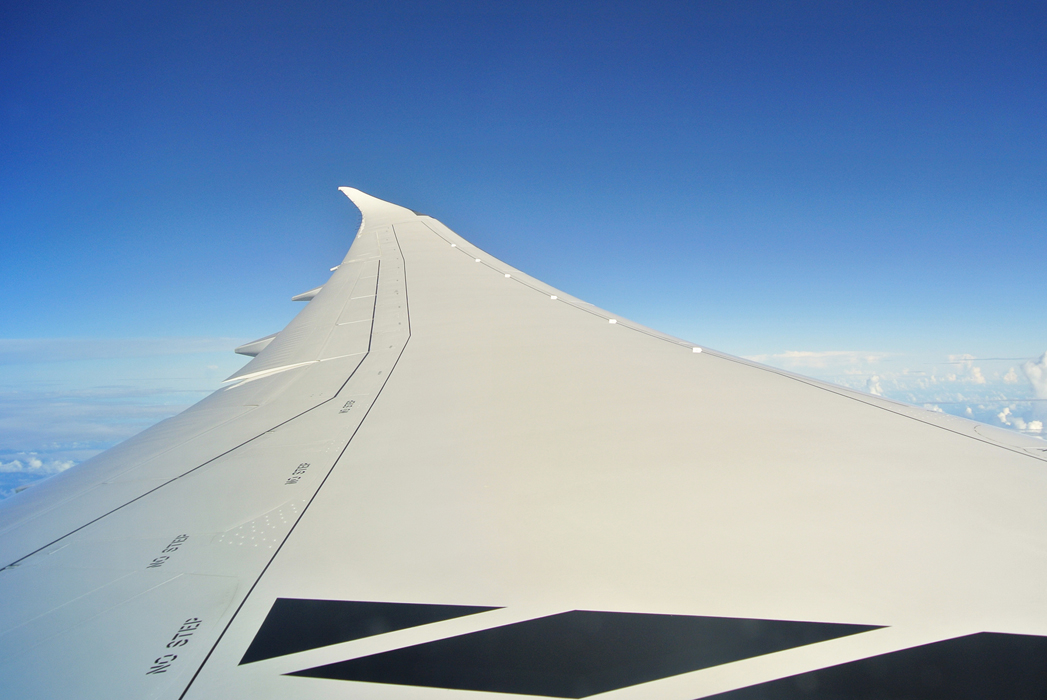
We love the steeply canted wings, for example. There’s something almost organic in the way they curve and taper. As the plane takes off, they bend upward, their tips rising nearly to the roofline of the cabin. It’s amazing to watch. The jet looks nearly alive, like some great seabird lifting its wings for flight. The scalloped engine nacelles (it reduces noise) are sexy, as are the twisty-curvy blades of the engine fans.

The beauty of any plane, though, is lost or made in the nose and tail. Here the 787 gets mixed grades…

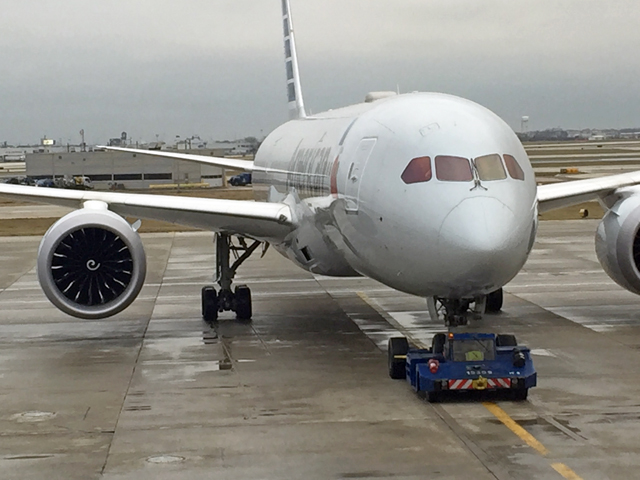
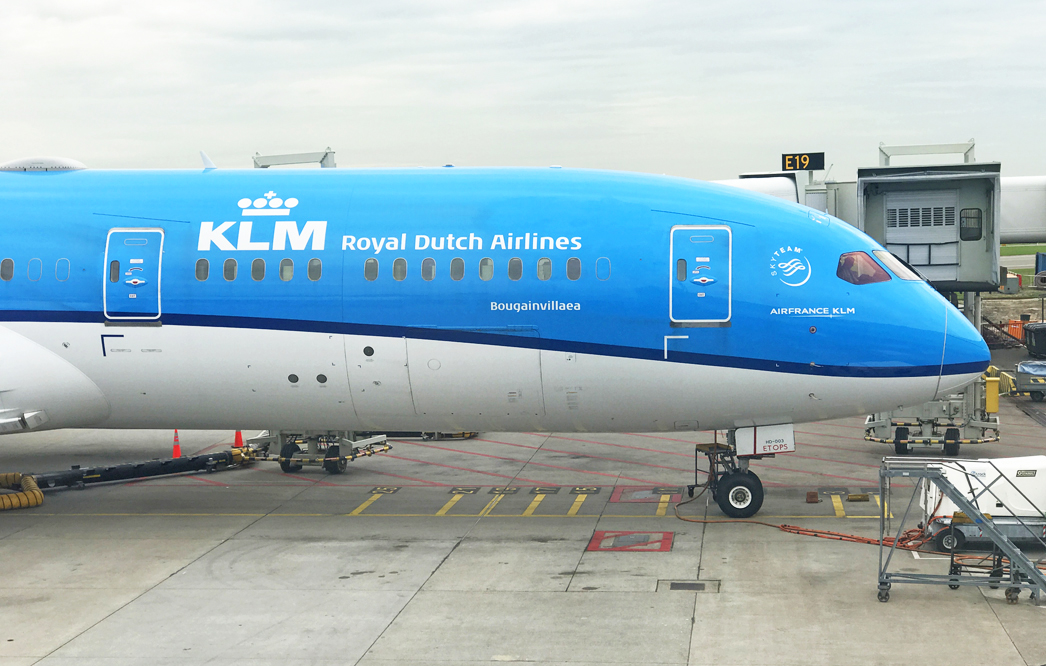
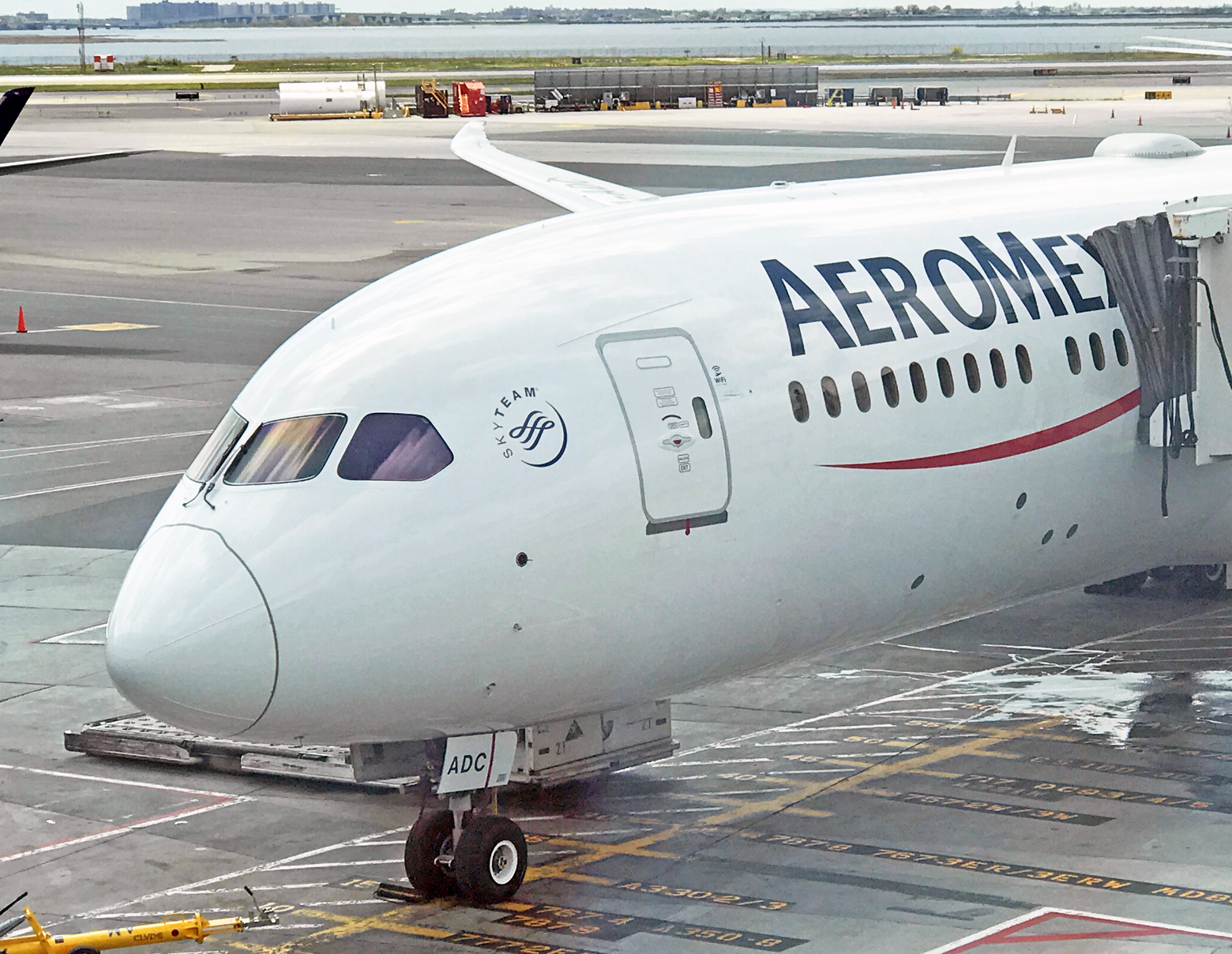
Based on other people’s comments, the nose seems to be one of those like-it-or-hate-it things. For me it works nicely. The cockpit windscreens are unusually rakish and sleek. This jumps out because we’re so accustomed to the boxy, sharp-cornered windows typically found up front — see the 737 for an example of how an ugly cockpit can handicap a plane’s profile. But in the name of aerodynamic smoothness, this is the way cockpit windows should look. It’s the nose of a bullet train, or a sports car. It evokes the Caravelle, and the Comet, relics of the distant past. Yet, at the same time, it helps the plane appear modern, even futuristic.

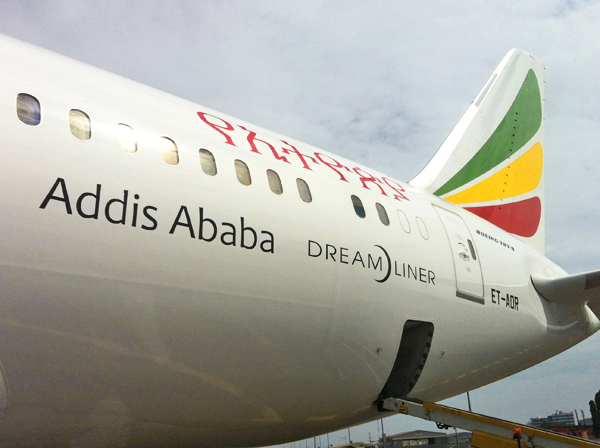
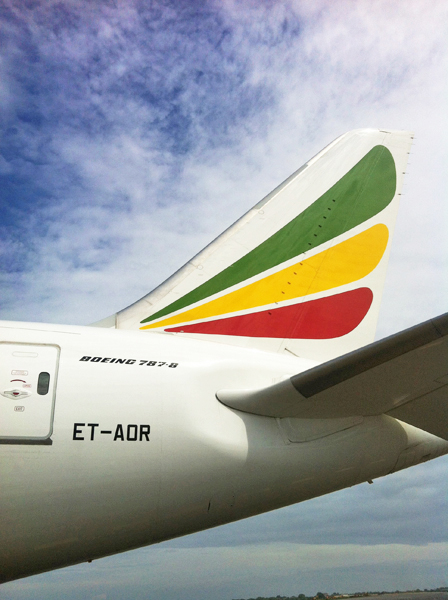
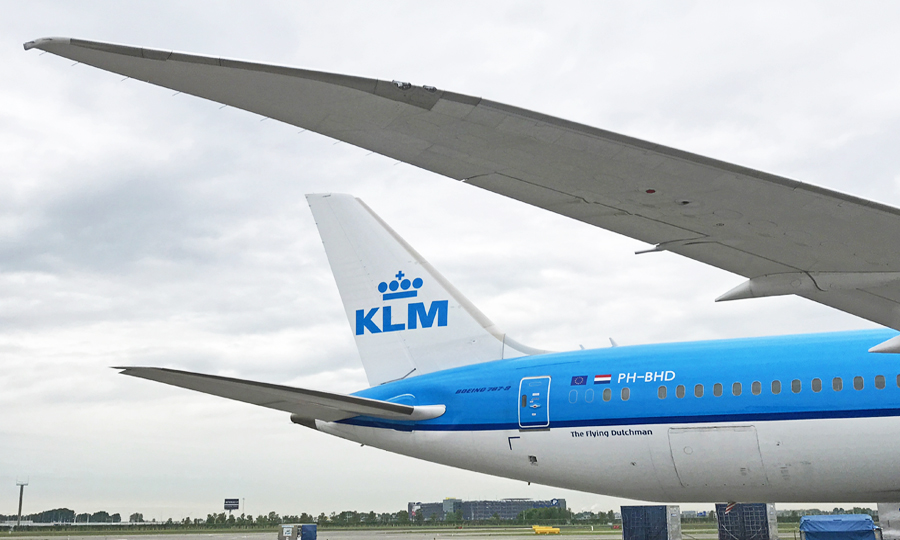
Plenty of people don’t like the nose — most I think they’re afraid to — but a bigger problem is the tail. It isn’t an ugly tail, exactly, but it’s awkwardly undersized, and curved at the top in a way that makes the entire plane look, well, fishy. Like a fish. A graceful fish, but not a sexy fish. A salmon, maybe, as opposed to a shark or a barracuda. That’s better than a steroidal beluga (the A380), but it’s distracting in an oddly anthropomorphic way. Also the plane is smaller and stubbier than people expect. There’s something sausage-like about it. The lengthened 787-9 variant has a sleeker and more balanced look than the standard 787-8. Ditto for the upcoming 787-10.

Overall it’s a good-looking plane, if not quite a beautiful one. If nothing else, it’s daringly distinctive, which is more than you can say about most contemporary jets. It looks strong, fast, and new. It looks like the future.


ALL PHOTOS BY THE AUTHOR

Ethiopian Airlines at Accra, Ghana
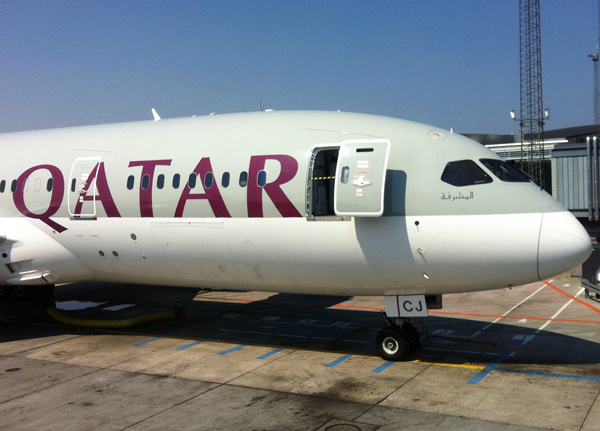
Qatar Airways at Copenhagen-Kastrup
KLM at Amsterdam-Schiphol
American Airlines at Chicago-O’Hare
AeroMexico at New York-JFK
Wing picture aboard Japan Airlines, 2012


Ethiopian 787 2


Ethiopian 787 Aft


Ethiopian 787 Engine


Ethiopian 787 Tail


Qatar 787 at CPH


787 wing view


Related Stories:

THE UGLIEST PLANES OF ALL TIME

HIGH ART: HISTORY, HYPE, AND THE WORLD’S BIGGEST PLANES

A RIDE TO TOKYO ON THE 787


Airplane Shop Banner Ad 2


Comments (93)

My Kingdom for a Cup Holder

Thai Airways Boeing 777.      Photo by the author.

Thai Airways Boeing 777.     Photo by the author.

April 17, 2014

THE SIMPLEST THINGS, sometimes, make a noticeable difference.

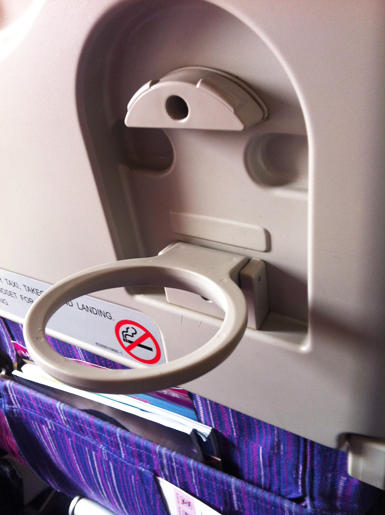
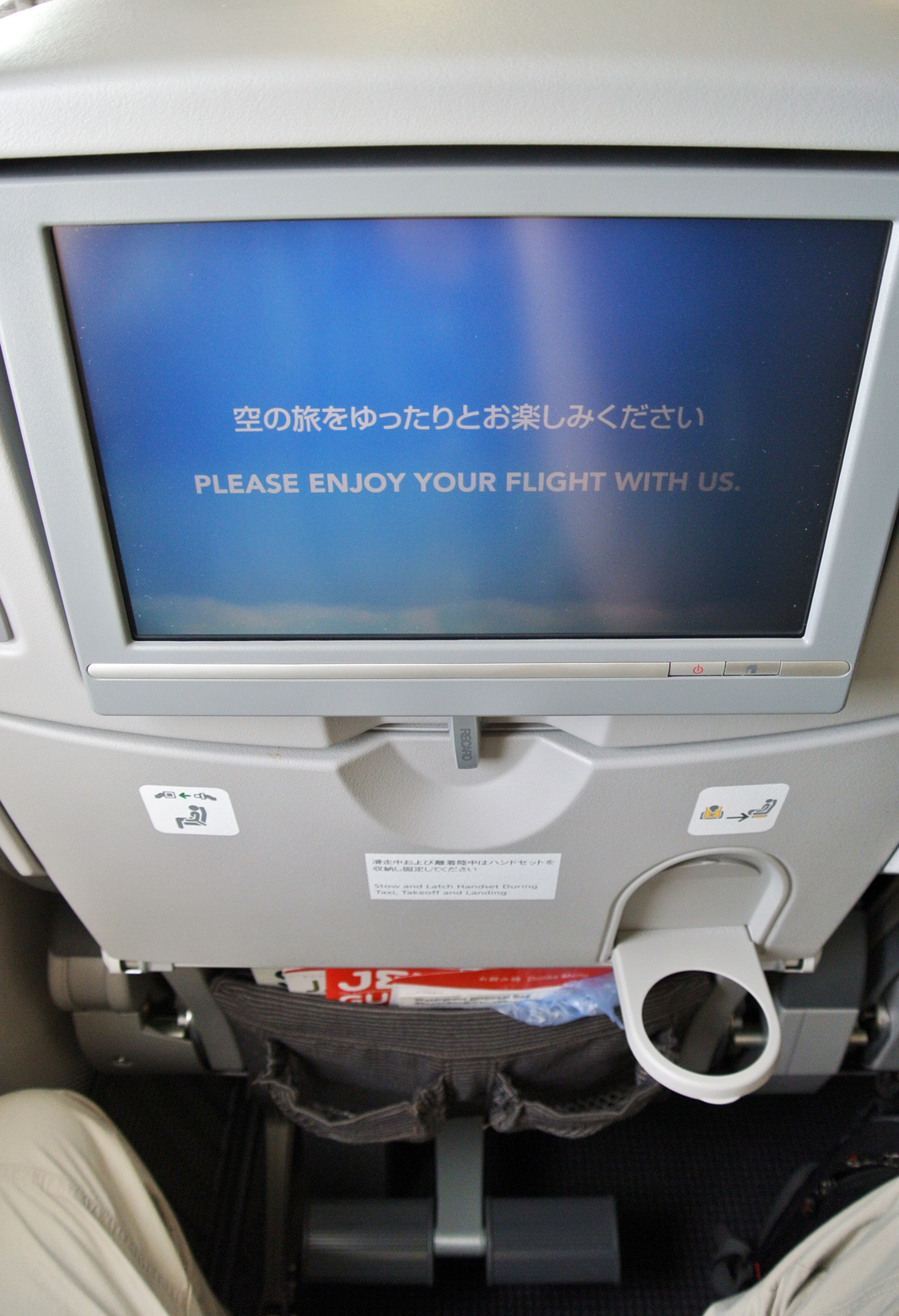
I’ve brought this up in my prior critiques of economy class ergonomics, but let me ask it again: why don’t U.S. air carriers equip their seat-backs with cup holders?

I’m talking about the snap-down holders available on both Airbus and Boeing models. Most of the major Asian, Middle Eastern and European carriers have them, but I have never seen a cup holder on an American airline. Not once. Why?

It’s nice to have your beverage there in front of you without having to deploy the entire tray. There’s a lot more room to move around, and getting in and out of the seat is easier. As a bonus, you can use the thing as a hook for your headset or earbud cord.

I know, I know, of all the things to complain about. And airlines, rightly, put the bulk of their cabin investments elsewhere. But considering the minimal costs involved, why the hell not? These are not expensive amenities.

And I’d apply the same sentiment to, for instance, a slightly raised edge on the front of your tray table to keep items from sliding into your lap during turbulence. Just a quarter inch would do the trick. (Gravity, we expect, is something that the people who design airplane interiors are at least vaguely familiar with, though sometimes I wonder.) I can’t imagine the extra cost would be more than a penny or two, if anything at all.

Japan Airlines 787.  Photo by the author.

Japan Airlines 787.    Photo by the author.


Related Story: ECONOMY CLASS, DONE RIGHT


Comments (27)

Protected: “The Question”

This content is password-protected. To view it, please enter the password below.

Enter your password to view comments.

Pilots and Copilots. Who are These People?

Epaulets


February 18, 2014

DEAR ASSOCIATED PRESS (and most other media outlets):

Please pay closer attention to use of the phrase “the pilot” in your stories. This is one of those commonly repeated tics that always gets my goat, resulting in pedantic, vaguely neurotic rants like this one.

“The pilot” did this, “the pilot” did that. Well, which pilot exactly, because there are always at least two pilots in a jetliner cockpit — a captain and first officer — and both of these individuals are fully qualified to operate the aircraft.

Use of the singular implies that the other person in the cockpit is something other than, and presumably less than, an actual pilot. I’m not sure if reporters have a style guide for these things, but this is nothing a simple “s” can’t fix: “the pilots.” Alternately you could say “the cockpit crew.” If a differentiation in rank is needed, I’d recommend using “captain” and “first officer.” Just be aware that either pilot may be at the controls during a particular incident.

The first officer is known colloquially as the copilot. But a copilot is not an apprentice. He or she shares flying duties with the captain more or less equally. The captain is officially in charge, and earns a larger paycheck to accompany that responsibility, but both individuals fly the aircraft. Copilots perform just as many takeoffs and landings as captains do, and both are part of the decision-making process.

In fact, while protocols might be slightly different carrier to carrier, it’s not unusual during emergencies or other abnormal situations for the captain to delegate hands-on flying duties to the copilot, so that the captain can concentrate on communications, troubleshooting, coordinating the checklists, etc.

Do I seem sensitive about this? That’s because I’m a copilot.

A copilot becomes a captain not by virtue of skill or experience, but rather when his or her seniority standing allows it. And not every copilot wants to become a captain right away. Airline seniority bidding is a complicated thing, and a pilot can often have a more comfortable quality of life — salary, aircraft assignment, schedule and choice of destinations — as a senior copilot than as a junior captain. Thus, at a given airline, there are plenty of copilots who are older and more experienced than many captains.

In some parts of the world, including parts of Asia, the experience disparity between captains and copilots tends to be more pronounced. The typical major airline new-hire in the United States tends to be a lot more experienced than the typical new-hire in Europe or Asia. But not always, and the raw totals in a pilot’s logbook are only part of the story and not necessarily representative of skill or talent. Airline training is never easy, and any pilot, no matter how young or comparatively inexperienced, needs to be good to succeed at that level. And once you’re there, cockpit duties are always shared equally and even the least experienced copilot is by any measure a pilot, trained and certified to fly the airplane.

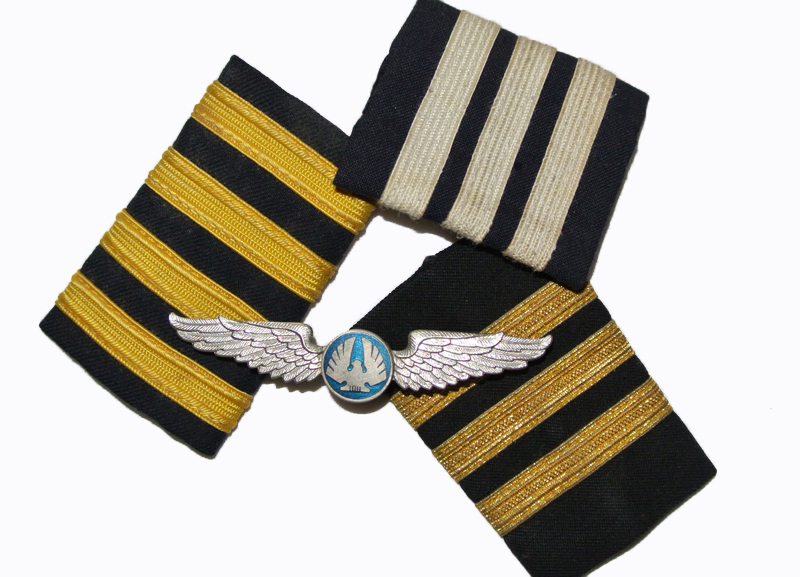
It can vary country to country, but captains usually wear four stripes on their sleeves and epaulets; copilots wear three.

On older planes there was a third cockpit station occupied by the second officer, also known as the flight engineer. (I spent four years as a flight engineer on a cargo jet in the mid-1990s.) Once upon a time planes also carried navigators, but the last known navigator in these parts was the old Howard Borden character from the original “Bob Newhart Show.”

Long-haul flights carry augmented crews that work in shifts. There might be two copilots and a captain; two captains and a copilot; or maybe two captains and two copilots. It varies airline to airline and with the length of flight. For example, at my airline, a ten-hour flight will carry three pilots: two copilots and a captain. Each crew member will have roughly one-third of the flight free. He or she retires to a bunk room or designated crew rest seat, while the other two remain up front.


Epaulets photo by the author.


AirlinePilotHiring Banner Ad


Comments (38)

Yak Hunting in Liberia

Yak40atROB4

PHOTOS AND STORY BY PATRICK SMITH


POSSIBLY THIS IS ONE OF THOSE THINGS only an aerophile can understand, but there’s something so fascinating, even enchanting, about old abandoned airplanes.

Entire books have been written about them — field guides, you could say — chronicling the whereabouts of this or that crashed, abandoned, or otherwise derelict airliner. You find them crashed in forests, mothballed in the desert, and tucked away in weedy corners of third-world airports: antique propliners like Constellations and DC-6s; sun-bleached 707s and DC-8s; retired Soviet Tupolevs. The jetliner boneyards in California and Arizona receive hundreds of requests annually from airliner geeks eager to explore their inventories.

For some of us, poring over some discarded old plane is even more exciting than exploring a still-flying one.

We see these planes as monuments, perhaps? To the men and women who flew them, to the passengers who rode aboard them — and most extraordinary of all, to the the places these planes have been. The difference between the peculiar grandeur of an old abandoned building, for instance, and that of an old abandoned airplane, is that the building existed only in a fixed location.  Airplanes, they’ve been everywhere.

I remember, during my visit to the boneyard at Mojave a few years back, looking up at a retired Boeing 747, soon destined for the scrapper.  The very same jumbo jet, I later learned, once made London and Honolulu runs for PeopleExpress.  Before that, it wore the name “City of Adelaide” for Qantas. I thought of all the far-flung places this elegant machine must have visited in its nearly three decades of flying, from Newark to New Delhi, Bangkok to Buenos Aires.  With the same sort of melancholy one feels when remembering an elderly relative in younger, happier times, I imagined this same 747, years ago, whirling in over Hong Kong harbor, ascending over Cape Town at dusk.

Of course, the real stories don’t belong to the planes themselves, but to the people they carried – from sheiks and dignitaries, to millions upon millions of vacationers and tourists.  Looking up at the forlorn hulk of that 747, I realized that with every takeoff the plane made, up 450 people were borne aloft with it.  Over a 30 year-career, that’s about five million stories. Its rows of empty chairs were like the rings of an ancient tree.

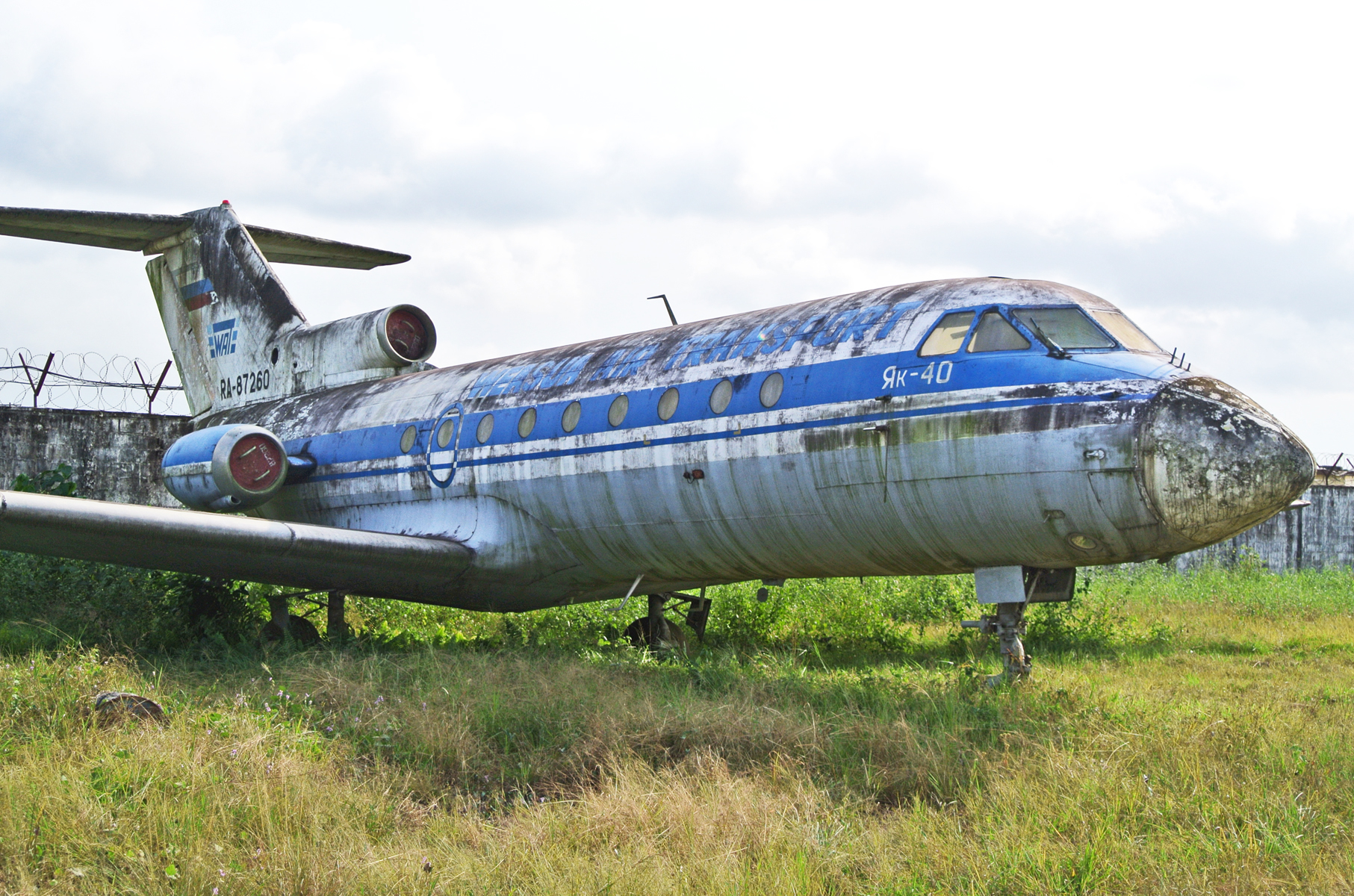
This past Christmas I had the chance to visit an abandoned Yak-40 at Roberts Field — the airport serving Monrovia, Liberia, in West Africa.

The Yakovlev Yak-40 was a tiny three-engined jet made in the Soviet Union.  It carried about 30 people.  Almost a thousand Yak-40s were built between 1966 and 1978. This was a true “regional jet” some three decades before the term ever existed.  A few are still in service.

I’d noticed the derelict Yak on earlier visits to Roberts, but never had the opportunity to wander over and explore. This time, in the company of an airport worker and his van, I was able to make the trip.

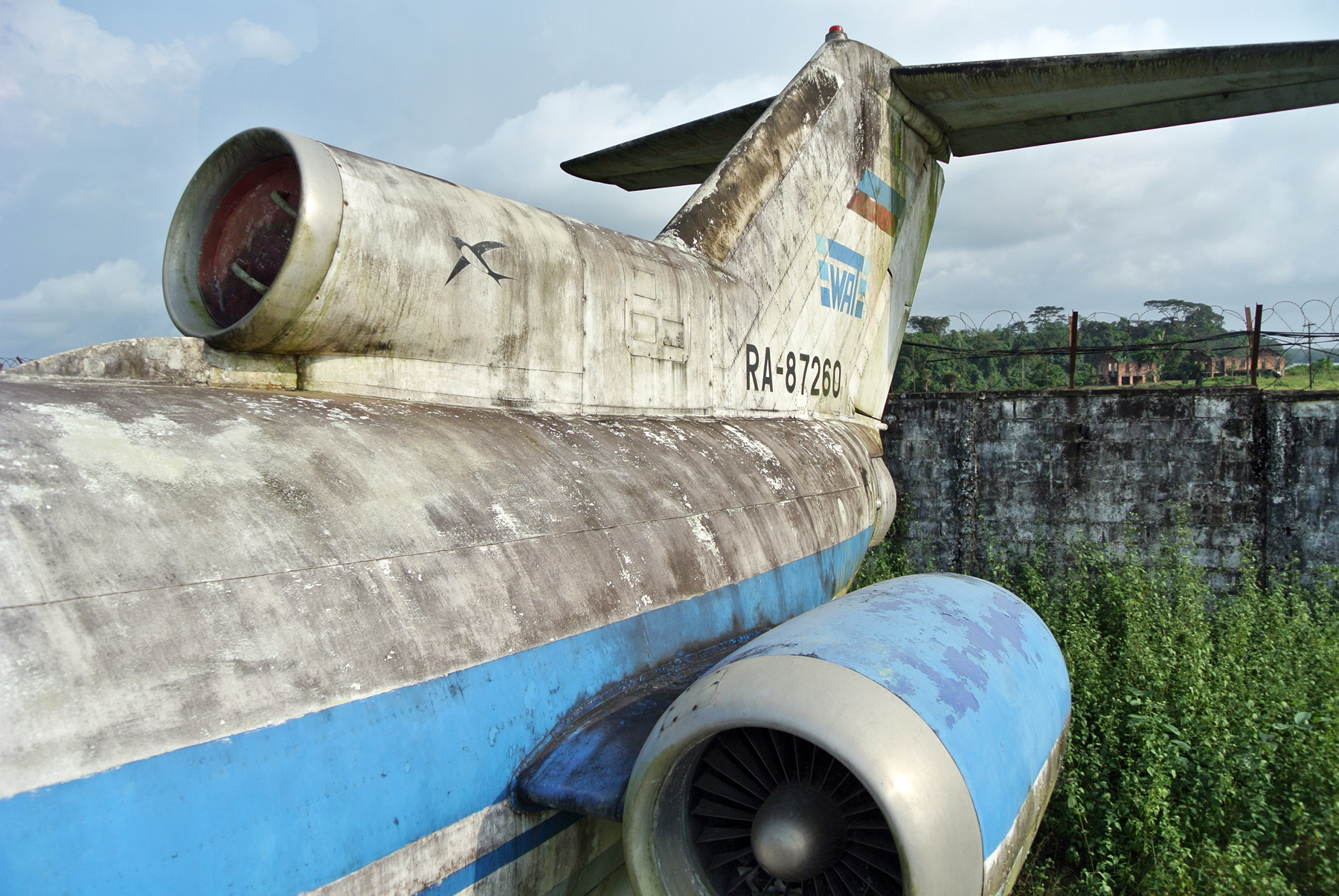
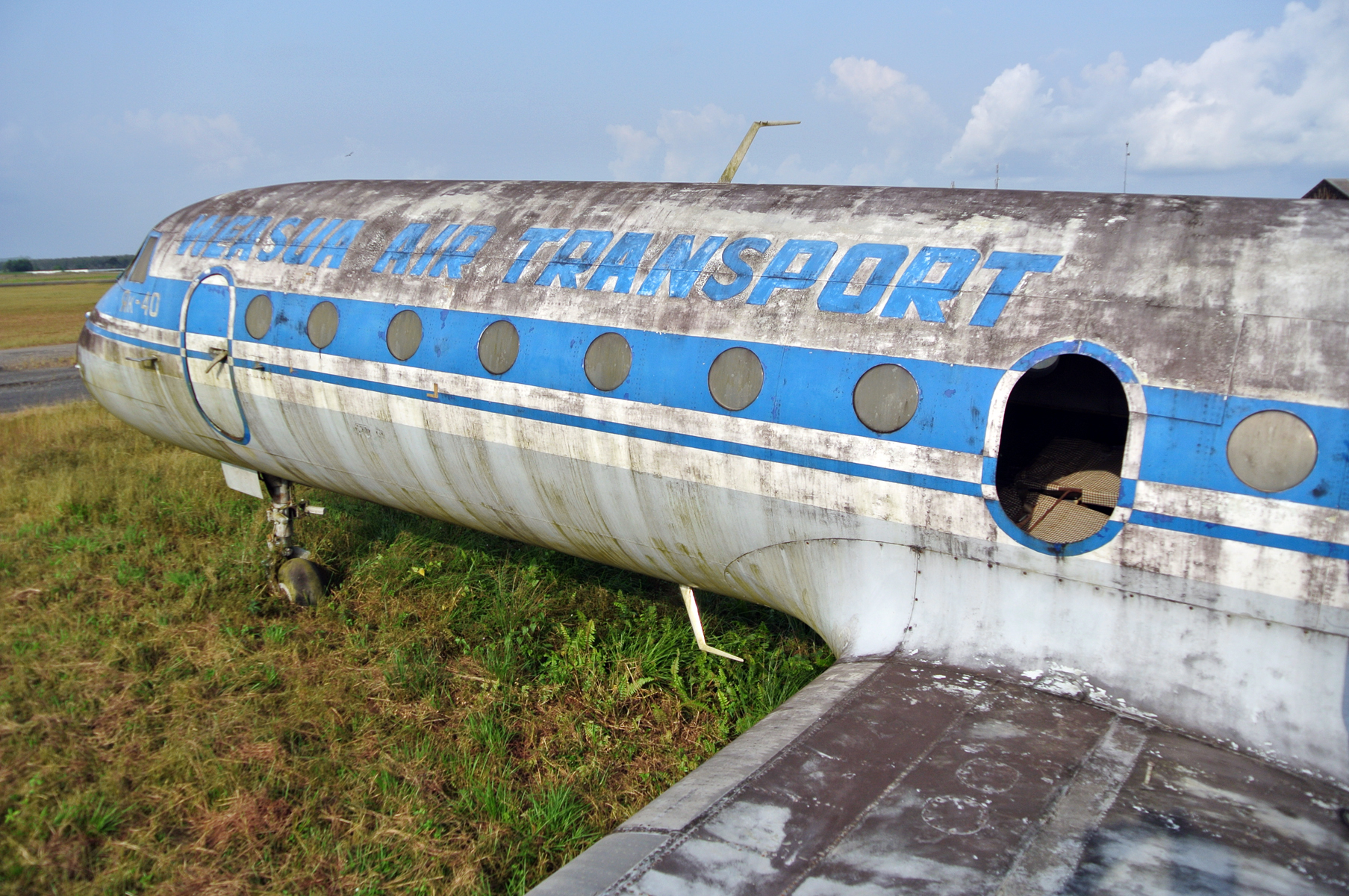
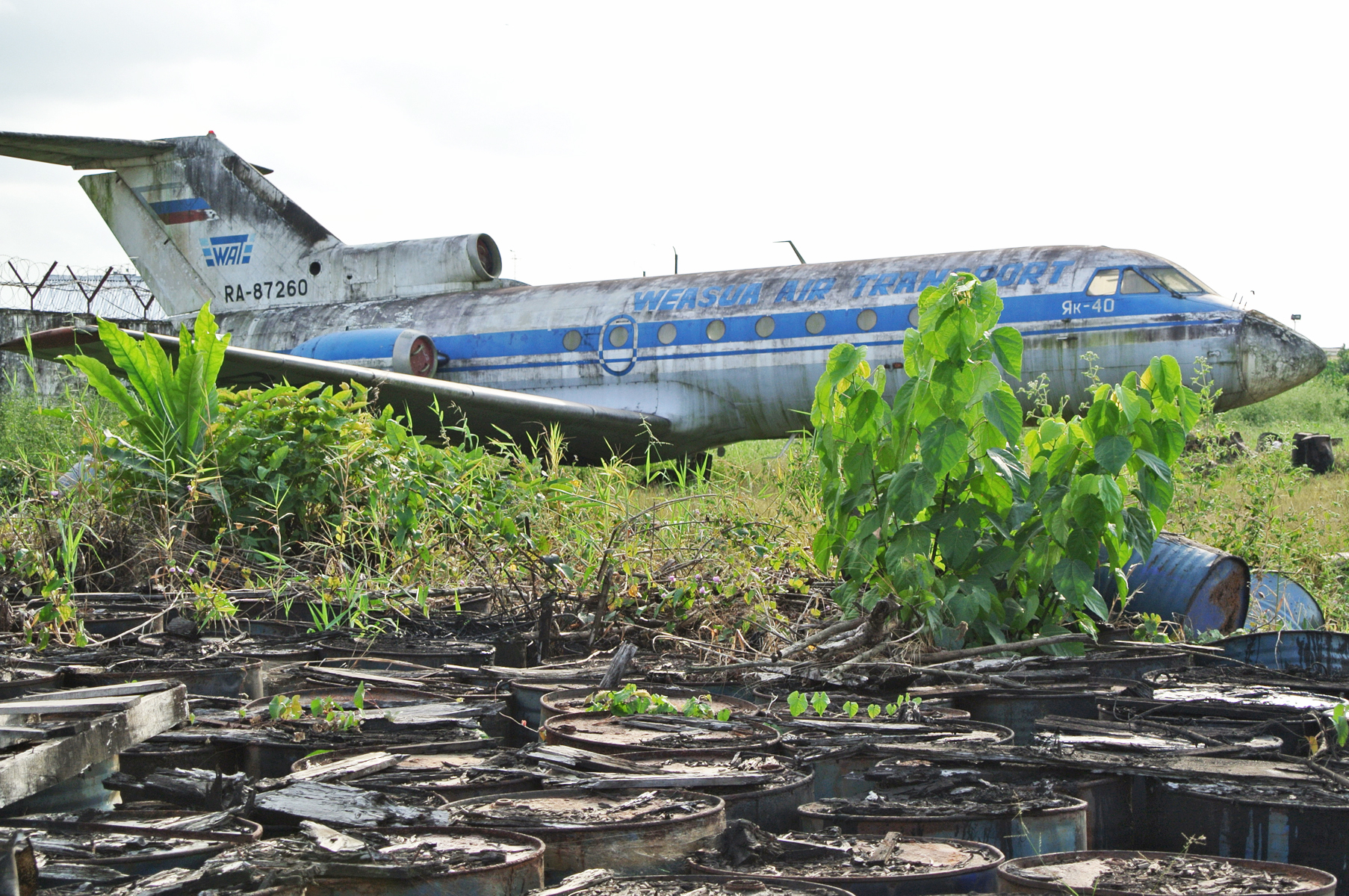
The plane wears a Russian registration and the markings of something called Weasua Air Transport, a tiny Liberian carrier that, according to Google and the database at Airliner.net, was shut down by regulators in 2006. Apparently Weasua never had more than two or three aircraft at a time — one of which crashed — and was once a member the European Union’s safety blacklist. The blue markings borrow from the old Aeroflot livery, and I imagine the jet once flew for Aeroflot, as most Yak-40s did.

Exactly how long it’s been sitting here, and other details of its past, are unknown. It’s doubtful this old jet did much “whirling in over Hong Kong harbor.” Trundling through an ice-fog over Smolensk is more like it. Nonetheless, these mysteries make the plane that much more interesting.


Yak40atROB1

Yak40atROB2

I love the Soviet-style oval doors.


Yak40atROB7

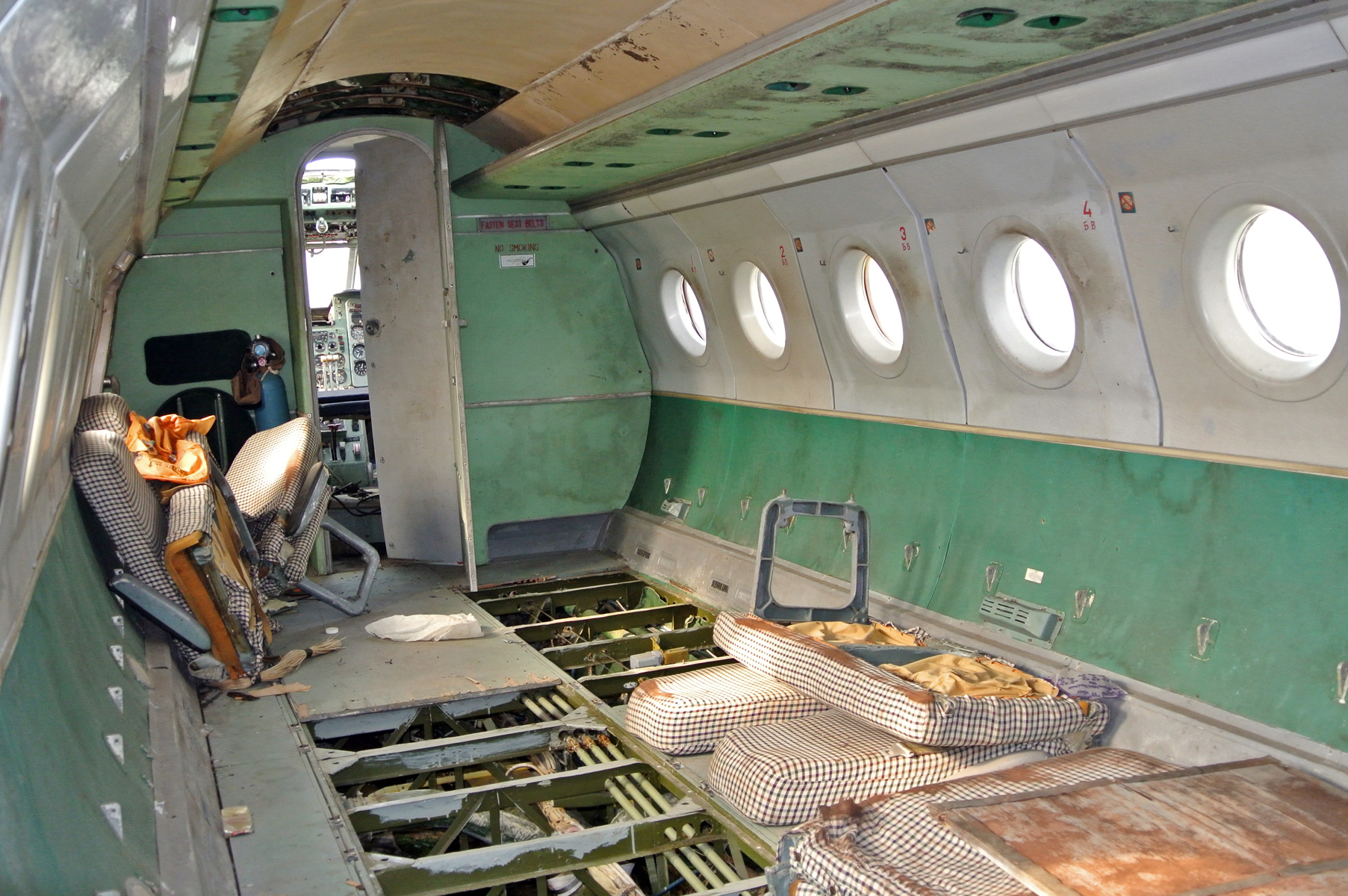
It was best to tread carefully on the walk from the overwing entry door to the cockpit. The cabin floor is mostly torn up, meaning one slip and you’re up to your knees in metal fuselage ribbing, assorted machinery, and greasy water. Up front, the pilots’ overhead escape hatch is missing, permanently exposing the interior to Liberia’s heat and drenching rains. Thus the cabin has become a sort of tropical terrarium, with about eight inches of stagnant green water between the floorboards and the bottom of the fuselage. I can’t imagine how many mosquitos — and who knows what all else — breed in here.


Yak40atROB8

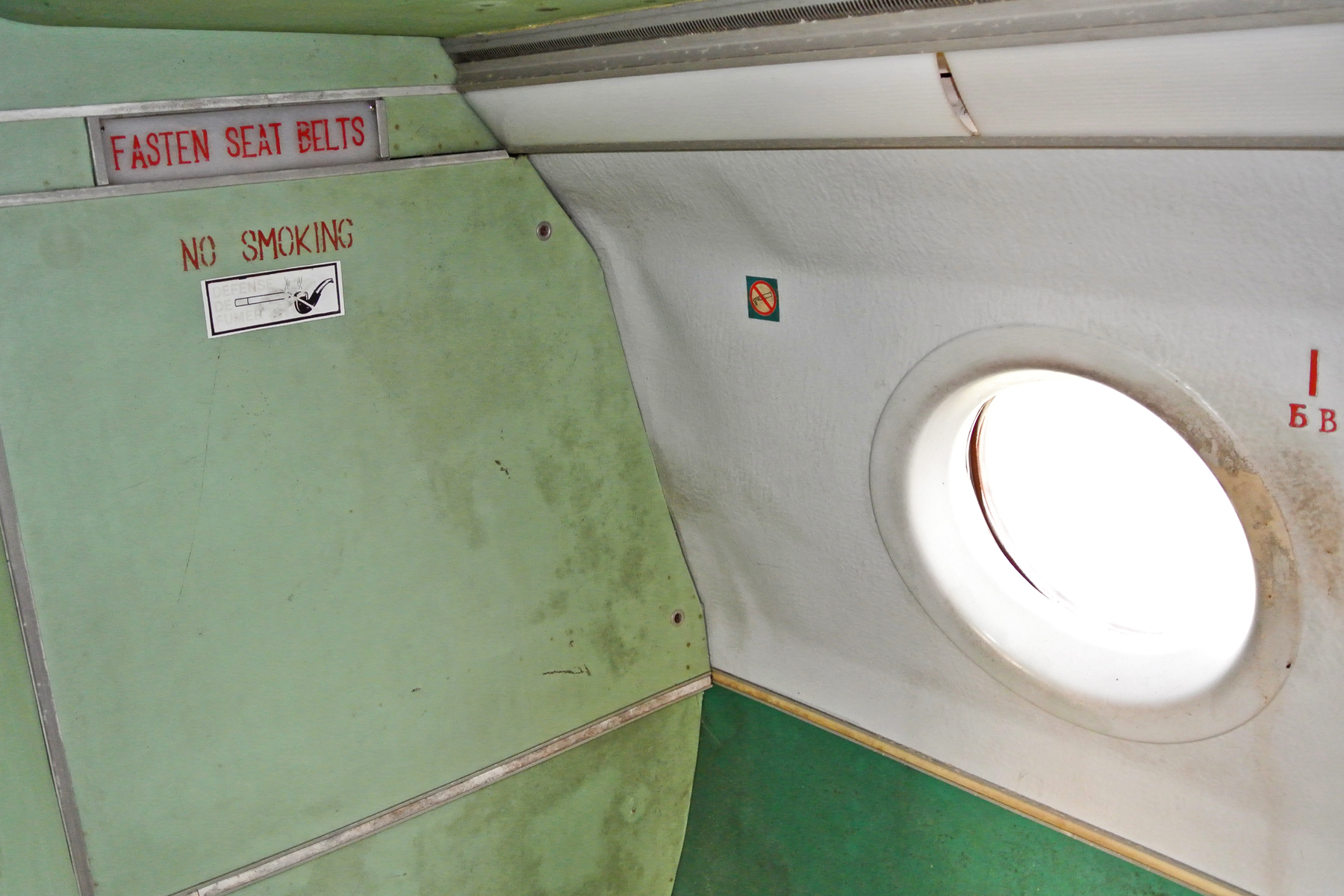
The NO SMOKING sign features a pipe. Note also the Cyrillic seat designator.


Yak40atROB5

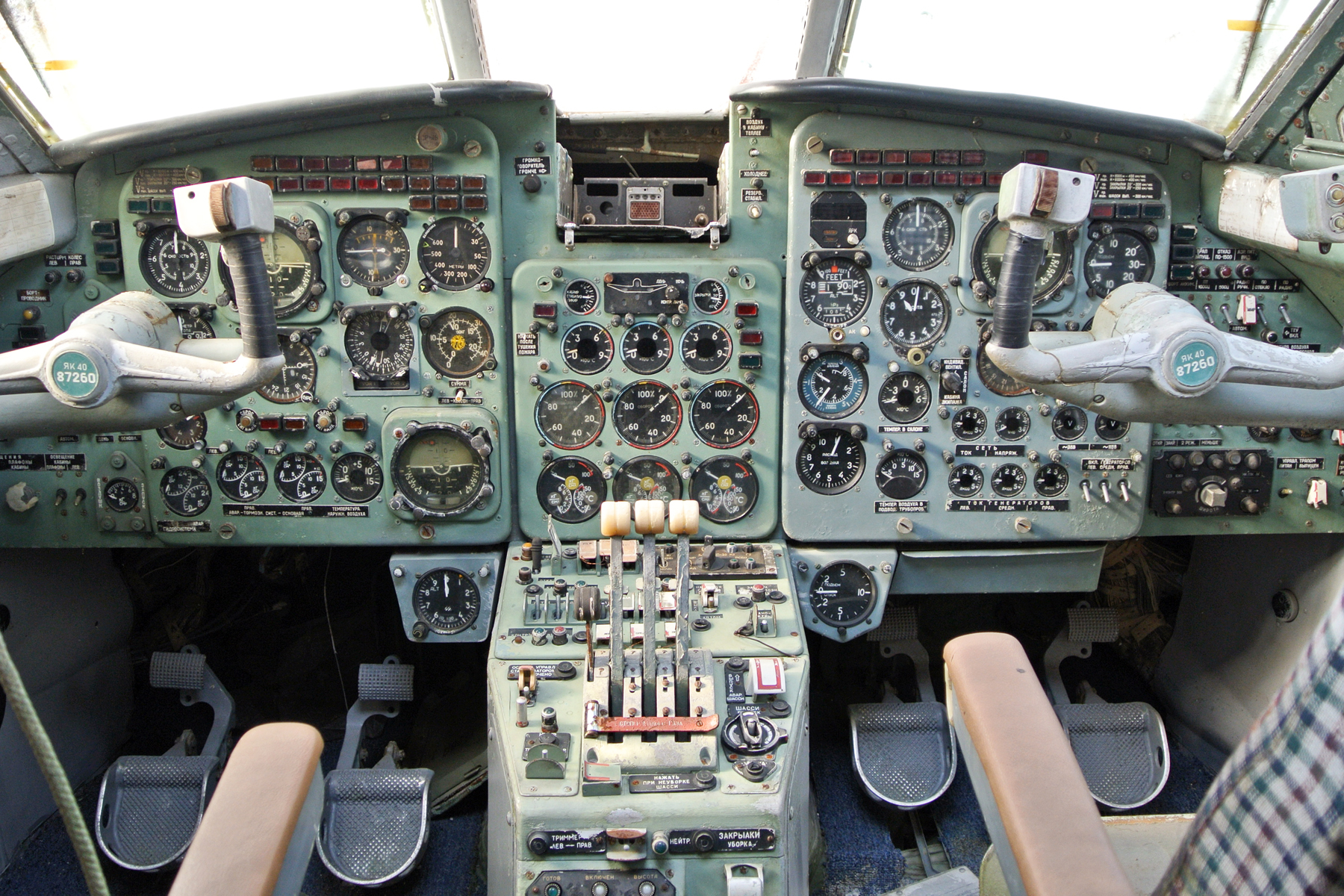
The cockpit is a baffling array of early generation engine gauges and instruments. I couldn’t tell you what half of these switches and dials might be for. The placards and labels are in Russian.


Yak40atROB6 copy

In the weeds nearby are hundreds of barrels of heavy black liquid that appears to be tar — much of which has leaked into ankle-deep slicks.


Yak40atROB9

I was able to unearth this shot of the very same plane — note the registration, RA-87260 — in happier times, seen in Sierra Leone in 2004. (Photo courtesy of Ali Hammoud.)


RELATED STORIES:

IMAGES FROM LIBERIA. PHOTOS FROM ROBERTS FIELD AND BEYOND.

LETTER FROM MOJAVE. THE DEEPER MEANINGS OF AN AIRPORT GRAVEYARD.


Airplane Shop Banner Ad 2


Comments (34)

Letter From Mumbai

An Afternoon in “Maximum City”

STORY AND PHOTOGRAPHS BY PATRICK SMITH

FLYING FROM EUROPE TO INDIA, we pass overhead Odessa, Ukraine. Odessa, they say, is home to the most beautiful women in the world. Then across the Black Sea to Azerbaijan and the gorgeous barren landscapes of Georgia. Next comes the ink-dark Caspian, and then the long desolate outback of northwestern Iran. The controllers down in Tehran are courteous and professional, their English impeccable — easier to understand than most Irish or Scottish controllers.

From there it’s directly overhead the apocalypse of Karachi, followed by a turn southbound, out across the Arabian Sea towards Mumbai.

It’s true about the smell. At ten-thousand feet or so, descending over the city, already you can make out the rank bouquet of urban India: a soupy waft that tastes of putrefaction and exhaust fumes. As if, somewhere below, the world’s largest garbage dump has been set on fire. It’s a smell that burrows into your clothes and your hair and right through the concrete bunker walls of your five-star hotel.

Twenty-four hours downtime.

The concierge hooks me up with young driver named Faiyaz — a most conscientious and law-abiding wheelman with a silver Toyota and remarkably handsome teeth. A hundred US dollars for the day, his services will cost, gas and sporadic commentary included.

It’s monsoon season, and we set out under a nervous, curdled sky. The air has a smell of rotten expectation — like a sink full of dirty dishes.

Maximum City, as Suketu Mehta dubbed it. And I never thought I’d see a metropolis with traffic worse than, say, Cairo or Bangkok. But at least the chaos of Cairo stays more or less in motion. Mumbai’s traffic never has the chance to become chaotic. Every road, highway, backstreet and boulevard exists in a permanent state of gridlock. And all of it four-wheeled and motorized. One misses the cows and three-wheel autorickshaws that jostle for space in other Indian cities. If nothing else, for the Westerner they make for a more curious view — a form of entertainment when you’re cemented into a non-moving column for 45 minutes.

The ten-mile drive to downtown takes almost two hours. Averaged out, that’s a little faster than walking. It’s a long, if morbidly engrossing trip through the city’s most frenetic northern suburbs.

Mumbai isn’t unlike most big cities, I reckon — provided you took that city, layered it under several inches of solid and semi-solid waste, then ran it through a blender. That’s a cheap and nasty description, but looking upon Mumbai is, for me, a pained gaze through layer upon layer of chaos — a noisy, smelly, kaleidoscopic battle between machinery, concrete, garbage and flesh.

From the car I catch sight of a tiny kitten, skinnier than a sparrow, moving nervously along the roadside gutter with a rat hanging limply from its fangs. The miniature, mud-spattered feline is boxed in by an endless stream of vehicles, and is simultaneously being bullied by an impetuous gang of hooded crows. A half dozen of the lead-colored birds are jabbing at the kitten with their deadly black noses.

How does this battle conclude? Who knows. Faiyaz hits the gas and we’re gone, onward to the next little nightmare.

Looking skyward, the air above, I notice, is no less a conglomeration of noise and form, swollen with sooty rain and noisily aflutter with creatures. It’s the crows who dominate, their ranks swollen by a surplus of streetside carrion. There are pigeons too; hawks; the occasional green parrot and a huge, day-flying bat with a wingspan as wide as a seagull.

Finally reaching downtown, Faiyaz navigates down a leafy street to the Mani Bhavan Gandhi Sangrahalaya — longtime residence of the country’s most beloved and well-known historical figure. I take in the history of the great scrawny Mahatma as presented through photographs, artifacts (yes, a spinning wheel), and an oddly engaging series of dollhouse-style dioramas.

It’s a self-guided tour, and I’m shadowed at each turn by a family of four, chattering away in Arabic. Their regalia, I can’t help noticing, is in the familiar jeans-and-sportscar style of the upwardly mobile Arab: The man is about 35, stocky and fit, with a pair of expensive sunglasses retracted atop his military-style haircut. He’s wearing dark navy Levis, a leather belt and cell phone holster, and a FERRARI polo shirt. His young son, around 8 or 9, is wearing a FERRARI polo and a FERRARI ball cap. Three paces behind trundles the man’s wife, covered top-to-bottom in a Gulf-style abaya. A miniature daughter in a purple skirt and a plastic princess crown clutches the woman’s hand, chirping along in tow.

Next is Chhatrapati Shivaji Terminus, formerly Victoria Terminus, the prickly, Gothic Revival wedding cake of a railway station and UNESCO World Heritage Site. The station has a prominent cameo in 2008’s “Slumdog Millionaire.”

And on November 26th that same year, you might recall, two men spent the better part of an hour inside Shivaji firing AK-47s and hurling grenades at commuters, killing 58 of them.

Eight of the attackers’ colleagues had meanwhile scattered elsewhere around South Mumbai and were having a similar night out, shooting and blowing things up at the Oberoi Trident Hotel, the Cama Hospital (for women and children), the Leopold Cafe, a Jewish community center, and, most infamously, at the British Empire’s most luxurious home-away-from-home, the Taj Mahal Palace Hotel. All together 167 people were murdered in the attacks, and nine of the ten terrorists were shot by police.

Today the reopened Taj, like many big-city hotels, is at least nominally protected by airport-style metal detectors and x-ray belts. I’m not sure what good this does. Inside, there’s no trace of the 60-hour siege that caused $40 million in damages. It’s all rich wood and rich upholstery and rich-looking men bent in hushed, important-sounding conversations. (I’d hardly turn down a night’s stay in the place, but as a tourist destination I prefer the actual Taj Mahal, several hundred miles to the north, in the pandemonium sprawl of Agra.)

Across the street from the Taj sits the Gateway of India, a 90-foot basalt archway and promenade poised at the harbor’s edge. It was here that the Mumbai gunmen had boated ashore from Pakistan, and where, after so much time in the car, I’m eager to go for a stroll.

The problem is parking.

Fiayaz suggests that we use a complimentary space offered by a carpet emporium — a place called All Asian Imports. The catch being that I’ll initially have to go into the store and pretend to be shopping, at least for a minute or two. Then I’ll be free to take my walk along the waterfront. Faiyaz will wait in the car.

This seems a reasonable, if entirely facetious plan, but as I’m pushing through the heavy glass doors I can’t help feeling conspicuous and a bit embarrassed. This just ain’t my kind of place. I’ve bought rugs in foreign countries before — the gouged-up floors of my apartment are concealed by curio-quality kilims from Morocco and Egypt — but the emporium’s nearly conjoined proximity with one of the world’s most exclusive hotels, not to mention its showroom chandelier, ample air conditioning and smartly dressed salespeople, say one thing clearly: there is nothing in here that I can afford.

I’m thinking fast in, fast out, until I’m grabbed hostage by a salesman with brightly polished shoes and a furry black monobrow. I might be an obvious impostor, in my New Balance sneakers and a sweat-stained t-shirt, but for the next half-hour I am in given a theatrical dissertation in the finer points of oriental carpet appraisal. I can’t get a word in edgewise. All escape is blocked.

Of all the things that might possibly happen in this store, my taking out a credit card and purchasing a carpet is beyond the realm of possibility. I’m afraid to let him know that, however. It would be impolite, even a touch hostile, not to feign interest.

So I nod and crinkle my forehead as Monobrow speaks. Nod and crinkle, nod and crinkle, nod and crinkle — the globally recognized expression of “yes, fascinating, tell me more,” as I slowly suffocate from the sheer boredom of it all.

Carpets are everywhere, stacked like logs. Monobrow snaps his finger and an assistant pulls a cylinder from the rack, unfurling it with a crackle. He shows me cotton-on-cotton, silk-on-cotton, then quizzes me on the differences. He rolls out a factory-made Chinese synthetic, laying it next to a sumptuous $5,000 Kashmiri example (something-on-something, with alkaline, or maybe it was non-alkiline dyes). Can I spot the differences?

Maybe. Sort of.

Next example. Then another and another and another. Soon there are several inches of rugs on the floor, slabbed atop each other like sheets of multicolored plywood. Somebody, it strikes me, has to roll them all back up again. Do I look like a wealthy customer, I’m wondering, skeptically. Or is he on to our parking scam and screwing with me, just to keep me from my promenade stroll?

At one point I bend down like a baseball catcher and pinch the fringy corners of several of the offerings, running the material briefly through my fingers in what I imagine to be the gesture a serious carpet-buyer might make.

Did I give myself away?

“Thread count!” Monobrow booms, as if an entire audience had gathered in the room, “is how a fool judges a carpet.” Is that what I was doing in my crouch, counting threads-per-centimeter?

Ditto, I’m informed, about the intricacy of the pattern (which would have been my second guess). No, a rug’s real value comes from the qualities of three and only three things: “Material, dyes, and workmanship.”

He pauses after each of these words, as if it were a quiz and I might fill in the blanks instead of just staring at him.

I cast a glance sideways, through tinted windows and out to the Gateway, where I’m supposed to be enjoying the rest of my afternoon. I curse Faiyaz, who, in case it isn’t obvious by now, has trapped me in here by design, hoping for a commission. The weather, I notice, is looking more ominous than ever.

And it dawns on me that the experience of travel, like the experience of life in general, is made up of too many scenes exactly like this one. That is, long stretches of boredom and squandered time, from which one yearns to escape, only to find his egress obstructed by an instrument of commercial tedium. Like those papyrus store “convenience stops” on the way to Giza or those places near Siem Reap with the rows and rows of buddhas. In this case it’s a long-winded lecture from a carpet merchant.

My means of escape, though, turns out to be simple enough.

“This one is extremely nice,” I say to Monobrow, pointing to whichever rug he happened to have unfurled below me at the moment. “But before we talk about price, my wife will need to see it.”

“Your wife? Of course. Where is she?”

“Across the street, at the Gateway. Let me go and find her and bring her over.”

Suddenly I’m hit by an old, old memory. The first time I ever bought a carpet in a foreign country — or maybe in any country. It was in Kusadasi, Turkey, near the ruins of Ephesus, in 1992. Kirsten, maybe, still has that little rug somewhere. This was before they lopped off all those zeroes from the Turkish lire, and I remember on my credit card statement how the numbers went right off the end of the page.

Monobrow is suspicious, I can tell, as he ought to be. But my excuse is wonderfully bulletproof. “As you wish,” he says.

“She will love the alkaline, non-alkaline cotton-silk non-Chinese dyes of this carpet.”

And with that I’m finally out of there.

As the door closes behind me I feel dirty, guilty, all eyes upon me, like a man slinking out of a whorehouse. I had no business being in there. I’m a kid from Revere, Massachusetts who went to community college. I don’t spend thousands of dollars on deluxe imported carpets, and I don’t feel comfortable in high-end boutiques that smell like jasmine and where the salesmen sip tea out of fancy china.

Again the alienation and failure of travel — the disappointment of finding yourself somewhere different, but not where you hoped to be.

The Gateway looks a lot like the Arc de Triomphe and its cousins in Washington Square and Brussels and everywhere else. Except that it’s grander and prettier, with its 16th-century Gujarat styling — at once European and Eastern, Victorian and Mughal.

There’s the crack of thunder. The sky looks like the bottom of a car, rusted and scabbed and ready to wreak havoc on everything beneath it. When the downpour comes the filthy gutters will turn to a brown, clotted stew.

I take my stroll, along past the Taj and to the back side of the Gateway, dark waves lapping at the seawall, occasional raindrops hitting me in the shoulder. I imagine the Mumbai attackers sloshing ashore here, clambering onto the street in their Adidas sneakers and cargo pants, weapons concealed in their satchels and backpacks. All the way from Pakistan they sailed. Travel of another kind.


This story originally appeared in the magazine SALON.


Comments (22)

The Noisy, Sweaty Hell of Small Planes

Flying over Cape Cod in a cramped cockpit, I wanted nothing more than to be down on the beach. Call me a heretic.

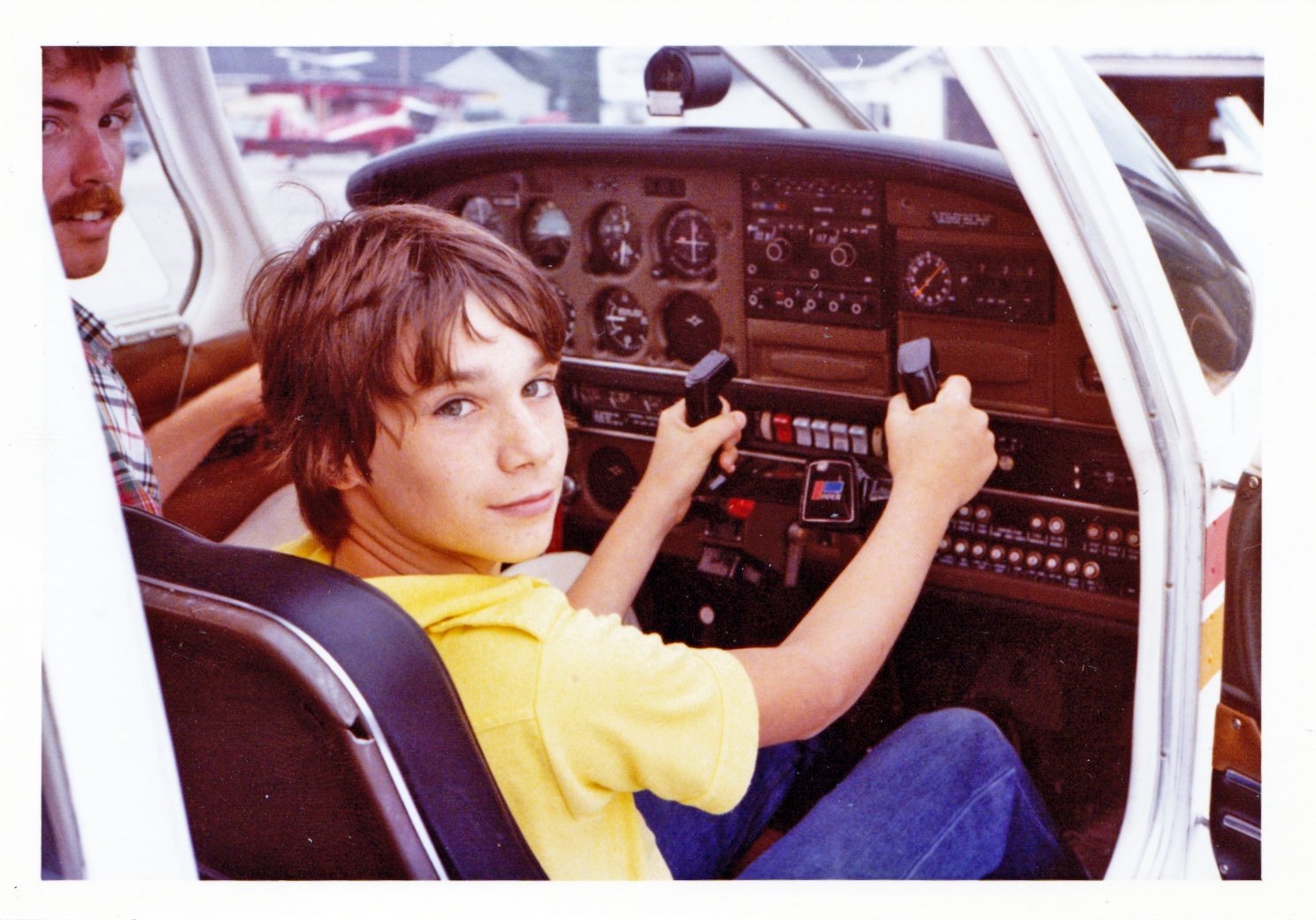
The author on a flying lesson, circa 1980.

I spent the better part of five years — from, roughly, autumn of 1985 through the late summer 1990 —  immersed in the world of general aviation, as it’s called, slowly building time and collecting the various add-on licenses and ratings I’d need for an airline job. My logbook records almost 1,500 flight hours at the controls of various single-engine Cessnas, Beechcrafts and Pipers. No fewer than 1,100 of those hours were logged as an instructor, teaching dentists and software engineers to fly in exchange for a salary so pitiful that I couldn’t afford groceries.

When I think back to those years, my memories aren’t especially fond.  Frankly, as I see it, those are 1,500 hours — two full months aloft — that I’m never getting back.

I feel that way about a lot of things, I suppose, and don’t we all.  And it’s not that I don’t savor the thrill of flight.  Just maybe in a different way than some. I love my job and the places it takes me; I’m doing exactly what I dreamed about doing when I was a seventh grader.  But this is commercial, international flying.  There was much about general aviation flying that I did not enjoy: the miserable pay, the tiny cramped cockpits that were either scorching hot or numbingly cold, the dismal suburban airports.

That makes me a snob, or a heretic, in the eyes of many private pilots.  But that’s all right.

Summers were the worst. It would be some steaming day in July or August, and I’d be giving instruction in some tattered old 172 over the shoreline of Plum Island or Cape Cod.  I’d be up there at 2,000 feet in that claustrophobic cockpit, sweat dripping down, literally banging elbows with my student, bouncing around in the hot gusts, ears ringing, hoarse from trying to shout over the din of the unmuffled pistons.  And there, directly below, would be this gorgeous beach.  Looking at the people playing frisbee and splashing in the surf, I wanted nothing more than to be out of that blasted contraption and down there with them.  It was all I could do not to grab the controls and aim for a landing on the sand, fling open the Cessna’s flimsy door and run for the water, free at last!

Those were some depressing moments.

Ironically, I imagine that many of the people below were looking up at us, jealously.  What a beautiful day for flying, right?  How splendid it must be on a clear summer day, up there in the breeze.

What the hell did they know?  Most people who look longingly at a small plane have never been in one.  It’s hot, it’s cold, its very tight and it’s noisy as all hell. Worse even than Southwest.

For the record, I’ll note that I always was a fan of the low-wing Piper series over the high-wing Cessnas.  The cockpit of the Piper Warrior was a better design, ergonomically. The Cessna was boxy, and the position of the wing cut hazardously into one’s view.

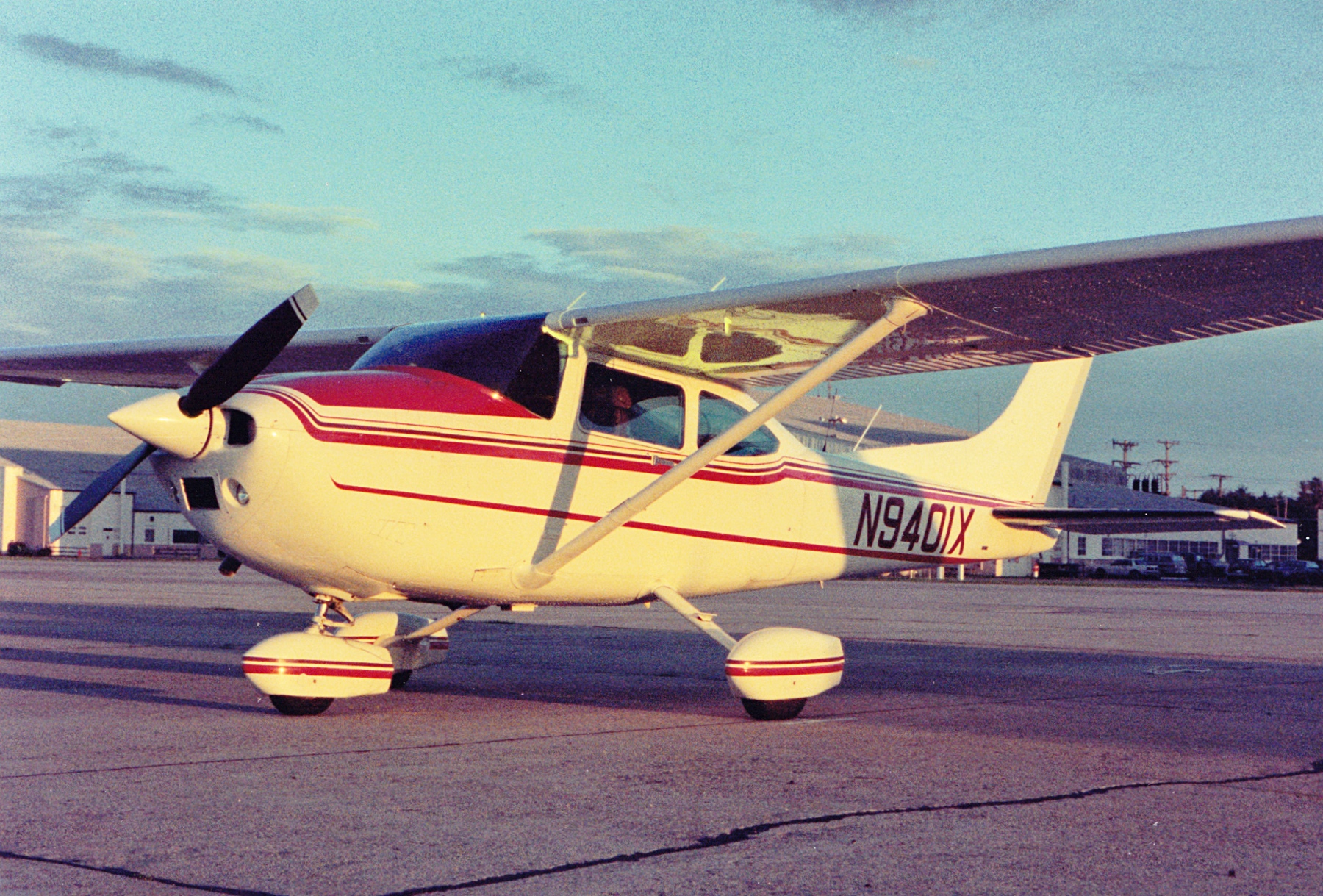
I had a student, though, Fred Shelton, who owned a clean and well-equipped Cessna 182 that I was quite fond of.  He would let me borrow it in exchange for instruction towards his instrument rating.  N9401X was the plane’s registration.  I will always remember that number.  In fact that plane was the last private plane I ever piloted — to Nantucket one weekend in August, 1990, shortly before going off to ground school at my first airline job.  Here’s a shot of it, proud and resplendent (so much as a Cessna can be either of those things) on the apron at Hanscom Field, outside Boston.

Nantucket was my favorite destination, and I landed there in N9401X many times.  I would bring John or Ben or Graham or Samantha Simpson  — or which ever girl I was trying (and failing) to impress at the time.  But the real thrill wasn’t the flight down, it was swimming out at Nobadeer. We’d grab our stuff, lock up the plane, scale the six-foot perimeter fence, and hike to the beach.

Of course, on the other hand, it was the airplane — the privilege of flight — that made those memories possible.  One of my big laments is that people have taken the airplane out of the travel equation.  Flying, in most people’s eyes, is but an inconvenient means to an end.  That, to me, is a terrible shame.  Once upon a time, it took months in a sailing ship to reach far-away countries and cultures that today are reachable in a matter of hours.  How is that not exciting?

That is what I love about flying today (New York to Hong Kong in a 747), and, on a much smaller scale, it’s what I loved about it then (Hanscom Field to Nantucket in a four-seater).

Getting there was half the fun. Or, maybe, slightly less.


This story originally ran in the magazine Salon.
Comments (15)

The Things We Carry

THE SCOURGES of modern-day air travel. I can think of a few: TSA, delayed flights, garbage in your seat pocket. Screaming kids and misdirected luggage. “CNN Airport News.”

Or, how about the blizzard of cardboard placards that hotel chains insist on littering their rooms with? I spend a quarter of my life in hotel rooms, and I resent having to spend the first five minutes of every stay gathering up an armful of this diabolical detritus and heaving it into a corner where it belongs. Attention innkeepers: this is fundamentally bad business. One’s first moments in a hotel room should be relaxing. The room itself should impart a feeling of welcome; it shouldn’t put you to work.

And here’s another one: the ever-expanding collection of electronic cords, adapters, chargers and other gadgets I’m obliged to haul around with me. You know what I’m talking about. Anybody who travels regularly knows what I’m talking about — an assortment of technological tackle that seems always be getting larger and more cumbersome. It keeps us “connected.” It makes our lives easier and more productive.

That’s what they tell us, anyway.  We’re increasingly at the mercy of commercial products, both tangible and virtual, and taught to behave as if we truly need them.

Don’t get me wrong. Riding the subway out to Logan, I love being able to pop in my earbuds and catch a few cuts from the Wedding Present or the Jazz Butcher. And my MacBook Air is as essential for travel as a change of socks. But there is, or was, something to be said for that unplugged, disconnected age of not-so-long-ago. If nothing else, our carry-ons were lighter, with more room for clothes.

The photo below shows the assortment of electronic gadget and gizmos I take with me pretty much every time I hit the road, be it for work or pleasure. As recently as a decade ago I owned none of this. I didn’t even have a cell phone until 2006.

Clockwise-ish, from upper right:

— My camera. It’s a Nikon 1, now that I’ve retired my Panasonic DMC-LX3 — a decent point-and-shoot with a Leica lens and super-long battery life. The Nikon takes better photos but it’s heavier and the battery doesn’t last nearly as long, meaning I sometimes have to bring along a charger as well (not shown). The camera comes with me on all of my vacations and half or so of my work assignments.

— Power adapter for laptop.

— Ethernet cord. Useful in those (too many) hotels where Wi-Fi is weak and a wired connection runs more robustly. Hotel-supplied ethernet cords are often broken.

— USB-to-ethernet adapter (see above).

— iPhone 4. (Product unplug: Am I the only person who despises — and I mean really despises — the iPhone’s messaging keypad? Because the special function keys — caps, space bar, backspace and return — are so close to the normal character keys, I’m constantly capitalizing, spacing and backspacing when I don’t mean to. This happens in either the vertical or horizontal layout, and it’s especially annoying for those of us with fat fingers. It takes me five attempts to complete the simplest sentence.)

— USB charger for iPhone. Includes a USB-to-AC connector (optional, but a good thing to have).

— Earbuds. It’s a Klipsch set.

— 32GB flash drive. For my backup files and for transferring to and from my master computer at home.

— AC adapter set. Essential when traveling overseas.

— And in the middle of it all, my beloved MacBook Air.

All together, we’re looking at roughly five pounds of gadgetry that, for all intents and purposes, is mandatory carry-on. Sometimes it’s slightly less, other times slightly more. Not shown, for instance, is a spare battery or charger for the Nikon, or my Flip video camera. (Flip is what I used to record this footage in Egypt and Senegal.) )

Thus, the real must-have gadget is a decent case or container in which to consolidate all of this crap. For me, most of the more wiry components above fit nicely into an old business class amenities kit, which keeps them out of the way and avoids tangles. (How frustrating is it, meanwhile, that so many electronic devices require their own proprietary charging cord or adapter? Imagine if every lamp took a different kind of light bulb.)

As for the rest of my luggage… I’m something of a pro when it comes to short-notice, multi-climate packing. Here’s a tip: go with lightweight clothing. What a concept, I know, but I’m amazed by how many people travel with heavy cotton jeans — even to hot climates. I own a lot of fast-dry synthetics. They’re not stylish, but when have I ever been? On the other hand I can launder a pair of pants in the hotel bathtub and they’re dry before morning.


a version of this story orginally ran on the website Salon.
 

Best Travel Gear Ad


Comments (16)

Planes, Pranks, and Praise: Ode to an Airport

Logan redux. From terrazzo floors to exploding soda cans, here’s Boston’s airport like you’ve never seen it.

March 11, 2013


THERE AREN’T A LOT OF GOOD THINGS to say about US airports in general. They’re noisy, dirty, confusingly laid out, often in poor repair, and sorely lacking in public transport options. We’ve got nothing on the airports in Europe or Asia, many of which are architecturally stunning and jam-packed with amenities. If you’ve ever been to Singapore, Incheon, Munich, or Amsterdam, among many others, you know what I’m talking about.

But if we had to pick one of our own…

Washington’s Reagan-National has an excellent subway connection, and the terminal, with its sun-splashed central hall and vaulted ceilings, is one of America’s greatest airport buildings. The international terminal in San Francisco is similarly impressive. Orlando is clean, green, and well laid-out. Portland, Oregon, is many people’s favorite.

Nobody, though, ever mentions my hometown airport, Boston’s Logan International. And I don’t think that’s fair. It’s squeaky clean, well organized, and unlike the vast majority of US airports, it has an efficient public transport link to the city. It’s even got some flair: what’s not to like about the inter-terminal walkways, with their skyline views, terrazzo floors, and inlay mosaics?

A tour:

As an adolescent airplane nut in the late 1970s, I spent many a weekend at Logan. The place has come a long way since then. Large-scale renovations began in the 1990s with the third harbor tunnel project, and continue still.

The overall plan-view – a sprawling handprint of four independent buildings, terminals A, B, C, and E – remains mostly unchanged (what used to be terminal D is still there, but today it serves as a connector between C and E). Everything, however, has in one way or another been remodeled, rebuilt, or enlarged. Annexes and appendages sprout everywhere, covering what used to be vacant space. BOS has never been among the biggest or busiest airports, but it sees many more passengers than it used to. Some 29 million people fly through Logan each year, placing it 48th among airports worldwide. By number of takeoffs and landings, it ranks 26th globally and 17th in the United States.

Terminal C is probably the least altered. When I was a kid, this was the home to Delta, United, and TWA. Today, it belongs to JetBlue and United. JetBlue is currently the largest carrier at BOS, and has invested heavily in renovations. Still, there’s only so much room to expand, and the two main concourses are somewhat claustrophobic and overcrowded.

Terminal B, on the other hand, is substantially larger than it once was, its main tenants – American and US Airways – having spent millions over the years on expansion.
It’s gate B-32, incidentally, from which American Airlines flight 11 pushed back on the morning of Sept. 11, 2001. An American flag flies atop the jet bridge. Slightly to the north is gate C-19, similarly adorned by the Stars and Stripes – the departure point of United’s flight 175 that same morning.

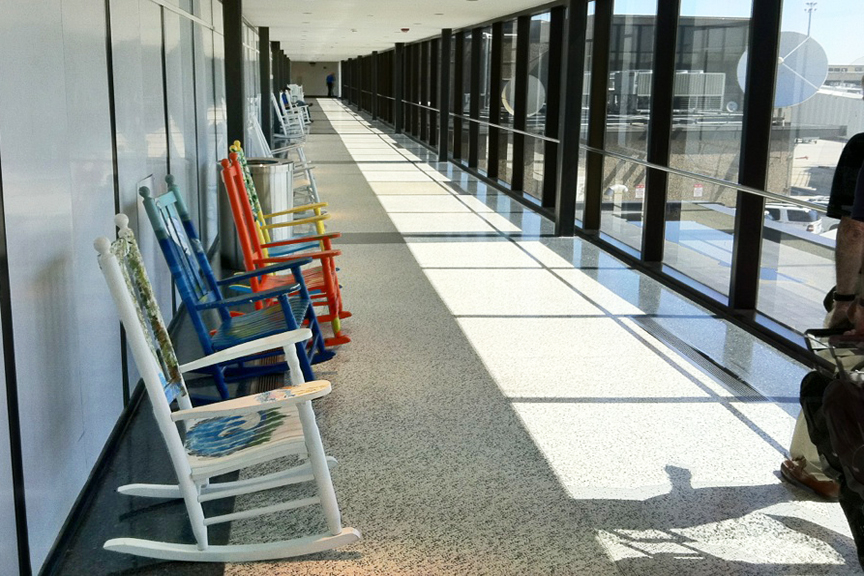
The connector walkway between B and C, by the way, is one of Logan’s friendliest spots. I don’t mean the newer, elevated walkway; I’m referring to the old main-level passageway that begins near the gates used by Virgin America. Massport has installed a series of whimsically painted rocking chairs that face floor-to-ceiling windows with a view of the runways. There’s little foot traffic and, best of all, it’s blissfully quiet. It’s one of very few places at Logan – or any other airport for that matter – where you can completely escape the PA announcements, CNN monitors, and all the other noise pollution that that plagues America’s terminals. It’s a peaceful, sunny location to read, send texts, or otherwise relax.

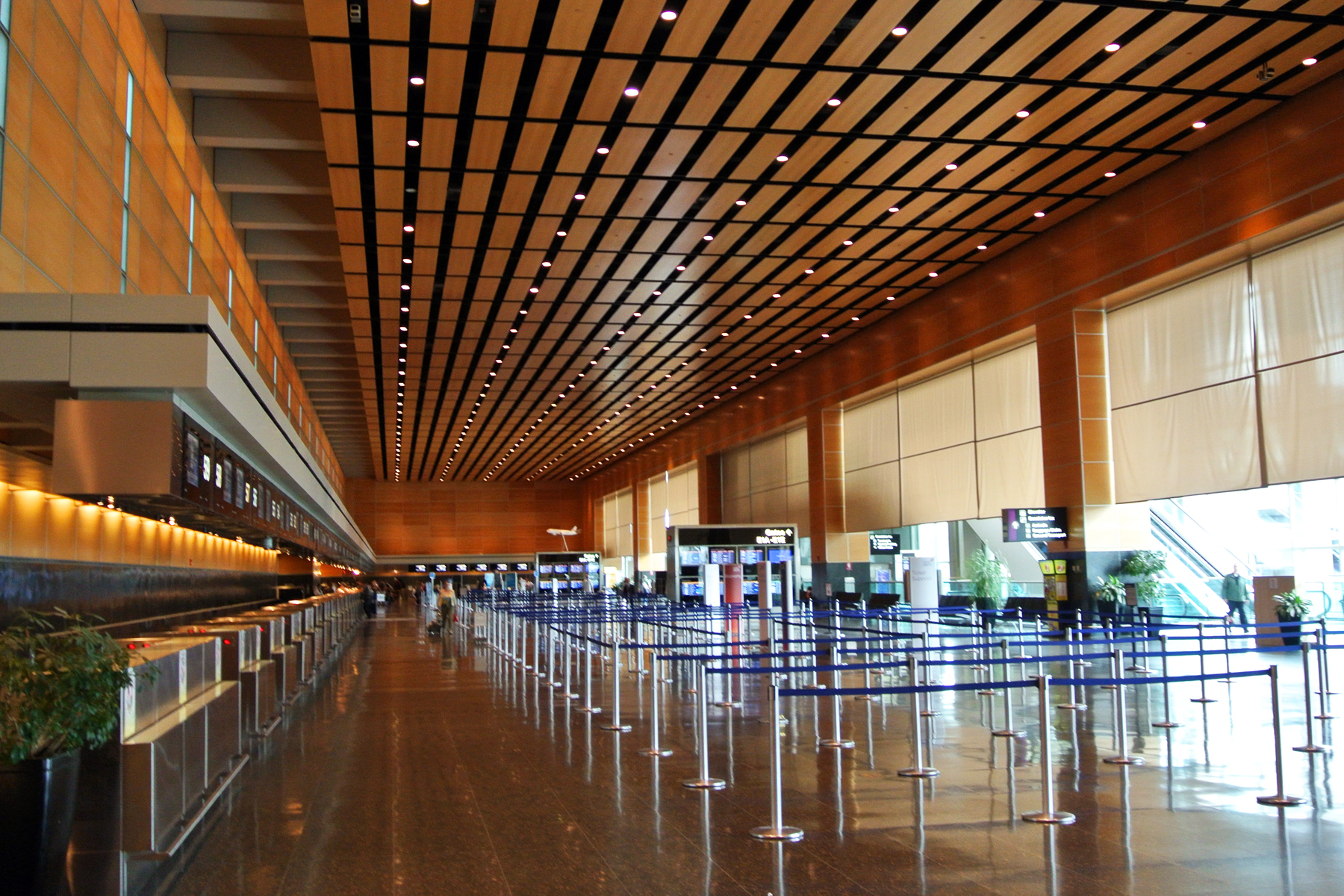
Terminal E, as we know it today, used to be called the John A. Volpe International Terminal, named after the former Massachusetts governor. The building has doubled in size. The spacious, wood-paneled check-in hall is entirely new and arguably the airport’s handsomest spot.

Passing the TSA checkpoint, one enters the building’s older section, which is clean and functional, if otherwise unglamorous, with lots of gray aluminum and segmented windows staring toward Revere. This is the only terminal with customs and immigration facilities, and so it’s home to all of Logan’s overseas carriers. Though not exclusively: the cluster of gates at the eastern tip, once the home of Braniff and later Northwest, are today used by AirTran and Southwest.

On Logan’s south side is Terminal A. Completed in 2005, this is home to Delta (and to United’s Houston and Newark flights). On the outside, the structure is low-slung and unspectacular. From the roadway, one approaches a kind of airport glacier – a hulking slab of whiteness and glass that looks more like an office park or a mall.

On the inside, though, it’s sleek, roomy, efficient, and has the best harbor and city views of any of the four terminals (though somebody needs to explain the chocolate-colored carpeting). There’s state-of-the-art everything, including a laser-guided aircraft docking system and, airports being airports, an impressive gauntlet of shopping and dining venues.* The architecture is white, but the verve is green: Terminal A was the first LEED-certified airport building in America.

Terminal A rests on the site of the old Eastern Airlines terminal – a stately edifice of brown masonry that opened in 1969. Its replacement was perhaps overdue, but one thing I miss about the original is a certain drama, inside and out. Stepping into the lobby, your gaze was drawn upward toward a soaring, vaulted ceiling. It wasn’t beautiful, but it did something not many terminals do these days, imparting a sense of exhilaration and theater. The latticed façade and five-story archways bore a certain likeness to the lower curtain wall of the World Trade Center – and not by accident, for both were the work of architect Minoru Yamasaki.

One thing nobody misses, on the other hand, is the old MBTA Blue Line station. Logan was America’s first airport with a rapid transit connection (1952), and by the 1990s, the platform was literally falling to pieces. Its replacement is one of the T’s finest stations – even if few will be reminded of places like Hong Kong or Kuala Lumpur, where one is whisked to and from the city center without the need to step outside.
Alternately, the T’s Silver Line bus takes you directly to and from South Station. Though in either direction the trip takes longer than it needs to. There ought to be a designated airport bus that skips the intermediate Courthouse and World Trade Center stations. Another good idea would be to run two buses – one that goes to Terminals A and B, another to C and E. Passengers in a rush could take either and use the inter-terminal walkways.

The T connections aren’t ideal, but they’re far better than what most U.S. airports offer. And, inbound on the Silver Line, it’s free.

If you’re driving, Logan’s roadways aren’t as easy to navigate as they once were. In the old days, the terminal complex was linked by horseshoe-shaped highway that made a simple, one-way loop. You never got lost, but traffic jams were common. On busy evenings or holidays, making the circuit from A to E could take half an hour. The new roads are a Rube Goldberg affair of overpasses, underpasses, and switchbacks, but at least the gridlock is gone.

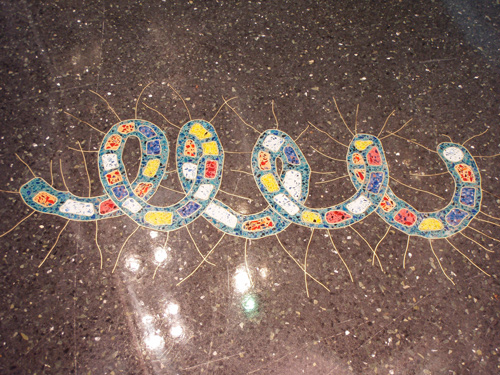
Then we have those climate-controlled pedestrian bridges, fetchingly inlaid with sea life mosaics designed by Somerville artist Jane Goldman. Previously, airline-to-airline transfers meant several minutes of sidewalk time and a ride on Massport’s shuttle bus. With the walkways now in place, there’s covered access – and a smidgen of ancient Rome – between any two carriers.

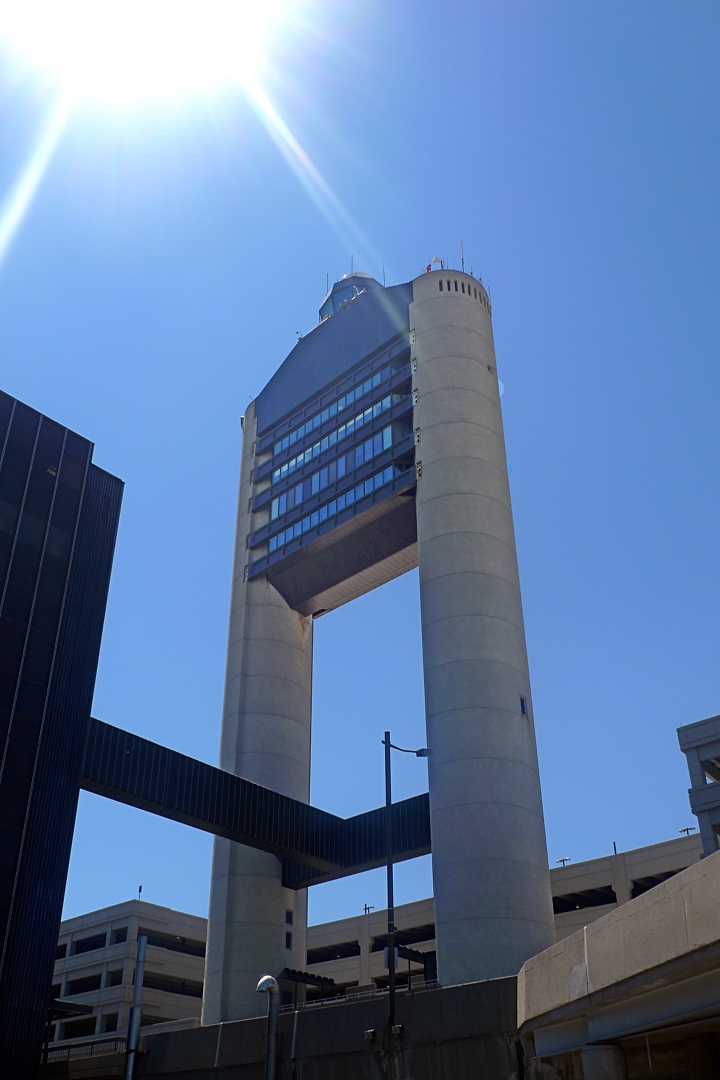
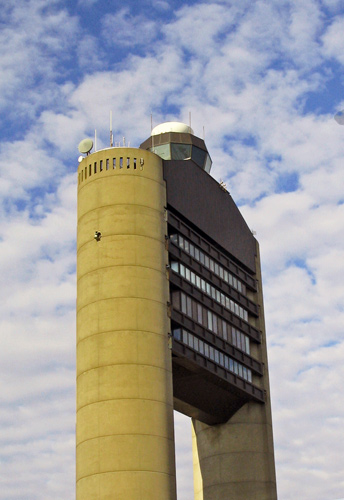
And rising above it all is Logan’s iconic control tower. This building opened in the early ’70s and is one of, if not the most, widely recognizable structures in all of Boston:

Segmented elliptical pylons that soar 250 feet into the air. They are sand-colored, but often turn amber in the sunset. Trussed between them, two-thirds of the way up, is a six-story platform of offices and workspace – an office building hung between two great goalposts. Its shoulders taper inward, and perched at their apex, like the head of a giant robot, is a 12-sided cupola crowned by a porcupine array of antennae and radar dishes.

I’ll tell you what I miss, though. I miss the old 16th floor observation deck.

On the bottom level of the tower’s workspace – either the 1st or 16th story, depending how you see it – used to reside one of Boston’s most unique public spaces: the airport observation deck.

The spectacularly poised lookout featured opposing sides of knee-to-ceiling windows and, arguably, the best view in town. To the north and east was a commanding vista of terminals, runways and taxiways; to the south and west, a sweeping panorama of the Boston skyline and waterfront. It’s a scant two miles from Logan’s perimeter seawall to the center of downtown, and thus, from the 16th floor, you observed the city and its airport in a state of working symbiosis.

From here, as an 8th grader in 1979, I saw Pope John Paul II touch down in a green-and-white Aer Lingus 747 named St. Patrick, then watched his motorcade disappear into the Sumner Tunnel before emerging again downtown. Passengers relaxed on carpeted benches while kids and families came on the weekends, feeding coins into the mechanical binoculars and picnicking on the floor. The idea of an airport evoking civic togetherness is hard to fathom these days, but the 16th floor possessed an element of that spirit, clinging to the now-vanished idea of an airport as a destination unto itself, like a park or a museum.

The deck had its regulars, and as a young teenager I was one of them. My friends and I would hop the Blue Line at Wonderland and spend the better parts of Saturday and Sunday at Logan. The 16th floor was our office, where we’d check in to unpack bag lunches and plan the day’s activities, which tended to blend our nerdier infatuations – taking pictures, logging registration numbers of planes – with the type of activities you might expect from adolescents: assorted rummaging, ransacking, and trouble-making.

We navigated our turf with a kind of muscle-memory intimacy. We knew the keypad combinations to most of the secure areas, and were on a first-name basis (“here come those pain-in-the-ass kids again”) with some of the airline ground staff. We’d sneak behind kiosks and dig through drawers and closets, helping ourselves to anything and everything affixed with an airline logo: stickers, stationery, boarding passes, and timetables. (At home, most of this detritus was tossed into a large aluminum foot-locker – a stash of collectible aerobooty that would doubtless garner thousands on eBay had I not thrown it away in the 1980s.) The parking lot atop the old Terminal A was another prime zone for pranks. More than one Eastern 727 or DC-9 had its wings and tail bombarded with snowballs from our rooftop launching pad.

Getting onto parked aircraft was something we accomplished regularly and with little resistance. It was an easy process of meandering through security, then staking out an arriving flight. After all the passengers had exited, we’d request a cockpit tour from the agent or crew. I remember a flight attendant taking us to see the lower-deck galley in a Delta L-1011 — riding down in the little elevator. Another time, a North Central pilot brought us into the tailcone of a DC-9 and showed us the data recorder.

Tired crews occasionally sent us down the jet bridge unattended. “Just don’t steal or break anything.” Or, if need be, it wasn’t beyond us to wander aboard without asking. We’d sit in the cockpit, going through imaginary takeoffs or pretending to be aloft over the ocean somewhere. Hunkered down over their desktop simulators, kids today think they have the edge on realism, but will never savor the visceral thrill of moving the actual throttles, knobs, and levers. Two friends and I once spent an entire hour sitting in the cockpit of a Northwest Orient DC-10. We’d simply walked down the jet bridge after everybody disembarked. Nobody had any idea we were there.

Once bored with the flight deck, we’d head back to the cabin, loading up our backpacks with barf bags, magazines, briefing cards, and cans of soda from the galley. We’d guzzle down that soda and were careful to save the cans. After amassing a six-pack or two, it was back to the 16th floor. There, in the bathroom sink, we’d fill the cans with water before sneaking into the fire escape. Within the tower’s north pylon, directly between the elevators, is a top-to-bottom spiral staircase. We’d learned to jimmy the door without triggering the alarm. Once inside, we’d lean over the railing and drop our water-filled cans the entire, 200-plus foot height of the shaft.

The cans would wobble, twist, and twirl, depending on the angle at which we released them. Like a pitcher feeling out the seams of a baseball for a slider or a curve, we had the different trajectories down to a science: hold it this way for a flat spin; tilt slightly for an end-over-end rotation. Off they’d go, and you’d hear the cans hissing as they accelerated toward terminal velocity, disappearing into a barely visible speck before impacting the concrete floor. Then came the sound, like a rifle shot echoing up the column. Often the cans would drift sideways and strike the lower floor railings or slam against the plumbing. Out of control, these wayward projectiles would ricochet madly, disintegrating in a white spray. Then we’d hop in the elevator for the post-crash investigation, marveling over the bizarrely crumpled cylinders and slivers of torn aluminum.

Over and over and over we’d let loose our water-bombs, emerging only for occasional quick scans of the tarmac, lest we miss Lufthansa’s daily departure for Frankfurt (flight 421, I still remember), or Swissair’s DC-10 (flight 129).

We’d also figured out a way, using wedges of cardboard, to raid the snack machines. Our heists were restricted to the lower shelves of the machines’ rotating dispensers, where the vendors, apparently catching on, began stocking some of the world’s most revolting treats. Back in Revere, my family’s kitchen cabinets held a year’s supply of stale Canada Mints that even our dog wouldn’t eat.

Up on the 17th floor, incidentally, was a lounge called Cloud Nine. For us, as 14-year-olds, it was one of Logan’s few decidedly off-limits spots, but itinerant flyers and off-duty employees were able to take in that same majestic view, enhanced by the buzz of an overpriced cocktail.

All of this is gone now. The observation deck, and Cloud Nine with it, were shuttered for good in 1989, ostensibly for security concerns.

The observation deck has become Massport’s Communications and Operations Center, with a suite of monitors and consoles that make it look like a miniature NASA command room. This is the headquarters of airport logistics, where a full-time staff of four coordinates everything from snow removal to emergencies. In the spot where I used to sit with binoculars, a Massport employee hovers in a telescoping chair, a display of incoming flights over his shoulder.

But the tower itself remains.

If an airport has one aesthetic obligation, it’s to impart a sense of place: you are here and nowhere else. And the Perini Construction Company’s lumbering control tower does this better than any airport building in the country. Looming overhead with anthropomorphic bravado (it really does resemble a giant robot) and staid New England resilience, this nameless old building is, then and now, the traveler’s touchstone and one of the city’s most exclamatory fixtures of identity. It says one thing, and says it perfectly: Logan Airport, Boston.

 
ALL PHOTOS BY THE AUTHOR

RELATED STORIES:

LOGAN GOES GLOBAL
TERMINAL MEMORIES
A NIGHT AT THE TWA HOTEL


Comments (18)