The 737 MAX

UPDATE: November 19, 2020

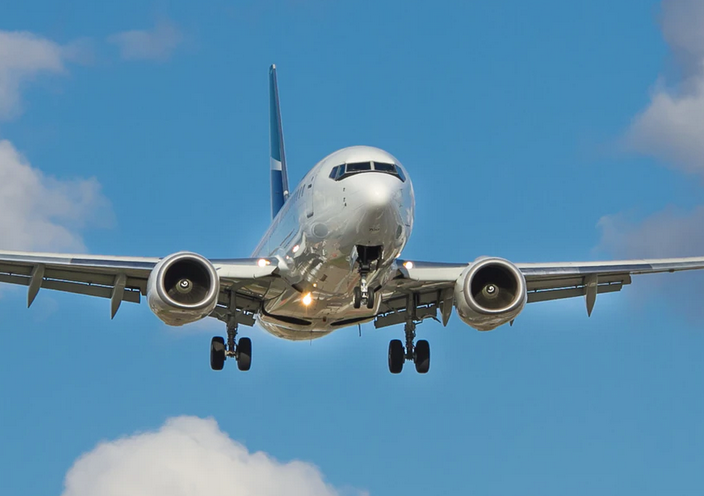
Two years after the crashes of Lion Air flight 510 and Ethiopian Airlines flight 302, the Boeing 737 MAX has been cleared to reenter service. Its twice deadly stall-avoidance system has been redesigned and pilot training protocols modified. FAA chief Steve Dickson gave the formal go-ahead on Wednesday afternoon, permitting U.S. carriers to once again operate the aircraft in scheduled service. Foreign regulators are expected to follow suit. American Airlines say it will begin phasing its MAX jets back into service as soon as December. United and Southwest will do so early in 2021. Some predicted the plane would never fly again. They were wrong. The MAX is back.

My feelings are mixed:

Is the 737 MAX safe, now that it’s been upgraded and tested out the wazoo? Absolutely. Will passengers trust the jet enough to fly on it? Probably, yes. Most people have little idea or concern about what airplane model they’re stepping onto, and I doubt that will change. The DC-10 and the Comet recovered with similarly scandalous legacies. The 737 will too.

Does that mean it’s a good design, and that Boeing can be forgiven for developing the decrepit corporate culture that led to this mess? And can the company be excused for having forgone the 797 concept years ago in order to push out more 737 variants instead? Heck no.

What they needed to do is not build the damn thing in the first place. As previously discussed on this site, the MAX is the ultimate monsterization of the 737 platform. A plane designed in the 1960s as a regional jet was pushed and pushed and pushed into roles it was never intended for. The “Frankenplane,” as I call it, was the result. It’s cramped, noisy, has a miserably uncomfortable cockpit, and can’t match the performance of its closest competitors — or, especially, of the plane it effectively replaces, the 757.

Such are the times. We don’t get spiffy new airplanes anymore. We get add-ons, variants, knockoffs.


UPDATE: December 29, 2019

Air travel has never been safer. This we can’t really argue. How we reached this point, however, and how we might improve upon it, is open to some debate. “Getting to this level wasn’t easy,” I said not long ago during a radio interview. “And is owed chiefly to three things. The first two are better pilot training and better technologies.”

So far, so good. But what about the third one? “Thirdly,” I said, “we have the seldom-acknowledged collaborative efforts of the airline industry and regulators.”

And that’s true, I suppose. Until it’s not.

Sure, the FAA and the airlines have a vested interest in keeping passengers alive. The stakes are enormous for all parties involved. In the past I’ve cited different examples of collaborative successes: the mandating of certain cockpit equipment, the establishment of proactive substance abuse programs, the tightening of pilot rest requirements, and so on. But this partnership only only works to a point. When the culture goes rotten and the checks and balances fail, the results can be catastrophic. The 737 MAX debacle is a perfect illustration of this.

For a deeper understanding of how, I recommend the recent New Yorker story, “After the Crash,” by Alec MacGillis. This is maybe the best exploration of the MAX saga that I’ve seen to date — worlds better than William Langeweische’s foul analysis that ran in the New York Times Magazine in September. It’s a sobering look into how the FAA and Boeing failed one another in certifying the MAX. (And how ironic that the grand-neice of none other than Ralph Nader was a passenger on the doomed Ethiopian Airlines flight?)

It’s also a sad indictment of what’s become of Boeing’s corporate culture since its acquisition of McDonnell Douglas. The company today is just another corporate entity whose masters see nothing but the bottom line. The many engineers, systems designers and pilots, whose talents were, for generations, the heart and soul of what made Boeing special, have been cast aside or ignored. Indeed, what this whole mess really comes down to is Boeing’s stubbornness and lack of vision: how, rather take the time and care to come up with a new airplane, it took a 55 year-old design and made a monster out of it.

What Boeing should do is the one thing it almost certainly won’t do: say goodbye to the 737. Cut its losses and pull the plug on a plane that should have been put to pasture a long time ago. Then pool its resources, bring those engineers and pilots back into the loop where they belong, and build an all-new, high-performing 200-seater.

Meanwhile, on and on it goes. How wrong I was. What I predicted would be fixed and forgotten in a matter of weeks is now in its ninth month of crisis. Boeing CEO Dennis Muilenberg was forced out last week. The planes remain grounded. Lawsuits are pending.


UPDATE: October 25, 2019

For months now I’ve avoided publishing any updates on the 737 MAX saga. Things have spun in so many different directions that I wouldn’t know where to dig in. The media, both big and small, has done a surprisingly good job with the story — and all of its various substories — and there hasn’t been much to add, from a pilot’s perspective, that I didn’t already say in my early installments.

This week, though, we’ve seen a couple of big developments. First, Indonesian authorities released their final report on the crash of Lion Air flight 510, the disaster that touched off the whole mess. Here’s a decent summary from the BBC. The findings echo much what William Langewiesche wrote in his scathing Times story a few weeks ago, throwing a portion of the blame on the flight crew and faulty maintenance.

The investigators cite nine — nine! — separate failures, both human and mechanical, that led to the crash. Although this spreads the blame around, it does not absolve Boeing. The BBC reporter nails it with this one paragraph: As Boeing’s chief executive Dennis Muilenburg has repeatedly stated, there was a chain of events. But at the heart of that chain was MCAS — a control system that the pilots didn’t know about, and which was vulnerable to a single sensor failure.

And there’s still the Ethiopian crash, the dynamics of which were somewhat different (see below).

Boeing, meanwhile, might at last be closing in on a solution. The beleaguered planemaker is moving forward with a suite of software and training upgrades that it believes will get the MAX back in the air soon. You can see a bullet-point rundown here. What “soon” might be is still anyone’s guess. I expected the plane to be flying again by now, and for the controversy to have long since died away. That hasn’t happened, and the repercussions for Boeing cannot be overstated. The company has taken a huge hit to its bottom line, as well as its reputation.

And here’s the part we hate to ask but need to: why did the 737 MAX need to exist in the first place? Were these catastrophes, on some level, the inevitable result of Boeing’s decades-long obsession with its 737 platform — its determination to keep the production line going, variant after variant, seemingly forever?

Instead of starting from scratch with a new airframe, Boeing took what was conceived in the 1960s as a regional jet, and has pushed and pushed and pushed it — bigger and bigger engines, fancier avionics, MCAS — into roles it was never intended for. Five decades and ten variants later, the MAX is a monsterized hybrid of a thing, a plane that wants, and needs to be something that it’s not: all muscle and power and advanced technology, jammed into the framework of a fifty year-old design. Call it a software failure, or call it bad corporate strategy and stubbornness.

The MAX will fly again, safely. Boeing has invested far too much money and effort to abandon the program. But here’s hoping this is the end. You won’t see it any reports, but what happened in Africa and Indonesia is, maybe, fate’s way of telling Boeing that the time has come to move on.
UPDATE: April 13, 2019

What a mess. Boeing is getting knocked around by everyone from members of Congress to late-night comedians. The MAX’s certification program is under scrutiny, airlines are canceling orders, and passengers everywhere are scared. The FAA is facing accusations that it took far too long to order the MAX’s grounding (after numerous other countries had already done so), and that it basically permitted Boeing to self-certify an unsafe aircraft.

We keep hearing, too, about what a horrible black mark this is not merely against Boeing, but against American aviation’s place in the world. We are no longer the global leader in air safety, no longer the “gold standard,” whatever that means exactly, as several articles have described it. This is maybe just another example of the weird phenomenon known as American exceptionalism, but each time I hear it, I keep going back to the DC-10 fiasco in the 1970s.

In 1974, in one of the most horrific air disasters of all time, a THY (Turkish Airlines) DC-10 crashed after takeoff from Orly Airport outside Paris, killing 346 people. The accident was traced to a faulty cargo door design. (The same door had nearly caused the crash of an American Airlines DC-10 two years earlier.) McDonnell Douglas had hurriedly designed a plane with a door that it knew was defective; then, in the aftermath of Paris, tried to cover the whole thing up. It was reckless, even criminal. Then, in 1979, American flight 191, also a DC-10, went down at Chicago-O’Hare, killing 273 — to this day the deadliest air crash ever on U.S. soil — after an engine detached on takeoff. Investigators blamed improper maintenance procedures (including use of a forklift to raise the engine and its pylon), and then found pylon cracks in at least six other DC-10s, causing the entire fleet to be grounded for 37 days. The NTSB also cited design flaws in the engine pylon and wing slats, quality control problems at McDonnell Douglas, and “deficiencies in the surveillance and reporting procedures of the FAA.”

That’s two of history’s ten deadliest air crashes, complete with design defects, a cover-up, and 619 dead people. And don’t forget the 737 itself has a checkered past, going back to the rudder problems that caused the crash of USAir flight 427 in 1994 (and likely the crash of United flight 585 in 1991). Yet the DC-10, the 737, and America’s aviation prestige along with them, have persevered. If we survived those scandals we can probably manage this. I have a feeling that a year from now this saga will be mostly forgotten. Boeing and its stock price will recover, the MAX will be up and flying again, and on and on we go. This is how it happens.

There’s also a lot being made of the FAA’s more or less outsourcing aircraft certification to Boeing. This is frustrating, and ironic, because air travel has never been safer, and it’s partly because, not in spite of, the close relationship and collaborative efforts between regulators, airlines, manufacturers, pilot groups, and so on. (A good example is the self-reporting program between pilots and FAA, which has been very successful and has kept dangerous trends from being driven underground.) Bear in mind how much these parties stand to lose should a tragedy occur. A crash can destroy an airline outright. It’s in the interest of all these entities to play things as safely as possible.

Did something go wrong in the 737 program? Are Boeing and the FAA jointly responsible? Probably. But I don’t believe anybody was intentionally reckless. That’s an important distinction, and for the most part the relationships between industry and regulators has been a productive one. You can’t say that about banking, perhaps, but in aviation it seems to work. The remarkable safety record we’ve enjoyed over the past twenty years bears that out, absolutely.

For the airline passenger, these can seem like scary times. Air crashes, perhaps more than any other type of catastrophe, have a way of haunting the public’s consciousness, particularly when the causes are mysterious. My best advice, maybe, is to turn off the news, take a step back, and try to look at this through a wider lens. The fact is, Lion Air and Ethiopian notwithstanding, air travel has never been safer than it is today. Two fatal crashes in five months is tragic, but in decades past it wasn’t unusual to see ten, fifteen, or even twenty air disasters worldwide in a given year. Nowadays, two or more is downright unusual. Here in the United States there hasn’t been a large-scale fatal crash involving a mainline carrier in nearly twenty years — an absolutely astonishing statistic. There are far more planes, carrying far more passengers, than ever before, yet the accident rate is a fraction of what it once was.


UPDATE: April 6, 2019

This just makes you shake your head.

What seems to be the case, based on analysis of the voice and data recorders from the doomed Ethiopian Airlines flight 302, is that the pilots did, as they should have, engage the plane’s pitch trim disconnect switches in a frantic attempt to regain control after a malfunctioning MCAS system forced the plane’s nose toward the ground. This pair of switches, on the center console near the thrust levers, killed power to the entire automatic pitch trim system, including MCAS, and should have allowed the pilots to maintain a normal flightpath using manual trim and elevator. Manual trim is applied by turning a large wheel mounted to the side of that same center console. Elevator is controlled by moving the control column forward or aft.

Yet they did not, could not, regain control. The reason, many now believe, is a design quirk of the 737 — an idiosyncrasy that reveals itself in only the rarest of circumstances, and that few 737 pilots are aware of. That is, when the plane’s stabilizers are acting to push the nose down, and the control column is simultaneously pulled aft, a sort of aerodynamic lockout forms: airflow forces on the stabilizers effectively paralyze them, making them impossible to move manually.

Aboard flight 302, the scenario goes like this: Commands of the faulty MCAS are causing the automatic trim system to push the nose down. The pilots, trying to arrest this descent, are pulling aft on the control column. The trim forces are stronger than the control column forces, which is why pulling back on the column has no effect. But now, with power to the trim system shut off, they should be able to lift the nose by manually by rotating the trim wheel aft, relieving that unwanted nose-down push. But the wheel won’t move. Believing the manual trim is itself broken, the pilots then reengage the auto-trim. MCAS then kicks in again, pushing the nose down even further. What’s worse, as the plane’s speed increases, the lockout effect intensifies. And so, with every passing second it becomes more and more difficult to recover.

The correct course of action would be to relax pressure on the control column, perhaps to the point of pushing the nose down even further. This will free the stabilizers of the aerodynamic weirdness that is paralyzing them, and allow the trim wheel to move, realigning the stabilizers to a proper and safe position. For the pilots, though, such a move would be completely counterintuitive. Instead, they do what any pilots would be expected to do under the circumstances. Turns out it’s the wrong thing, but they have no way of knowing.

It’s possible that the pilots of Lion Air flight 610 faced exactly the same situation, with the same result.

Apparently, pilots of older-generation 737s — long before there was MCAS — were aware of the lockout potential, and some were trained accordingly. (I flew the “classic” 737-200, briefly, about twenty years ago, but have no memory of it one way or the other.) However, as an obscure phenomenon that no pilot was likely to ever encounter, it was eventually forgotten as the 737 line evolved, to the point where no mention of it appears in the manuals of later variants.


UPDATE: March 29, 2019

ON MARCH 10th, Ethiopian Airlines flight ET302, a Boeing 737 MAX bound for Nairobi, crashed after takeoff from Addis Ababa, killing 157 people from more than thirty countries. Five months earlier, 189 people perished after Lion Air flight JT610 went down near Jakarta, Indonesia, under eerily similar circumstances. Both planes were brand new 737 MAX jets. Both crashed shortly after takeoff following a loss of control.

Although findings from the voice and data recorders pulled from the Ethiopian wreckage haven’t been released yet, it’s all but assumed that flight succumbed to the same flight control malfunction that brought down Lion Air. The 737 MAX has a deadly design problem, and Boeing needs to fix it. In the meantime, all MAX jets remain grounded worldwide.

The culprit is something called MCAS, which stands for Maneuvering Characteristics Augmentation System, a system that adjusts control feel as the plane’s nose pitches upward, effectively nudging it downward.

MCAS operates in the background, transparently and automatically — there’s no on or off switch, per se — and only during a very narrow window of the jet’s flight envelope. This is not something that occurs in normal, day-to-day operation, but certification requires it for those occasions when, for whatever reason, the plane reaches unusually steep climb angles. To raise a plane’s nose, the pilot pulls back on the control column. As the nose pitches further and further upward, the control forces required to maintain this action are supposed to become heavier. This helps keep pilots, and/or the autopilot, from inadvertently stalling the plane — that is, exceeding what we call the “critical angle of attack,” at which point the wings run out of lift and the plane ceases to fly. On the 737 MAX, however, certain aerodynamic factors, including the placement of its very powerful engines, result in control forces actually becoming lighter as it approaches the point of stall. Because of this the plane would not meet certification standards. And so MCAS was engineered in to properly adjust the feel.

Thus there’s a certain beauty to MCAS — provided it works correctly. What’s happening, apparently, is that faulty data is being fed to MCAS by the plane’s angle of attack indicator — a small, wedge-shaped sensor near the plane’s nose that helps warn pilots of an encroaching aerodynamic stall. An impending stall is sensed when there isn’t one, triggering the plane’s stabilizer trim — stabilizers are the wing-like horizontal surfaces beneath the tail — to force the nose down. This sets up a battle of sorts between the pilots and the trim system until the plane becomes uncontrollable and crashes.

What leaves us stymied, though, is the fact that any MCAS commands, faulty or not, can be overridden quickly through a pair of disconnect switches. Why the Lion Air pilots failed to engage these switches is unclear, but unaware of the system’s defect in the first place, we can easily envision a scenario in which they became overwhelmed, unable to figure out in time what the plane was doing and how to correct it. From that point forward, however, things were different. “Though it appears there’s a design flaw that Boeing will need to fix as soon as possible,” I wrote in November,“passengers can take comfort in knowing that every MAX pilot is now acutely aware of this potential problem, and is prepared deal with it.”

Or so it seemed. With the Lion Air crash fresh on any MAX pilot’s mind, why did the Ethiopian pilots not immediately disconnect the trim system? Did a disconnect somehow not work? Was the crew so inundated by a cascade of alarms, warnings, and erratic aircraft behavior that they failed to recognize what was happening? Or, was the problem something else completely? This is the most perplexing part of this whole unfolding drama.

While we wait for the black box results, Boeing this week revealed a suite of hardware and software tweaks that it claims will rectify the issue. This includes incorporation of a second angle of attack indicator, and an alerting system to warn pilots of a disagreement between the two.

The largest MAX operators in the U.S. are American Airlines, Southwest and United. Other customers include Alaska Airlines, Air China, Norwegian, FlyDubai, China Eastern and China Southern. The type is most easily recognize by its 787-style scalloped engine nacelles, which earlier 737s do not have.

Founded in 1945, Ethiopian Airlines is the largest carrier in Africa. Westerners hear “Ethiopia” and tend to make certain, unfortunate associations, but this is company with a proud history and a very good safety record. It flies a state-of-the art fleet, including the Boeing 787 and A350, on routes across four continents. Its training department, the Ethiopian Airlines Aviation Academy, has been training pilots for 55 years. Ethiopian’s pilots are distinguished by their handsome, olive green uniforms.

The captain of the doomed flight ET302, Yared Getachew, was a graduate of the highly competitive Ethiopian Airlines Aviation Academy, and had more than 8,000 flight hours — a respectable total. “Yared was a great person and a great pilot. Well prepared,” a former Ethiopian Airlines training captain told me.

The first officer, on the other hand, had a mere two-hundred hours. Airline training is intensive, and as I’ve written in the past, the raw number of hours in a pilot’s logbook isn’t always a good indicator of skill or talent. Nonetheless, if indeed that number is correct (it’s unclear if this refers to his total flight time, or his number of hours in the 737 MAX), that’s pretty astounding. By comparison, the typical new-hire at a U.S. major carrier has somewhere on the order of 5,000 hours. Whether the first officer’s lack of experience had anything to do with the accident, however, is another matter.


Related Stories:

THE PLANE THAT NEVER WAS.
ODE TO THE 757

Comments (365)

The 747 in Winter


September 30, 2018

The Boeing 747 turns fifty years old today.

Smithsonian magazine has published an essay of mine about the plane for its “American Icon” feature. You can read it here. It appears in the magazine’s print version as well.

The longer, unabridged version is below.

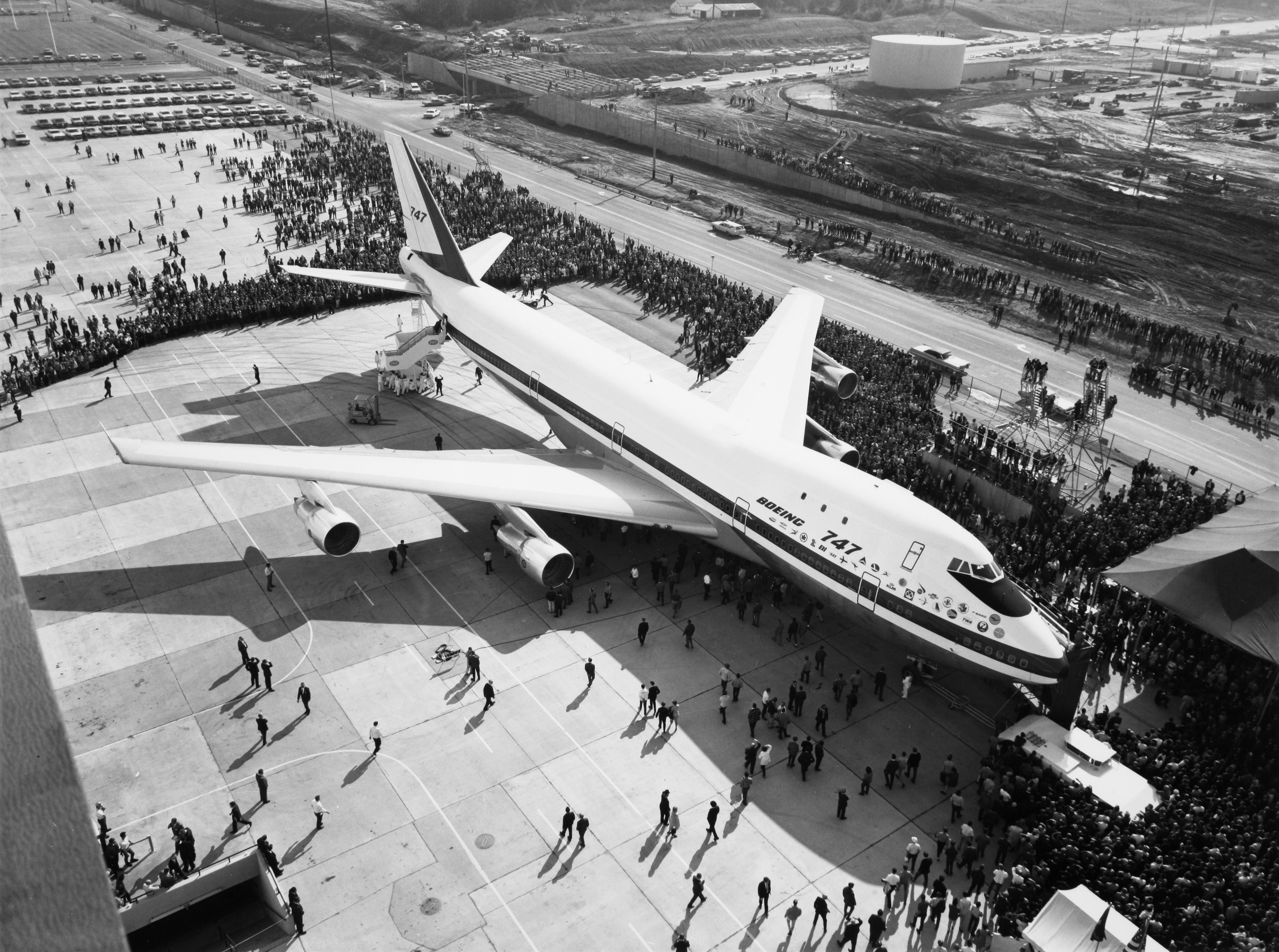
FIFTY YEARS AGO, on the last day of September in Everett, Washington, the first Boeing 747 was rolled from the hangar. Onlookers were stunned. The aircraft before them, gleaming in the morning sunshine, was more than two-hundred feet long and taller than a six-story building.

An airplane of firsts, biggests, and superlatives all around, the 747 has always owed its fame mostly to feats of size. It was the first jetliner with two aisles — two floors, even! And enormous as it was, this was an airplane that went from a literal back-of-a-napkin drawing to a fully functional aircraft in just over two years — an astonishing achievement.

But this was more than size for the sake of itself. Boeing didn’t build the biggest plane of all time simply to prove it could. By the 1970s, a growing population craved the opportunity to travel nonstop over great distances. But no airplane was big enough, or economical enough, to make it affordable to the average person. Boeing’s four-engined 707 had ushered in the Jet Age a decade earlier, but with fuel-thirsty engines and room for fewer than 200 passengers, its per-seat economics kept ticket prices beyond the budget of most vacationers.

Enter Juan Trippe, the legendary founder of Pan Am. Trippe had been at the vanguard of the 707 project, and now he’d persuade Boeing that not only was an airplane with twice the 707’s capacity technologically feasible, it was a revolution waiting to happen.

He was right, even if vindication didn’t come easy. Boeing took a chance and built Trippe his superjet, nearly bankrupting itself in the process. Early-on engine problems were a costly embarrassment, and sales were alarmingly slow at the outset. But on January 21, 1970, Pan Am’s Clipper Victor made the maiden voyage on the New York–London milk run, and the rest, as they say, is history. With room for upwards of five-hundred passengers, the 747 introduced the economies of scale that, for the first time, allowed millions of people to travel great distances at affordable fares. Say what you want of the DC-3 or the 707 — icons in their own right — it’s the 747 that changed global air travel forever.

And it did so with a style and panache that we seldom see any more in aircraft design. Trippe isn’t the only visionary in this story; it was Boeing’s Joe Sutter and his team of engineers who figured out how to build an airplane that wasn’t just colossal, but also downright beautiful.

How so? “Most architects who design skyscrapers focus on two aesthetic problems,” wrote the architecture critic Paul Goldberger in an issue of The New Yorker some years back. “How to meet the ground and how to meet the sky—the top and the bottom, in other words.” Or, in Boeing’s case, the front and the back. Because what is a jetliner, in so many ways, but a horizontal skyscraper, whose beauty is beheld (or squandered) primarily through the sculpting of the nose and tail. Whether he realized it or not, Sutter understood this perfectly.

Joe Sutter and his creation.

It’s perhaps telling that today, strictly from memory, with only the aid of a pencil and a lifetime of watching airplanes, I’m able to sketch the fore and aft sections of the 747 with surprising ease and accuracy. This is not a testament to my drawing skills, believe me. Rather, it’s a demonstration of the elegant, almost organic flow of the jet’s profile.

It’s hard to look at a 747 without focusing on its most distinctive feature — its upper deck. The position of this second-story annex, which tapers rearward from the crown of the cockpit windscreen, has typically inspired descriptions like “bubble-topped” or “humpbacked,” which couldn’t be more insulting. In fact the upper-deck’s design is smoothly integral to the rest of fuselage. Compare the 747’s assertive, almost regal-looking prow to the bulbous, Beluga-like forward quarters of the double-decked Airbus A380 and, well, enough said. As for the tail, where some might see the in-your-face expanse of towering, 62-foot billboard, I see the rakishly canted sail of a tall ship.

Even that name itself — “Seven forty seven” — is such a neat little snippet of palindromic poetry.

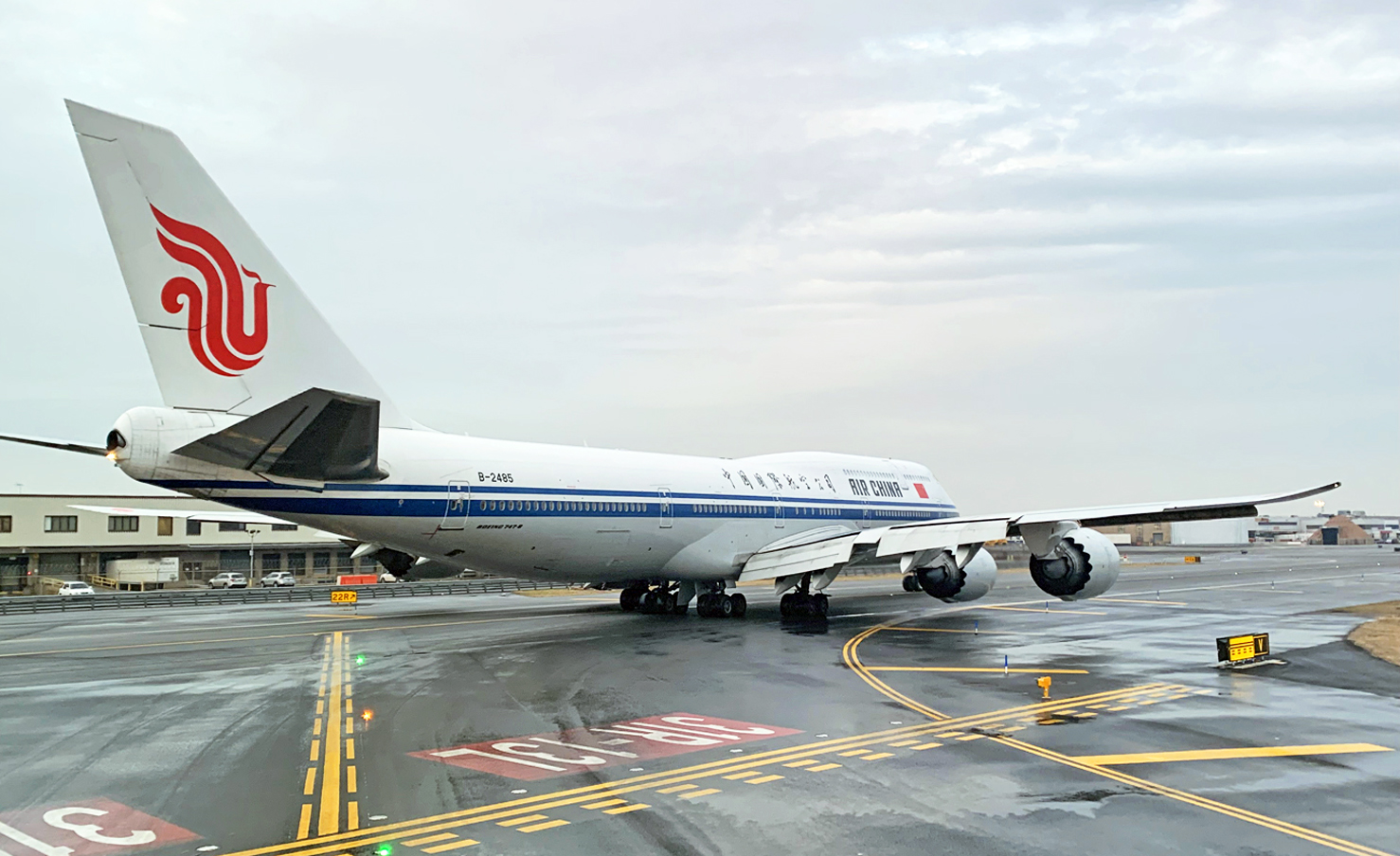
Air China 747-8.     Author’s photo.

Funny, how we gauge a plane’s commercial success, aesthetic or otherwise: through raw tonnage, wingspan, and this or that statistical bullet-point. Or, in the case of the ubiquitous 737, through the number of units sold. How crass. It’s hard to find romance in the business of aircraft production, but we should take a moment to savor beauty where it exists. “Air does not yield to style,” are words once accredited to an aerodynamicst at Airbus. They, builders of the A380, the graceless behemoth that kicked the 747 into second place on the size list. The ghost of Joe Sutter would like a word with you.

This is also the aircraft that has carried five U.S. Presidents. It carried the Space Shuttle, and, we might note, was perennially the star of any number of Hollywood disaster movies. We should mention its roles in real-life tragedies, too, from the collision at Tenerife, to TWA 800, to the unforgettable photograph of Pan Am’s Maid of the Seas lying sideways in the grass at Lockerbie. Horrific incidents to be sure, but they underscore the 747’s prestige in a way that is almost transcendent — bringing the airplane beyond aviation and into the realm of history proper.

The nature and travel author Barry Lopez once wrote an essay in which, from inside the hull of a 747 freighter, he compares the aircraft to a Gothic cathedral of twelfth-century Europe. “Standing on the main deck,” Lopez writes, “where ‘nave’ meets ‘transept,’ and looking up toward the pilots’ ‘chancel.’ … The machine was magnificent, beautiful, complex as an insoluble murmur of quadratic equations.” Rarely do commercial aviation and spirituality share the same conversation — unless it’s the 747 we’re talking about.

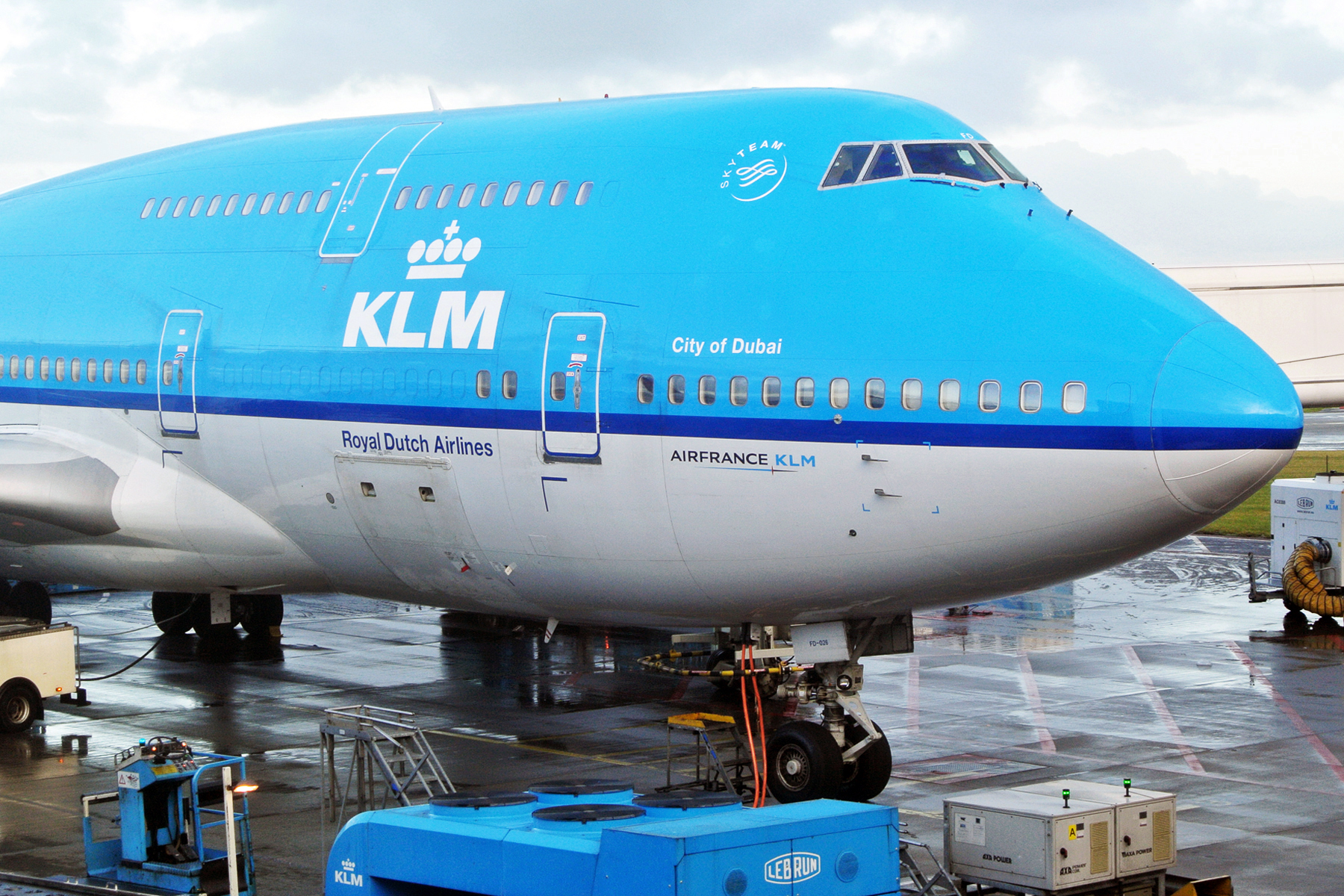
KLM 747-400 at Amsterdam-Schiphol.     Author’s photo.

In the second grade, my two favorite toys were both 747s. The first was an inflatable replica, similar to those novelty balloons you buy at parades, with rubbery wings that drooped in such violation of the real thing that I’d tape them into proper position. To a seven-year-old it seemed enormous, like my own personal Macy’s float. The second toy was a plastic model about 12 inches long. Like the balloon, it was decked out in the livery of Pan Am. One side of the fuselage was made of clear polystyrene, through which the entire interior, row by row, could be viewed. I can still picture exactly the blue and red pastels of the tiny chairs.

Also visible, in perfect miniature near the toy plane’s nose, was a blue spiral staircase. Early 747s were outfitted with a set of spiral stairs connecting the main and upper decks — a touch that gave the entranceway a special look and feel. Stepping onto a 747 was like stepping into the lobby of a fancy hotel, or into the grand vestibule of a cruise ship. In 1982, on my inaugural trip on a 747, I beamed at my first real-life glimpse of that winding column. Those stairs have always been in my blood — a genetic helix twisting upward towards some pilot Nirvana.

In the 1990s, Boeing ran a magazine promotion for the 747. It was a two-page, three-panel ad, with a nose-on silhouette against a dusky sunset. “Where/does this/take you?” asked Boeing across the centerfold. Below this dreamy triptych, the text went on:

“A stone monastery in the shadow of a Himalayan peak. A cluster of tents on the sweep of the Serengeti plains. The Boeing 747 was made for places like these. Distant places filled with adventure, romance, and discovery. The 747 is the symbol for air travelers in the hearts and minds of travelers. It is the airplane of far-off countries and cultures. Where will it take you?”

Nothing nailed the plane’s mystique more than that ad. I so related to this syrupy bit of PR that I clipped it from the magazine and kept it in a folder, where it resides to this day. Whenever it seemed my career was going nowhere (which was all the time), I’d pull out the ad and look at it.

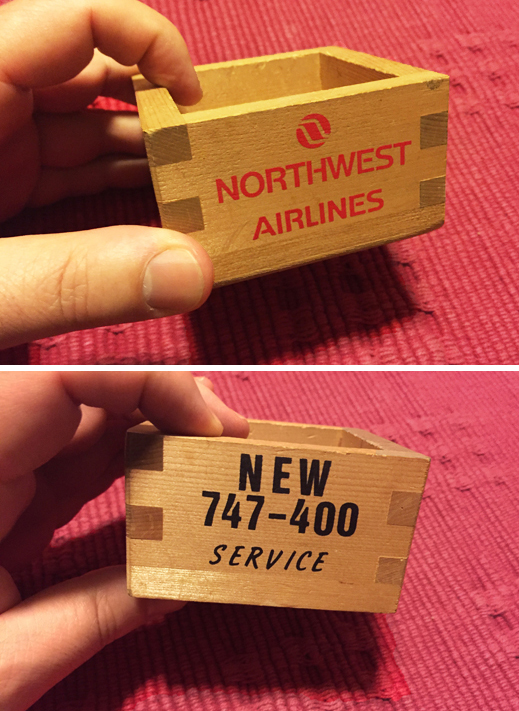
Alas, I never did pilot a 747. I’ve been forced to live the thrill vicariously instead, through colleagues who’ve been more fortunate, or by riding along in the cabin or cockpit jump seat. In 1989 I was a passenger on the inaugural 747-400 flight from JFK airport to Tokyo. Everyone on board was given a commemorative wooden sake cup. I still have mine.

For better or worse, however, airlines don’t pick their planes based on beauty or sentimental contemplations, and numbers that made good business sense in 1968 are no longer to the 747’s favor. There’s been a lot of chatter about the plane of late, not much of it auspicious, as the world’s major carriers, one by one, have been sending 747s to the boneyard. Delivery numbers of the final variant, the 747-8 have dwindled to almost nothing, and the assembly line, after almost half a century, is undoubtedly soon to go dark. The fragmentation of long-distance air routes, together with the unbeatable economics of newer aircraft models, have sealed its fate.

When Delta Air Lines retired the last of its 747s in 2017, the plane took a cross-country farewell tour, including a stop at the Washington factory where it was manufactured. At Air France, 300 well-wishers came to Charles de Gaulle airport for a day-long celebration and sightseeing flight over Paris and the French countryside.

The plane’s replacement is not so much the double-decker Airbus A380, as many people assume. The A380 indeed has captured some of the ultra high-capacity market, but with the exception of Emirates’ 100-plus fleet it’s found only in limited numbers. Rather, it’s Boeing’s own 777-300, which can carry almost as may people as a 747, at around two-thirds of the operating costs, that has rendered the four-engine model otherwise obsolete. Pretty much every 777-300 that you see out there — and there are hundreds of them — would have been a 747 in decades past. The -300 has quietly become the premier jumbo jet of the 21st century.

In other cases, market fragmentation has resulted in carriers switching to smaller long-haul planes like the 787 and the Airbus A330. In past decades, traveling internationally meant flying on only a handful of airlines from a small number of gateway cities. Today, dozens of carriers offer nonstop options between cities of all sizes. More people are flying than ever before, but they’re doing so in smaller planes from a far greater number of airports.

With Delta and United having retired the last examples, the 747 is now absent from the passenger fleets of the U.S. major airlines for the first time since 1970. How sad is that? (Atlas Air, that New York-based freight outfit, we turn our lonely eyes to you.)

Just the same, reports of the plane’s death have been exaggerated. Hundreds remain in service worldwide: British Airways, Lufthansa, Korean Air and KLM have dozens apiece, in both freighter and passenger configurations. Other liveries, too, can be spotted at airports both at home and overseas: Virgin Atlantic, Air China, Qantas. While the 747-8 has sold only sporadically, there are enough of them around to ensure they’ll be crossing oceans for years to come.

Icon is such an overused term in our cultural lexicon, but in the case of the 747, it couldn’t be more apt. Like other American icons of design and commerce, from the Empire State Building to the Golden Gate Bridge, it endures — a little past its prime, perhaps, but undiminished in its powers to inspire and awe. And this one literally flies, having carried tens of millions of people to every corner of the globe — an ambassador of determination, technological know-how, and imagination at its best.

It could be a metaphor for American itself: no longer the most acclaimed or the flashiest, it remains stubbornly dignified, graceful and important in ways you might not expect. And in spite of any proclamations of its demise, it carries on.

747 at Kennedy Airport, 1997.     Author’s photo.


Now for some fun:

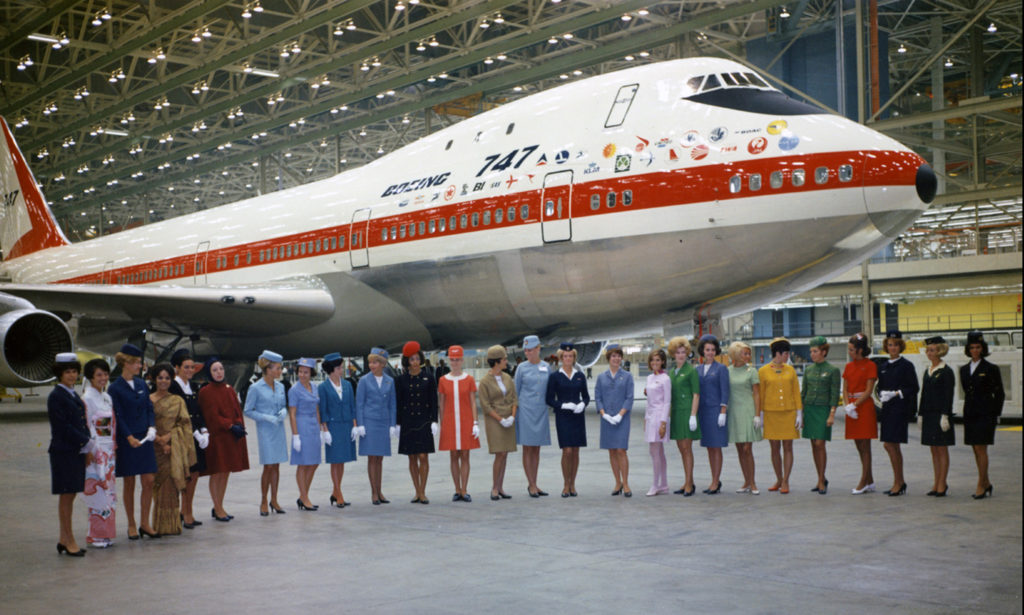
The picture at the top of this article shows the prototype Boeing 747 on the day of its rollout from the factory in Everett. It was September 30th, 1968. I love this photo because it so perfectly demonstrates both the size and the grace of the 747. It’s hard for a photograph to properly capture both of those aspects of the famous jet, and this image does it better than any I’ve ever seen.

Across the forward fuselage you can see the logos of the 747’s original customers. The one furthest forward, of course, is the blue and white globe of Pan Am. Pan Am and the 747 are all but synonymous, their respective histories (and tragedies) forever intertwined. But plenty of other carriers were part of the plane’s early story, as those decals attest. Twenty-seven airlines initially signed up for the jumbo jet when Boeing announced production.

My question is, can you name them? How many of those logos can you identify?

Here, and here, are a couple of closer-in, higher resolution shots to help you.

Once you’re ready, scroll down for the answers.

The 747 in those archival Boeing photos still exists, by the way, and you can visit it — touch it — at the Museum of Flight at Seattle’s Boeing Field.


And the answers are…

Here are the 27 original customers. You may wish to reference this close-up photo as you go along, left to right…

Top row:

Delta Air Lines
Eastern Airlines
Air India
National Airlines
World Airways
United Airlines
American Airlines
Air France
BOAC
Lufthansa

Bottom row:

Sabena
Iberia
South African Airways
Air Canada
El Al
Braniff International
Scandinavian Airlines (SAS)
Swissair
Qantas
KLM
Aer Lingus
Alitalia
Northwest Airlines
Continental Airlines
Trans World Airlines (TWA)
Japan Airlines (JAL)
Pan American

Twenty-seven carriers got things rolling, though many more would follow, from Cathay Pacific to Air Gabon. I’m not sure of the meaning of the order of the decals. Pan Am was the launch customer, and its logo is located furthest forward — either first or last on the list, depending how you see it. The rest may or may not be chronologically arranged, I don’t know.

Whatever order they are in, there’s a tremendous amount of history in those logos. Let’s take a quick look at each of the 27 carriers, and their trademarks. Again, left to right, top row first:

1. Delta operated only a handful of the original 747-100, and not for very long, although later it would inherit more than 20 of the -400 variant through its merger with Northwest. The last of those jets was retired last year. The Delta “widget” symbol is today a two-tone red, but is otherwise identical to the mark you see in these photos.

2. A single 747-100 flew in Eastern colors only very briefly before it was sold to TWA. The airline’s blue and white oval, however — one of the most iconic airline trademarks of all time — endured a lot longer. This was the final incarnation of the carrier’s longtime falcon motif, and Eastern used it right to the end, until the company’s demise at the hands of Frank Lorenzo in 1991.

3. Air India operated four different 747 variants before switching to the 777-300. The centaur logo, representative of Sagittarius, suggested movement and strength. It also resembled the farohar, a Parsi heavenly symbol featuring a winged man. The Parsis are a Zoroastrian sect of the Subcontinent — of which Air India’s founding family, the Tatas, were members — and their farohar is a sign of good luck. Sadly, the carrier abandoned this culturally rich trademark some years ago.

4. National Airlines flew the 747 on routes between the Northeast and Florida. In 1980 the airline merged with Pan Am. Its “Sundrome” terminal at Kennedy Airport, where the JetBlue terminal sits today, was designed by I.M. Pei.

5. World Airways was a U.S. supplemental carrier that flew passenger and cargo charters worldwide for 66 years until ceasing operations in 2014. It operated the 747-100, -200 and -400.

6. Until last year, United Airlines had operated the 747 without interruption since 1970, having flown the -100, -200 and -400 variants, as well as the short-bodied SP version. The latter were inherited from Pan Am after purchase of that airline’s Pacific routes in 1986.

7. American Airlines sold the last of its 747s more than two decades ago, but over the years its fleet included the -100 and, for a short period, the SP. The emblem in the photos shows an early version of the famous AA eagle logo, later perfected by the Italian designer Massimo Vignelli and worn by the carrier until its disastrous livery overhaul in 2013.

8. The Air France seahorse logo still graces the caps of the airline’s pilots. Air France flew the 747-100, -200, and -400. Today, the 777-300 and A380 do the heavy lifting.

9. BOAC, the British Overseas Airways Corporation, merged with British European Airways in 1974 to form what today is known as British Airways. That black, delta-winged logo traces its origins to Imperial Airways in the 1920s. Known as the “Speedbird,” this is where British Airways’ air traffic control call-sign comes from.

10. Lufthansa’s crane logo, one of commercial aviation’s most familiar symbols, is mostly unchanged to this day. The airline’s 13 747-400s and 19 747-8s comprise what is, at the moment, the largest 747 fleet in the world. The -100 and -200 were in service previously, including a freighter version of the -200.

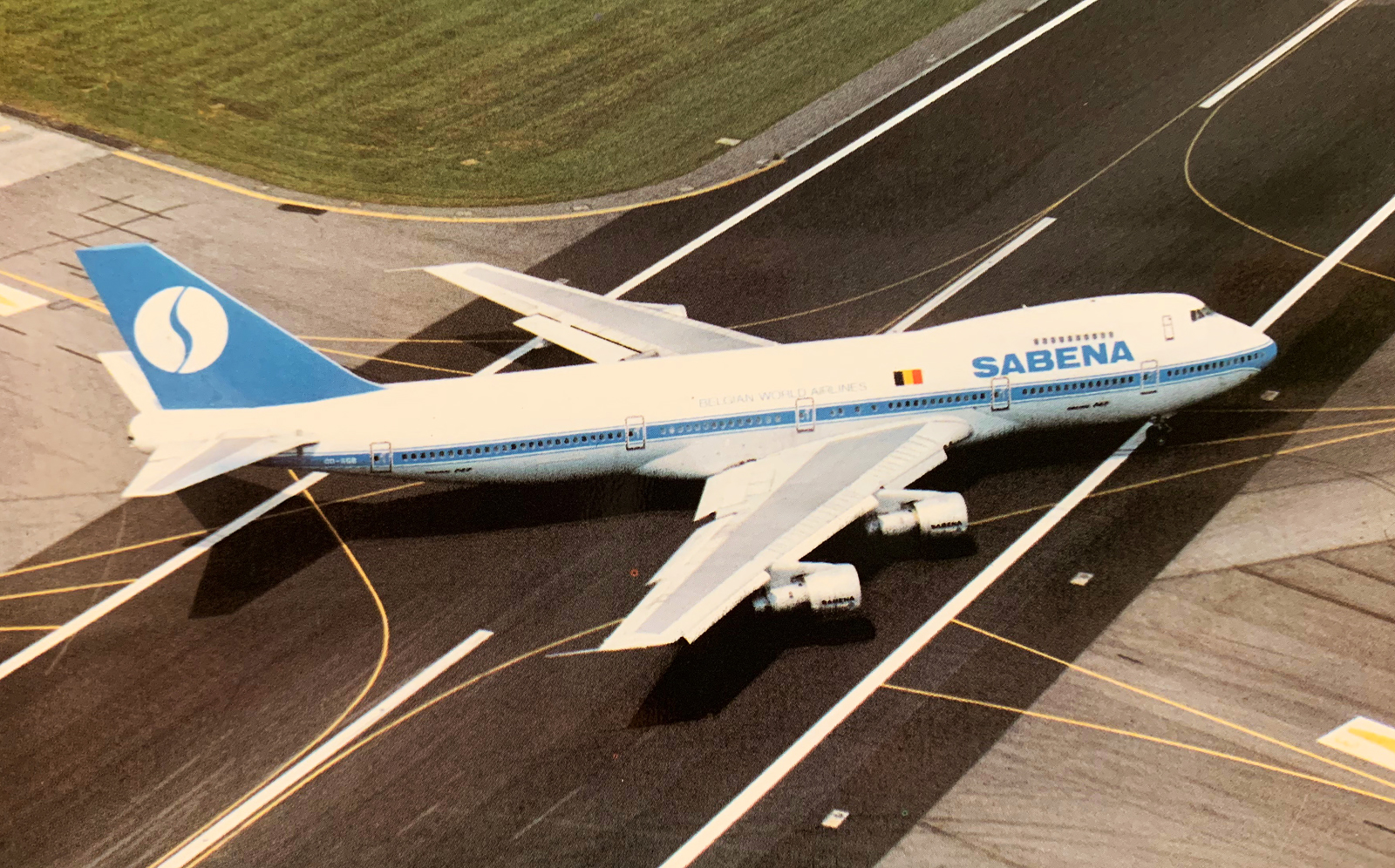
11. Sabena, the former Belgian national carrier, flew the 747-100, -200 and -300. The airline ceased operations in 2002 after 78 years of service. This logo is one of the hardest to identify in the Boeing photos. It’s blurry in most pictures, and the carrier didn’t use it for very long. People are much more familiar with Sabena’s circular blue “S” logo.

12. Spanish carrier Iberia flew 747s for three decades, but today it relies on the A330 and A340 for long-haul routes. Different versions of the globe logo were used until the late 1970s.

13. South African Airways is among the few airlines to have flown at least four different 747 variants: the -200 through -400, plus the SP. The springbok, an African antelope, remained its trademark until a post-Apartheid makeover in the 1990s.

14. Air Canada recently brought back the five-pointed maple leaf as part of a beautiful new livery. Alas, you won’t be seeing it on a 747. The last one left the fleet in 2004.

15. El Al is Hebrew for “to the skies,” and the Israeli airline still operates a handful of 747-400s mainly on flights between Tel Aviv and New York.

16. It was hard to miss one of Braniff’s 747s. The Dallas-based carrier, one of America’s biggest airlines until it was killed off by the effects of over-expansion and deregulation, painted them bright orange.

17. Each of Scandinavian’s 747s carried a “Viking” name on its nose — the Knut Viking, the Magnus Viking, the Ivar Viking among them — with a fuselage stripe that soared rakishly upward into the shape of a longboat. Just a beautiful plane, as you can see below. That striping is long gone, but the SAS trademark, one of the most enduring in aviation, is unchanged.

18. After being in business for 71 years, Swissair closed down forever in March, 2002. It had flown the 747 -200 and -300.

19. Qantas — that’s an acronym, by the way, for Queensland and Northern Territory Aerial Services — uses a modernized version of this kangaroo logo, and continues to operate a fleet of a dozen or so 747-400s.

20. KLM is the world’s oldest airline, and this logo, a masterpiece of simplicity, is still in use today, only barely altered. There are 17 747s in the KLM fleet. With United out of the picture, KLM joins Lufthansa, Qantas, El Al and BOAC/British Airways as the only members of the original 27 to have operated the jet continuously since 1970.

21. Aer Lingus 747s were a daily sight here in Boston throughout the 1970s and 1980s, before the airline downsized to the Airbus A330. A modernized shamrock logo remains on the tail.

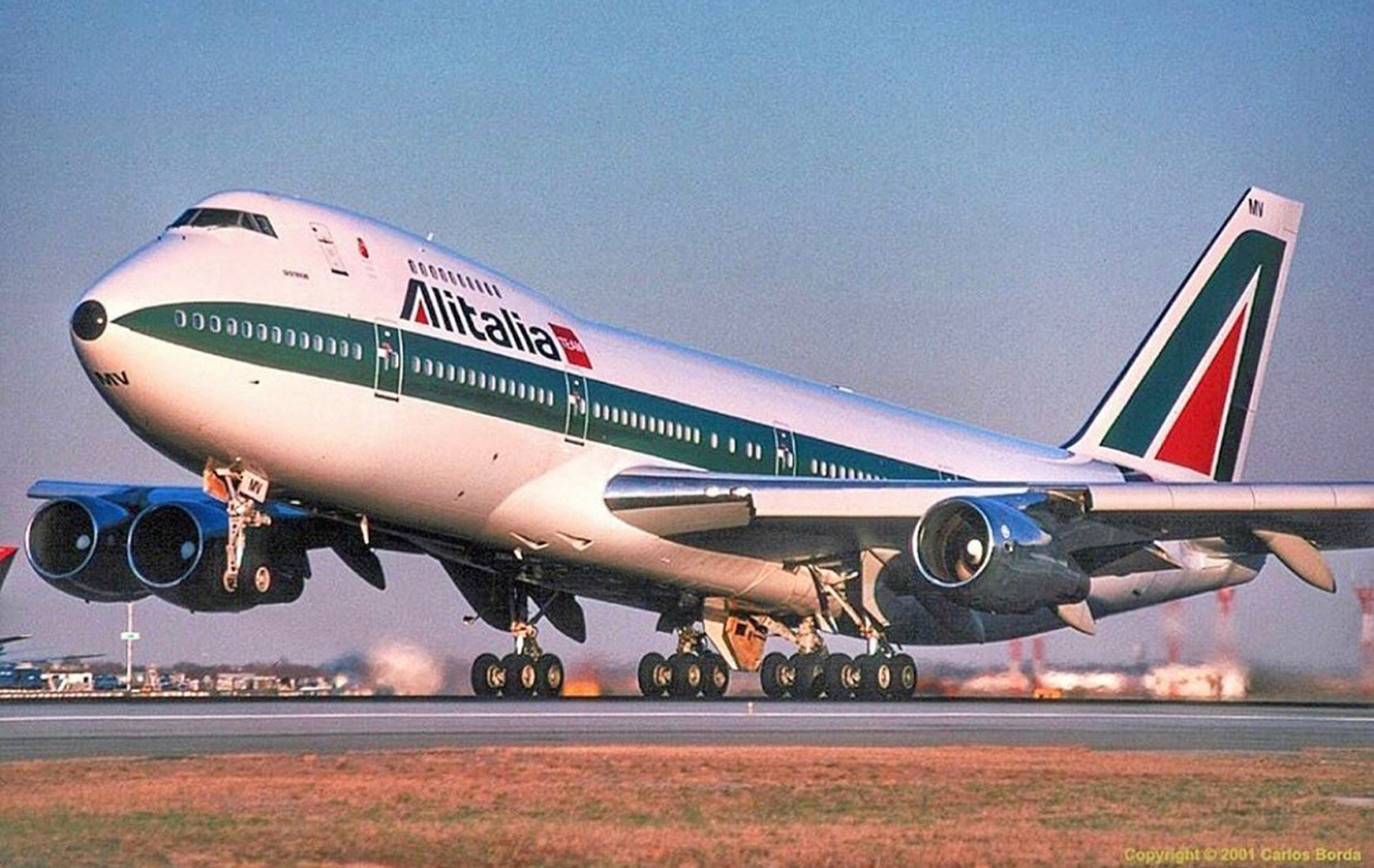
22. Alitalia’s “Freccia Alata” bow and arrow is the emblem that readers had the most trouble with. This was the airline’s symbol until 1972, before changing to the stylized red and green “A” used to the present day. It looks even older than it is. One emailer described it wonderfully as, “something Gatsby would have on cufflinks.” Alitalia parted ways with the 747 in 2002, switching to the 777 and A330.

23. Northwest, which merged with Delta in 2008, was for a time the world’s largest 747 operator, with more than 40 in service. It was the launch customer of the 747-400 in 1989. The last of those planes, now wearing Delta colors, will be flown to the desert later this month, ending 47 years of 747 passenger service by U.S. carriers.

24. Continental Airlines flew the 747-100 and -200 on and off, but never had more than a handful. The “meatball” logo, as some people callously called it, was designed by Saul Bass and used from 1968 until 1991. Continental merged with United in 2010.

25. TWA, one of the world’s most storied carriers, was an early 747 customer and kept the type in service until 1998 — shortly after the flight 800 disaster. Though few people remember it, TWA also had a small fleet of three 747SPs at one point. The SP paint job included the markings “Boston Express,” as they were primarily used on routes from Boston to London and Paris.

26. Japan Airlines flew more 747s than anybody — at one point over 60 — including a high-density short-range version that held 563 passengers! (It was one of those “SR” planes that crashed near Mt. Fuji in 1985, in what remains the deadliest single-plane accident of all time.)  JAL’s crane logo, with the bird’s wings forming the shape of the Japanese rising sun, is the most elegant airline logo ever created. JAL retired the crane in 2002 as part of a monstrously ugly redesign, but wisely brought it back nine years later.

27. And then there’s Pan Am — the blue globe that was once as widely recognized as the logos of Coca-Cola or Apple. What can you say?


Related Story:

WE GAAN. THE HORROR AND ABSURDITY OF HISTORY’S WORST AIR DISASTER

Joe Sutter and factory photos courtesy of Boeing.

Comments (3)