Archive for Uncategorized

Ask the Pilot Christmas, 2024

December 22, 2024

Welcome to the 2024 installment of “An Ask the Pilot Christmas.”

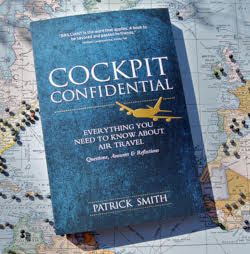
I traditionally start off with gift suggestions, but this year I really don’t have any, save a shameless plug for my book. I mean, it does make a kickass stocking stuffer.

You can expect chaos at the airports, of course. According to the International Air Transport Association (IATA), roughly 62 billion people are expected to fly between now and New Year’s Eve, 96 percent of them connecting through Atlanta.

In fact I don’t know how many people are projected to fly. I haven’t been listening. In any case, it’s the same basic story every year: the trade groups put out their predictions, and much is made as to whether slightly more, or slightly fewer, people will fly than the previous year. Does the total really matter? All you need to know is that airports will be crowded and flights full. Any tips I might offer are simple common sense: leave early, and remember that TSA considers fruitcakes to be hazardous materials (no joke: the density of certain baked goods causes them to appear suspicious on the x-ray scanners).

For years I made a point of working over the holidays. When I was a bottom-feeder on my airline’s seniority list, it was an opportunity to score some of those higher-quality layovers that were normally out of reach. Other pilots wanted to be home with their kids or watching football, and so I was able to spend Christmas in Cairo, Edinburgh, Budapest and Paris.

That’s how it works at an airline: every month you put in your preferences: where you’d like to fly, which days you’d like to be off, which insufferable colleagues you hope to avoid, and so on. There are separate bids at each base, for each aircraft type and for each seat – i.e. captain and first officer. The award process then begins with the most senior pilot in the category and works its way down. The lowest-rung pilots have their pick of the scraps.

Festi-fying my hotel room.   Accra, Ghana, 2013.

Eventually the process reaches a point when there are no more rostered trips to give out. Those pilots left over — the bottom ten or fifteen percent — are assigned to what we call “reserve.” A reserve pilot has designated days off, and receives a flat minimum salary for the month, but his or her workdays are a blank slate. The reserve pilot is on call, and needs to be within a stipulated number of hours from the airport — anywhere from two to twelve, usually, and it can change day to day. When somebody gets sick, or is trapped in Chicago because of a snowstorm, the reserve pilot goes to work. The phone might ring at 2 a.m., and you’re on way to Sweden or Brazil — or to Omaha or Sacramento.

Looking back, holiday flying has provided me a number of those sentimental vignettes guaranteed to make a person maudlin once they’re retired and looking back…

One of my favorite memories dates back to Thanksgiving, 1993. I was captain of a Dash-8 turboprop flying from Boston to New Brunswick, Canada, and my first officer was the always cheerful and gregarious Kathy Martin. (Kathy, who also appears in my “Right Seat” essay, was one of three pilots I’ve known who’d been flight attendants at an earlier point in their careers.) There were no meal services on our Dash-8s, but Kathy brought a cooler from home, packed with food: huge turkey sandwiches, a whole blueberry pie and tubs of mashed potatoes. We assembled the plates and containers across the folded-down jumpseat. The pie we passed to the flight attendant, and she handed out slices to passengers.

Quite a contrast to Thanksgiving Day in 1999, when I was working a cargo flight to Brussels. It was custom on Thanksgiving to stock the galley with a special meal, and the three of us were hungry and looking forward to it. Trouble was, the caterers forgot to bring the food. By the time we noticed, we were only minutes from departure and they had split for the day. I thought I was going to cry when I opened the door to our little fridge and saw only a can of Diet Sprite and a matchbook-size packet of Tillamook cheese. The best we could do was get one of the guys upstairs to drive out to McDonald’s. He came back with three big bags of burgers and fries, tossing them up to us just as they were pulling the stairs away. Who eats fast food on Thanksgiving? Pilots in a pinch.

On New Year’s Eve, 2010, I was flying over the city of Bamako, Mali, in West Africa. Fireworks explode only a few hundred feet from the ground, but when enough of them are going off at once, it’s quite the spectacle when seen from a jetliner. At the stroke of midnight, the city erupted in a storm of tiny explosions. The sky was lit by literally tens of thousands of small incendiaries — bluish-white flashes everywhere, like the pulsing sea of lights you see at concerts and sporting events. From high above, this huge celebration made Bamako look like a war zone.

Notre Dame, 2017.

I’ve also spent a number of holidays traveling on vacation. Thanksgiving in Armenia, for instance. Another Thanksgiving in Timbuktu.

And with that in mind, here’s some advice…

Do not, ever, make the mistake that I once made and attempt to enjoy Christmas at a place in Ghana called Hans Cottage, a small hotel situated on a lagoon just outside the city of Cape Coast.

They love their Christmas music at the Hans Cottage, you see, and the compound is rigged end-to-end with speakers that blare it around the clock. And although you can count me among those people able to tolerate Christmas music (in moderation, and so long as it isn’t Sufjan Stevens) there is one blood-curdling exception. That exception is the song, “Little Drummer Boy,” which is, to me, the most cruelly awful piece of music ever written. (It was that way before Joan Jett or David Bowie got hold of it.)

It’s a traumatic enough song in any rendition. And at the Hans Cottage Botel they have chosen to make it the only — only! — song on their Christmastime tape loop. Over and over it plays, ceaselessly, day and night. It’s there at breakfast. It’s there again at dinner. It’s there at three in the morning, seeping through the space under your door. And every moment between. I’m not sure who the artist is, but it’s an especially treacly version with lots of high notes to set one’s skull ringing.

“Ba-ruppa-pum-pum,ruppa-pum-pum…” as I hear it today and forever, that stammering chorus is like the thump-thump of chopper blades in the wounded mind of a Vietnam vet who Can’t Forget What He Saw. There I am, pinned down at the hotel bar, jittery and covered in sweat, my nails clattering against a bottle of Star lager while the infernal Drummer Boy warbles into the buggy air.

“Barkeep!” I grab Kwame by the wrist. “For the love of god, man, can’t somebody make it stop?”

Kwame just smiles. “So lovely, yes.”


Related Story:
LETTER FROM GHANA: WELCOME TO ROOM 420.

Photos by the author.

Comments (9)

Lockerbie at 36.

December 21, 2024

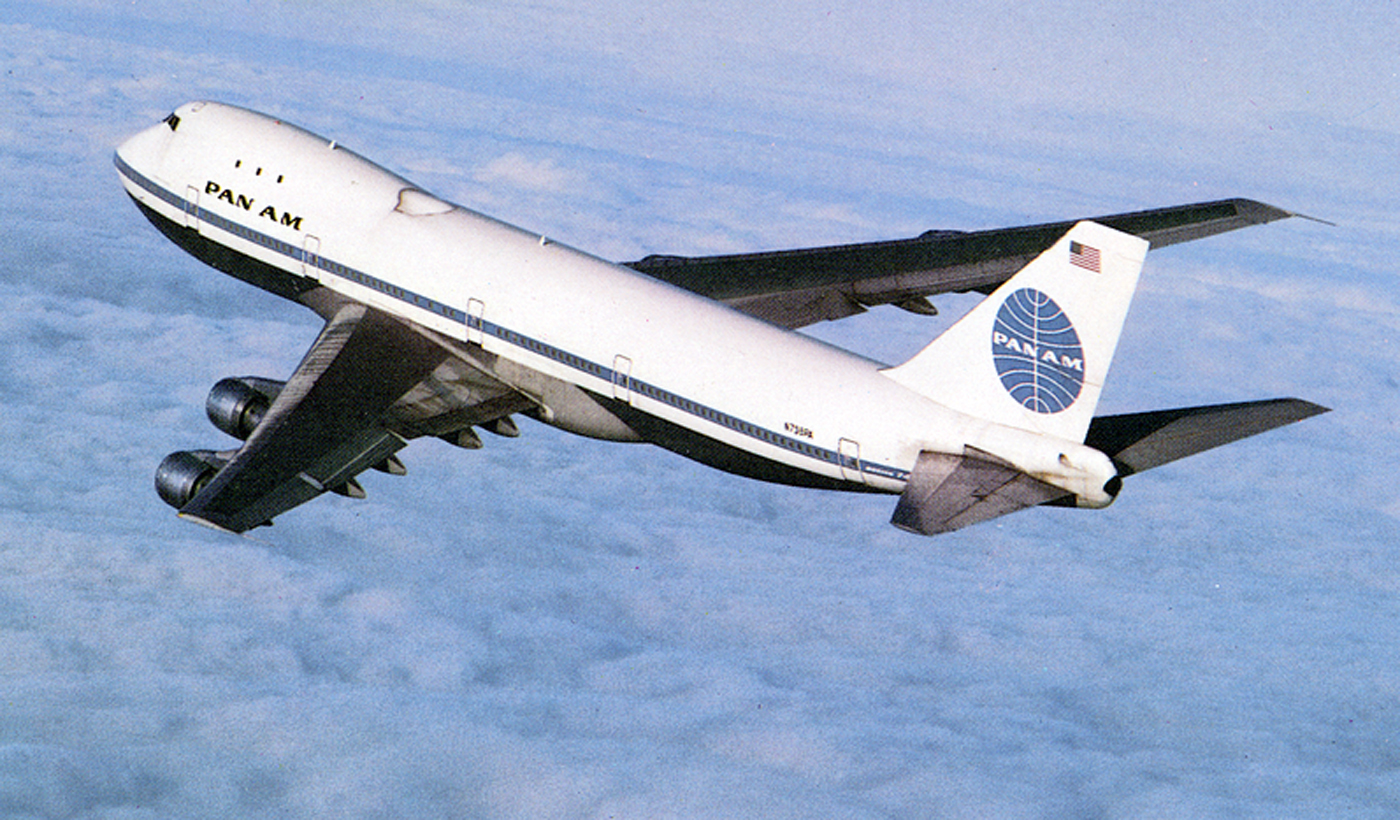
SATURDAY, DECEMBER 21st, is the winter solstice and either the shortest or longest day of the year, depending on your hemisphere. It also marks the 36th anniversary of one of history’s most notorious terrorist bombings, the 1988 downing of Pan Am flight 103 over Lockerbie, Scotland.

Flight 103, a Boeing 747 named Clipper Maid of Seas, was bound from London to New York when it blew up in the evening sky about a half-hour after takeoff. All 259 passengers and crew were killed, along with eleven people in the town of Lockerbie, where an entire neighborhood was virtually demolished. Debris was scattered over 800 square miles. Until 2001, this was the deadliest-ever terror attack against American civilians. A photograph of the decapitated cockpit and first class section of the 747, lying crushed on its side in a field, became an icon of the disaster, and is perhaps the saddest air crash photo of all time.

The investigation into the bombing — the U.S. prosecutorial team was led by a hard-nosed assistant attorney general named Robert Mueller (yes, that Robert Mueller) was one of the most fascinating and intensive investigations in law enforcement history. Much of the footwork took place on the Mediterranean island of Malta, where the explosive device, hidden inside a Toshiba radio and packed into a suitcase, was assembled and sent on its way. The deadly suitcase traveled first from Malta to Frankfurt, and from there onward to London-Heathrow, where it was loaded into flight 103’s baggage hold.

Among the security enhancements put in place after the bombing is the now familiar requirement that passengers and their checked luggage travel together on the same flight. (“Bag pulls,” as we call them, are a regular occurrence on overseas flights when passengers — but not their bags — miss their connections, often resulting in delays.)

Two Libyans, Abdelbaset al-Megrahi and Lamin Khalifah Fhimah, were eventually tried in the Netherlands for the bombing. Both had ties to Libyan intelligence and were believed to have carried out the attack under orders of Libyan leader Mohammar Khaddafy. Fhimah was acquitted (a verdict that generated plenty of controversy), but in 2001, eleven years after the incident, al-Megrahi was convicted and sentenced to life.

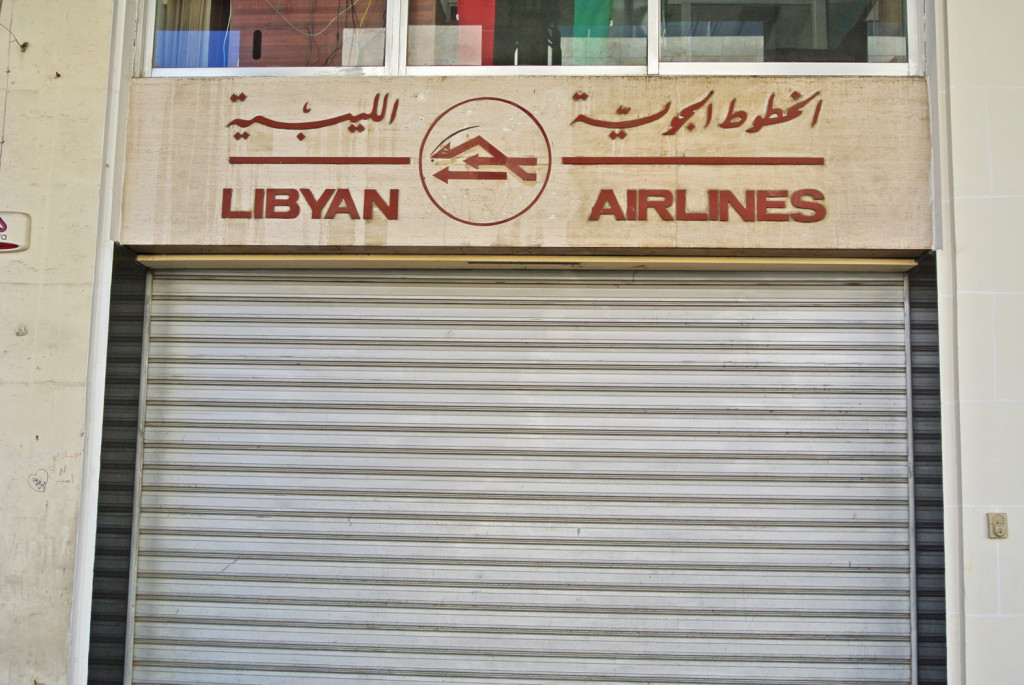
Al-Megrahi and Fhimah also had been employees of Libyan Arab Airlines. Al-Megrahi was in charge of security, and Fhimah was the carrier’s station manager at the Malta airport. During my vacation to the island a few years ago, it was eerie when I found myself walking past the Libyan Airlines ticket office, which is still there, just inside the gate to the old city of Valletta.

In 2009, in a move that has startled the world, Scottish authorities struck a deal with the Libyan government, and al-Megrahi, terminally ill at the time, was allowed to return home, to be with his family in his final days. He was welcomed back as a hero by many.

Then, only two years ago, a third alleged Libyan conspirator, Abu Agila Masud, was apprehended by U.S. authorities and awaits trial on charges that he built the explosive device that destroyed flight 103. The investigation remains open, and it’s possible, if unlikely, that other individuals could someday be held accountable.

There’s lots to read online about flight 103, including many ghastly day-after pictures from Lockerbie. But instead of focusing on the gorier aspects, check out the amazing story of Ken Dornstein, whose brother perished at Lockerbie, and his dogged pursuit of what happened. (Dornstein, like me, is a resident of Somerville, Massachusetts.)

The government of Mohammar Khaddafy was also held responsible for the 1989 destruction of UTA flight 772, a DC-10 bound from Congo to Paris. Few Americans remember this incident, but it has never been forgotten in France (UTA, a globe-spanning carrier based in Paris, was later absorbed by Air France).

A hundred and seventy people were killed when an explosive device went off in the DC-10’s forward luggage hold. The wreckage fell into the Tenere region of the Sahara, in northern Niger, one of the planet’s most remote areas. (Years later, a remarkable memorial, incorporating a section of the plane’s wing, was constructed in the desert where the wreckage landed.)

In exchange for the lifting of sanctions, Khaddafy eventually agreed to blood money settlements for Libya’s hand in both attacks. The UTA agreement doled out a million dollars to each of the families of the 170 victims. More than $2.7 billion was allotted to the Lockerbie next of kin.


Upper photo courtesy of Pan Am Museum.
Second photo by the author.

Comments (3)

The Drones Danger

December 16, 2024

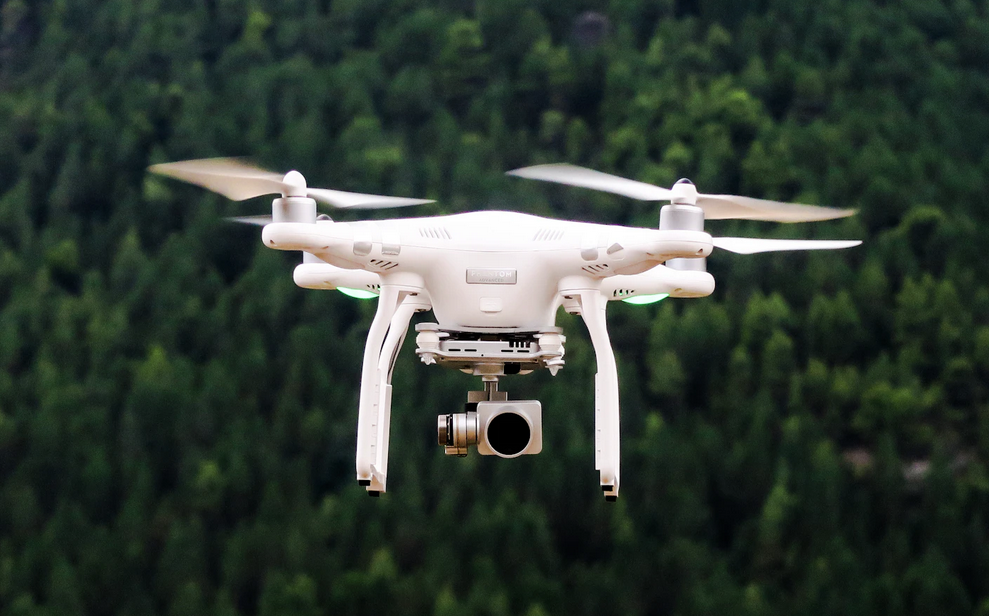
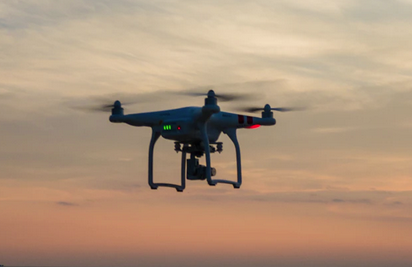
DRONES HAVE BEEN all over the news of late. While I can’t speak to what enemies or other state actors might be behind the ongoing rash of sightings, it gives us a good opportunity to revisit the dangers drones can pose to commercial aircraft.

The issue has moved from an “emerging threat,” as I described it not long ago, to an established one. The number of close encounters between airplanes and drones continues to grow. Here in the United States, the FAA says it receives over a hundred new reports every month — and it’s perhaps just a matter of time before we see a collision. (Just this past weekend, two men were arrested after flying a drone through prohibited airspace near Logan Airport here in Boston.)

The FAA, with its unquenchable enthusiasm for mind-paralyzing acronyms and abbreviations, now refers to all remotely piloted flying machines as UAS or “unmanned aerial systems.” Whatever you call them, they’re potentially lethal.

The amount of damage a collision might cause depends on two things: the speed of the plane and the size — which is to say the weight — of the drone. The heavier the drone, the greater the potential damage. A jetliner traveling at 250 miles per hour (in the U.S., that’s the maximum speed when below 10,000 feet), hitting a 25-pound UAS creates about 40,000 pounds of impact force.

drones-for-sale

Most hobby drones weigh less than ten pounds and don’t fly very high, but bigger, heavier machines are out there, and we’ll be seeing more of them: paramilitary border patrol drones; police department surveillance drones; Bezos and his fleet dropping iPhones and toasters from the sky.

It’s these larger drones that are of greatest concern. If an operator should lose control of one of these things, or it otherwise wanders into airspace it shouldn’t be in, the results could be catastrophic — particularly if the collision were to damage the plane’s control surfaces or cockpit.

Even a collision with a lightweight drone could result in serious, and expensive, damage. A small drone impacting an engine would be unlikely to cause a crash, but it could easily cause the failure of that engine and millions of dollars of repair bills. Windscreens and other components are vulnerable as well. Small drones are invisible to air traffic control and onboard radar.

Rules have been on the books from the start, though in typical FAA fashion they’re a confusing spaghetti-knot of dos and don’ts. And in 2015, regulators enacted a mandatory registration process for all UASs weighing more than half a pound.

Have all hobbyists been complying with this program? Of course not, but I suppose its purpose is less about tracking users than it is about creating awareness. Ultimately, it’s up to users policing themselves.

The problem all along has been mostly one of ignorance: most drone flyers aren’t trying to be reckless or cause mayhem; they simply don’t realize how hazardous a collision between and plane and a drone could be. This mindset needs changing. More than coming up with technical fixes or enforcing complex airspace rules, we need to encourage awareness and common sense.


Related Story:
LASERS, LASERS, EVERYWHERE

Upper and lower photos courtesy of Unsplash.
Center photo by the author.

Comments (14)

Counting Up, Counting Down

November 18, 2024

ON NOVEMBER 12, 2001, two months after the 9/11 terrorist attacks, American Airlines flight 587 went down after takeoff from Kennedy Airport in New York. The Airbus A300-600 slammed into the Belle Harbor neighborhood of Queens, killing all 260 people on board, plus five others on the ground. This was, and remains, the second-deadliest airline accident ever to happen on U.S. soil, after the American flight 191 disaster, in Chicago, in 1979.

It also was 23 years ago. More than two full decades have passed since the last major air disaster involving a U.S. carrier — the longest such streak by far.

I was impressed when we made it to five years; amazed when we made it to ten; shocked when we hit 15, then absolutely astonished when we got to twenty.

And still the streak goes on. We’ve grown accustomed to it. Even I have. This year, the November 12th anniversary slipped right past me. I’m publishing this post almost a week later, after an emailer reminded me of the date.

Tens of millions of Americans were born, raised, and reached adulthood in this 23-years span. Tens of millions more were children at the time of the 587 crash. My point being: a huge portion of citizens have no real memory of commercial aviation prior to the early 2000s. Fewer and fewer people realize just how common large-scale accidents once were, year after year after year, both globally and in the United States. More than twenty air disasters occurred in 1985 alone. In 1974, the U.S. major carriers recorded five crashes, including two within three days of each other.

Training, technology, and regulation have all had big roles in what changed. So has luck, and it hardly needs saying that our streak at some point will end. Maybe in five months, maybe in five years, maybe tomorrow.

I have no idea what might cause the next big crash — who or what will be to blame. What I do know is that the ensuing media frenzy will be unlike anything we’ve ever seen. This is both because and in spite of how rare crashes have become. The smallest aviation mishap these days generates a remarkable amount of buzz, to the point where aviation is perceived to be a lot more unsafe than it actually is. I can’t imagine what the reaction would be — and will be — with a death toll in the dozens or hundreds.

Fifty years ago, in 1973, a Delta DC-9 crashed into the seawall at Boston’s Logan International Airport, killing 89 people. The incident barely made the front page of the New York Times, running below the fold, under an article about transit bonds.


Related Stories:

FUTURE TENSE
LUCKY AND GOOD
AMERICA’S DEADLIEST AIR DISASTER, 40 YEARS LATER

Comments (14)

Autumn Macabre

November 1, 2024

Forgive me for being morbid, but did you know that no fewer than six major airline crashes occurred on Halloween?

That’s right, six.

Ranked chronologically, they go like this…

1. On Halloween morning, 1979, Western Airlines Flight 2605 crashed in Mexico City killing 73 people. The crew attempted to land on a closed runway in the fog. The DC-10 hit a truck, then careened into a building.

2. On the night of October 31, 1994, American Eagle Flight 4184 went down near Roselawn, Indiana killing all 68 passengers and crew. Investigators found that a design flaw allowed ice accretion to cause an uncommanded aileron reversal, which threw the ATR-72 into an unrecoverable dive. The plane’s de-icing system was redesigned.

3. Two years later the day, TAM flight 402 crashed after takeoff from São Paulo, Brazil, after a thrust reverser deployed during climb. All 99 people aboard the Fokker 100 jetliner were killed.

4. Exactly three years later, EgyptAir Flight 990 crashed into the Atlantic near Nantucket, killing 217. Investigators determined that the first officer intentionally crashed the Boeing 767.

5. On Halloween night, 2000, the crew of Singapore Airlines Flight 006 attempted takeoff on a closed runway in Taipei, Taiwan. The Boeing 747 collided with construction equipment and burst into flames. Eighty-three of the plane’s 179 occupants died.

6. On October 31, 2015, Metrojet flight 9268, a Russian charter flight heading from Sharm El Sheihk, Egypt, to St. Petersburng, was destroyed by a bomb after takeoff. All 224 passengers and crew on the Airbus A321 were killed. It is believed the bomb was planted by operatives of the Islamic State group.


There you have it. There can’t possibly be a calendar day with a record worse than October 31.

There’s nothing going on here other than chance, of course. Bad luck is bad luck. Still it’s peculiar. I’m not normally superstitious, but can you find any patterns?

I had this to mull over on Halloween night, flying a 767 to Europe.


Comments (3)

When is a Country Not a Country?

Border Crossing Conundrums for Travelers

October 23, 2024


Port au Prince, Haiti, 1999

“Sorry, it’s too dangerous,” says the driver.

To the best of my knowledge and experience, Port-au-Prince is the only place in the world this side of eastern Ukraine where a cabbie will refuse a twenty-dollar bill to take an American into town for a quick drive-through tour.

With nothing else to do I wander the apron. Behind our dormant jet a row of scarred, treeless hills bakes in the noon heat, raped of their wood and foliage by a million hungry Haitians. The island of Hispaniola is shared in an east-west split between Haiti and the Dominican Republic, and the border between these countries is one of the few national demarcations clearly visible from 35,000 feet — the Dominican’s green tropical carpet abutting a Haitian deathscape of denuded hillsides the color of sawdust.

In front of the terminal, men ride by on donkeys and women balance baskets atop their heads. Somebody has started a cooking fire on the sidewalk. Haiti is the poorest country in the western hemisphere, and there’s more squalor along the airport perimeter than you’d see in the most run-down parts of Africa.

I notice a pair of large white drums being unloaded from our airplane. I ask a loader if he knows what the barrels contain, wondering what sort of nasty hazmat we’d just brought in. A forklift carries them to a corner of a ramshackle warehouse, and three skinny helpers pry off the heavy plastic lids. What’s revealed is a tangled white mass of what appears to be string cheese floating in water. A vague, quiveringly rotten smell rises from the liquid.

The forklift driver sticks in his hand and gives the ugly congealment a churn. “For sausage,” he answers. What we’re looking at, it turns out, is a barrel full of intestines — casings bound for some horrible Haitian factory to be stuffed with meat. Why the casings need to be imported while the meat itself is apparently on hand, I can’t say, but somebody found it necessary to pay the shipping costs and customs duties to fly a hundred gallons of intestines from Miami to Port-au-Prince.


THE SEGMENT ABOVE is from a book I’ve been pretending to write. It describes an afternoon several years ago, when I was a cargo pilot for DHL. The setting is the Port au Prince airport in Haiti — a country I’ve never been to.

Oh sure, I’ve flown into to the Port au Prince airport once or twice. But just the same, so far as I’m concerned, seeing that I never set foot outside the terminal, I have not been to Haiti.

The issue here is what, exactly, constitutes a visit to another country. Making that determination can be tricky, and those who travel a lot will sometimes wrestle with this quandary. When your plane stops for refueling or you spend the evening at an airport hotel… does that count?

Where to draw the line is ultimately up to the traveler; it’s more about “feel” than any technical definition of a border crossing. But there should be a certain, if ineffable standard — something along the lines of that you-know-it-when-you-see-it definition of pornography.

According to my own criteria, a passport stamp alone doesn’t cut it. At the very least, a person must spend a token amount of time — though not necessarily an overnight — beyond the airport and its environs. On the pin-studded map that hangs in the dining room of my apartment, there is no pin for Haiti.

Other cases, though, are more subjective. For instance, traveling once between Germany and Hungary, I spent several hours riding a train through Austria. We pulled into Vienna in the middle of the night and sat for six hours. At sunrise we headed out again, trundling across the Austrian countryside toward Budapest. Certain people might consider that enough, but as with Haiti there’s no Austria pin on my map. I saw towns, cars, people… but all through the window of a train, never touching soil. Doesn’t count.

On the other hand, I have been to Liberia. I used to fly a regular route there from Accra, Ghana, and our flights would lay over for a few hours at Liberia’s international airport, known as Roberts Field. One time I hired a driver to take us out for a mini-tour of the nearby area. We never spent the night, but I walked through villages, saw people, took pictures. Liberia gets a pin.

As does Qatar, though I spent a mere three hours in Doha, driving around at night, between flights, on a tour provided by Qatar Airways.

Sometimes the country itself is what muddles things up. Consider the world’s various territories, protectorates, self-governing autonomous regions, occupied lands and quasi-independent nations. Yeah, I know, Vatican City is a sovereign state, politically speaking. But in practical terms, is it really? When I tally up the countries I’ve visited, I can’t bring myself to include it.

And let’s not begin to assess the countless atolls, archipelagos, and assorted tiny islands scattered throughout the oceans. If a citizen of Japan visits Guam, has he been to the United States? In one sense, sure. In another, perhaps more accurate sense, he’s simply been to Guam — neither genuine U.S. turf nor a country unto itself. You can make a similar argument with Bermuda, Tahiti, and elsewhere. And let’s not get started with Tibet, or Palestine. Sometimes, maybe, there is no country.

Together these things can make it impossible to provide a wholly accurate answer when asked how many countries you’ve traveled to. It depends. For me the number is ninety-eight. Or thereabouts.

Of course, that’s only important if you’re the sort who keeps track of such things. Travelers are known to hold “passport parties” upon reaching certain milestones – a 50th, 75th, or 100th country. In the eyes of some, country-counting cheapens the act of travel by emphasizing quantity over quality, but maybe that’s sour grapes.


PHOTOS BY THE AUTHOR

A version of this post originally appeared in the magazine Salon.

Comments (26)

First Class, Low Class, No Class: The Passenger Hall of Shame

June 20, 2016

I’M OLD ENOUGH to remember when people dressed up to fly. I remember my dad putting on a tie before we left for the airport. And that was on a trip to Florida, of all places, as recently as the early 1980s.

One of the reasons that people once took flying so seriously is that so few of them had the means to partake in it. Not all that long ago, only a fraction of the population could afford to fly on a regular basis. When I was in junior high, in the late ’70s, maybe a third of my classmates had ever been in an airplane. Even into high school I frequently met other kids who’d never flown. Flying today is far cheaper than it used to be. As a result, almost everybody does it.

And as the demographics have changed, so have the levels of behavior. This we’d expect. With nearly four million people flying every day of the week, across every strata of culture and class, standards of decorum were bound to fall. That’s fine, and I don’t mean to sound snobbish. Maintaining simple dignity doesn’t require anything too formal. I have no problem, for example, with people wearing shorts and sandals onto a plane.

But there comes a point, and what I do have a problem with is when otherwise reasonable protocols of civility, manners and courtesy cease to apply. What is it? Is it the stress? Is it the contempt people harbor for the airlines? Whatever the causes, flying has a way of bringing out the worst in people.

I’ve never been privy to a full-blown “air rage” incident, but I’ve witnessed countless instances of shameful behavior: passengers cursing at airline staff; stealing from the liquor carts; leaving diapers in seat pockets; etc. It tends to be small-scale stuff — rudeness and a lack of elementary courtesy — rather than anything violent or overtly hostile, but that doesn’t excuse it. Why, for example, do so many airline passengers find it acceptable to throw garbage and food all over the cabin floor, then mash it into the carpeting with their feet? You don’t do this in a restaurant. Why is it okay on an airplane?

T-Shirt

Here’s some of what I’ve seen just in the last few months…

I am at the airport in Dubai one early morning, waiting to catch an Emirates flight to Boston. I’m sitting in the boarding lounge when I hear a strange noise coming from behind me. Snip, snip snip, click, click, click.

I turn around, and what do I see? The guy directly behind me — a young guy in his twenties — is sitting cross-legged in his chair. Both of this feet are naked, and he is clipping his toenails. With every snip and click he splits away another crescent of nail, which he drops into a growing pile next to his left knee.

Would you take off your socks and start clipping your toenails in a movie theater? In the waiting room at your dentist? Most people would feel uneasy doing it in the woods, never mind at an airport boarding lounge in front of three-hundred people. And while I don’t want to watch, I feel that I have to. Because I need to know what he’s going to do with that big, disgusting pile of trimmings once our flight begins to board. Is he going to collect them up and carry them to the trash? Or will he brush them to the floor?

What do you think he does?

On another occasion I am at Kennedy Airport, in terminal four. A woman and her young daughter are sitting on a bench-seat along the edge of the corridor. The daughter is four, maybe five years old, and she’s holding a tall plastic cup brimming with round, colored candies. They’re marble-shaped candies, possibly peanut M&Ms. All at once, with no warning, the girl flings the cup onto the floor. It’s an impressive spectacle, I have to say, as hundreds of tiny orbs go clattering across the carpet, coming to rest in a great fan of color. People turn and stare.

And what does the woman do? She stands up, takes the girl by the hand, and the two of them walk silently away, leaving the entire mess — even the plastic cup — sitting there for some unfortunate janitorial worker to sweep up.

Meanwhile, people are kicked off planes all the time for acting, and even dressing, obnoxiously. In Boston recently, jetBlue denied boarding to a young woman because they felt her shorts were too revealing. Apparently, though, a t-shirt emblazoned with the words FUCK LOVE in huge block letters is within the boundaries of decency?

I’m not a prude. Nonetheless I’m dying to understand when and how this sort of thing become acceptable. And I’m imagining this same attire in a different context: In the bleachers at a baseball game, for instance. Would that be okay? Would the guy be asked to leave? Wouldn’t he be harassed by parents who’d brought their kids along? There are plenty of little kids at airports, so why is it different? And which is more troubling, the fact that he’s being accommodated, or the fact that somebody rude enough to put on a shirt like that exists in the first place?

Next we have Ms. Stinkytoes, luxuriating in her Emirates first class suite. She shows us that boorishness these days isn’t merely for the louts in steerage. Are these the same people who buy elephant ivory and rhinoceros horns? And the privacy of her suite is no excuse (couldn’t she at least have closed the doors?). Maybe I’m overreacting to this one, but how is this any more appropriate that resting one’s bare and splayed toes on a restaurant table? This is still, for all intents and purposes, a public place, and somebody else is going to be occupying that cubicle a few hours from now. And for crying out loud, they give you socks and slippers!

Barefoot2

 
Photos by the author.

Comments (130)

My Election Curse

Presidents, Planes, and Pilot Black Magic. Is This How Donald Trump Won?

Update: November 5, 2024

It would’ve been fun to know that New Day Rising, or Sorry, Ma, Forgot to Take Out the Trash, might be blasting through the halls of power in Washington. But oh well. It’s a wrap. And my streak goes on.

Eight candidates. It’s a little creepy, no?

I need to harness these powers for profit.


November 5, 2024

I’VE MET THREE PRESIDENTS. None of them American presidents, but presidents nevertheless.

The first of them was John Atta Mills, the semi-beloved leader of Ghana. Mills died in 2012, but during his tenure, he and his entourage had ridden aboard my airplane at least twice, traveling to or from Accra, the Ghanaian capital.

If you think that’s vaguely impressive, I also had the honor of meeting and flying the President of Guyana, Bharat Jagdeo, two or three times. (Contrary to what my father and others seem to think, Ghana and Guyana are in fact different countries, on different continents, with different presidents.)

Third on the list is Ellen Johnson Sirlief, Nobel Peace Prize laureate and the President of Liberia. I met her four times, including once at a reception at Roberts Field near Monrovia. On one of those occasions I asked if she’d be kind enough to sign a copy of our flight plan. She obliged, adding her name in green ink at the bottom of the dot-matrix printout.

Things have worked out pretty well for me, I think. Years ago, when I was puttering around over Plum Island sweating to death in some noisy old Cessna, the idea that one day I’d be be carrying presidents in the back of my plane would have struck me as ludicrous.

There is, however, a dark side to my brushes with politicians. And if you’re planning to run for office, you might do well to keep your distance.

What am I talking about? Here are six vignettes, true stories all. Try to figure it out:

One day in 1980 I’m at Boston’s Logan airport, plane-spotting with a pair of my junior high pals. Who disembarks from a TWA plane only a few feet in front of us but Jerry Brown, then-governor (and, yes, governor again!) of California. In addition to his gubernatorial prowess, Mr. Brown, a.k.a. “Governor Moonbeam,” is known for his dabbling in Buddhism, his long liaison with Linda Ronstadt, and his appearance in one of the most famous punk rock songs — the Dead Kennedys’ “California Über Alles.”

Four years later, the late senator Paul Tsongas of Massachusetts speaks at my high school graduation (St. John’s Prep in Danvers, Massachusetts).

Six years after that, on a Sunday morning in 1990, I’m standing at Teterboro Airport, a busy general aviation field in New Jersey, close to New York City. A private jet pulls up. The stairs come down, and out steps Jesse Jackson and a phalanx of burly bodyguards. Jackson walks into the terminal, passing me by inches.

The following summer I’m back at Logan, using a payphone in Terminal E. Suddenly Ted Kennedy is standing at the phone next to me, placing a call. (Quaint, I know, in this age of wireless, but there’s the famous Senator, slipping dimes into the slot.) I’m talking to a friend, and I surreptitiously hold up the receiver. “Listen,” I say, “whose voice is this?”

“Sounds like Ted Kennedy,” she reckons. And it is.

Next, it’s 1994, at Logan again, and I’m in the captain’s seat of a Northwest Airlink 19-seater, preparing for departure to Baltimore. Up the front stairs comes Michael Dukakis. He stops briefly behind the cockpit and says hello.

Later, in the late spring of that same year, Vice President Al Gore is making the commencement speech at Harvard University, close to my Cambridge apartment. I’m passing through Harvard Yard, and there’s the V.P., his wife Tipper, and his two blonde daughters shaking hands with a line of admirers. I join the line.

So, my question is: what is it that makes those six encounters collectively significant? Think about it. Each has something in common. Or, more correctly, two things. What are they?

While you’re mulling it over, I’ll give you the longer versions of my run-ins with Dukakis and Gore:

After we land in Baltimore, Dukakis thanks us for the ride and remarks, “Not a lot of room in here.” Even at 5’8″ he’s right about that. The Metroliner’s skinny, tubular fuselage earned it the nickname “lawn dart.”

“Yeah,” I answer, “It’s not exactly Air Force One.”

Meanwhile, intentionally or otherwise, the Duke has left a huge sheaf of important-looking papers in his seat pocket — probably because he’s run to a phone to cuss out his secretary for booking him on that stupid little plane with the annoying pilot. I carry the papers inside to the agent. “Here,” I say. “These belong to Mike Dukakis.” She looks at me like I’m crazy.

The Duke flew to Baltimore in one of these.

The day that I met Al Gore was sunny and humid. It was one of those days when I’d ride my mountain bike aimlessly around my neighborhood, hoping to meet a girl or maybe find a bag of money on the sidewalk. I never had much luck on those counts, but then I’d never run into a Vice President either.

I come down Broadway, then up Kirkland Street to the corner of Harvard Yard. The graduation ceremonies have just ended, and Gore — his family and a handful of Secret Service men in tow — have come through a gate and are walking toward the concrete plaza in front of the Science Center. I lock up my bike and follow them.

A crowd of about 50 people quickly gathers. Those of us in front form a straight row, and Gore comes down the line to shake our hands. He’s a Harvard graduate, and most of those around me are Harvard alum, or the parents and families of graduating seniors. People are introducing themselves with lines like, “Charles Tipton-Dune, sir, class of ’68. It’s an honor to meet you.” And Al says, “It’s a pleasure.”

As he approaches me, it’s my plan to say, “Patrick Smith, sir, class of ’88” (a total fabrication, but I’m feeling left out). Instead, I get nervous and do something a lot more idiotic. So idiotic, in fact, that to this day it makes my skin burn with embarrassment when I remember it.

My turn comes, and I look up at Al Gore, the Vice President of the United States of America. I stick out my hand and I say: “How ya doin’?”

Bear in mind, too, that I’m wearing shorts and a ratty old Husker Du t-shirt, surrounded by people in suits and gowns. I’m sweaty from bicycling. Gore shakes my hand and looks at me, a bit crookedly, no doubt wondering if I’m not some protégé of John Hinckley or Squeaky Frome.

“Great,” he answers. “How you doin’?”

After that I break from the crowd and go over to the black limousine parked on the plaza. This is Gore’s car, an ’80s-model Cadillac that looks like the cars of my Sicilian neighbors when I was a kid growing up in Revere. The tinting is peeling from several of the windows. It surprises me that such an important person is asked to ride around in such a shitty car. The Secret Service men inside eye me lazily. They wear sunglasses and have coiled wires sticking from their ears. They don’t seem particularly concerned with my loitering, and I nod to the guy in the driver’s seat. How ya doin’?

Right, okay, so back to my riddle. What do Jerry Brown, Paul Tsongas, Jesse Jackson, Ted Kennedy, Mike Dukakis and Al Gore all have in common, in addition to crossing paths with yours truly?

The answer, of course, is that all six were Democrats who ran for President. And all six, whether it was the party nomination or general election, lost.

That’s pretty uncanny if you think about it. Six – six! – Democrats who ran and failed. Six losers and me.

Or is it seven? If we consider degrees of separation, I can maybe take responsibility for the election of Donald Trump in 2016 as well. That’s because, in 2012, I shared a shuttle flight from New York to Boston with Chelsea Clinton. She and her husband were sitting just a few rows ahead of me. At one point I was taking something down from the overhead locker when she passed me in the aisle. I was in her way and had to move aside. “Sorry,” I said. “Excuse me,”

“Thanks,” said Chelsea Clinton. And four years later, her mother would run for President and fall short. I don’t know if my curse is contagious among family members, but it felt like a weird coincidence.

And what’s my reason for dredging all of this up? Well, the U.S. Presidential election is happening as we speak, and know this:

A few years ago I was on a layover in San Francisco. It was the day of the annual Pride Parade, which I found myself watching from a street corner at the foot of my hotel. Floats and cars burbled past, their occupants calling and waving: corporate contingents, local pols, VIPs. One of those cars was a festively adorned convertible. And in the back seat, waving to the crowd, sat, you guessed it, Kamala Harris.

Have I struck again? Number eight?

If you’re rooting for Harris to prevail, I’m sorry, but I can’t un-see what I saw. If there’s a means of reversing these dark powers of serendipity, I don’t know what it is.

What’s more is that about six months ago I saw Harris’s husband, Doug Emhoff, at Washington-Reagan Airport. He stepped off a plane and walked past me, maybe fifteen feet away, accompanied by three or four Secret Service agents.

And no, I have never seen or met a Republican candidate (or their spouses or offspring) for President. Whatever dreary karma I’m lugging around, it’s viciously partisan. If the Republicans were smart, they’d hire me and shuttle me around to their opponents’ rallies.

I should also mention that I once saw James Carville, the famous political consultant and “Democrat strategist,” going through TSA security at La Guardia. That was about fifteen years ago. It can’t explain my earlier encounters, but maybe Carville caught whiff of my bad juju and passed it along to the candidates I saw later.

As I type this it’s 6 p.m. on election night. We’ll find out very soon if the streak continues.


Related Story:

DONALD TRUMP WANTS TO REPAINT AIR FORCE ONE.

An older version of this story appeared in the online magazine Salon.

Comments (63)

Top Flight

September 23, 2024

I FOUND THIS LIST, over at The Atlantic, published back in 2015: What Was the Most Significant Airplane Flight in History? A roll call of aviation luminaries, myself not included, was invited to weigh in.

The Enola Gay, bound for Hiroshima, that’s a heavy one. And from my fellow blogger Christine Negroni: “In 1914, Abram Pheil became the very first passenger on the very first passenger flight, a 23-minute trip from St. Petersburg, Florida to Tampa. Like the 12-second flight of the Wright Brothers eleven years earlier, his brief time in the air has had an enormous impact on the world.”

It’s hard to argue with her. But some of the other entries, I don’t know. D.B. Cooper, come on. Lindbergh’s solo crossing? Nah. Of course, there’s no right or wrong answer. The idea of lists like these is to draw from different perspectives.

Had I been asked, my entry for history’s most significant flight would be Pan Am’s inaugural of the Boeing 747 in 1970.

Pan Am’s Clipper Victor kicked things off between New York and London on January 21st, about six months after the success of Apollo 11. Why this flight? Well, if we broaden this conversation to planes generally, rather than specific flights, we have to rank the Boeing 747 as the most influential aircraft of all time. The industry’s first-ever widebody, it ushered in the concept of affordable long-haul flying, changing global travel as we knew it — and know it still — perhaps more than any other invention.

Plus, it was a gorgeous design. In a production run lasting more than fifty years, Boeing would sell more than a thousand of them.

(Ironically the Victor was the very same 747 destroyed at Tenerife in 1977, in history’s worst aviation disaster. Remarkably, this single aircraft was involved in two of the most historic flights of all time, one celebratory and the other catastrophic.)

Runner up, for influence if not aesthetics, would be the Douglas DC-3.

Rolled out in 1935, the DC-3 wasn’t really the first of anything, but it perfected the evolution of the all-metal passenger transport to become the first truly profitable and mass-produced airliner. So many thousands of DC-3s were built, in civilian and military versions, both in the U.S. and under license abroad, that nobody knows for sure the actual count.

As late as the 1960s more than a thousand DC-3s were still in airline service. Today every passenger plane, from a ten-seater to the 787, bears a debt to this antique piston twin.

Much the same way, Boeing’s four-engined 707 revolutionized air travel forever.

The 707 was third in jetliner chronology — the star-crossed de Havilland Comet and the Soviet Union’s Tu-104 copycat came before it — but it was faster, with greater range and more seats, taking the Comet’s ill fortune and turning it into gold, safely crossing oceans and continents at twice the speed of mainstay propliners.

When, in 1958, Pan Am launched the 707 between New York and Paris (just like Lindbergh), the jet age truly was born. A year later American Airlines inaugurated transcon 707 nonstops between New York and Los Angeles. The poet Carl Sandburg was aboard.

Yes, well, sorry to some of you who’d lobby for something flashier. The Concorde, I know, makes a prettier icon than the 707 or a DC-3. But while sexy and famous, it proved little beyond the non-viability of the SST concept. Perhaps when hydrogen replaces kerosene this category will be reborn.


Photo Credits:

Lufthansa 747 by the author.
Pan Am 747 courtesy of Pan Am Historical Foundation.
DC-3 courtesy of Unsplash.
707 by Boeing, public domain.
707 thumbnail from the author’s postcard collection.

Comments (17)

Feeling the Heat

August 5, 2024

“Meltdown” is the buzzword used when computer glitches throw air travel into disarray, as happened a couple of weeks ago. But is there a more literal application? How do extreme temperatures impact air travel? The question is important, as heat waves pummel the globe and we keep breaking records for the hottest-ever temperatures.

On the most basic level, hot weather affects air travel the way it affects most things: it makes people uncomfortable and wears them down. Things happen more slowly. With all that nonreflective asphalt and open space, airports become “heat islands,” subjecting people and equipment to sometimes unbearable conditions. Imagine what it’s like slinging suitcases out on the tarmac when the mercury hits triple digits.

Workers are subject to overheating, and so is their equipment: tugs, tractors, cart and lifts — all the myriad moving parts of airport logistics. Airplanes themselves, meanwhile, have a lot of internal machinery, both electronic and mechanical, and much of it runs hot to begin with. Throw in soaring temps and things can break down.

Aerodynamically, warmer air is less dense than cooler air, meaning that in hot weather a wing produces less lift. Jet engines don’t like this low-density air either, producing less thrust. Engines also are subject to internal temperature limits — exhaust gas temps, etc. — beyond which operation isn’t permitted. Together, this dictates higher takeoff and landing speeds — which, in turn, increases the amount of required runway.

What all of that means for travelers is that your flight might be weight-restricted and unable to take a full load of people or cargo. How much so will vary with the temperature and runway length.

Outright grounding of flights is rare, but at a certain point that can happen too. Some aircraft have a hard temperature limit — usually around 50 degrees Celsius — beyond which taking off simply isn’t permitted. We also get a detailed paper printout before each departure that factors in weight, temperature, wind, runway length, and so forth, providing us with the speeds, thrust, and flap settings that we’ll use for takeoff. Sometimes, above certain temperatures, data doesn’t exist.

So, you could say there are hard and soft limits. The aerodynamic limits are soft. That is, you don’t know for sure if a flight can safely depart, or at what weight, until you juggle the numbers. The hard limits are the absolute temperature maximums, set by the manufacturer, that you’re not allowed to exceed.

If your flight is weight-restricted — or canceled — you’re liable to get a dumbed-down synopsis over the gateside loudspeaker or from your pilots. Something along the lines of, “We’re sorry but it’s too hot to fly today.” This makes it sound subjective, or up to the whims of the crew, but in reality it’s more scientific.

Extreme heat is no fun for airlines or their customers. Unfortunately, you can expect more of it as climate change causes more and more extreme weather events, including extreme heat waves.

It’ll be especially interesting to see the effects on those carriers whose hubs are located in what are already the hottest places on earth. The Gulf Carriers, for example (Qatar, Emirates, and Etihad) or Saudia, or Air India. Fortunately for them, many of their long-haul flights arrive and depart in the dead of night, when it’s cooler.

All well and good, but I’ve failed to address the one question you’re lining up to ask: Why are are planes so damn hot when parked at the gate?

Well, a plane’s air conditioning is supplied one of three ways:

1. Via the engines. Air for the “packs” as the AC units are called (it’s an acronym from the words “pneumatic air cycle kit”), is plumbed from the engine compressors. This is the most effective way of cooling or heating the cabin.

2. However, planes can’t run their engines at the gate. And so, during boarding and deplaning, air is supplied to the packs via the plane’s APU, or auxiliary power unit. This is a small jet engine usually located up under the tail. The APU can power the packs as necessary, but they won’t run as robustly as when the main engines are supplying the air.

3. Via an external air supply. You’ll sometimes see fat, caterpillar-like hoses connected to the belly of a plane. These provide hot or cold air as requested from an air conditioning unit attached to the jet bridge. The effectiveness of this method tends to vary plane to plane and gate to gate.

Variations in 2. and 3., above, are the reason the cabin is sometimes sweltering. Or, in winter, freezing cold.


Related Stories:

TALKING TURBULENCE
THE DEICE MAN COMETH

Landing photo by Victor Forgacs, courtesy of Unsplash.
Emirates photo by the author.

Comments (11)