






Project Sunrise
June 19, 2026
This week, Qantas Airways announced it will begin its long-awaited London-Sydney nonstops late next year. With an expected time aloft of around 22 hours, this will be, by a wide margin, the longest flight in the world — indeed, the longest scheduled nonstop in history.
This is the culmination of a decades-long quest — of challenges so vast that Qantas even gave its quest a name: Project Sunrise. (Personally I would’ve gone with Project Horizon, but nobody asked.) After a series delays and setbacks, the airline now feels confident enough to give us a launch month: October 2027.
The route will be flown using a fleet of specially modified, ultra-long range (ULR) Airbus A350s, the first of which is undergoing a series of test flights as we speak.
The “Kangaroo route” as it was called as early as the 1930s, once took twelve days and required more than a dozen stops. By the 1960s, with the advent of jets like the 707, three or four stops was the norm. In the 1990s, with the introduction of the Boeing 747-400, a single stop became the standard. Even after all that progress, the idea of a nonstop still seemed a dream, well, too far.
The newest generation of aircraft, including the A350, changed that thinking, and here we are.
A New York-Sydney nonstop, slightly shorter in distance, is planned following launch of the London flights.
Qantas says fares will run about 20 percent higher than those charged for its current one-stops along the same routes, citing a “massive demand” for direct service.
Cabins will feature a premium-heavy configuration of only 238 seats. The lower density layout stands to reason. As I’ve pointed out before, the real challenges of long-haul flying are perhaps no longer technological so much as human. That is, how do you keep passengers comfortable, or even sane, on a journey stretching ten-thousand miles? We’re basically at the limits of what people can endure, at least in economy class.
So, what’s left?
Does the success of Project Sunrise end the range game? Is this aviation’s ultimate triumph over distance? After all, London to Sydney is about as far as it gets, and it’s hard to come up with another pair of cities that couldn’t be connected nonstop.
Looking at the map, however, we do see a last unconquered frontier: Asia to South America. No airline has ever flown a nonstop between these two continents, and the biggest reason is distance.
The mileage between Tokyo and Sao Paulo — arguably the most likely market — is actually longer than London-Sydney. As are routes like Beijing-Sao Paulo and Shanghai-Buenos Aires.
Tokyo-Lima, another potential pairing, is about equal to the mileage between New York and Singapore, which as of 2026 is the longest flight in the world. It’s doable, but not by much.
Could the A350 ULR, or Boeing’s newest 777, close those gaps? Possibly, but technical hurdles are only part of what makes a route viable. You need enough passenger demand, at particular fares, to warrant the expenses of running such a flight. Just because a plane can fly nonstop from Tokyo to Sao Paulo, or from Shanghai to Buenos Aires, doesn’t mean it’s a smart idea.
For now, unless the Chinese become too envious and rush into something, Qantas and Project Sunrise will hold the crown.
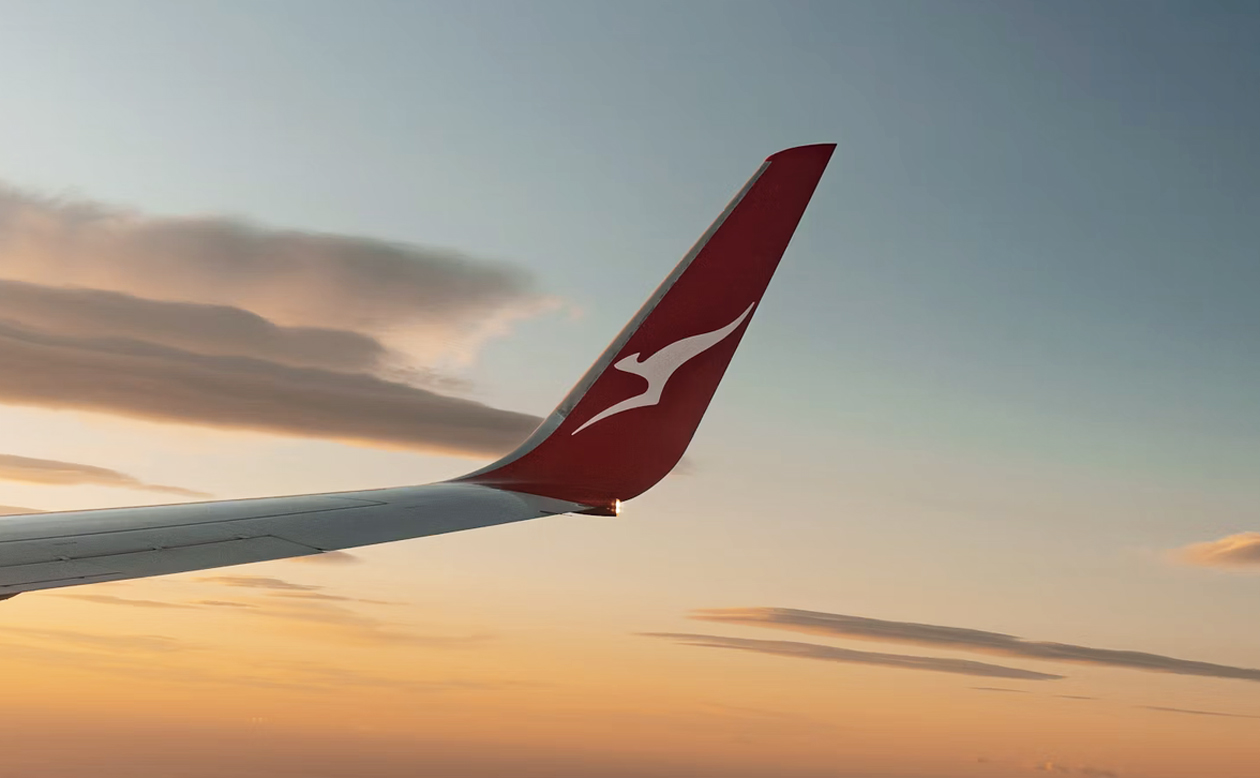
Photo by Sam Carter, courtesy of Unsplash.

Leave a Comment
Maximum 1500 characters. Watch your spelling and grammar. Poorly written posts will be deleted!
20 Responses to “Project Sunrise”
You are viewing newest comments first. Click to reverse order
John Graham – Boeing sold only 45 747SPs. It was the longest-range 747 when it entered service in 1976, but its range was soon superseded by 747-200Bs with uprated engines from P&WA, GE and RR and max takeoff weight increased from 800,000 to 833,000 lbs.
The 747-400 entered service in 1989. It had even more range at 875,000 lbs MTOW; all the passenger -400s at that weight had tail fuel.
The six Qantas 747-400ERs had 910,000 MTOW but no additional fuel. The extra MTOW gave a bit more range at full payload.
(All the other 910,000 lb MTOW 747-400s were freighters with the peculiar designation 747-400ERF)
(continued with some overlap)
(Again from Wikipedia)
• “October 2, 1957: Trans World Airlines’ L-1649A, set the record for the longest-duration, non-stop passenger flight aboard a piston-powered airliner on the inaugural London–Heathrow to San Francisco Flight 801 where the aircraft, having encountered strong headwinds, stayed aloft for 23 hours and 19 minutes covering 8,638 kilometers (5,367 mi; 4,664 nmi).”
This airplane cruised at 325 mph between 20,000 and 25,000 ft. Unceasing engine vibration and noise. No movies; no music. Play cards, read a book or an airline-provided magazine, talk to your seatmate, try to sleep. Eat and drink to excess. Lots of smoking.
The aft cabin had reclining sleeper seats. There was a mid-cabin lounge; the mid and forward cabin seats were 2+2, 40-inch pitch with ample recline.
So much for the “golden age” of air travel.
Patrick, for a comprehensive summary of the longest flights go to:
https://en.wikipedia.org/wiki/Longest_flights
The longest-duration peacetime scheduled flights were 1956-1960 during the very brief reign of the longest-range piston-engine airliners: the Douglas DC-7C Seven Seas and the Lockheed 1649 Starliner.
TWA dubbed their 1649s “Jetstreams” but they were not jets. They inaugurated the first non-stops from the West Coast to London and Paris.
From Wikipedia
• “September 29, 1957: A Trans World Airlines Lockheed L-1649A Starliner, the ultimate piston-engine airliner in terms of range and endurance, flew the inaugural 8,780 kilometers (5,456 mi; 4,7
• 41 nmi) Los Angeles to London–Heathrow polar route in 18 hours and 32 minutes.
• October 3, 1957: Trans World Airlines broke their own longest flight record, again using the L-1649A, with the launch of TW850’s non-stop flight from San Francisco to Paris–Orly covering 9,001 kilometers (5,593 mi; 4,860 nmi) in a scheduled flight time of 19 hours, 45 minutes.”
Those flights were eastbound, assisted by prevailing tailwinds.
Westbound against prevailing headwinds took longer. (Again from Wikipedia)
• “October 2, 1957: Trans World Airlines’ L-1649A, set the record for the longest-duration, non-stop passenger flight aboard a piston-powered airliner on the inaugural London–Heathrow to San Francisco Flight 801 where the aircraft, having encountered strong headwinds, stayed aloft for 23 hours and 19 minutes covering 8,638 km
I would think fuel capacity and the weight of said fuel would be the limiting factors in ulta long flights, assuming the crew and passengers can endure it.
South African Airways flew the SP around the ‘bulge of Africa’. If the winds were against the aircraft they would ‘top up’ by a technical stop in Lisbon. I think the Qantas -400ER which was very specific to Qantas and had the extra fuel in the tail stabiliser had more endurance than the SP. Qantas branded the aircraft “Longreach” and I think were in service until recently. Perhaps readers with actual experience could comment – I was only a passenger!
Having done LAX and SFO to SYD, MEL and AKL (and reverse) more times than I care to remember – at least 25 round trips, possibly 40+ – in both business and economy. I don’t think that I personally could stand more than 15 hours – even with lie flat beds.
I’m very happy I’m no longer doing that commute and I don’t think I’d take the direct even it were available. And I say that as someone who thinks that LAX is one of the worst airports in the world
In the news today, an airbus A350-1000ULR just completed a non-stop test flight from Melbourne to Toulouse, where it was built. Took 24.5 hours, passed through two sunrises and two sunsets. The plan is not that particular route, but rather east coast australia to NYC and London non-stop.
The name Project Sunrise relates to the Double Sunrise flights between Perth and Colombo during WWII. It was flown by Catalinas and took in excess of 24 hours.
Qantas now flies Perth – London non-stop in 787s as well as Perth – Paris and Perth – Rome. Personally I like to break the trip at Dubai or Doha.
Two questions.
One, which 747 had the longest range, the -400 or -SP? And I know that there are variables like winds aloft, time of year, time of day, and so on. But….just as a rule.
And the other. I seem to remember reading many years ago that United once scheduled the -400 between ORD and HKG. And that fuel and range margin was so tight that the plane was actually towed all the way to the runway before the engines were started.
Is that or could that be true or was there maybe some liberties taken with the truth? I wish I can remember when and where I heard that.
I think the ‘project sunrise’ name is a homage to the old double sunrise flights before the jet age
You’re incorrect about the 60s/70s: When I was a kid, QF1 (and the BOAC equivalent) was a 36-hour trip: SYD-SIN-BOM-BAH-FRA-LHR. I’ve enjoyed it getting shorter but nonstop will be the best.
You talk about passenger frustration, but honestly 36 hours with a short music loop through a stethoscope headset was pretty awful. My mum would not let us get off at the stops so we were trapped. And of course there was only a small non-smoking section. I let my own kiddo get off at the single-stop QF1 that stops at BKK. Not really worth it TBH.
BTW, as part of project sunrise they’ve already introduced nonstop Perth-London, though why anyone would want to fly between those two cities is beyond me 😈. QANTAS has kind of ignored it.
Fly Me to the Moon”, originally titled “In Other Words”, was written composed by Bart Howard in 1954. That was a long time ago. Solved.
Man, than sounds brutal. It’s definitely a matter of human endurance now! I fly from Los Angeles to Paris (sometimes Amsterdam) once or twice per year. That’s about 10.5-12 hours each way, depending on direction and the wind’s mood that day. I fly in Business Class, and even though it’s very nice, I am more than ready to get off the plane when it arrives. I can’t imagine going 22 hours.
> What about Paris-Papeete, the world’s longest domestic flight?
Not a non-stop connection. They refuel in SFO (or LAX).
> Could the A350 ULR, or Boeing’s newest 777, close those gaps? Possibly, but technical hurdles are only part of what makes a route viable.
I’m not so sure about the 777X even on a technical basis. The -9 is expected to have roughly the same range as the 789 (or 339). And while the -8 does better in terms of range, it still just barely matches the non-ULR 359, if we for a moment ignore that so far there has been zero interest in the -8 so we’ll have to see if Boeing ever actually sells any non-freighter -8s.
The A350’s key selling point has always been efficiency which serves as the enabler for ultra-long range missions (via the ULR variants). The 777X with its massive non-composite body from the 90s just can’t match that — its strength lies rather in capacity (especially cargo thanks to its massive power). The Dreamliner is in design much closer to the A350, but it lacks the range (and even the capacity) to match the 35K.
Boeing can still walk away smiling — ULR is a bit of a niche market, with the “regular” long range market targeted by the Dreamliner being much broader. And the 787 has been a real knock-out there. Exciting times to watch these two manufacturer giants compete.
It is worth mentioning that São Paulo has the largest Japanese population outside Japan, being the home to 1.5-2 million Japanese Brazilians. Apart from the economic importance of Tokyo and São Paulo, this could be a major driver in realizing a direct flight between the two.
That annoying mach barrier, what could we do if SSTs were economically viable? and er, safe?
I’ve done saigon-SFO on a 747 changing planes at narita. Long leg was 14 hours in cattle class elbows-in middle seat, but was bearable. Except for when a bunch of us lined up to use the toilet 90 minutes before landing and asshole inside had fallen asleep. About 24 hours all said door to door.
I will suggest that for these 22 hour non-stops mostly premium class seating, that they come with expedited clearing security and maybe a preferred customs line.
Having done Los Angeles/Sydney, I’m pretty sure that was at my endurance limit. I could not wait to get off that plane, even though I spent most of the trip (both coming and going) asleep – a nice habit I developed for long trips many years ago.
What about Paris-Papeete, the world’s longest domestic flight?
Crew staffing will be an issue