





Power Trash
“Garage rock” is one of those tough-to-define genres — if we can call it a genre. Gritty, scrappy, unpolished, low-fi. Bands that play fast and don’t take themselves too seriously. It’s any or all of those things. A lot like punk, I guess, and the terms are sometimes interchangeable. Best to let the music do the describing…
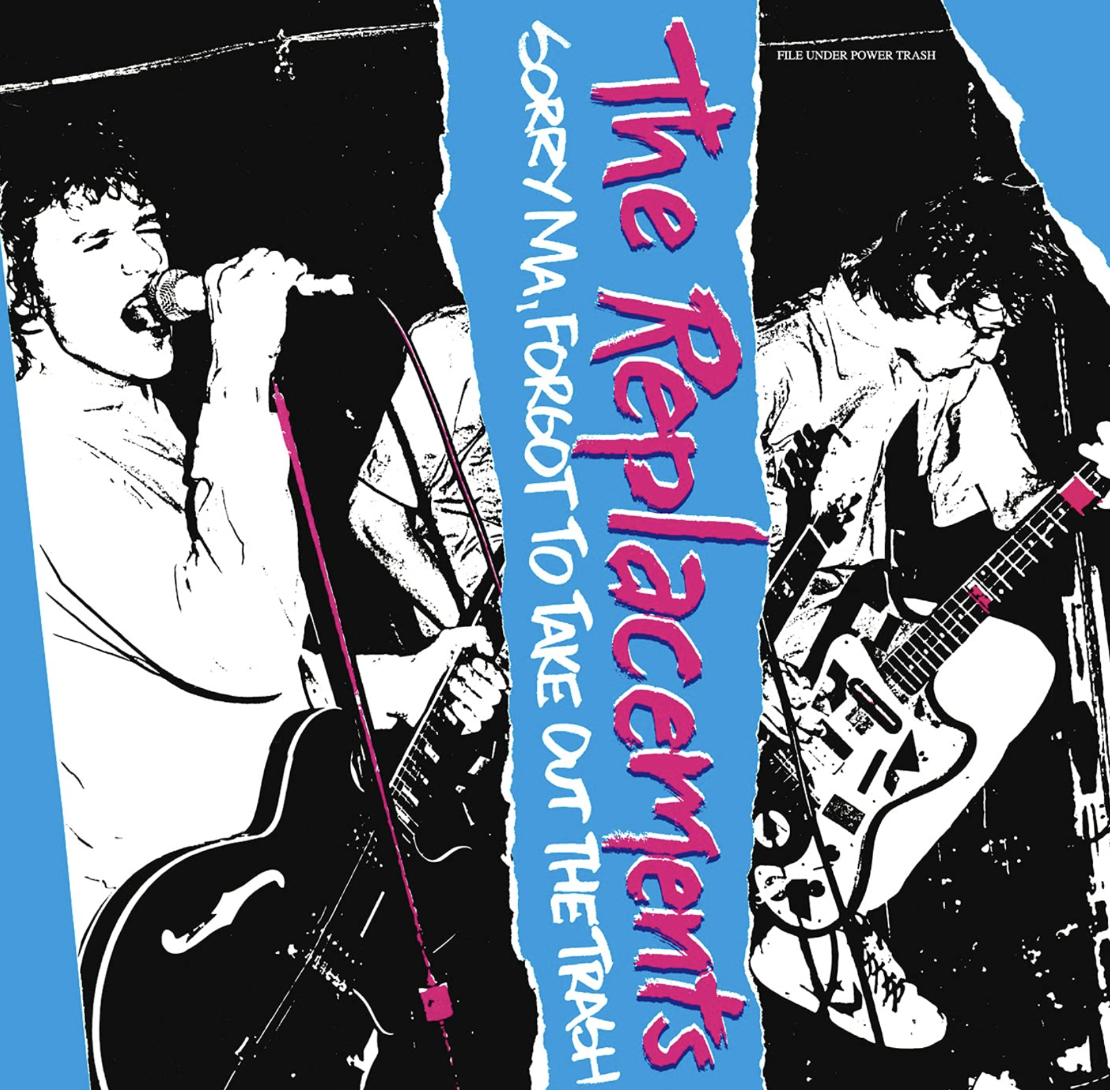
And, so, allow me to present the greatest garage rock album of all time: Sorry Ma, Forgot to Take Out the Trash, by the Replacements.
Late to the party, I discovered this record in 1985. It was already four years old. (Which itself is remarkable. In 1981, fer Chrissakes, I was listening to REO Speedwagon.) Unfamiliar with the band, I wasn’t sure what to expect. Oh sure, I’d known of the Replacements — four bratty drunks out of Minneapolis led by a growly singer named Paul Westerberg — but had never really given them a listen. (They’d been tangential to the punk scene as I knew it, more for the over-21 crowd instead of the Sunday matinee hardcore crowd.)
This was their “early stuff,” as the saying goes. Brash and breathless. The band had since moved on — matured, most would say — into the era of “Please to Meet Me” and an appearance on Saturday Night Live. They’d nudged into the mainstream. The edges of it, anyway, much the way their fellow Minnesotans Husker Dü had done around the same time, both bands leaving their thrashier roots behind and gunning for wider appeal.
It’s tempting to say that Sorry Ma is to the Replacements what Land Speed Record is to Husker Dü. That formative first record (and the one that, years down the road, bands like to distance themselves from). But while both projects are fast and furious, Land Speed is, after a couple of listens, a one-dimensional bore. Sorry Ma, on the other hand, is a classic of freewheeling punk rock energy.
It’s like a fireworks show. Each of the 18 songs is a quick little incendiary — explosive but colorfully crafted. Now you see it, now you don’t… and here comes the next one. Most of them clock in at under two minutes; a hallmark of punk efficiency. They make their point and move on, Westerberg’s cheeky lyrics riding a barrage of shock-and-awe melodies both frantic and playful.
“I hate music! It’s got too many notes!”
There’s nothing poppy about them, but songs like “I Hate Music” or “Love You Til Friday” quickly stick in your head. They also make you laugh. Everything about the album is fun. Who can’t laugh out loud at Westerberg’s exasperation in the song “Shut Up”? There’s even a track called “Somethin’ to Dü,” a tongue-n-cheek dig at their Twin City compatriots.
What other bands do we associate with fun? The Ramones? The Ramones were fun in a packaged, constrained sort of way. The Replacements were fun in a sloppy, punchy, hung over sort of way. I know which one I like better.
Which brings us back to the “garage rock” thing. You know it when you hear it, I suppose. The album’s title, alone, is garage as it gets, but it’s Sorry Ma’s raw guitars and no-fuss mix that are quintessential. Indeed this has to be the least pretentious LP ever recorded. (The engineer was Steve Fjelstad, who later would engineer Husker Dü’s 1985 masterpiece New Day Rising. Though the two, as it happens, sound nothing alike.)
The album’s greatest moment, though, is on its last and best song, “Raised in the City,” which ought to have been an indie rock anthem. It’s the part near the end where Westerberg shouts, “Stinson! Stinson!” calling out to the Stinson brothers, Bob and Tommy, on lead guitar and bass respectively, as the album comes to a close. It’s one of those easy-to-miss improvisations that can make a song special. I can’t imagine Westerberg planned to yell those names out. He just did, and on-beat. It’s that kind of record and I’ve always loved it.
“File under power trash,” it says on the cover. Perfect.
When Bob Stinson died in 1995, Sorry Ma was played at his wake.
Related Story:
New Day Rising at 41

Leave a Comment
Maximum 1500 characters. Watch your spelling and grammar. Poorly written posts will be deleted!