





The Lowdown
UPDATE June 7, 2026
Only a day after sharing my hunches, below, about the plight of United flight 169 at Newark, the NTSB released its preliminary report.
It appears the captain, who was at the controls, did “duck under,” employing the technique I describe below. This alone shouldn’t have been dangerous, but in the process he sank lower than he meant to. At the last moments, the first officer seemed to realize things were askew, but felt there wasn’t time enough to call for a go-around.
You can READ THE FULL REPORT HERE.
June 3, 2026
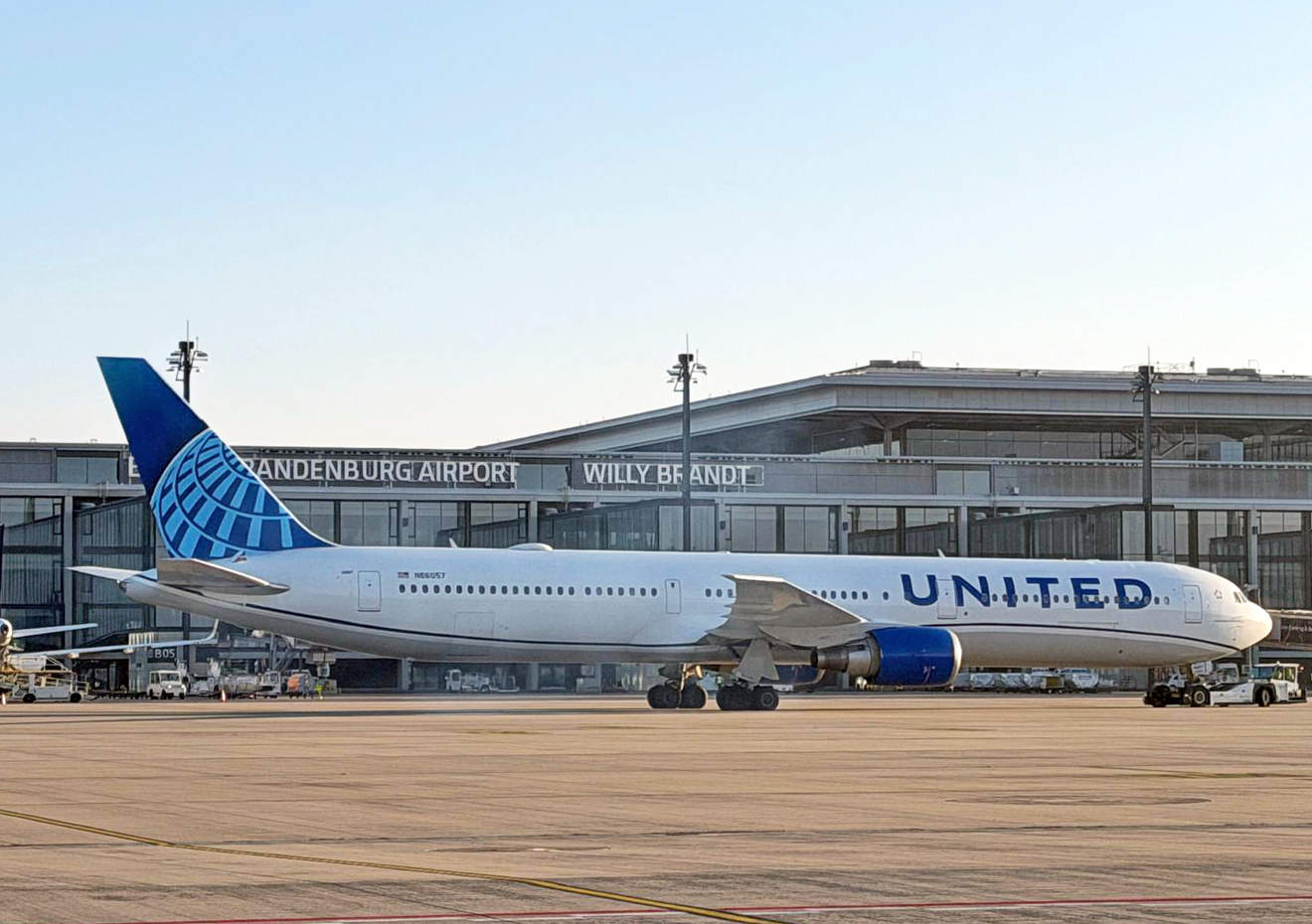
You’ve all seen the video of that United 767 hitting the light pole, which in turn hit a delivery truck, as it landed in Newark back on May 3rd. The footage from inside the careening truck is startling.
How it happened, exactly, is still being investigated. But I’ve been asked to speculate, and so I will:
Runway 29 at Newark is short. Long enough, under most conditions, to accommodate a 767, but short enough to require extra concentration from the crew. The runway’s threshold is also unusually close to the highway, lessening the margin for error.
One way or another, flight 169 drifted below the descent path and impacted the utility standard at the edge of the highway.
It’s possible they were “ducking under,” as we call it. That is, in the final seconds of the landing, intentionally sneaking just a touch below the normal path — to take advantage of as much pavement as possible and avoid landing long. This is customarily done by visual reference, using a runway’s VASI or PAPI lights (depending which it has). Set just to the side of the runway, these project an alignment of colors (red, green, or white) that pilots use to determine if they’re high, low, or exactly on glide.
This technique, though well-known, isn’t always encouraged, and in some cases it’s prohibited by the airline. We always pull up the performance data prior to landing, which tells us how much runway is required. It accounts for wind, surface conditions, and so on. If you’ve crunched the numbers correctly, there shouldn’t be a need for improvising.
In its flight manuals, United had a short-runway policy that, while it didn’t encourage ducking under per se, it recommended that pilots adjust their touchdown aiming point to one closer to the threshold.
Even if they were ducking under, they still shouldn’t have hit the pole. Somehow they ended up lower than they intended.
Or, for whatever reasons, it was entirely inadvertent. Sometimes an approach gets unstable and you fall a bit low. This isn’t terribly uncommon. If you’re unable to correct in time, you’re supposed to break off the landing and go around.
There is no ILS approach to runway 29 — a system that sends out a vertical guidance signal, called a “glide slope,” that pilots track to the runway. Instead there are what we call “non-precision” and/or “visual” approaches. These come in different flavors, and while they’re routine, and still plenty precise, they’re more complicated. The descent path is handled differently, and slipping low is perhaps more likely than it would be with an ILS. And winds were gusty at the time, adding to the difficulty.
Were they ducking under? Did they sink too and neglect to go around? Did they even realize what was happening? Was there time?
I don’t know. Any of that is possible. Or something else.
These are just guesses and conjecture, and I’m not implying that anyone was negligent or reckless. Eventually we’ll have more info.
I landed on runway 29 many times, but it was years ago when I flew regional turboprops. What’s short for a 767 isn’t so short for a 19-seater.
Meanwhile, Instagram is full of reels showing purported “close calls” at the edge of 29, insinuating that the runway is unsafe and that planes are routinely almost crashing. These scary-seeming videos are mostly just tricks of angle and perspective. And as I noted earlier, the runway’s threshold is close to the highway, meaning that jets on a perfectly normal glide path can appear “low” when in fact they’re right where they should be.
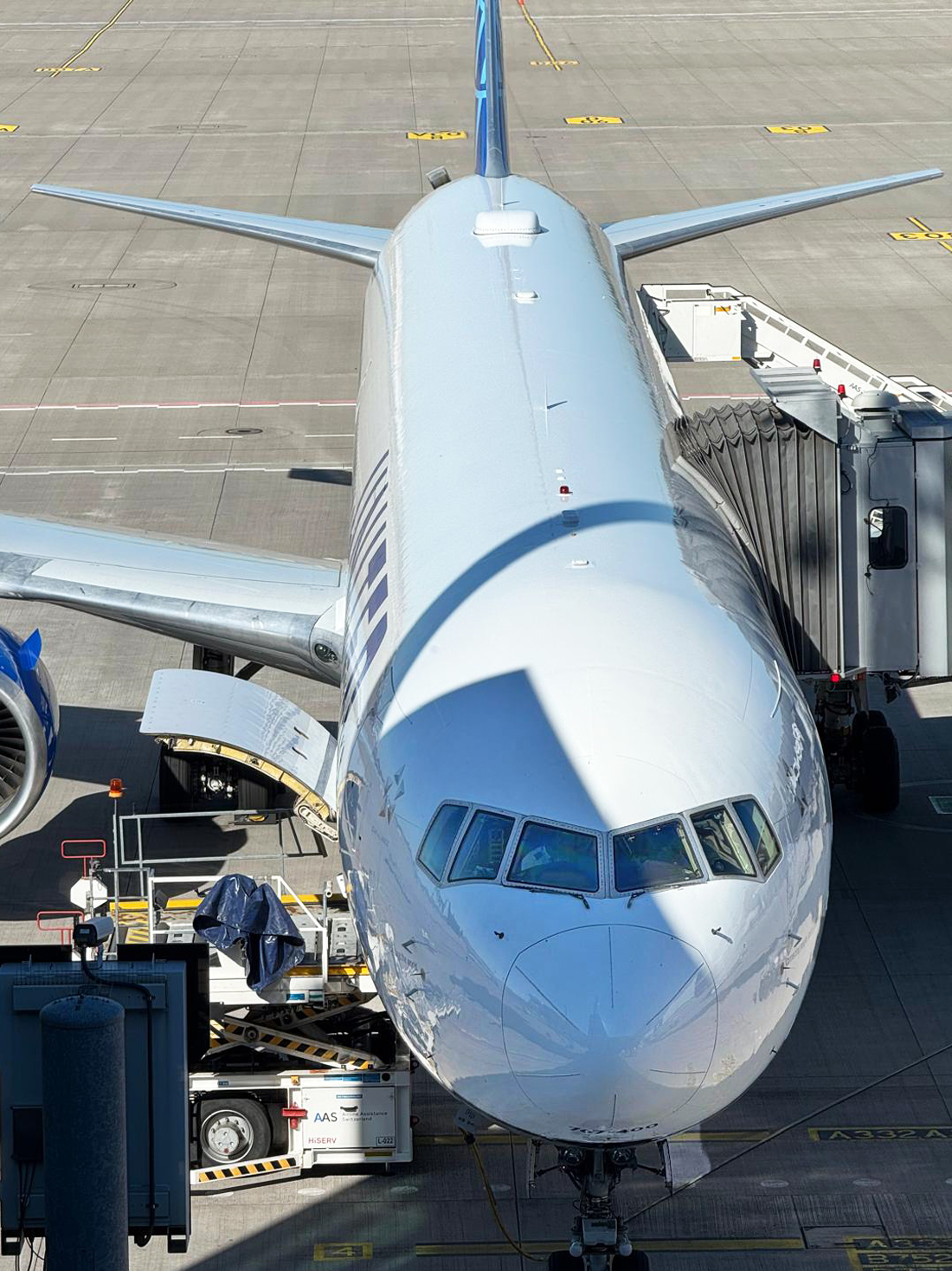
The aircraft at Newark was a 767-400, largest variant of the 767 family. United and Delta are the only two carriers in the world that fly these models. United inherited its -400s from Continental Airlines when it merged with that carrier in 2010.
The -400 was a bespoke collaboration between Delta and Boeing. Delta wanted a widebody to replace its aging L-1011s, for use mainly in high-density domestic markets. Speaking of short runways, the -400 was once a regular visitor at La Guardia.
The jet was later shifted onto international routes. Flight 169 was coming from Venice.
Related Story:
Photos courtesy of Mark Rubenstein.

Leave a Comment
Maximum 1500 characters. Watch your spelling and grammar. Poorly written posts will be deleted!
4 Responses to “The Lowdown”
You are viewing newest comments first. Click to reverse order
“There is no ILS approach to runway 29”
Why? Seems all runways at a major airport such as Newark would have this capability.
Thanks
Dave…an avid reader and fan!
Looking at satellite images, runway 29 has an awful lot of tire black well short of the marked aiming point. It appears it was SOP among some pilots to get down early to maximize the roll availability. Another normalization of deviance situation? At least no one was hurt in this one. Though I have to imagine those in the pointy end are enduring some tea no-biscuits meetings with higher-ups.
The preliminary NTSB report states that the pilot flying (the captain, as it turns out), reported that he (report uses “he”; no name included) intended to approach with 3 red PAPI lights. To me (not a pilot, just an interested observer), that suggests that the pilot was intending to come in a bit lower than usual, presumably as you say b/c of the shortish runway.
“You’ve all seen the video of that United 767 hitting the light pole as it landed…”
You’ve got that all wrong! The plane didn’t clip the pole. The pole leaped into the air trying to hitch a ride by hanging onto the main gear. 🙂