Archive for 1

A “Life List” of Planes
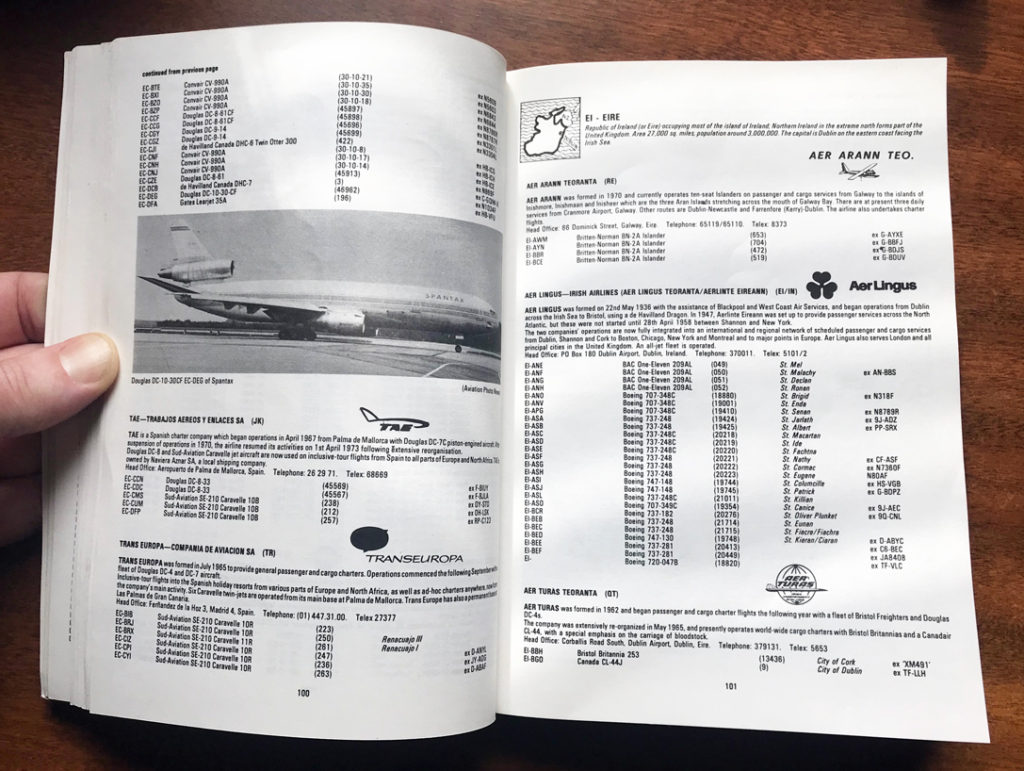
Pages from “World Airline Fleets, 1980.”  


UPDATE: March 1, 2026

AIRLINER ENTHUSIASTS are like birdwatchers in a lot of ways. We dress funny and tend to own expensive binoculars. And, we’re into lists.

As I kid I was a planespotter. I’d spend entire weekends holed up in the 16th-floor observation deck at Logan Airport, logging the registration numbers of arriving and departing jets. There were books you could buy — annual global fleet directories with the registrations and specs of every commercial plane in the world, arranged alphabetically by country and airline. There were little boxes where you could check off each plane once it was “spotted,” or, you could just line through the listing with a highlighter.

World Airline Fleets, I remember, was one of these books. It came from the U.K. and was edited by a fellow named Gunter Endres (who, the Interweb tells us, is still writing aviation books). An even bigger volume, published in Switzerland, was called J.P. Airline Fleets. The idea was to mark off as many planes as you could.

Up there on the 16th floor, things could get competitive. I’ll never forget the jealousy I felt toward a legendary Boston spotter named Barry Sobel, because he’d been there to record a Pakistan International 707 freighter that landed unexpectedly one weekday while I was in school.

At one point, way back when, I could have told you the model and airline of every commercial plane I’d ever seen. Birders have tallies like this, too. They call them “life lists.” Braniff DC-8, El Al 707, Aeroflot IL-62… check, check, check. There were hundreds. Somewhere along the way I stopped keeping track, and all these years later I couldn’t begin to reconstruct such a catalog.

What I can do, however, easily and accurately, is present a slightly different life list: a record of each airplane type, and each airline, that I have flown aboard. It appears below. I’ll also include which classes I’ve sat in, using the traditional industry codes:

F = First
C = Business
Y = Economy

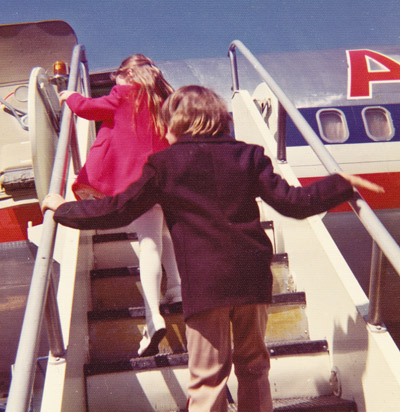
The accompanying photo is from April, 1974. That’s my sister and me walking up the stairs to an American Airlines Boeing 727, on our way to Washington, D.C. This was the first airplane, large or small, that I ever set foot in. I’m fortunate to have the moment preserved like this.

Even then, at eight years-old, I knew it was a 727.
BOEING 727

American   F,Y
Northwest   F,Y
Eastern   Y
Delta   F,Y
Pan Am   Y
TWA   F,Y
USAir/US Airways  Y
Trump Shuttle   Y
Fawcett (Peru) Y
Aeroamericana (Peru)  Y
DHL (cargo, cockpit jumpseat)


BOEING 707

TWA Y


BOEING 737 CLASSIC

Piedmont  Y
USAir   Y
United  Y
Delta  Y
Aloha Y
Rutaca (Venezuela)  Y
Cayman Airways Y
Sky Airline (Chile)  Y
PLUNA (Uruguay) Y


BOEING 737 (Next Generation)

American Y
United  Y
Delta   F,Y
Southwest  Y
KLM  C,Y
Malaysia Airlines  Y
SAS  Y
South African Airways  Y
Jet Airways (India) C
Turkish Airlines  Y
Thai Lion Air Y
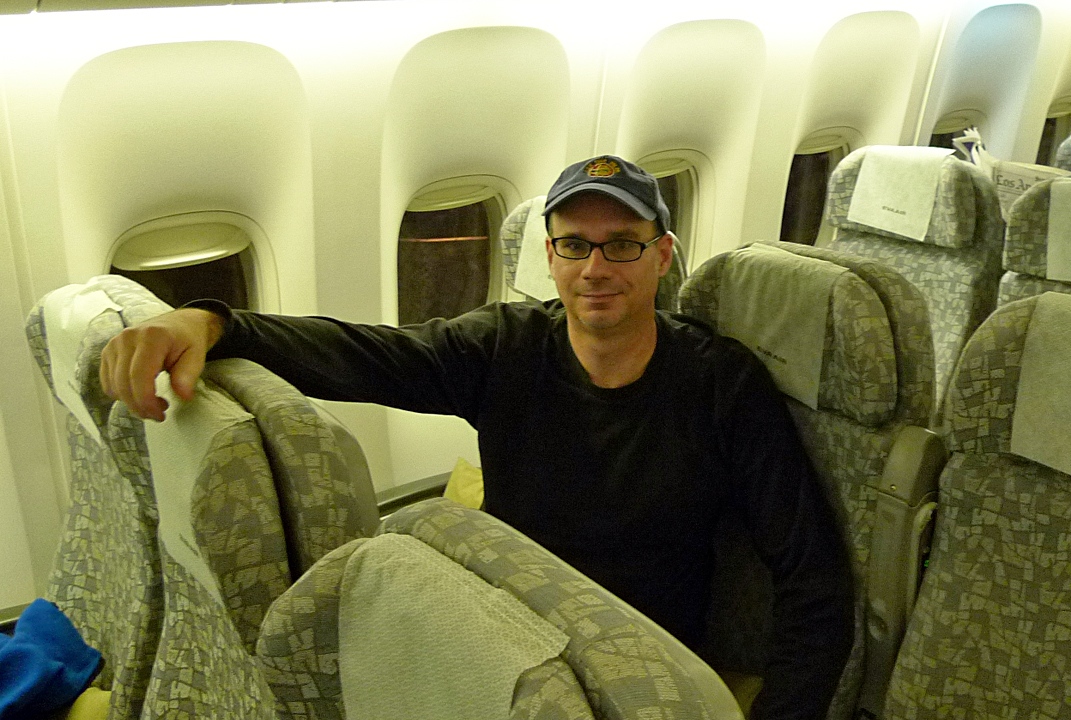
En route to Taipei on an Eva Air 777.

BOEING 747 (All series)

Pan Am Y
Northwest F,C,Y
El Al  Y
United  C
British Airways  C,Y
Air France  Y
Qantas  Y
Singapore Airlines  Y
Thai  C
Delta  C,Y
Korean Air  F,C
Royal Air Maroc Y
South African Airways  Y


BOEING 757

Northwest  Y
American  F,Y
United  F,Y
Delta  F,C,Y
British Airways  Y
Icelandair  Y


BOEING 767

United F,C,Y
Delta  F,C,Y
TWA C
All Nippon  Y
Kenya Airways  C


BOEING 777

United  Y
American C
Delta  C,Y
Emirates  F,C,Y
Malaysia Airlines  Y
Thai  C,Y
Eva Air  Y
Korean Air Y
Royal Brunei  Y
Cathay Pacific  C
Qatar Airways C
Singapore Airlines  C
Jet Airways (India) F
China Eastern C
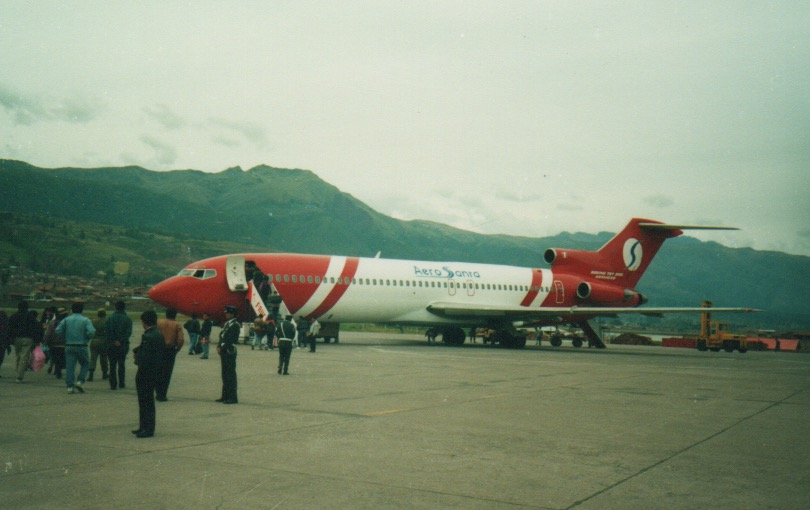
AeroSanta 727 at Cuzco, 1994.   Author’s photo.

BOEING 787

Japan Airlines  Y
Qatar Airways C
Virgin Atlantic C
Korean Air C


DOUGLAS DC-8

Air Canada  Y
DHL (cargo, cockpit jumpseat)


McDONNELL DOUGLAS DC-9 (Classic)

Northwest Y
USAir  Y
Delta  F,Y
Air Canada  Y
Finnair  Y
Aeropostal (Venezuela)  Y
ValuJet  Y


McDONNELL DOUGLAS MD-80 Series (DC-9 Super 80, MD-88/83/87, etc.)

TWA  F,Y
Delta  F,Y
American F,Y
New York Air  Y
Continental  F
Austral (Argentina)  Y


McDONNELL DOUGLAS MD-90 Series (MD-90, Boeing 717)

Delta  F,Y
Bangkok Airways  Y
Uni Air (Eva Air)  Y


McDONNELL DOUGLAS DC-10

American  F,Y
Northwest  F,C,Y
Aeromexico Y
Finnair  Y
British Airways  C
Continental  Y


McDONNELL DOUGLAS MD-11

Delta  C,Y
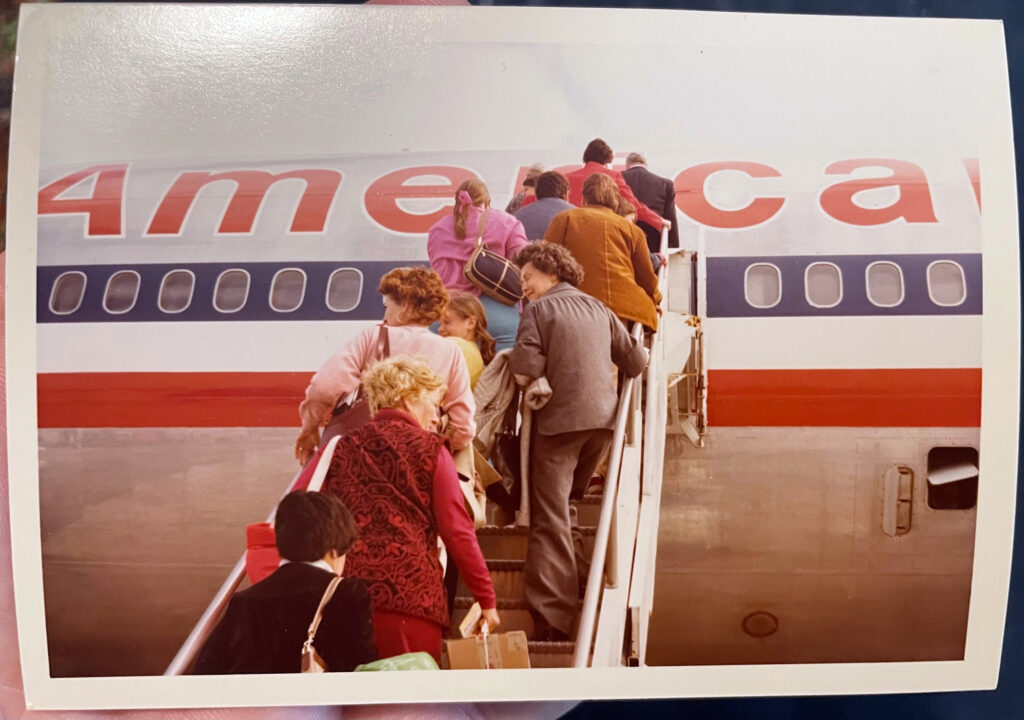
Boarding a DC-10 in Bermuda, 1979.   Author’s photo.

LOCKHEED L-1011

Eastern F,Y
Pan Am  Y
Delta  Y


FOKKER F-28

USAir  Y


AIRBUS A300

Eastern  Y
American  Y
Thai  Y
DHL (cargo, cockpit jumpseat)


AIRBUS A310

Lufthansa  Y


AIRBUS A320 Series (A319, A320, A321)

United F,Y
Delta  F,Y
America West F
US Airways Y
British Airways  Y
Air France  Y
Lufthansa Y
TAP Y
Royal Brunei Y
Air Malta   C
SAETA (Ecuador) Y
LanPeru  Y
AirAsia  Y
JetBlue  Y, C
China Eastern F
Drukair (Royal Bhutan Airlines) C
Avianca C
VietJet Y
Qatar Airways C
South African Airways Y
Aegean Airlines Y


AIRBUS A330

Air France  Y
Sabena  Y
Delta  C,Y
Cathay Pacific  C,Y
Thai  Y
Asiana  C
Singapore Airlines  C
Turkish Airlines C
China Airlines  C
Philippine Airlines C
Qatar Airways C
South African Airways C
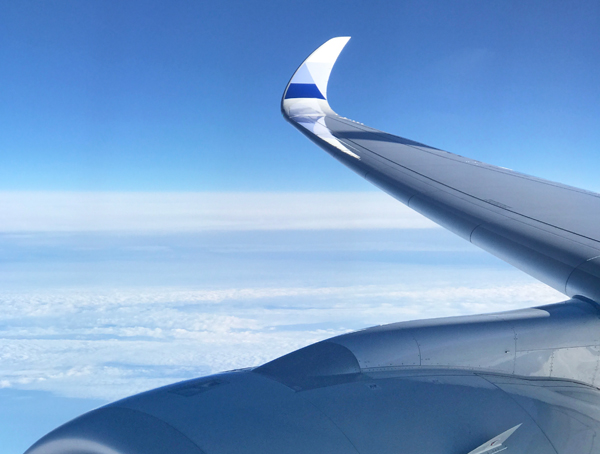
On board a China Airlines A350.   Author’s photo.

AIRBUS A340

Air France  C,Y
EgyptAir  Y
SriLankan  Y
Cathay Pacific Y
China Airlines Y
Qatar Airways C


AIRBUS A350

Qatar Airways  C
China Airlines   C
Cathay Pacific C
Delta C, Y
Thai Airways C
Qatar Airways C


AIRBUS A380

Emirates  F,C
Qatar Airways C
Asiana  C


AIRBUS A220 (Bombardier C-Series)

Delta  F,Y
airBaltic Y


EMBRAER 190

JetBlue Y
American  Y
US Airways  Y
Aerorepublica (Colombia)  Y


EMBRAER 190

JetBlue Y
American Y
US Airways Y
Aerorepublica (Colombia)   Y


TUPOLEV Tu-134

Aeroflot  Y


TUPOLEV Tu-154

Aeroflot Y


As you’ve probably noticed, I’ve left out regional jets and turboprops. Partly because they’re boring, and partly because, for that same reason, I can’t remember them all. Highlights would include a Pan Am Express Dash-7, an Air New England FH-227, an Aeroperlas (Panama) Shorts 360, and a cargo-carrying Twin Otter in which I sat on the floor during a hop from St. Croix to San Juan.

The winners, if we can call them that, are the 737 and A320, predictably enough. That’s not very exciting, and it’s pleasing to see the infinitely more impressive 747 coming in third place. Somehow I’ve managed to fly aboard 747s from 13 different carriers.

Northwest Airlines, some of you might recall, was the launch customer for the 747-400, back in 1989. That spring, they had been using the jet on domestic “proving runs” mainly between Minneapolis and Phoenix. Finally on June 1st, they inaugurated international service. The first departure was flight NW 47, from JFK to Narita. My friend Ben and I were passengers on that flight. It was the day after my 23rd birthday. I still have one of the commemorative sake cups that they handed out.
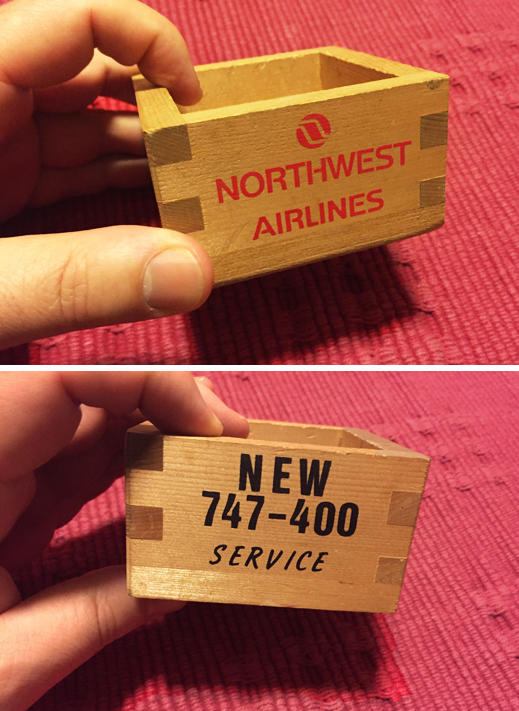
747SakeCup

Of all the planes that ought to be on the list, but aren’t, the most painful example is the Concorde. Years ago, when I was a regional airline pilot, British Airways used to offer a special “interline” Concorde fare to London, available only to industry employees. It cost $400, and it was what we call “positive-space” — as opposed to standby.

A remarkable bargain, looking back on it. But when you’re a young pilot making twenty grand a year, $400 is a lot of money, and so I kept putting it off, putting it off. I’ll do it later, I promised myself. Next year.

And then it was gone.
 

Comments (74)

The De-Ice Man Cometh

Snow, Ice, and Airplanes. Everything You Need to Know About the Travails of Winter Flying.

2025 Version.

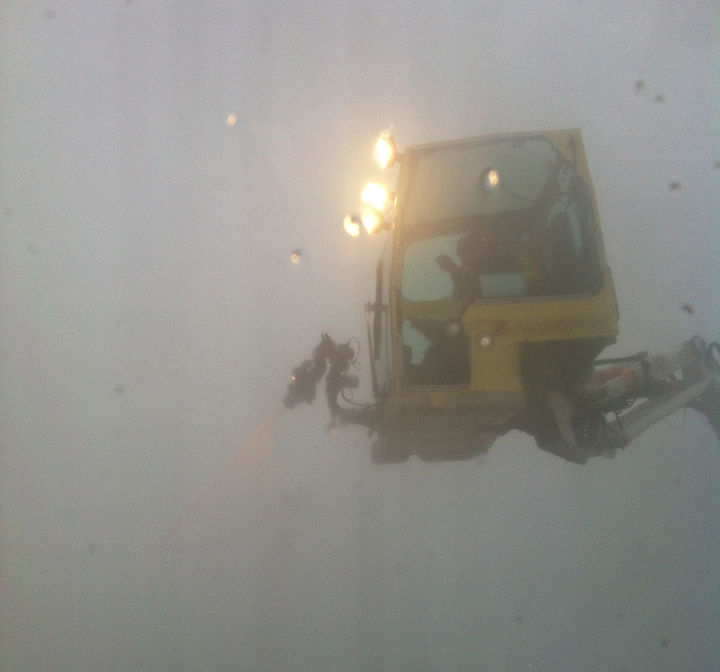
Deiceman

“You’re sitting on the tarmac while a guy in a hovering pod floats over you, twin beams of light piercing the murk of de-icing fluid. That’s my airplane fantasy. I want to be that guy!”

— Peter Hughes


IT’S THAT TIME OF YEAR AGAIN: snowstorms, cancellations, delays, and the sights and sounds of that weird fluid splattering off the fuselage. Here’s some intel…

On the Ground:

Parked at the terminal, ice, snow, or frost accumulates on a plane the same way it does on your car. But while a cursory brushing or scraping is a safe-enough remedy for driving, it doesn’t work for flying, when even a quarter-inch layer of frozen material can alter airflow around the wing—highly important during takeoff, when speed is slow and lift margins are thin. The delicious-looking spray used to clean it away is a heated combination of propylene glycol alcohol and water. Different mixtures, varying in temperature, viscosity, and color, are applied for different conditions, often in combination: a plane will be hit with so-called Type I fluid (orange) to get rid of the bulk of accumulation, then further treated with Type IV (greenish), a stickier substance that wards off additional buildup.

While it might appear casual to the passenger, the spraying procedure is a regimented, step-by-step process. Pilots first follow a checklist to ensure their plane is correctly configured. Usually the flaps and slats will be lowered to the takeoff position, with the APU providing power and the main engines shut down. The air-conditioning units will be switched off to keep the cabin free of fumes. When deicing is complete, the ground crew tells the pilots which types of fluid were used, as well as the exact time that treatment began. This allows us to keep track of something called a “holdover time.” If the holdover time is exceeded before the plane has a chance to take off, a second round of spraying may be required. The length of the holdover depends on the kind of fluids used, plus the rate and type of active precipitation (dry snow, wet snow, ice pellets; light, moderate, heavy). We have charts to figure it all out.

Deicing fluid isn’t especially corrosive, but neither is it the most environmentally friendly stuff in the world. And although it resembles apple cider or a tropical fruit puree, I wouldn’t drink it; certain types of glycol are poisonous. At upward of $5 a gallon, it is also very expensive. When you add in handling and storage costs, relieving a single jet of winter white can cost several thousand dollars. A growing number of airports recycle deicing fluid. It’s a complicated process, but it beats letting the goop seep into the water table or drain into lakes and rivers.

Another method is to tow aircraft into specially built hangars equipped with powerful, ceiling-mounted heat lamps. JetBlue has such a hangar at JFK. In some ways this is a greener technique, though it uses hideous amounts of electricity.


In the Air:

Under the right combination moisture and temperature, icing also can occur during flight. It tends to build on the forward edges of the wings and tail, around engine inlets, and on various antennas and probes. Left unchecked, it can damage engines, throw propeller assemblies off balance, and disrupt the flow of air over and around the wing. In a worst-case scenario, it can induce a full-on aerodynamic stall.

The good news is that all commercial aircraft are equipped with devices to keep these areas clean. On propeller-driven planes, pneumatically inflated “boots” will break ice from the leading edges of the wings and horizontal tail. On jets, hot air from the engine compressors is ducted to the wings, tail, and engine intakes. Windshields, propeller blades, and the different probes and sensors are kept warm electrically. These systems use redundant power sources and are separated into independently functioning zones to keep any one failure from affecting the entire plane.

Airframe ice comes in three basic types: rime, clear, and mixed. Rime is the most frequent one, appearing as a sort of white fuzz. The rate at which ice accretes is graded from “trace” to “severe.” Severe icing, usually associated with freezing rain, can be a killer. It’s also very rare, and it tends to exist in thin bands that are easy to avoid or fly out of. On the whole, inflight icing is considerably more of a threat to smaller, noncommercial planes than it is to airliners. Even in the heaviest precipitation, seeing more than a trace amount of rime on a jet is uncommon.

Planes also have sophisticated anti-skid systems to help deal with slick runways. And if you’ve looked closely, you’ve seen that most runways are cut laterally by thousands of thin grooves, spaced inches apart, to help with traction. When it’s icy or snowy we get braking reports, graded 1-5, or from “good” to “nil,” prior to taking off or landing. Anything below a 2, or if described as worse than “poor,” and the runway essentially becomes unusable. Slippery conditions reduce the amount of crosswind we’re allowed to take of or land with, and a runway will be further off-limits if the depth of snow or slush exceeds a certain value. It varies by aircraft type and carrier-specific rules, but more than about three inches of dry snow on a runway, or a half-inch of the wet stuff, and you aren’t going anywhere until it’s plowed.

I’ve made my share of wintry-weather landings. One thing that always surprises me is the way in which fresh snowfall can make a runway difficult to see and align yourself with. In normal conditions the runway sits in stark contrast to the pavement, grass, or whatever else is around it. When it’s snowing, everything is white. Runways are outfitted with an array of color-coded lighting. Most of the time you pay only cursory attention to these displays. That is, until the moment you break from a low overcast, just a few hundred feet over the ground with a half-mile of visibility, and find yourself confronted with a landscape of undifferentiated whiteness. Those lights and colors are suddenly very helpful.


Accidents and Incidents:

There have been tragedies over the years in which planes attempted takeoff with iced-over wings. Most infamous was the 1982 Air Florida disaster in Washington, DC, when in addition to ignoring buildup on the wings, the crew failed to run the engine anti-ice system, allowing frozen probes to give faulty thrust readings. On Halloween night in 1994, sixty-eight people died aboard American Eagle flight 4184 — a crash attributed to a design flaw, since rectified, in the ATR-72’s deicing system.

Other planes have gone skidding off the end of snowy runways. Culprits have included erroneous weather or braking data, an unstable approach continued when it should have been broken off, the occasional malfunction, or any combination of those things.

I can’t tell you there will never be another ice-related accident. But I can assure you that airlines and their crews take the issue a lot more seriously than they used to. We’ve learned a lot — much of it the hard way — and this has carried over into a mindset, and more careful procedures, that leave little to chance.

If it seems like the effects of winter weather have become worse, that’s because they have. When I was a kid growing up near Boston, a few inches of snow at Logan Airport meant almost nothing. In the 1990s, when I flew for the regionals, I remember going to work in snowstorms all the time. We’d de-ice and depart, no big deal. Sure, things got slowed down, but nothing like the way it happens today. Nowadays, two inches of snow and airports go bonkers with cancellations and delays.

One night in 1992 a snowstorm hit New York, and a USAir jet crashed off the runway at La Guardia. The next morning I flew from LGA to Boston on the Trump Shuttle. My flight left on time. That wouldn’t be the case in 2025.

What’s happened, mainly, is that the amount of air traffic has more than doubled since then. In those days, closing a runway for 35 minutes for plowing didn’t really disrupt much. Today, hundreds of flights are impacted.

Airlines also have become more conservative when bad weather looms, preemptively readjusting their schedules before the brunt of any storm moves in. This is unfortunate if you’re one of those whose flight is canceled in advance, but things would be a lot worse, for a lot of people, had the airline attempted to push through. And what’s happening in one part of the country affects flights, and their passengers, further down the chain, in cities across the nation and the world. Drawing down the operation in one location protects passengers elsewhere.

When it gets bad, airline workers don’t enjoy the chaos any more than passengers do. Pilots and flight attendants often live in cities far from their crew bases, and have to fly in to catch their assignments. With a storm looming, that means leaving many hours early — sometimes a day or more ahead of schedule. Or, on the back end, we can find ourselves unable to get home again until things return to normal.

Once in a while, though, the timing works to our advantage. How do you turn what was supposed to be a 24-hour European layover in into a six-day vacation, as happened to me a couple of winters ago? Easy, just send a snow hurricane roaring through the Northeast. While the rest of you were stranded on tarmacs, sleeping under benches and sucking on discarded Chick-fil-A wrappers, I was sightseeing and sipping hot chocolate.

Not to rub it in or anything.


Iceman photo by the author.

Comments (51)