






Five Dead After 767 Crashes in Miami
September 10, 2026. UPDATED.
Five people were killed this past Sunday when a Boeing 767 freighter crashed off the end of a runway in Miami, colliding with several vehicles and catching fire.
As more info comes to light, the more and more egregious things look. My cardinal rule is to avoid early speculation and conjecture, but this is shaping up to be a colossal screw-up on the part of the crew.
The bullet points:
1. The plane touched down at an unusually high speed and roughly halfway down the runway. Pilots are expected to abandon any landing should the targeted speed be exceeded by any significant amount. (Landing speeds vary with weight, flap setting, and weather.)
2. The pilots were still in the process of configuring the jet as it passed over the threshold. The flaps were in the process of extending. This is somewhat shocking. Standard protocol is to have the jet fully configured and stable no lower than a thousand feet above the ground. If it’s not, you break off the landing and go around.
3. Neither the plane’s thrust reversers nor its ground spoilers (panels that lift from the wing to help the jet decelerate), were activated after touchdown. Reverse thrust is controlled by whichever pilot is at the controls, while the spoilers deploy automatically after sensing proper weight-on-wheels and tire spin-up — in other words, when the plane “knows” it’s on the ground. The reason they didn’t deploy is probably because the jet never sensed a proper touchdown. In the videos, the left main landing gear can be seen still aloft as the jet speeds past. It was so fast it wanted to keep flying. The pilots could have manually activated the spoilers, but a last-second decision was made to apply go-around thrust instead.
4. In something of a panic move, the throttles were pushed fully forward. Was there enough runway left to become airborne again? Maybe, but the pilots decided otherwise and, after only a few seconds, power was again cut to idle. At which point they were out of options: there was neither room enough to stop nor to fly again.
What it all looks like, in summary, is a highly unstable approach that, for whatever reasons, the pilots chose to continue rather than abandon.
Video footage shows ominous-looking clouds and rainstorms off the approach end of the runway. Gusts and possible windshear may have been a factor. Yet even if this is the case, it wouldn’t excuse the pilots for attempting to land.
Unless there’s more to it. We know certain facts, but we don’t know the why of them. None of this is conclusive.
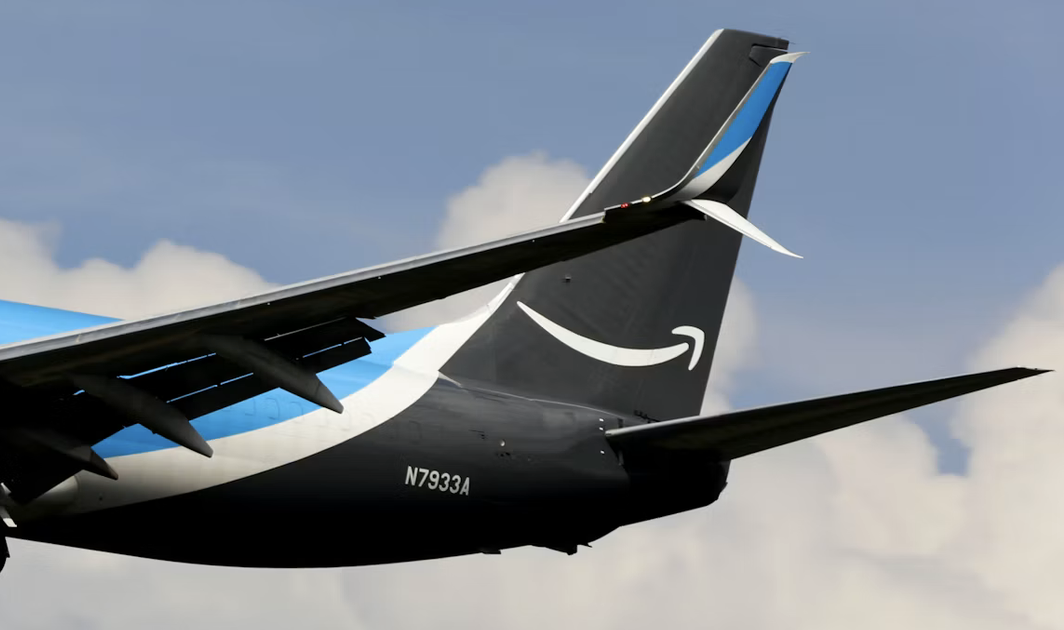
Much of the media, meanwhile, is describing the plane as an “Amazon” or “Prime Air” jet. Which it was and wasn’t.
Amazon does not own an airline or fly its own planes. It uses contractors, some of whom paint their jets in an Amazon “Prime Air” livery. (It’s an arrangement not unlike those between the major passenger carriers and their regional jet “Express” and “Connection” partners.) The 767 that crashed in Miami was flown on Amazon’s behalf by a company called 21 Air, which I’d never heard of until today.
Another company that relies on contractors is DHL, the global shipping giant. You’ll see jetliners in DHL’s distinctive red and yellow colors at airports all over the globe. These belong to a multitude of contractors; none are flown by DHL itself.
FedEx and UPS, on the other hand, own and operate their own airlines.
Related Story:
ODE TO THE 767
Photo courtesy of Unsplash

Leave a Comment
Maximum 1500 characters. Watch your spelling and grammar. Poorly written posts will be deleted!
19 Responses to “Five Dead After 767 Crashes in Miami”
You are viewing newest comments first. Click to reverse order
There’s an old joke that says the most troublesome part of an automobile is the nut holding the steering wheel. Translate that to aviation, and you have the nut holding the stick or yoke.
The 767 has had an excellent safety record and definitely qualifies as one of Boeing’s best. As far as I can recall, just about every aerial mishap involving a 767 has been been traceable to loose nut failure (the most infamous was the Gimli Glider, which simply ran out of gas). 🙂
As for the Miami mishap, the obvious question is “What in hell were they thinking???” Coming in hot and high is never good, but why the cockpit crew was configuring the aircraft for landing while flying over the threshold is as baffling as trying to understand the federal tax code.
The contractor arrangement turned out to matter commercially as well. About a week after the crash Amazon suspended its flying with 21 Air while its other contracted carriers carried on, so the Prime Air paint stayed in the sky and the operator behind that particular jet did not. It is a neat illustration of your point that the livery tells you very little about who is actually flying the aircraft.
You are incorrect.
The DC8 allowed the thrust reversers to be depoloyed whilst airborne at any altitude. The 738 too allows its deployment but only when the radalt registers 25′ or less. If you ask me, that feature should be made mandatory on all aircraft, regardless of how rarely it gets used in practice. With the sort of tailwinds the crew had, they possibly could’ve better managed the situation. The minute I read that they’d gone off the far end of the runway at 200+ kph, I knew the pilots would be – and correctly – cashiered, and that might well happen. The CVR transcripts seem to confirm that the PIC was the PF but despite the difference in seniority, the PM should’ve usurped control once he sensed that it was all too hot and risky, said “my aircraft, mate” and gone around. The FO might still be exonerated but he was a wimp, IMO
If one goes to sec dot gov and does a company search for FedEx (or UPS) one will discover that FedEx does not register itself as an airline. It is recorded and licensed as an air courier service and apparently the SEC is okay with that. Next go to sec dot gov and do a company search for Jet Blue and discover that Jet Blue is registered and licensed as Air Transportation, Scheduled. Apparently, SEC is okay with that.
In other words, the two creatures are considered similar yet, distinctly different. Like bagels are not doughnuts, roaches are not ants, grocery stores are not convenience stores, up is not down. I know darn well that obstinate people will have difficulty with this.
I know! Let’s try this! Call FedEx and inform the nice CSR that you want to book a flight from, say Dallas to Miami for yourself and entourage of no more than four souls. Listen carefully to the nice CSR’s response as it will likely go something like this, ” I am sorry, we are not an airline. You would have to contact an airline for that. Is there anything else I can I can help you with today?”
And have a nice day!
FedEx isn’t ONLY an airline, but it runs one. It owns and deploys a fleet of jets, piloted and maintained by its own employees, on fixed schedules on routes around the world.
That’s an airline no matter how you cut it.
Ditto for UPS.
When I worked (four years) at one of those DHL contractors I referenced, any thought that we didn’t fly for an “airline” would’ve been laughable. Of course we did. Indeed, our company was called “DHL Airways.”
To add to the go-around question below, I’ve experienced one during all of my travels.
We were trying to land at Washington National, and I guess the winds shifted during final, because we just got blown down the runway. The pilots throttled up and we went around in a big circle and got back in line. This process was in the 20-ish minute range.
However, during that time National closed due to the weird winds shifting around and we went into some sort of holding pattern.. My flight eventually headed to Norfolk and landed there for more fuel. And then finally National reopened and we flew from Norfolk back to National.
I don’t remember the exact year, but it was during the era when planes had phones in all the headrests, because I had to use one to tell my parents in DC that I was going to be pretty late. If I remember correctly, it was about 18 dollars for a three minute call.
The go-around was certainly exciting, but at not point did I feel unsafe. I did feel irriated with the delays, however.
Replying to Chris Hesler’s question about how much time a go-around adds to a flight – I think the right/proper answer is that it depends on how much other air traffic is around; ATC will provide the plane with directions to get them back into the landing traffic pattern. I imagine that if aircraft spacing were an issue, the plane would be directed into a holding pattern until ATC can slip them back into the landing pattern.
I was fortunate to witness a go-around while planespotting at MSP in the past month – the plane taking off ahead of the arriving flight took a bit too long to begin their take-off roll. That go-around added about 15 minutes to the arriving flight. I should note that this wasn’t during a particularly busy time at MSP, and according to the plane’s flight track, they pretty much rejoined the landing pattern immediately.
Looks like a struggle between confirmation bias and the reality of the situation. Solved.
Oy vey, it looks like they did (briefly) attempt a go-around, per NTSB summary of the flight data recorder. Already half-way or more down runway released brakes and applied go-around thrust, 4 seconds later changed their minds and tried to ride it out. Talk about being behind the plane; unstable below 1000 feet AGL should be automatic initiation of go-around.
NTSB says pilots will be interviewed tomorrow and also CVR transcript will be made available.
Hey Len, Like Patrick (myself) Capt Steeeve has decades of airline training, you have to respect that.
One thing was clear to us a go around needed to be executed prior or after touchdown. Extremely fast on approach was just part of it. This Capt certainly saw how far behind the aircraft they were. 5 airport workers died a terrifying death.
Patrick is always insightful and prudent. He is likely as disturbed by this unbelievable chain of events. I look forward to his remarks.
Patrick, to avoid confusion you should have elaborated that “FedEx and UPS … own and operate cargo airlines that own their aircraft, and are flown by employee flight crews.”
The Merriam-Webster Dictionary definition for airline is “an air transportation system including its equipment, routes, operating personnel, and management”…
Both FedEx and UPS meets that definition. It doesn’t require them to have to be carrying *human* passengers.
Just wondering…Do you know captain Steeeve, or are familiar with his Youtube channel. Opinion?
UPS will be held liable for all those killed and injured and all the property damage in the Louisville crash. Amazon won’t pay a Dollar for this one.
A couple of questions come to mind.
As an infrequent flyer, I have never experienced a go-around. At a large airport like Miami, how much time would that typically add to a flight?
Safety is supposed to be paramount in aviation, but . . . could a situation arise whereby the flight crew feels pressure – whether extrinsic or intrinsic – to avoid a go-around and consequent delays?
There was a mention of deteriorating weather in the area at the time of the crash. Is it conceivable that the crew was trying to keep on schedule and thus stubbornly committed themselves to landing after an unstable approach?
Knowing what we know about Amazon and the unforgiving nature of their workflow, I can’t help but wonder.
The video I saw of the final runway approach did not look good. (assuming that video is real, sigh) That was not a stabilized aircraft, they did not perform a flare for rear bogies touching first, instead getting themselves into a ground effect float even after they were well past the piano keys. The screaming question in the room is why didn’t they do the very multiple times indicated go-around?
The assertion that FedEx doesn’t own or operate an airline belies information available online. Wiki isn’t the only source, but seems to provide a synopsis of many other sources: https://en.wikipedia.org/wiki/FedEx_Express. My neighbour was a manager at FedEx until recently, and our conversations, while not centered on the topic, touched upon the FedEx fleet (given the founders’ role with the company).
That seems to be the case with the UPS air cargo fleet, too.
They (and others) are logistic companies, but appear to operate cargo fleets as part of their ambit (vs. contracting out to third party carriers). My interpretation, anyway.
Neither FedEx nor UPS operate or own airlines. They are logistics companies.