





Old Dog, New Tricks
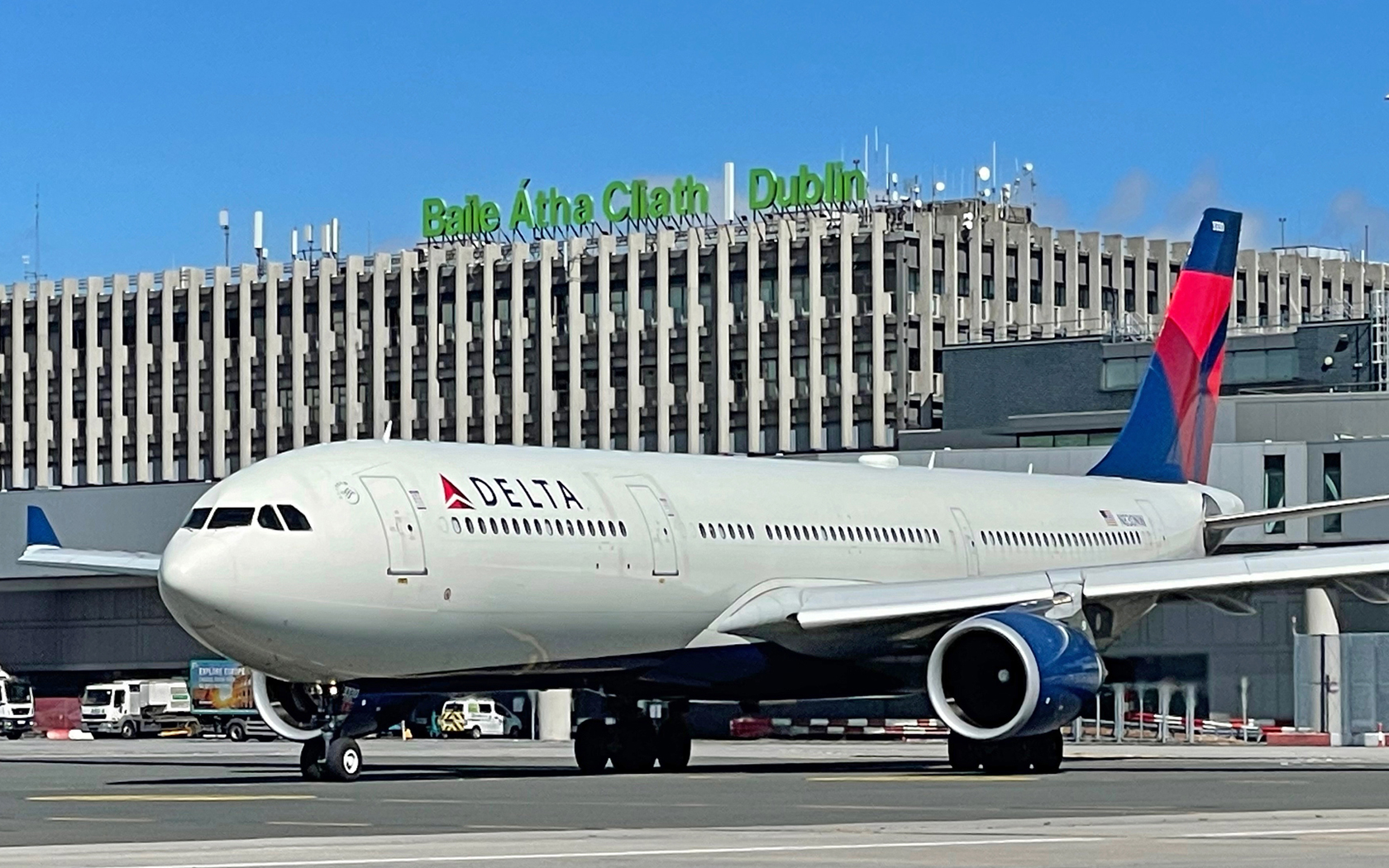
An Airbus A330.
May 10, 2025
AFTER SEVENTEEN YEARS of flying the Boeing 757 and 767 — plus several earlier years on an assortment of other types — I’ve switched over to the Airbus.
The transition wasn’t easy, entailing more than a month of study and simulators, with a series of tests and evaluations along the way. For those of you who buy into the old “jetliners just fly themselves” mantra, five weeks of A330 training might change your mind.
You may already know that Boeing and Airbus operate quite differently, each with its own platform of control, automation, and flight management. You’ll be expecting me to expound on the challenges of learning to use a side-stick control rather than a yoke, for instance, and understanding the Airbus’s unique “flight control laws,” and so on. As it happens, I don’t have much to say on those things. Stick versus wheel… sure, it’s different, but the adjustment is quick.
What you might be surprised to hear me say, however, is that I find the Airbus a less sophisticated machine than the Boeings I’d been flying, even though its baseline technology is newer (late 1980s versus early 1980s). Conventional wisdom holds the Airbus in higher technological esteem, but to me the pilot-machine interface is a more cumbersome and work-intensive one. Tasks that took one or two button-pushes in the Boeing might take five in the Airbus. Is there a Frenchman Rube Goldberg?
And there were several moments during training that where I caught myself asking, “What do you mean it can’t…?” Certain things about it are peculiarly old-fashioned. At one point I starting calling it “the Soviet Boeing.”
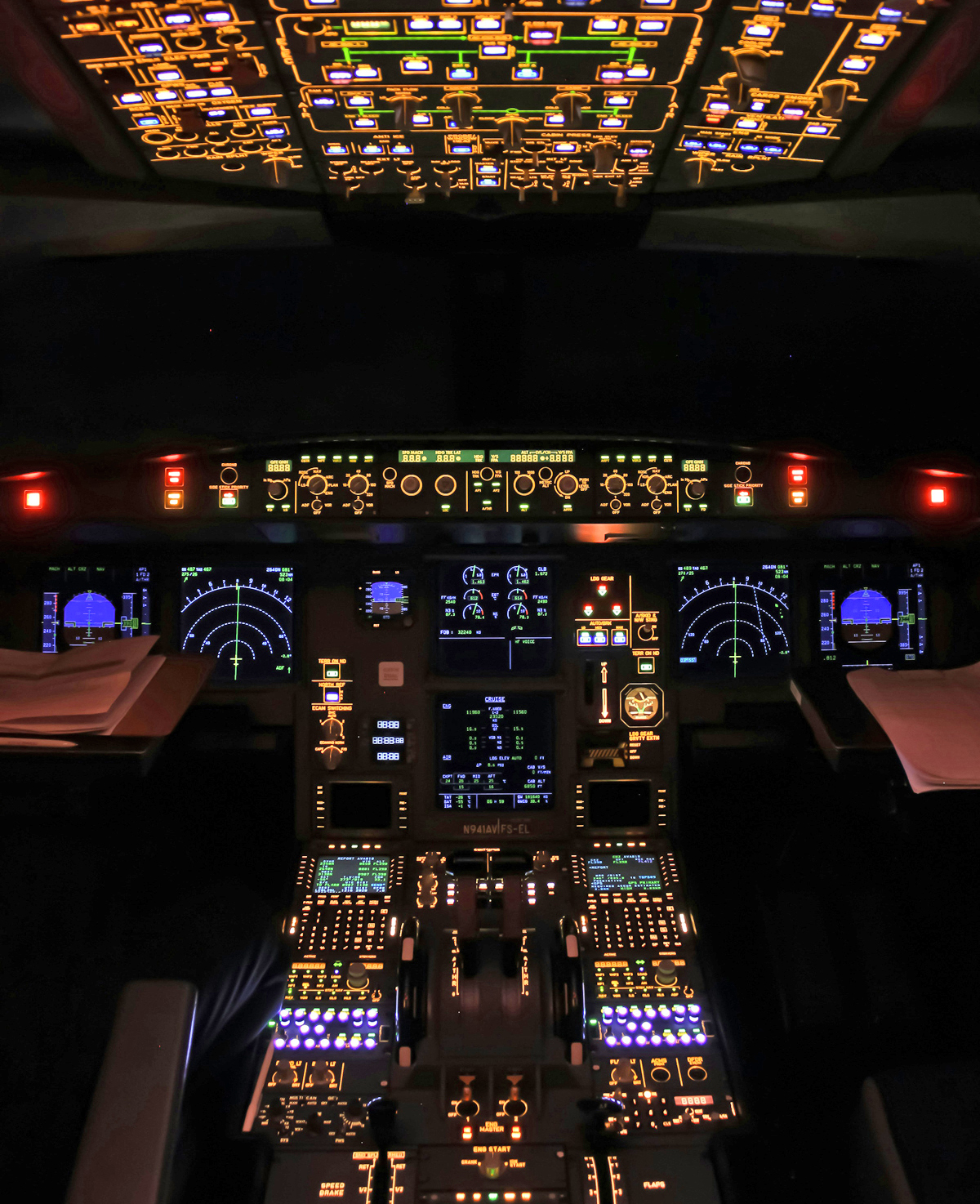
This by no means makes the plane less safe. The things I’m talking about are stylistic, idiosyncratic. There’s a grace that’s missing. If Boeing is Apple, Airbus is most certainly Microsoft. They both get the job done safely, but Boeing does it more elegantly.
Among the A330’s attributes, none is more impressive than its ability to take off and land at remarkably low speeds. It owes this to a huge and beautifully sculpted wing (its span is over 200 feet) that is able to excel both at high-speed efficiency and low-speed docility. At typical weights, the jet is off the ground by 150 knots and touching down at 135 or so. For a plane of its size that’s amazing.
Neither is it bad looking. I’m always bemoaning the bland aesthetics modern jetliners, but I have to say, the A330 is a sexy exception, the -900 variant especially.
But truth be told, so much of what enamors pilots to their planes is creature comfort. And on that count, I’ll take the Airbus over the 757/767 any day. The cockpit is roomy and quiet. There’s a downstairs bunk room to rest in on long-haul flights, and instead of a clunky control wheel in front of me, I’ve got a table to write on.
I expect I’ll grow to like it.
One thing I haven’t done, to the consternation of some of my friends, is make the upgrade from first officer to captain. I remain a lowly copilot, for now.
This by design. Staying in the right seat offers me extremely high seniority — single digits within my category and base — allowing me to pick and choose my trips, vacation weeks, days off, and so on. And the biggest bonus of all, it allows me to be based at home, no longer slogging to and from New York each time I have to work. As captain I’d be commuting still, and working much harder. Pay-wise, I can almost make up the difference by pulling a monthly overtime trip.
Related Stories:
ODE TO THE 767
ODE TO THE 757
SENIORITY EXPLAINER
Upper photo by the author.
Cockpit photo courtesy of Andres Dallimonti and Unsplash.

Leave a Comment
Maximum 1500 characters. Watch your spelling and grammar. Poorly written posts will be deleted!
27 Responses to “Old Dog, New Tricks”
You are viewing newest comments first. Click to reverse order
I know I’m writing this several months late but..
Congrats! It’s interesting how you found the A330 more cumbersome despite Airbus’ reputation.
As for the A330’s looks, I also like it and find it fairly sleek and elegant. I like how the nose is sharper (“pointier”) than on the A320 series; the large wing, titled landing gear, and square winglets make it really graceful; and, something that’s really underrated, I like how the rear of the fuselage doesn’t curve downwards, unlike every other widebody (except of course its sister aircraft, the A340, and the 747). Yeah, it’s just another twinjet, but I love the clean straight lines, and it’s elegant in all the right places. The neo’s large engines & raccoon mask make it even more attractive, but the look of the winglets is a significant downgrade IMO.
Patrick.
I just got a cool surprise while watching Air Crash Investigation on Disney+.
It was great to see you on the JAL episode talking about the 747. However they only had you listed as an aviation blogger
Very interesting to read polot views on Airbus-Boeing comparisons.
I am an AME M1/M2 now retired with 36 yrs time on jet acft from corporate to major airline acft. I have enjoyed working with the greatly varied engineering styles of builders. Seeing how they think by being intimately familiar with the machinery. Short DC8’s to A340-500. My favourite is the A330 as its reliability for hard ailine use was hard to beat. Very nice to work on and RR RB211 Trent 700 performed very well and reliably. Swallowed geese and kept full performance for remainder of flight. A maintenace oriented engine and excellent design for internal inspection ànd component access. I am not a licenced pilot but have flown the A330/A320 sim a number of circuits and done vfr and ifr landings. I found them easy to fly and control, although in calm wxr sim conditions. Hats off to you folks who fly in that nasty wxr! I also have years on the Eambraer 175/195. Totally different computer systems design again. Nice reliable aircraft, once we worked out the software bugs. I enjoyed the pressure and responibility of providing our flight crews with airworthy machines. Safe flying to all!
Wilson, you got me. How did they do it? Please don’t tell me they threw them out the window.
Is there any noticeable difference in the pilot-machine interface between the A330 and the A330-neo?
Unless your airline is phasing out the 57 and 67 that’s a big expense in training.
Do the pilots of the A-330 dispose of empty soft drink cans the same way they did on the DC-8?
I’m a passenger, not a pilot, and I find the Airbus much more comfortable and easy to ride in. I find anything Boeing just…old and dislike flying in them.
I know exactly what you mean Patrick. Airbus 310 🙂
¨What does it do when I push/pull a knob?¨
¨”A signature of Airbus autopilot Operation.”
The push/pull operations of the FCU knobs are an ingenious and sophisticated feature exclusive to Airbus airplanes. This revolutionary design has transformed the way pilots interact with the flight instruments, creating an effortless human-machine interface. By simply pushing the knobs, pilots can give control to the autopilot to execute commands using its pre-programmed logic (also known as “Managed guidance mode”). Conversely, a pull operation signifies a manual command input from the pilot, where the autopilot executes the command in the most direct way possible (referred to as “Selected guidance mode”). For instance, when the heading knob is pushed, the autopilot will expertly follow its pre-planned flight path to the destination. Meanwhile, a pull of the same knob will command the autopilot to fly directly towards the heading input and maintain that heading until the pilot issues a new command. However, don’t let the simplicity of this design fool you…¨
https://shop.minicockpit.com/blogs/autopilot-demystified/what-does-it-do-when-i-push-pull-a-knob
That description made me laugh out loud.
Patrick, I’ve been with you since Salon. Back in those days, you were the only working pilot I came across who had anything relatable (and decently written) to say about a subject I was very interested in. Times have changed, yet you continue to bring a sensibility to your subject that outclasses all the others.
My interest in commercial aviation was sparked way-back-when by an article I saw in (I think) Popular Mechanics about the ‘Gimli Glider” incident. Somewhere in that article someone said that the maneuvers made immediately prior to the successfully safe landing would not have been possible in an Airbus. Could that be true? My curiosity was sparked, but the sources I found were either too technical and arcane or just too poorly written and/or argumentative, so I gave up. But my interest remained and I found your work, and later that of more content creators, that expanded my knowledge of commercial aviation far further than just insights into the now-dated “Airbus vs. Boeing” argument.
Getting to the point here, I flatter myself to believe I posses an earnest layman’s knowledge about fly-by-wire systems and Airbus control laws and the philosophies underlying the design of modern airliner automation. Yet your eloquent description of making the switch from B to A gave a perspective I otherwise never would have seen, and much to think about. I’m glad you do what you do. Please keep it up.
Why did you change?
Congrats! I guess what needs getting used to is the lack of tactile feedback in the Bus. Your sidestick doesn’t indicate what your colleague may be doing with it, and the detent too probably doesn’t move around whenever Autothrust tweaks the power; I’m yet to take a proper gander at the A330 manual I have. Insofar as slow speeds go, nothing like the cantation of the A380. For a bird of its size, it sure can mush and fly slow when it needs to, including rotation and touchdown.
I wish you many hours of flying in clement Wx in the A33x!
I hope this is a promotion of sorts for you…..
Having flown every wide body over the past decades, I can say this: The 777, 747, 767 and 787 are very comfortable and reliable for a passenger, but the Airbus A330s and A350s are far quieter and more comfortable for the long hauls. The reduction in noise levels alone makes me happy when I learn that I will be flying on Airbus for my international flights. I hope you have a great experience with these planes!!
Nice. I guess you’ve been too busy to publish much. I missed the snark. My nephew has been on the Airbus at Spirit for three years – loves it. (This is the kid who built time towing banners) When Bon and I commuted to the boat for all those years it was either in a 73 or a 320 and we preferred the Airbus because it was just more comfortable. I hope the tariffs don’t f*ck up your career.
“sexy”
Well … there’s no accounting for taste.
I can readily imagine that the sheer abstraction of Airbus-style fly-by-wire makes the pilot-machine interface an alienating experience.
Anyway, flying the A330 will no doubt improve your range of destinations, & that’s always good.
Nah, it’s really not any different from how the 767 — or any other plane — was. The “feel” is different, but task-wise it’s the same stuff. The Airbus is actually MORE complicated and work-intensive, and thus more hands on, at least in terms of how much button-pushing is involved.
The A340-500 is probably the best-looking of the wide-boi Airbii. Four huge engines, saucy rear, not too stretched like the -600. Too bad he thirsty. The 330-8/9 are lookers.
Can’t argue with you.
Sorry, Airbuses give me the willies.
Their fly-by-wire technology is excessively loaded with arcane software algorithms (“flight control laws”) that were written by potato-chip-munching code jockeys who are convinced they know more about airplane driving than do pilots who have five digits worth of hours in their logs.
Having worked my entire career on computing machinery, I am the first one to advise that said machinery is hardly infallible and expecting it to out-think an experienced pilot is setting the stage for the inevitable. Oh, wait! The inevitable has already happened when the “flight control laws” decided the pilot didn’t know what he was doing and snatch away control.
To be fair, Boeing has had its issues with FBW, but their arrangement acknowledges that when push comes to shove, the guy/gal holding the yoke has a more-powerful computer in his/her head than will ever be bolted down in an airliner’s electronics bay.
Congratulations on the switch!
One minor (and nerdy) correction: the A330 has a larger wingspan than early 747 variants (the -100 through -300 series), but the later 747-400 and -8 have larger wingspans.
Finally transitioned eh? It’s a good aircraft. Capable, aesthetic, versatile, and yeah, presumably roomy! I’m more of a 777 person myself…
Was just going to ask about the lunch table! Thank you for stating truth about Boeings smart logic and intuitive FMS, you just cant forget the greatness. Nice to know that no matter the platform the brain and hands will keep FD bars centered. Great read Patrick!
Did you change because the A330 will take you places the 767 doesn’t? Can you fly the A350? How well did your first real landing go?
OK, so IANAP, but even in the highly forgiving realm of Microsoft Flight Simulator, I find that I cannot fly well (at all) with the sidestick (mine is an Airbus 320 replica, FWIW) in my left hand versus my right. (N.B. I’m from the US, and driving in the UK was a serious exercise in concentration for me, one that I’m not real keen on repeating.) Indeed, I only tried it after seeing a picture of an A320 cockpit and being flabbergasted by the wrong-sided stick placement. How much adjustment does that take for a real pilot?
Very happy to hear this, Patrick. You have got to like your work tools — work is hard enough as it is at times.
After hearing your initial thoughts a few weeks back I was a bit worried. But seems you’re growing into it.
As a pax I always loved the cozy 767 and the 757 has always been a real looker. But the A330 is comfortable (its 2-4-2 Y beats this ever more popular 3-3-3 any day) and indeed it still looks sleek in spite of its considerable age by now. Like you, I’ve always loved the A330 wing (it’ll take me some more time to start liking those neo winglets though).
Will you be doing both the 332/3 and 339? By comparison, does the 332 feel more like a rocket? And, any urge to also get into the 359 game?
Best of luck to you, Sir. May you enjoy many pleasant and safe hours piloting the A330 for your pax. Still looking forward to the day you are up there in the front office when I’m hitching a ride.
Congratulations Patrick. After doing the training for the A330 are you licensed to fly all the basic versions: -200; -300 and -900(neo)? In the future if you ever wanted to fly the A350, how long is a typical training period for that aircraft now that you are qualified on the A330? Enjoy your new “ride.”